The global orthopedic implant market is entering 2026 with steady demand, stricter scrutiny, and uneven regional growth. Grand View Research estimates the market could expand at a compound annual growth rate of about 4.9% from 2024 to 2030. Fortune Business Insights reports different values because its scope and product categories vary. That difference matters. Buyers should question every headline figure.
A reliable orthopedic implant company must offer more than a broad product catalogue. Its evidence should include peer-reviewed clinical studies, transparent regulatory records, validated manufacturing systems, and dependable post-market surveillance. These factors influence patient safety and purchasing confidence. The World Health Organization highlights the growing need for quality surgical care as populations age. Meanwhile, the International Osteoporosis Foundation reports that fractures linked to bone weakness affect millions worldwide each year. Demand is real.
Look closely at practical details. Can the supplier maintain titanium hip stems, porous-coated screws, or spinal cages across multiple production batches? Are instruments available in regional hospitals? Can surgeons receive training before complex procedures? These questions often reveal more than a polished website. Importantly, market reports are not perfectly comparable. They use different definitions, currencies, and forecasting periods. This guide therefore evaluates leading companies through a balanced lens, combining market presence, clinical credibility, product depth, supply reliability, and buyer support. No ranking is permanent. Local approvals, hospital needs, pricing pressure, and new clinical evidence can quickly change the picture.
What Orthopedic Implant Companies Do and Which Products They Make
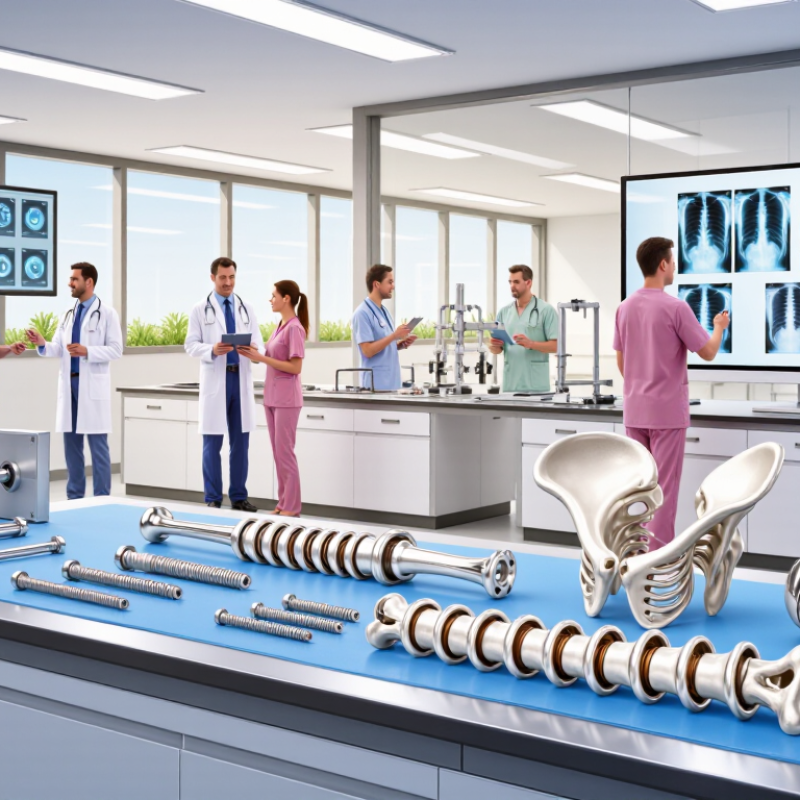
Orthopedic implant companies design, manufacture, validate, and support devices used to restore damaged bones and joints. Their product portfolios commonly include hip and knee replacements, trauma plates, screws, intramedullary nails, spinal implants, and sports-medicine anchors. Some also supply surgical instruments, planning software, and sterilization services. The work is highly regulated.
Demand is substantial. The World Health Organization reported that about 1.71 billion people live with musculoskeletal conditions worldwide in 2022. Grand View Research estimated the global orthopedic implants market at approximately USD 52 billion in 2023, with continued growth expected through 2030. These figures differ by research method, product scope, and currency assumptions. That difference matters.
For global buyers, a capable supplier should provide traceable materials, validated manufacturing, and documented clinical evidence. Certification to ISO 13485 can indicate a structured medical-device quality system, but certification alone does not prove implant performance. Buyers should examine fatigue testing, biocompatibility records, sterilization validation, shelf-life data, and post-market surveillance. Regulatory files should match the destination market, not merely the factory’s home country. Practical experience also matters: accurate sizing, instrument compatibility, training quality, and response time can affect an operating room’s efficiency. The overlooked detail is after-sales support. A technically strong implant becomes less useful when replacement instruments arrive late or product records are incomplete.
2026 Best Orthopedic Implant Companies for Global Buyers — What Orthopedic Implant Companies Do and Which Products They Make
This product-focused comparison describes common orthopedic implant categories and supplier capabilities. It does not rank or identify individual companies; product availability, regulatory authorization, and specifications vary by supplier and market.
| Product Category | Typical Products | Common Clinical Use | Common Materials or Design Features | What Global Buyers Should Verify |
|---|---|---|---|---|
| Hip reconstruction | Femoral stems, femoral heads, acetabular cups, liners, and revision components | Total hip arthroplasty and revision of hip replacements | Common material choices include titanium alloys, cobalt-chromium alloys, and polyethylene; some systems offer ceramic bearing components. | Check system compatibility, size range, fixation options, bearing combinations, instrument availability, and local regulatory authorization. |
| Knee reconstruction | Femoral and tibial components, polyethylene inserts, patellar components, and revision systems | Total or partial knee arthroplasty and revision procedures | Metal components commonly use cobalt-chromium or titanium alloys; bearing inserts commonly use medical-grade polyethylene. | Confirm implant configuration, available sizes, surgical instrumentation, revision options, sterilization details, and authorized indications. |
| Spinal implants | Pedicle screw and rod systems, interbody cages, plates, and fixation components | Spinal stabilization and selected fusion procedures | Systems may use titanium alloys, stainless steel, or polymer materials such as PEEK; designs and indications differ by device. | Review intended use, available dimensions, compatible instruments, imaging considerations, traceability, and country-specific approvals. |
| Trauma fixation | Plates, screws, intramedullary nails, wires, and external-fixation components | Stabilization of fractures in long bones and other skeletal regions | Common materials include titanium alloys and stainless steel; systems may include locking and non-locking fixation options. | Assess anatomical coverage, screw and plate compatibility, instruments, labeling, sterilization status, and availability of replacement parts. |
| Shoulder reconstruction | Humeral stems and heads, glenoid components, and reverse shoulder system components | Shoulder arthroplasty, including anatomical and reverse configurations where indicated | Metal components and polyethylene bearing surfaces are commonly used; component geometry varies by system. | Verify configuration-specific indications, size options, compatible components, training and instrument needs, and local market authorization. |
| Sports medicine and soft-tissue fixation | Interference screws, suture anchors, buttons, and selected ligament-fixation devices | Fixation of soft tissue to bone in selected reconstructive procedures | Products may be made from metal, polymer, or bioabsorbable materials; material and intended use are device-specific. | Check the approved indication, material composition, fixation method, implant dimensions, shelf life, and instructions for use. |
| Maxillofacial and small-bone fixation | Mini-plates, screws, pins, and small-joint fixation components | Selected facial-bone, hand, foot, and small-bone fixation procedures | Systems commonly use titanium alloys or stainless steel, with dimensions designed for specific anatomical applications. | Confirm anatomical indications, plate and screw compatibility, instrument sets, product traceability, and applicable local standards. |
| Bone graft substitutes and void fillers | Selected synthetic bone graft substitutes and materials for filling bone voids | Use in specific bone defects where permitted by the product labeling | Products may contain calcium-based ceramics or other materials; composition, handling, and resorption characteristics vary. | Review the exact intended use, contraindications, preparation instructions, storage conditions, and regulatory status in the destination market. |
FAQS
They make hip and knee replacements, trauma plates, screws, spinal implants, and surgical anchors. Some also provide instruments, planning software, and sterilization services.
Review material traceability, manufacturing validation, clinical evidence, and regulatory documents. Ask for fatigue testing and biocompatibility records. Do not rely on certificates alone.
Implant systems must match anatomy, fixation methods, revision needs, and imaging requirements. A suitable product in one hospital may perform poorly elsewhere. Local conditions matter.
Request biological evaluation data, sterilization validation, shelf-life evidence, and batch records. Check complaint handling and post-market surveillance. Missing records are a warning.
No. Certification can show a structured quality system. It does not guarantee clinical results or long-term durability. More evidence is needed.
Regulatory files must match the importing country’s requirements. Procedure volumes, reimbursement rules, budgets, and import processes also differ. The market can change quickly.
Compatible instruments can reduce delays during surgery. Training helps teams use sizing tools and implant systems correctly. Small gaps can become expensive.
Not always. Delayed deliveries, missing instruments, and weak revision support increase total cost. A cheap product may create pressure later. That deserves careful review.
It is highly important. Replacement instruments should arrive promptly, with complete product records. Response time affects operating-room efficiency. Presentations can look better than reality.
Do not overvalue polished presentations or familiar suppliers. Seek surgeon feedback and inspect practical evidence. No method is perfect.
Conclusion
The 2026 orthopedic implant market includes companies that design, manufacture, and supply products such as joint replacement systems, spinal implants, trauma fixation devices, sports medicine components, and related surgical instruments. A reliable orthopedic implant company should demonstrate consistent product quality, strong engineering capabilities, traceable materials, validated manufacturing processes, and effective post-market support. Global buyers should evaluate clinical evidence, product durability, sterilization controls, certifications, and quality management systems before making purchasing decisions.
Regulatory requirements, import procedures, distribution networks, and supply continuity can significantly affect international procurement. Buyers should confirm that products meet the applicable standards in their target markets and that suppliers can provide stable documentation, delivery schedules, training, and technical service. The best supplier choice depends on the healthcare facility’s clinical needs, surgeon preferences, patient population, budget, market regulations, and long-term inventory plans. Careful comparison of product scope, safety performance, customization options, communication, and after-sales support can help buyers establish a dependable and compliant partnership.