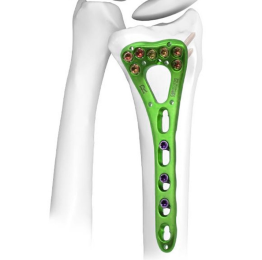
Thoracolumbar Pedicle Screw System
Posterior fixation featuring monoaxial, polyaxial, and reduction pedicle screws with titanium rods (Ø5.5mm / Ø6.0mm) for deformity correction and trauma stabilization.
In global medical device procurement, evaluating a Spine Fixation System requires looking beyond surface specifications. Procurement teams, hospital supply chain directors, and orthopedic brand owners must evaluate metallurgical purity, thread pullout resistance, intraoperative articulation tolerance, and regulatory registration compliance.
At Orthomanufacturer Medical Co., Ltd, we engineer spinal instrumentation systems to meet the rigorous physical and regulatory requirements of international surgical centers. A high-performance Spine Fixation System must maintain structural stability under complex multi-axial mechanical loads—combining flexional, torsional, and compressive stress—while promoting rapid osseointegration and minimizing surgical invasiveness.
Global purchasers frequently ask: How does thread pitch design impact pedicle anchorage in osteoporotic bone? What biomaterial modifications yield higher fatigue limits in posterior thoracolumbar reconstruction? How can OEM buyers streamline technical documentation for local regulatory approvals? This comprehensive technical guide addresses these critical procurement queries, presenting product breakdowns, engineering innovations, market forecasts, and manufacturing standards.
Extra Low Interstitial medical-grade titanium alloy delivering superior fracture toughness, reduced fatigue propagation, and excellent MRI artifact compatibility for pedicle screws and rods.
Engineered dual-lead thread geometries double insertion speed, reduce friction heat, and increase pullout strength by up to 28% in cancellous bone structure.
Friction-fit polyaxial screw head design allows smooth intraoperative rod positioning while maintaining a stable angular stance before final locking nut torque application.
Each system is supplied as a unified clinical module: titanium implants, modular instrumentation trays, and autoclavable storage cases designed for seamless intraoperative performance.
Posterior fixation featuring monoaxial, polyaxial, and reduction pedicle screws with titanium rods (Ø5.5mm / Ø6.0mm) for deformity correction and trauma stabilization.
Percutaneous pedicle screw system with integrated extended break-away tabs, cannulated screw shafts, and low-profile rod inserters for smaller incisions.
Ultra-low profile cervical plates featuring integrated anti-backout tactile locking mechanisms, variable angle screws, and wide graft visualization windows.
Radiolucent PEEK (ASTM F2026) cages for PLIF, TLIF, ALIF, and DLIF procedures, equipped with tantalum radiopaque markers and aggressive tooth profiles.
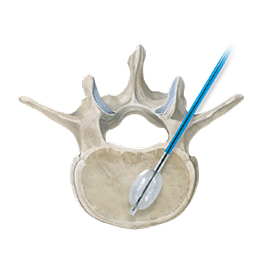
Comprehensive vertebral compression fracture treatment kit: inflation syringe, high-pressure silicone balloons, access cannulas, and bone cement mixer.
Miniature polyaxial screws (Ø3.5mm / Ø4.0mm) and transition rods for occipito-cervical and upper thoracic fixation challenges.
Understanding how surgeon preferences, material science, and global procurement models are transforming spinal hardware sourcing.
Surgical trends indicate a rapid movement from open posterior procedures toward minimally invasive techniques. Modern surgeons require a Spine Fixation System with percutaneous delivery mechanisms, radiolucent carbon-fiber instrumentation towers, and compatibility with intraoperative 3D navigation and robotic guidance platforms. Distributors must stock systems that integrate extended break-away tabs, self-tapping cannulated pedicle screws, and standardized sensor alignment markers.
While machined PEEK (ASTM F2026) remains an industry standard for spinal interbody cages due to its bone-like modulus of elasticity (3.6 GPa) and radiolucency, additive manufacturing is creating major shifts. 3D-printed porous titanium cages featuring biomimetic trabecular architectures (50–70% porosity with 400–600µm pore size) promote direct bone ingrowth (osseointegration) without sacrificing mechanical compressive strength. Forward-thinking buyers are expanding their portfolios to include both surface-treated PEEK and additive titanium implants.
Global healthcare systems are under strict budget constraints. Rather than dealing with fragmented suppliers for pedicle screws, cross-links, cervical plates, and instruments, distributors are consolidating vendors. Partnering with a dedicated OEM manufacturer like Orthomanufacturer Medical Co., Ltd allows distributors to receive complete, pre-validated systems with customized laser logo marking, UDI barcoding, and local language packaging, drastically reducing time-to-market.
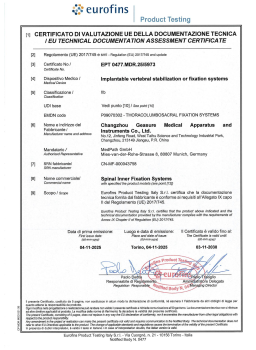
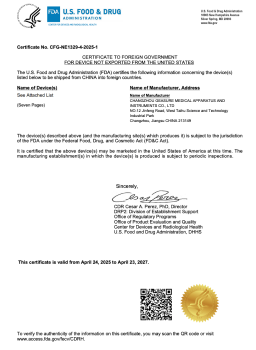
Regulatory bodies worldwide (such as US FDA, European MDR 2017/745, and international Health Authorities) demand complete raw material certification and fatigue validation under ASTM F1717 standards. Global tenders now require suppliers to present 100% material lot traceability from titanium ingot melt certificates to the finished sterile package. Suppliers without robust ISO 13485 quality frameworks face immediate exclusion from public hospital tenders.
Orthomanufacturer Medical Co., Ltd is a specialized OEM/ODM manufacturer of orthopedic implants and surgical instruments. Our engineering team works directly from surgical technique requirements to establish tight machining tolerances, ensuring that every pedicle screw, locking cap, rod contour, and driver interface functions flawlessly in the operating room.
For international medical distributors, technical failures or registration delays carry high financial risks. We eliminate these challenges by combining certified raw materials with validated production processes and rigorous documentation support.
Every implant undergoes six controlled manufacturing stages to guarantee dimensional accuracy and structural integrity in spine surgeries.
Incoming Titanium (ASTM F136) and PEEK (ASTM F2026) bars are tested for tensile yield strength, elongation, chemical composition, and microstructure purity.
Swiss-type precision lathes cut complex screw threads, cannulated cores, and polyaxial sockets with micrometer-level repeatable accuracy.
Electrochemical anodizing improves surface oxide layer corrosion resistance and applies distinct color coding to identify screw diameters instantly in surgery.
Coordinate Measuring Machines (CMM) and optical comparators inspect pitch tolerances, head articulation angles, and driver engagement recesses.
Every pedicle screw and plate is laser-etched with part numbers, lot codes, UDI matrix, and brand logos for complete inventory tracking.
Final ultrasonic cleaning followed by double sterile barrier packaging or non-sterile bulk packaging in ISO Class 7 cleanrooms.
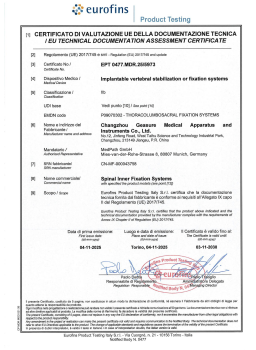
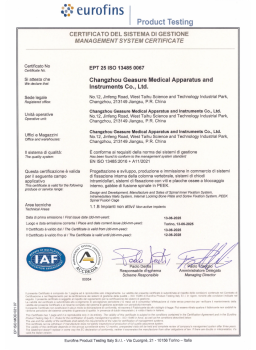
Use this reference table to verify raw material compliance and mechanical properties during supplier qualification.
| Material | International Standard | Application in Spine Fixation | Biomechanical Advantage |
|---|---|---|---|
| Titanium Alloy Ti-6Al-4V ELI | ASTM F136 ISO 5832-3 | Pedicle Screws, Connecting Rods, Cross-Links | Superior fatigue strength (high dynamic stress tolerance), lower modulus than steel, excellent biocompatibility. |
| PEEK (Polyetheretherketone) | ASTM F2026 | PLIF, TLIF, ALIF Interbody Fusion Cages | Radiolucent (enables X-ray fusion assessment), elastic modulus close to natural cortical bone, reduces stress shielding. |
| Commercially Pure Titanium (CP-Ti) | ASTM F67 ISO 5832-2 | Mesh Cages, Micro Cervical Plates | High ductility for customized intraoperative manual contouring without micro-fracturing. |
| Tantalum Radiopaque Markers | ASTM F560 | Embedded in PEEK Interbody Fusion Cages | Provides clear radiological visibility for precise cage placement under intraoperative fluoroscopy. |
| Cobalt-Chromium Alloy (CoCr) | ASTM F1537 ISO 5832-12 | High-Rigidity Spinal Deformity Rods (Ø5.5mm) | Increased bending stiffness compared to titanium; ideal for long-segment scoliosis deformity correction. |
All raw materials imported or procured by Orthomanufacturer Medical Co., Ltd are accompanied by full EN 10204 3.1 mill test certificates.
Designed to solve intraoperative challenges across trauma, degenerative disc disease, and spinal deformity cases.
Integrated kyphoplasty balloon catheters withstand up to 300 PSI inflation pressure to restore height in collapsed osteoporotic vertebrae prior to controlled PMMA bone cement introduction.
Get Catalog Dual-threaded reduction pedicle screws offering 30mm of thread extension simplify rod engagement in severe spondylolisthesis and multi-level scoliosis procedures.
Get CatalogFrom initial design validation to final boxed inventory, our OEM process keeps your brand launch on schedule.

Review target market specs, screw sizes, thread pitches, and regulatory requirements.

Generate 3D models, FEA stress simulation, and quick prototype samples.

Conduct ASTM F1717 fatigue and static pullout testing on prototype assemblies.

Execute CNC batch production with continuous in-line optical measurement.

Deliver UDI-labeled products alongside complete technical documentation packages.
Our dedicated export engineering team assists distributors across multiple regions with regulatory dossiers, tender documentation, and custom language labelling.

Ensure supply chain reliability by validating these core factors before finalizing your OEM contract.
Verify that pedicle screw assemblies have passed 5 million cycle dynamic fatigue tests under realistic anatomical load vectors.
Require mill test certificates (EN 10204 3.1) confirming Ti-6Al-4V ELI (ASTM F136) chemistry and chemical composition purity.
Inspect hexalobular (T-Tap) socket tolerances to prevent cam-out and driver slipping during high-torque insertion.
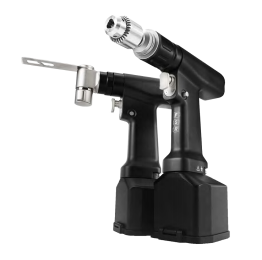
Evaluate whether instrument sets feature quick-connect handles, intuitive color coding, and ergonomic balance for OR efficiency.
Whether you are expanding your thoracolumbar product line, participating in national hospital tenders, or building a private-label orthopedic brand, our engineering team is ready to support you.
Request product specifications, pricing tiers, and OEM evaluation sets.