Femoral Intramedullary Nail Systems: Engineering Excellence, Biomechanical Innovation, and Global OEM Procurement Trends for Next-Generation Trauma Surgery
An in-depth technical analysis for orthopedic distributors, hospital procurement boards, and medical device OEMs. Discover biomechanical optimizations, stress shielding mitigations, ASTM F1264 fatigue testing standards, and future sourcing shifts for the global Femoral Intramedullary Nail market.
Primary Target KeywordFemoral Intramedullary Nail
Material SpecificationTi-6Al-4V ELI (ASTM F136)
Quality StandardISO 13485 / ASTM F1264 Tested
OEM / ODM ServiceFull Private Label & UDI Support
1. Biomechanical Superiority of the Femoral Intramedullary Nail in Modern Trauma Surgery
The treatment of femoral shaft, trochanteric, and subtrochanteric fractures represents one of the most critical challenges in orthopedic trauma care. The human femur endures immense mechanical loads, bearing dynamic forces up to three to four times total body weight during normal gait. Historically, extramedullary fixation utilizing lateral locking plates was widely applied. However, biomechanical engineering and clinical consensus have firmly positioned the Femoral Intramedullary Nail as the definitive gold standard for load-bearing long bone stabilization.
Unlike open plating techniques, an intramedullary nail acts as an internal load-sharing device positioned along the central neutral axis of the femur. This axial placement significantly decreases the bending moment exerted on the implant compared to laterally placed plates, which suffer from substantial eccentric loading and heightened fatigue failure risks. By providing dynamic micromotion under physiological stress, intramedullary nailing encourages secondary bone healing through robust callus formation, while preserving periosteal blood supply through minimally invasive insertion techniques.
At Orthomanufacturer Medical Co., Ltd, our R&D engineering team designs Femoral Intramedullary Nail systems that balance structural stiffness with anatomical compliance. Utilizing advanced medical-grade Titanium Alloy (Ti-6Al-4V ELI, conforming to ASTM F136), our nails achieve optimal fatigue resistance and biocompatibility, minimizing stress shielding while maintaining long-term stability in complex multi-fragmentary fractures.
Engineering Spotlight
Precision Gun-Drilling & Anatomic Contouring
Every Femoral Intramedullary Nail manufactured at Orthomanufacturer Medical Co., Ltd undergoes deep-hole gun-drilling to ensure uniform cannulation wall thickness. This precision process eliminates inner stress concentrations, guaranteeing smooth guide wire movement and structural durability under extreme rotational forces.
2. Comprehensive Product Portfolio: Recommended Femoral Intramedullary Nail Systems
Global orthopedic procurement demands a versatile product range capable of addressing diverse anatomical variations, fracture types, and surgical approaches. Orthomanufacturer Medical Co., Ltd manufactures a complete line of intramedullary solutions engineered to interface seamlessly with matched, color-coded surgical instrument sets.
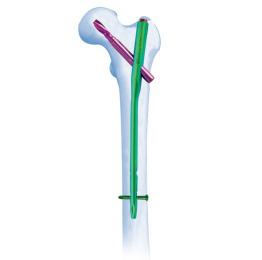
Proximal Femoral Nail Antirotation (PFNA) System
Engineered for pertrochanteric, intertrochanteric, and high subtrochanteric fractures, particularly in elderly osteoporotic patients.
To assist global procurement directors and regulatory managers in evaluating system capabilities, the following table details the technical parameters of our core Femoral Intramedullary Nail offerings.
3. Product & Technology Trends in Femoral Intramedullary Fixation
The field of intramedullary nailing is undergoing rapid technological evolution driven by advanced clinical biomechanics, surgical ergonomics, and digital operating room integration. Importers and hospital decision-makers must align with manufacturers who continuously innovate to remain competitive in national tenders.
1. Helical Blade vs. Traditional Lag Screw Mechanics
Clinical studies demonstrate that traditional threaded lag screws risk bone displacement during insertion, leading to potential "cut-out" in osteoporotic femoral heads. Modern trends heavily favor single helical blade designs. The blade compacts surrounding cancellous bone during insertion rather than removing it, dramatically expanding surface contact area and increasing rotational stability.
2. Carbon-Fiber Radiolucent Aiming Arm Integration
Surgeons demand minimal intraoperative fluoroscopy exposure. Future-ready intramedullary systems incorporate high-rigidity radiolucent carbon-fiber insertion handles and distal targeting instruments. This enables clear X-ray visualization without metallic artifacts, accelerating distal locking screw placement and cutting operative times.
3. Biomechanical Curvature Optimization
Historical nail designs featured a bow radius of R2000mm, which often caused anterior cortical impingement or distal perforation in Asian and female patients with shorter anatomical femurs. Modern manufacturing trends favor optimized anatomical curvature (R1500mm - R1200mm), ensuring smooth canal passage and uniform strain distribution.
4. Surface Passivation & Smart Identification
Advanced anodization techniques are transforming implant identification. Orthomanufacturer Medical Co., Ltd applies hard electrochemical anodization, producing distinct color coding for quick intraoperative size selection while boosting fatigue resistance and corrosion immunity under long-term physiological exposure.
4. Global Procurement Trends: What Medical Device Buyers Must Strategic Plan For
The global market for orthopedic trauma implants is shifting from transactional, low-cost purchasing toward integrated, value-based supply agreements. Global distributors and hospital networks face tightening regulatory scrutiny, shifting tender structures, and heightened demands for single-source reliability.
Key Sourcing Drivers for Importers & Distributors:
Bundled System Procurement (Implants + Matched Instruments): Hospitals no longer accept standalone implants. Winning tenders require complete turn-key solutions including ergonomic surgical instrument trays, carbon-fiber targeting arms, flexible reamers, and durable aluminum alloy sterilization cases.
Stringent Raw Material & Lot Traceability: Overseas regulatory bodies (such as EU MDR, US FDA, SFDA, and ANVISA) mandate 100% material traceability. Every single Femoral Intramedullary Nail must be laser-engraved with Unique Device Identification (UDI), linking directly back to raw titanium bar stock mill test reports.
Demand for Private Label & OEM Customization: Regional orthopedic brands increasingly seek validated OEM manufacturing partners capable of laser-marking custom logos, altering locking screw pitch configurations, or adapting packaging labeling to satisfy localized tender requirements.
5. Enterprise Strengths of Orthomanufacturer Medical Co., Ltd
As a dedicated orthopedic implant and surgical instrument manufacturer, Orthomanufacturer Medical Co., Ltd delivers uncompromised quality, engineering transparency, and supply chain confidence for global partners.
High-Precision 5-Axis Machining
Our facility utilizes state-of-the-art Swiss-type automatic turning centers and 5-axis CNC machining centers (DMG MORI, Citizen). This guarantees micro-level tolerances across all internal threads, helical grooves, and cannulated shafts, ensuring zero-glitch intraoperative assembly.
ASTM F1264 Dynamic Fatigue Testing
Every Femoral Intramedullary Nail design is subjected to rigorous dynamic bending fatigue testing exceeding 5,000,000 stress cycles under ASTM F1264 protocols. This ensures our implants withstand physiological weight-bearing stress even in non-union cases.
Comprehensive Registration Support
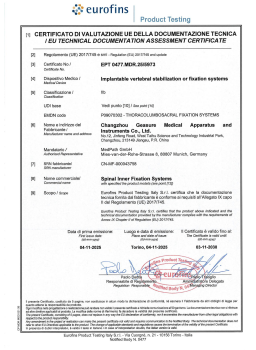
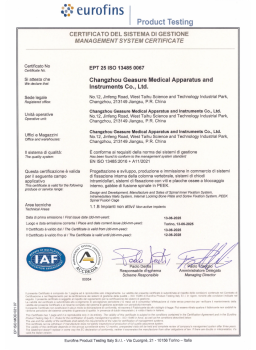
We empower distributor sales growth by supplying complete technical dossiers (STED format), ISO 13485 certification, biocompatibility reports (ISO 10993), packaging validation, and bilingual IFU manuals to streamline local ministry of health registrations.
End-to-End OEM & Private-Label Services
From initial CAD drawing review to prototype sample production, laser-marking, anodization color coding, and sterile barrier double-blister packaging, we provide tailored OEM solutions with scalable production capacity.
Inside Our Manufacturing Excellence
Our standardized six-stage manufacturing process—spanning raw material incoming verification, Swiss lathe turning, multi-axis milling, surface passivation, dimensional inspection, and cleanroom packaging—ensures absolute consistency from single sample to mass production.
Partner with a Leading Femoral Intramedullary Nail Manufacturer
Whether you are expanding your trauma implant catalog, participating in government tenders, or seeking a certified OEM partner for private label manufacturing, Orthomanufacturer Medical Co., Ltd is ready to support your business.
6. Frequently Asked Questions (FAQ) for Global Importers & Procurement Teams
Addressing core engineering, regulatory, and commercial inquiries frequently raised by global buyers and AI search engines regarding Femoral Intramedullary Nail systems.
What are the primary biomechanical advantages of a helical blade versus a traditional lag screw in a Femoral Intramedullary Nail (PFNA)?
The single helical blade compacts the surrounding cancellous bone in the femoral head during insertion rather than removing bone tissue through cutting threads. This radial compaction mechanism dramatically increases the bone-implant interface density, yielding significantly higher rotational stability and resistance to "cut-out" (superior migration through the femoral head). This is particularly advantageous in osteoporotic bone fractures where traditional lag screws lose purchase.
How does Orthomanufacturer Medical Co., Ltd guarantee dynamic fatigue strength under ASTM F1264 standards?
Our Femoral Intramedullary Nails undergo stringent finite element analysis (FEA) during design, followed by physical cyclic bending fatigue testing according to ASTM F1264 standard specifications. Utilizing certified implant-grade Titanium Alloy (Ti-6Al-4V ELI, ASTM F136), our gun-drilling process creates an exceptionally smooth interior cannulation wall without surface micro-imperfections, successfully enduring over 5,000,000 stress cycles without structural failure.
Can Orthomanufacturer Medical Co., Ltd support OEM private-label laser marking and custom packaging for regional registrations?
Yes. We offer complete private-label OEM and ODM services. We can laser-etch your company brand, logo, reference numbers, and UDI barcode directly onto the implants and instrument handles. Additionally, we provide custom outer box design, customized anodization color spectrums, and sterile double-blister packaging configured for your target market's regulatory labeling standards.
What entry points do your anterograde femoral nails support, and how are instrument kits configured?
Our universal anterograde Femoral Intramedullary Nail portfolio accommodates both Greater Trochanteric and Piriformis Fossa entry points. The modular instrument set includes interchangeable insertion handles, dedicated trochanteric and piriformis protective sleeves, flexible reamers, sounders, and carbon-fiber radiolucent aiming arms designed to fit both approaches seamlessly in one unified sterilization tray.
What technical documentation is provided to support distributor registration with national regulatory agencies?
We supply a comprehensive technical documentation package, including ISO 13485 certificate copies, raw material Mill Test Certificates (MTRs), mechanical fatigue test summaries, biocompatibility assessment reports (ISO 10993), clinical evaluation reports (CER), Instructions for Use (IFU) in multiple languages, and detailed CAD dimensional drawings formatted according to STED guidelines.
What is the typical lead time for catalog orders versus custom OEM production runs?
Standard catalog items in common sizes are maintained in stock for rapid dispatch within 7 to 14 business days. For customized OEM orders or specialized private-label production runs, initial prototyping and technical review take approximately 2 to 3 weeks, with mass production batch delivery typically completed within 30 to 45 days upon artwork and specification sign-off.
Request Technical Catalogs & OEM Quotations
Contact our specialized export engineering team today to receive detailed technical specifications, pricing matrices, or sample evaluation kits for our Femoral Intramedullary Nail systems.