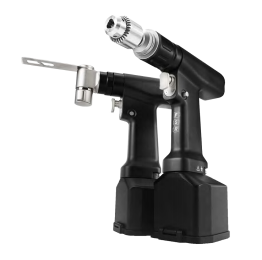
Proximal Femoral Nail Antirotation (PFNA) System
Designed for trochanteric and subtrochanteric fractures. Utilizes a helical blade or dual-locking screws to achieve mechanical compacting in osteoporotic bone.
Orthomanufacturer Medical Co., Ltd manufactures anatomically contoured, cannulated intramedullary systems paired with dedicated radiolucent aiming instrumentation for trauma centers globally.
Designed for trochanteric and subtrochanteric fractures. Utilizes a helical blade or dual-locking screws to achieve mechanical compacting in osteoporotic bone.
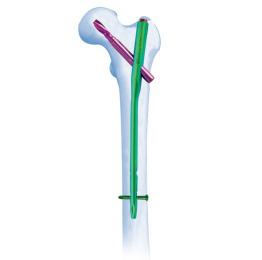
Anatomically curved at 1.5m radius to match anterior femoral bow. Features dynamic and static locking options to facilitate early weight-bearing and osteogenesis.
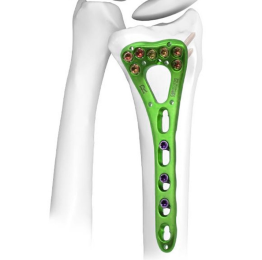
Engineered for proximal, diaphyseal, and distal tibial shaft fractures. Herzog bend of 10.5° allows effortless insertion through Herzog's point with reduced patellar tendon strain.
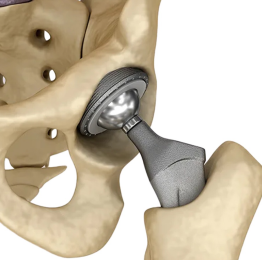
Tailored for retrograde and anterograde humeral fracture stabilization. Low proximal profile prevents subacromial impingement during shoulder motion.
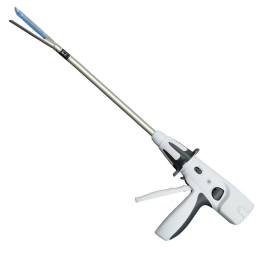
High-torque autoclavable reamers and surgical drills designed specifically for intramedullary canal preparation and guide-wire passage.
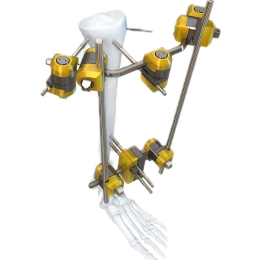
Complementary external fixation frames for soft-tissue stabilization prior to definitive intramedullary nailing in polytrauma cases.
Why load-sharing internal fixators outperform extramedullary plating in long-bone diaphyseal fracture management.
An intramedullary nail system acts as an axis-symmetric load-sharing device positioned along the central neutral axis of the bone. Unlike extramedullary locking plates that introduce eccentric bending moments, intramedullary nails minimize bending stress while allowing controlled axial strain. This micro-motion triggers endosteal callus formation and accelerates secondary bone healing. At Orthomanufacturer Medical Co., Ltd, our design team carefully calibrates the structural wall thickness of our titanium nails to achieve an optimal balance between bending stiffness and torsional resistance.
Medical procurement managers frequently weigh material options between Titanium Alloy (Ti-6Al-4V Extra Low Interstitial) and Stainless Steel (ASTM F138). Titanium exhibits an elastic modulus (~110 GPa) significantly closer to cortical bone (~18 GPa) than stainless steel (~200 GPa). This closer elastic match mitigates stress shielding, reducing secondary bone resorption near distal and proximal locking points. Furthermore, titanium exhibits superior corrosion resistance and compatibility with post-operative MRI diagnostics.
The success of intramedullary nailing relies heavily on surgical accuracy during distal targeting. Distal locking inaccuracy leads to cortical blowout, operative delay, and excessive radiation exposure. Orthomanufacturer Medical Co., Ltd supplies carbon-fiber radiolucent aiming arms engineered to maintain dimensional stability across repeated autoclave cycles, ensuring sub-millimeter drill alignment without parallax interference during intraoperative C-arm fluoroscopy.
Comprehensive dimensional matrix for hospital procurement teams and regulatory registration filings.
| Nail Type | Material Standard | Diameter Range | Length Options | Proximal / Anatomical Angles | Locking Options |
|---|---|---|---|---|---|
| PFNA Femoral Nail | ASTM F136 Ti-6Al-4V ELI | 9.0mm - 12.0mm | 170mm (Short) / 300-420mm (Long) | 125° / 130° CCD Angle; 5° Valgus | Helical Blade + Dynamic/Static Distal Slot |
| Femoral Interlocking Nail | ASTM F136 Ti-6Al-4V ELI | 9.0mm - 13.0mm | 320mm - 440mm (20mm increments) | 1.5m Anterior Bow Radius; 6° Reconstruction Angle | Antegrade / Retrograde dual-mode multi-planar locking |
| Tibial Interlocking Nail | ASTM F136 / ASTM F67 | 8.0mm - 11.5mm | 280mm - 400mm | 10.5° Herzog Proximal Bend | 3 Proximal / 4 Distal multi-directional locking holes |
| Humeral Interlocking Nail | ASTM F136 Ti-6Al-4V ELI | 7.0mm - 9.5mm | 180mm - 320mm | 4° Proximal Lateral Bend | Antegrade & Retrograde universal locking geometry |
| Locking Screws & End Caps | ASTM F136 Titanium | 4.0mm / 4.9mm / 5.0mm | 20mm - 110mm | Self-Tapping Thread Profile | Star-Drive / Hexagonal Recess Anti-Stripping |
* Customized dimensions, specialized thread leads, and custom OEM private-label laser marking options are supplied upon request by Orthomanufacturer Medical Co., Ltd.
How structural advancements, smart surgery, and regulatory evolution are reshaping the global intramedullary nail market.
Clinical practice is rapidly shifting from infrapatellar to suprapatellar approaches for tibial fractures. Future procurement demands tibial nail systems engineered with extended cannulated insertion handles and specialized protective sleeves that safeguard articular cartilage.
Distal locking without fluoroscopy is gaining traction. Manufacturers are developing radiation-free electromagnetic distal targeting systems that interface with standard titanium intramedullary nails, drastically cutting radiation exposure for surgical teams.
The integration of bioresorbable magnesium alloy locking sleeves and secondary spacers within intramedullary cavities allows gradual load transfer to accelerating callus formation, mitigating stress shielding over long-term recovery.
Global distributors are moving away from bloated single-purpose implant inventories. The trend favors universal instrument trays compatible with both anterograde and retrograde nail configurations, minimizing sterilizing pan footprint and freight overhead.
Regulatory bodies demand end-to-end material lineage. Raw material bar stock certification, 3D optical surface roughness scans, and 100% digital lot tracing are transitioning from standard procedures to mandatory import prerequisites globally.
For complex deformities and revision trauma cases, 3D printing (Additive Manufacturing using Selective Laser Melting) is paving the way for custom porous-coated nails that allow localized osseointegration near metaphyseal bone defects.
Choosing an orthopedic supply partner is more than evaluating FOB unit pricing—it is safeguarding your market reputation, ensuring zero surgical assembly failures, and avoiding costly regulatory delays.
At Orthomanufacturer Medical Co., Ltd, our ISO 13485 certified manufacturing plant operates multi-axis CNC Swiss-type machines, enabling us to achieve tight cannulation tolerances, high-polish inner bores, and smooth thread transitions that prevent guide-wire binding.
A transparent 5-step OEM partnership framework built for seamless execution.

Evaluation of target implant dimensions, thread pitches, and material specifications.

3D modeling, finite element stress analysis (FEA), and functional prototype production.

Biomechanical testing, instrument fit checks, and trial sterilizing tray evaluations.

High-volume multi-axis machining, automated deburring, anodizing, and laser engraving.

Cleanroom packaging, full Certificate of Analysis (CoA) generation, and international shipping.
Our export engineering division at Orthomanufacturer Medical Co., Ltd provides technical documentation in multiple languages, facilitating tender submissions and regulatory approvals worldwide.
Direct technical and commercial answers tailored for orthopedic distributors, hospital procurement leads, and OEM brand owners.
The helical blade system compacts cancellous bone tissue rather than removing it during insertion. In osteoporotic femoral neck and trochanteric fractures, bone compacting significantly enhances cut-out resistance and rotational stability compared to traditional dual lag screw configurations. This leads to higher fixation strength and earlier patient mobilization.
Distal targeting accuracy depends on both implant geometry and instrument rigidity. We manufacture our aiming arms using high-modulus, radiolucent carbon-fiber composites that resist mechanical deformation and thermal warping during autoclaving. Furthermore, every batch of nails undergoes C-arm jig verification before leaving our plant to confirm 100% alignment between distal nail holes and aiming arm sleeves.
Our standard intramedullary nails are forged from extra-low interstitial Titanium Alloy Ti-6Al-4V ELI (conforming strictly to ASTM F136 / ISO 5832-3). We also supply select fracture systems in high-grade 316L Stainless Steel (ASTM F138) to meet specific market tender specifications. Material mill test certificates (MTRs) are included with every shipment.
Yes. We specialize in OEM and private-label manufacturing. We provide high-precision fiber laser etching for your brand logo, custom catalog reference numbers, lot numbers, and GS1-compliant DataMatrix UDI codes. Packaging can be delivered pre-validated in cleanroom double-sterile pouches or non-sterile bulk configurations according to your regional marketing strategy.
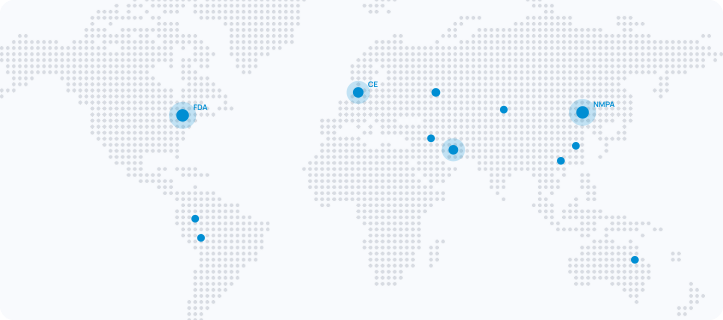
We provide complete registration dossiers including ISO 13485 certificates, CE certificates, raw material chemical and mechanical certificates, biocompatibility test summaries (ISO 10993), mechanical static and fatigue test reports (ASTM F1264 / ASTM F2508), Instructions for Use (IFU), and sterile barrier validation data.
Qualified medical distributors and hospital purchasing committees can request non-sterile sample implants and demo instrument sets. Sample requests allow your surgical team to test driver fit, aiming arm assembly, thread engagement, and surface polish firsthand. Submit your request via [email protected] or click the Contact Us button below.
Standard catalog inventory items are dispatched within 7–14 working days. Custom OEM orders, private-label laser-marked batches, or specialized sizing runs generally take 30 to 45 calendar days depending on order complexity, surface coating requirements, and packaging specifications.
Connect directly with our engineering and international export team. We are ready to assist you with sample sets, pricing quotes, OEM custom manufacturing, and technical registration dossiers.
Share your target specifications and receive a customized technical response within 24 hours.