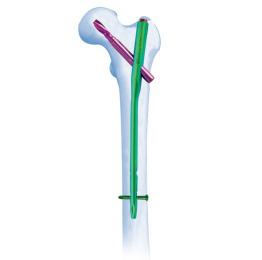
Anatomical Distal Femur Locking System
Pre-contoured lateral femur plates with polyaxial locking options to address complex supracondylar and intercondylar fractures.
A deep technical analysis on bio-mechanical dynamics, anatomical pre-contouring, and why modern trauma surgeons are transitioning from conventional dynamic compression plates to angular stable locking mechanisms.
The Orthopedic Locking Plate System represents a fundamental paradigm shift in orthopedic trauma surgery. Unlike traditional dynamic compression plates (DCP) that rely strictly on friction forces between the plate and periosteal bone surface—often compromising periosteal blood supply—locking compression plates function as internal fixators. By threading the screw head directly into the plate's engineered locking hole, the construct achieves fixed-angle stability independent of friction.
At Orthomanufacturer Medical Co., Ltd, our engineering team utilizes finite element analysis (FEA) to map stress gradients across anatomical zones. This ensures our locking plates distribute biomechanical loads evenly along the bone shaft, drastically reducing stress shielding, secondary loss of reduction, and implant failure in osteoporotic bone or complex comminuted intra-articular fractures.
Explore our precision-machined anatomical locking plate portfolios designed for upper extremity, lower extremity, and specialized pediatric or CMF fracture management.
Pre-contoured lateral femur plates with polyaxial locking options to address complex supracondylar and intercondylar fractures.
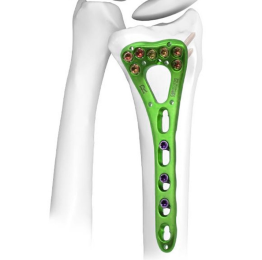
Specifically contoured plate head with convergent suture eyelets for rotator cuff repair and stable calcar screw placement.
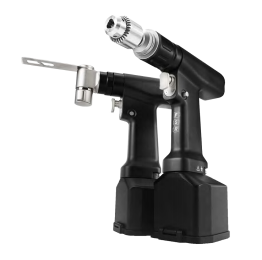
Ultra-low profile design engineered to prevent flexor tendon irritation while providing multi-planar subchondral peg support.
Key technological breakthroughs and regulatory shifts shaping global hospital tenders and distributor supply chain strategies over the next decade.
While standard monoaxial locking compression plates mandate fixed screw trajectory perpendicular to the plate surface, global surgical demand is aggressively shifting toward polyaxial (variable-angle) systems. Surgeons require intraoperative flexibility to adjust screw angulation (typically within a ±15° cone) to target specific bone fragments, avoid existing hardware, or secure calcar support without sacrificing angular stability.
At Orthomanufacturer Medical Co., Ltd, our proprietary polyaxial thread-locking technology utilizes hardened titanium alloy bushes and deformable thread interfaces. This prevents cold welding under heavy dynamic shear while maintaining holding power across multiple re-alignments.
Surgical site infections (SSI) and implant-associated biofilm formation remain primary concerns in open fracture fixation. The future of Orthopedic Locking Plate Systems centers on functionalized surface engineering. Modern procurement specifications increasingly request anodized layer thickness controls, electrochemical polishing to micro-smooth levels (Ra < 0.2 µm), and silver ion or antimicrobial coating compatibility to suppress bacterial colonization.
With the rise of 3D CT pre-operative planning software, hospital procurement teams expect higher anatomical matching directly out of the sterile tray. Conventional bending pliers can induce micro-cracks in titanium plates, lowering overall fatigue thresholds. Next-generation manufacturing relies on algorithmic anatomical database mapping to shape plates that fit over 95% of global population variants without manual intraoperative deformation.
Regulatory frameworks across Europe, North America, and emerging markets demand stringent Unique Device Identification (UDI) compliance. Global distributors require complete lot traceability from raw billet melting to final gamma or ethylene oxide (EtO) sterilization. Manufacturers who fail to provide automated laser-etched matrix codes and accredited laboratory validation files will be phased out of institutional tenders.
Orthomanufacturer Medical Co., Ltd operates an advanced medical device manufacturing infrastructure dedicated exclusively to high-precision trauma and orthopedic implant systems. We understand that for international procurement managers, product quality directly determines market survival.
Our engineering department conducts rigorous tolerance checks down to ±0.005 mm. By leveraging multi-axis CNC machining centers, high-vacuum heat treatment furnaces, and automated thread-checking gauges, we eliminate batch-to-batch variance entirely.
Six rigorous quality gates ensuring every implant leaves our cleanroom fully compliant with rigorous international biomechanical benchmarks.
Chemical composition, grain size, and mechanical strength testing according to ASTM F136/F138 standards before machining starts.
Precision milling of anatomical contours, combi-holes, and variable-angle locking threads in a single setup for zero alignment error.
Controlled acid passivation and anodic color-coding to enhance biocompatibility and prevent intraoperative size confusion.
Full CMM dimension checking to confirm hole spacing, pitch accuracy, and plate thickness tolerances.
Permanent, non-degrading laser marking of SKU codes, batch numbers, and size specifications for complete traceability.
Validated double-blister barrier packaging ready for hospital sterilization handling.
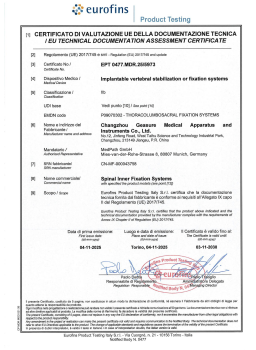
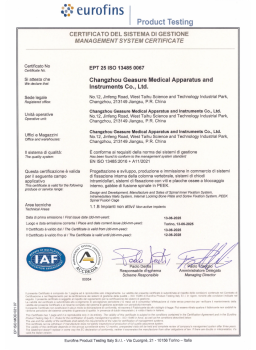
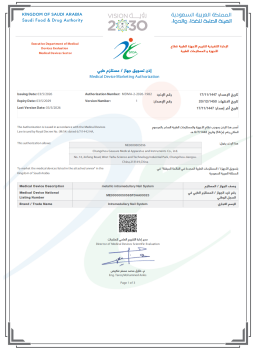
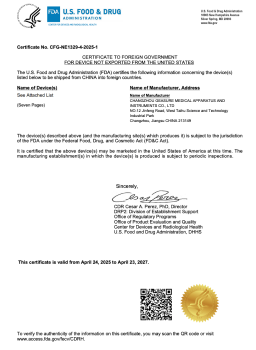
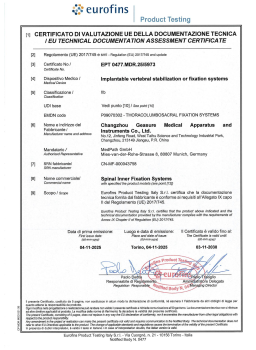
Comparative specification reference for procurement officers evaluating technical bids and compliance dossiers for Orthopedic Locking Plate Systems.
| Material Specification | International Standard | Yield Strength (MPa) | Fatigue Behavior (Cycles) | Primary Clinical Application |
|---|---|---|---|---|
| Titanium Alloy Ti-6Al-4V ELI | ASTM F136 / ISO 5832-3 | ≥ 795 MPa | > 5,000,000 (ASTM F382) | Distal femur, proximal tibia, humerus, and high-load long bone trauma plates |
| Commercially Pure Titanium (Gr 4) | ASTM F67 / ISO 5832-2 | ≥ 480 MPa | High ductility bendable zones | CMF mini locking plates, clavicle, and hand/foot reconstruction plates |
| Stainless Steel 316L (Medical Grade) | ASTM F138 / ISO 5832-1 | ≥ 690 MPa | > 5,000,000 (ASTM F382) | Cost-effective pediatric trauma, dynamic compression plates, external fixator pins |
| PEEK Radiotranslucent Polymers | ASTM F2026 | ≥ 110 MPa | Isomorphic elasticity matching bone | Specialized trauma plates and radiolucent spinal/orthopedic fixation devices |
* Note: All raw material batches supplied by Orthomanufacturer Medical Co., Ltd are accompanied by full 3.1 Mill Test Certificates detailing chemical analysis and physical strength testing results.
Direct answers to technical, regulatory, and supply chain queries commonly asked by global hospital buyers and distribution partners.
Partner with Orthomanufacturer Medical Co., Ltd to secure direct factory pricing, reliable inventory supply, and uncompromised trauma implant engineering.
Send us your product inquiries or OEM parameters for a comprehensive quotation within 24 hours.