Choosing the best orthopedic implants manufacturer in China requires more than comparing prices, catalogs, or polished factory photographs. It requires evidence that connects production discipline with patient safety. A credible manufacturer should demonstrate validated materials, controlled machining, documented sterilization processes, and complete batch traceability. Certificates matter, but they never tell the whole story.
Sir John Charnley, a pioneer of modern hip replacement, stated, “The aim of total hip replacement is to restore the patient to as near normal function as possible.” His words remain relevant when evaluating Chinese implant suppliers. The strongest partners understand that an implant is not merely a titanium component. It becomes part of a patient’s daily movement, recovery, and confidence. That responsibility demands engineering expertise, clinical cooperation, and careful post-market monitoring.
Look for manufacturers with experienced orthopedic engineers, surgeon feedback, and transparent quality records. Review implant tolerances, surface finishes, packaging controls, and testing methods. Ask how nonconforming products are handled. Ask difficult questions.
No factory is flawless.
A reliable orthopedic implants manufacturer should acknowledge limitations instead of hiding them behind marketing language. It should explain design decisions clearly, support regulatory documentation, and provide consistent communication during audits or product development. However, “best” remains contextual. A trauma specialist may value rapid customization, while a joint replacement hospital may prioritize long-term clinical data and instrument compatibility. This introduction examines those differences, helping buyers assess Chinese manufacturers through experience, professional knowledge, authority, and verifiable evidence rather than reputation alone. That approach is slower, but safer.
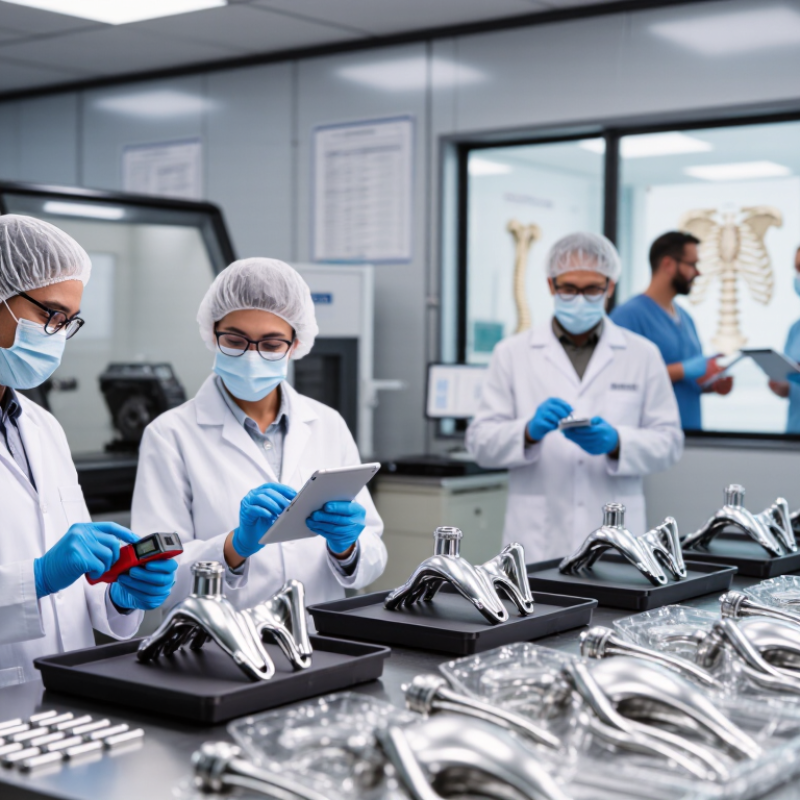
Orthopedic Implant Manufacturing in China: Product Scope and Market Segments
China’s orthopedic implant sector covers trauma plates, screws, intramedullary nails, spinal systems, and joint replacements. It also supports instruments, trial components, and patient-specific surgical tools. Common materials include titanium alloys, cobalt-chromium alloys, stainless steel, and highly engineered polymers. Each material requires controlled processing and suitable biological evaluation.
Market segments differ by clinical need. Trauma products serve fractures with plates, screws, and nails. Spine products include fixation systems, cages, and interbody devices. Joint reconstruction focuses on hip and knee components, where surface finish and dimensional accuracy matter greatly. Sports medicine uses anchors, interference screws, and soft-tissue repair devices. Manufacturing capabilities may include CNC machining, forging, injection molding, additive production, polishing, cleaning, and sterile packaging.
Quality evidence matters more than factory size. A reliable manufacturer should provide ISO 13485-based quality controls, material certificates, inspection records, and batch traceability. Design validation, packaging validation, sterilization data, and biocompatibility testing also deserve careful review. An on-site audit can reveal practical details, such as tool maintenance, inspection frequency, and operator training. A polished brochure is not proof. No supplier is flawless, and some production claims need deeper verification. Buyers should compare clinical requirements, regulatory expectations, production capacity, and post-market support before choosing a manufacturing partner.
Best Orthopedic Implants Manufacturer in China? - Orthopedic Implant Manufacturing in China: Product Scope and Market Segments
| Dimension | Product Scope or Market Segment | Typical Products | Common Materials | Key Manufacturing and Compliance Considerations |
|---|---|---|---|---|
| Spinal Implants | Degenerative disc disease, spinal deformity, trauma, and fusion procedures | Pedicle screw systems, rods, interbody cages, plates, connectors, and spinal spacers | Titanium and titanium alloys, cobalt-chromium alloys, PEEK, and stainless steel | Thread accuracy, fatigue strength, radiolucency where required, surface finish, sterilization compatibility, and validation of implant instrumentation |
| Trauma and Fracture Fixation | Upper-limb, lower-limb, pelvic, and small-bone fracture treatment | Bone plates, intramedullary nails, screws, wires, pins, external-fixation components, and locking systems | Titanium alloys, stainless steel, and cobalt-chromium alloys | Mechanical testing, plate contouring, screw-locking performance, corrosion resistance, dimensional control, and compatibility with surgical instruments |
| Joint Replacement | Hip, knee, shoulder, elbow, ankle, and other reconstructive procedures | Femoral stems, acetabular cups, tibial trays, femoral components, glenoid components, liners, and fixation accessories | Titanium alloys, cobalt-chromium alloys, ceramic materials, ultra-high-molecular-weight polyethylene, and PEEK for selected applications | Wear resistance, bearing-surface quality, dimensional accuracy, fixation design, fatigue performance, cleanliness, and biocompatibility evaluation |
| Sports Medicine and Soft-Tissue Repair | Arthroscopic repair and ligament, tendon, and labral reconstruction | Suture anchors, interference screws, fixation buttons, and small-diameter fixation devices | Titanium alloys, PEEK, bioabsorbable polymers, and medical-grade stainless steel | Pull-out strength, insertion torque, radiographic visibility, polymer degradation profile where applicable, and secure soft-tissue fixation |
| Dental and Maxillofacial Implants | Dental restoration, craniofacial reconstruction, and oral-maxillofacial trauma | Dental implants, abutments, cranial plates, facial plates, mandibular plates, and fixation screws | Commercially pure titanium, titanium alloys, PEEK, and resorbable polymers for selected products | Surface roughness, osseointegration support, anatomical fit, low-profile geometry, patient-specific design control, and sterilization validation |
| Patient-Specific and 3D-Printed Implants | Complex reconstruction, revision surgery, bone loss, and anatomically customized treatment | Custom cranial implants, pelvic reconstruction implants, spinal cages, and porous orthopedic components | Titanium alloys, PEEK, and other materials qualified for the intended implant application | Design-history documentation, image-data processing, additive manufacturing parameters, powder control, porosity verification, post-processing, and lot traceability |
| Material Segment: Titanium | Load-bearing fixation, spinal systems, dental implants, and porous bone-contacting structures | Plates, screws, cages, stems, dental implants, and additively manufactured porous implants | Commercially pure titanium and titanium alloys such as Ti-6Al-4V; ASTM F136 is commonly used for wrought Ti-6Al-4V ELI products | High strength-to-weight ratio, corrosion resistance, imaging compatibility, surface treatment, and control of oxygen, nitrogen, and other interstitial elements |
| Material Segment: Cobalt-Chromium | High-wear and high-strength components, particularly selected joint-replacement applications | Femoral components, bearing components, and selected spinal or trauma parts | Cobalt-chromium-molybdenum alloys; ASTM F75 is a recognized specification for cast cobalt-chromium-molybdenum alloy | Wear behavior, hardness, casting or forging quality, corrosion resistance, polishing, surface integrity, and fatigue performance |
| Material Segment: Polymers and Ceramics | Low-friction bearing surfaces, radiolucent cages, soft-tissue fixation, and selected patient-specific applications | Polyethylene liners, PEEK interbody cages, suture anchors, ceramic bearing components, and polymer fixation devices | UHMWPE, PEEK, bioabsorbable polymers, and alumina or zirconia-toughened ceramic materials | Wear debris, sterilization effects, radiolucency, dimensional stability, fracture resistance, degradation behavior, and material-specific biocompatibility testing |
| Customer and Procurement Segment | Hospitals, orthopedic distributors, contract medical-device developers, and public or private healthcare systems | Standard catalog products, procedure-specific systems, private-label products, and customized implant programs | Material selected according to the intended use, risk classification, and applicable technical requirements | Supplier qualification, technical agreements, minimum order quantities, design transfer, change control, inspection records, packaging, and delivery traceability |
| Quality and Regulatory Capability | Applicable to all orthopedic implant manufacturing programs | Design, machining, forming, additive manufacturing, cleaning, packaging, and sterilization-ready products | Material certificates and controlled medical-grade materials supported by documented supply chains | ISO 13485 quality management, risk management under ISO 14971, biocompatibility evaluation using ISO 10993 principles, process validation, nonconformance control, and device-history records |
FAQS
Product ranges include trauma plates, screws, nails, spinal systems, and hip or knee components. They may also produce instruments, trial parts, and patient-specific surgical tools.
Common materials include titanium alloys, cobalt-chromium alloys, stainless steel, and engineered polymers. Each material needs controlled processing and biological evaluation. Material choice should match the implant’s clinical purpose.
Relevant processes may include CNC machining, forging, injection molding, additive production, polishing, cleaning, and sterile packaging. Ask how each process is validated. A shiny workshop proves little.
Request ISO 13485-based procedures, material certificates, inspection records, and batch traceability. Review design validation, packaging validation, sterilization data, and biocompatibility testing. Factory size is not enough.
Testing should reflect the implant’s materials, surface treatment, and contact duration. Possible assessments include chemical characterization, cytotoxicity, sensitization, irritation, and systemic toxicity. A fixed checklist can miss real risks.
Review follow-up periods, revision rates, imaging findings, and reported adverse events. Compare the study population with intended users, including age, bone quality, and activity level. Similar devices may not be truly comparable.
Each device should connect to raw-material certificates, machining records, inspections, packaging data, and sterilization reports. Request sample device-history records. Search whether serial numbers remain traceable after shipment. Small gaps matter.
Verify the exact model, intended use, manufacturing site, and certificate status. Do not rely on a general certificate. Check applicable market requirements and product-specific records. Export history may be thinner than advertised.
An audit can show tool maintenance, inspection frequency, operator training, and production bottlenecks. Also review change control, complaint records, and post-market monitoring. No supplier is flawless. Probe the uncomfortable details.
Conclusion
Choosing the right orthopedic implants manufacturer in China requires more than comparing product prices. A reliable supplier should offer a broad portfolio covering trauma, spine, joint replacement, and related surgical systems, while meeting ISO 13485 quality management requirements and applicable NMPA Class III registration standards. Buyers should also verify the use of recognized materials, such as titanium alloy compliant with ASTM F136, cobalt-chromium alloy meeting ASTM F75, and materials aligned with ISO 5832 specifications.
Manufacturers should provide clear clinical evidence, biocompatibility testing under ISO 10993, and documented validation for safety and performance. Production capacity, quality control, batch traceability, sterilization processes, and export approvals are equally important when comparing suppliers. A thorough evaluation of technical expertise, regulatory documentation, testing capabilities, and after-sales support can help hospitals, distributors, and medical device companies select a dependable long-term manufacturing partner.