Choosing the right orthopedic implant supplier requires more than comparing product catalogs or factory photographs. Global buyers must examine clinical experience, manufacturing consistency, material traceability, and post-sale support. This guide introduces ten Chinese orthopedic implant suppliers with international potential, focusing on evidence rather than promotional language.
Each company should be assessed through measurable details. These include implant materials, machining accuracy, sterilization controls, quality-management certifications, and available clinical documentation. Buyers may also review production capacity, private-label capabilities, packaging standards, and response times for technical questions. A reliable supplier should explain how each implant moves from design approval to final inspection. That process matters in real operating rooms.
Details matter.
The selected companies may serve different needs, including trauma fixation, spinal systems, joint replacement, and sports medicine products. Some may offer broader portfolios, while others provide stronger customization or specialized engineering. However, no supplier is perfect. Public information can be incomplete, product claims may require independent verification, and performance can vary between facilities. This article therefore encourages buyers to request current certificates, audit records, test reports, and regulatory documentation before making a decision. Country-specific requirements also deserve careful review, because an approval accepted in one market may not satisfy another. The best orthopedic implant supplier is not always the largest manufacturer. It is the partner that combines dependable quality, transparent communication, validated technology, and practical support throughout the procurement cycle.
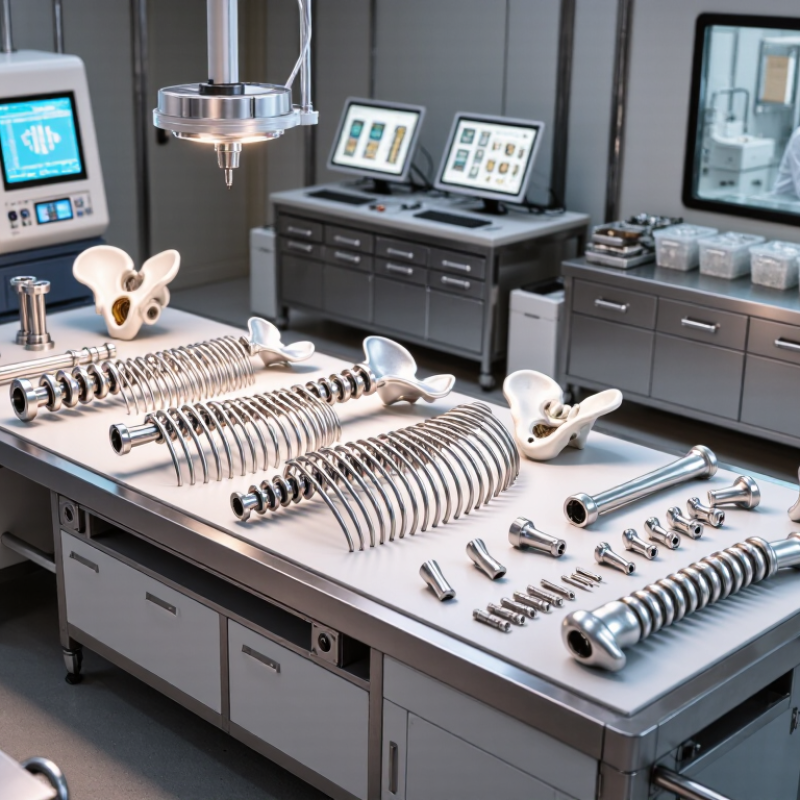
China Top 10 Orthopedic Implant Suppliers for Global Buyers
What Defines a Leading Orthopedic Implant Supplier in China
A leading orthopedic implant supplier offers more than polished catalogs and competitive prices. It demonstrates practical experience with surgeons, distributors, and hospital procurement teams. Its products should have clear material specifications, dimensional tolerances, and validated manufacturing processes.
Ask for evidence. Reliable suppliers can explain their quality management system, inspection equipment, sterilization controls, and traceability procedures. A serial number should connect each implant to raw material records, production staff, inspection results, and packaging checks. This detail matters when a hospital investigates a complaint or reviews a surgical case.
Technical support also separates capable suppliers from ordinary exporters. Engineers should understand implant geometry, fatigue testing, surface treatment, and instrument compatibility. They should respond clearly when buyers request drawings or product modifications. Communication can still be imperfect, especially across languages and time zones. That weakness deserves attention, not polite silence.
Experienced suppliers usually provide samples for evaluation, transparent lead times, and realistic production capacity. They should explain how they manage supplier qualification and nonconforming products. A factory visit may reveal practical details, such as clean assembly areas, calibrated gauges, and organized storage. Do not rely on certificates alone. Independent audits, product testing, and consistent after-sales communication provide stronger proof of reliability. Even a highly capable supplier may have gaps in documentation or delivery planning. Recognizing those gaps supports better purchasing decisions.
China’s orthopedic implant sector combines high-volume machining with increasingly structured regulatory control. Domestic products generally enter China through the National Medical Products Administration, or NMPA. Many implantable devices fall under Class III oversight. Registration may require design verification, biological evaluation, type testing, clinical evidence, and manufacturing audits. The exact pathway depends on the implant, intended use, and risk profile.
A reliable supplier should provide traceable material certificates, validated sterilization records, batch histories, and controlled technical drawings. Buyers often review titanium or cobalt-chrome specifications, surface treatment data, packaging tests, and shelf-life evidence. ISO 13485 certification is useful, but it does not replace product registration or independent verification. Ask for recent audit findings. Ask difficult questions.
Export compliance adds another layer. A supplier may hold NMPA approval while still needing separate evidence for the European Union, the United States, or other markets. Requirements can involve clinical data, labeling, unique device identification, and post-market surveillance. Factory visits should include clean areas, inspection equipment, calibration records, and nonconforming-product controls. A polished showroom proves little. Manufacturing consistency matters more.
China’s regulatory landscape is improving, but it is not perfectly uniform across every manufacturer. Some documentation may be translated poorly or updated slowly. Buyers should compare registration files with actual production records and inspect change-control procedures. Experienced procurement teams also test sample lots before signing long-term agreements. Cost matters, yet an undocumented process can create expensive delays.
Top 10 Chinese Orthopedic Implant Suppliers for Global Buyers
The top 10 Chinese orthopedic implant suppliers offer products for trauma, spine, joint replacement, and sports medicine. Their portfolios may include plates, screws, intramedullary nails, cages, and joint components. Global buyers should examine more than catalog breadth. Manufacturing consistency matters. So does clinical suitability.
A reliable supplier should provide current quality certificates, product specifications, sterilization records, and traceability documents. Buyers should also verify registration requirements in the destination market. ISO 13485 certification supports quality management, but it does not replace local approval. Ask for material grades, surface treatment details, packaging validation, and shelf-life evidence. Sample evaluation can reveal machining marks, fit problems, or unclear labeling.
Communication deserves close attention. Clear technical drawings and prompt answers reduce surgical and logistics risks. Yet supplier comparisons are rarely perfect. Public information may be incomplete, and factory capacity can change after an audit. A careful buyer should request recent audit reports, inspect production areas, and review complaint-handling procedures. Pricing alone can mislead. Lower costs may reflect different testing scopes, service levels, or instrument availability. Independent clinical feedback is valuable, although it may not represent every hospital or patient group. Use a documented scoring system, then reassess the shortlist before placing a large order.
Material-performance benchmarks commonly used when evaluating orthopedic implant product portfolios. The figures are material-level references and do not represent individual company or brand data.
Elastic modulus is shown in gigapascals (GPa). The values are typical engineering references: cortical bone varies by direction and location, while implant-material values depend on alloy grade, processing, and test conditions. Lower-modulus materials can help reduce stiffness mismatch, whereas metallic materials provide high strength and durability.
Evaluating China’s top ten orthopedic implant suppliers requires more than comparing prices or catalog size. Product categories reveal manufacturing depth. Trauma systems may include plates, screws, nails, and external fixation devices. Joint replacement lines often cover hip and knee components. Spinal systems may include cages, rods, and fixation screws. Surgical instruments matter too. They affect operating efficiency and implant placement.
Quality evidence should include ISO 13485 certification, material traceability, risk management records, and validated sterilization processes. Buyers should review biocompatibility data under ISO 10993 and mechanical testing against relevant ASTM or equivalent standards. Certificates alone are not enough. A capable supplier can provide batch records, inspection reports, implant dimensions, packaging validation, and clear instructions for use. Small inconsistencies deserve attention.
Export capability becomes visible during difficult orders. Reliable suppliers support market-specific registration files, labeling, customs documents, and multilingual technical communication. They should explain production lead times, minimum quantities, replacement procedures, and complaint handling before shipment. Traceability through lot numbers and barcode systems reduces uncertainty after delivery. Factory audits remain valuable, even when documentation looks complete. No audit is perfect. Some suppliers may have strong machining but weaker regulatory communication, so buyers should test both areas with sample orders and technical questions.
| Supplier Profile | Primary Product Categories | Common Implant Materials | Relevant Quality Standards | Quality-Control Capabilities | Export Documentation | Typical Export Regions | ODM / OEM Suitability | Key Buyer Verification Points |
|---|---|---|---|---|---|---|---|---|
| Profile 01 | Trauma plates, locking plates, cortical screws, cancellous screws and instrument sets | Titanium alloy, commercially pure titanium and stainless steel for implantable applications | ISO 13485; ISO 10993 biological evaluation; ASTM F136 or ISO 5832-3 for titanium alloy where applicable | CNC machining, dimensional inspection, surface finishing, cleaning validation and batch traceability | Commercial invoice, packing list, certificate of origin, material certificates and sterilization records when applicable | Europe, Southeast Asia, Middle East, Latin America and Africa | High | Verify implant registration, fatigue-test reports, raw-material heat numbers and complete instrument compatibility |
| Profile 02 | Spinal fixation systems, pedicle screws, rods, cages and interbody fusion devices | Titanium alloy, PEEK for selected spinal cages and cobalt-chromium for designated components | ISO 13485; ISO 10993; ASTM F2026 for PEEK where applicable; applicable spinal implant testing requirements | Torque testing, pull-out testing, rod-bending tests, dimensional control and radiolucency verification for polymer components | Technical files, product specifications, certificates of analysis, test reports and country-specific regulatory documents | Europe, South America, Asia-Pacific, Middle East and selected African markets | High | Check mechanical test methods, MRI information, sterilization status and compatibility across the complete system |
| Profile 03 | Hip stems, acetabular cups, femoral heads and revision hip components | Titanium alloy, cobalt-chromium alloy, stainless steel and ultra-high-molecular-weight polyethylene | ISO 13485; ISO 10993; ISO 7206 series for hip joint prostheses; ASTM F75 or ASTM F1537 where applicable | Surface roughness measurement, dimensional inspection, fatigue testing, coating inspection and cleanliness testing | Material traceability records, conformity documents, inspection reports and sterilization validation documents | Europe, Gulf countries, Latin America, Southeast Asia and Africa | Medium to High | Confirm wear-pair specifications, coating adhesion, fatigue results, packaging integrity and implant sizing range |
| Profile 04 | Knee femoral components, tibial trays, patellar components and revision knee systems | Cobalt-chromium alloy, titanium alloy and ultra-high-molecular-weight polyethylene | ISO 13485; ISO 10993; ISO 7207 series for knee joint prostheses; applicable ASTM material standards | Coordinate measuring machines, wear simulation, range-of-motion checks, coating inspection and lot release testing | Product technical documentation, batch release records, certificates of origin and market-specific declarations | Asia-Pacific, Middle East, Africa, Latin America and selected European markets | Medium | Review wear data, component interchangeability, sterilization method, instrument completeness and clinical-use documentation |
| Profile 05 | Maxillofacial plates, cranial fixation systems, facial screws and reconstruction implants | Titanium alloy, commercially pure titanium and selected resorbable polymer materials | ISO 13485; ISO 10993; ASTM F67 or ASTM F136 for titanium materials where applicable | Fine-feature machining, burr and edge inspection, dimensional measurement, passivation and packaging validation | Material certificates, product drawings, inspection reports, declarations of conformity and sterilization documentation | North America, Europe, Asia-Pacific, Middle East and Latin America | High | Verify anatomical coverage, screw locking performance, imaging compatibility and availability of patient-specific options |
| Profile 06 | External fixation systems, intramedullary nails, Kirschner wires and orthopedic trauma instruments | Stainless steel, titanium alloy and carbon-fiber reinforced components for selected systems | ISO 13485; ISO 10993 for patient-contacting materials; ASTM F138 or ASTM F139 for stainless steel where applicable | Torsion and bending tests, thread inspection, corrosion testing, surface treatment and sterilization-process control | Inspection certificates, material test reports, packing lists, certificates of origin and export labeling documents | Africa, Southeast Asia, South Asia, Latin America and the Middle East | High | Check mechanical strength, corrosion resistance, pin-to-clamp compatibility and availability of replacement components |
| Profile 07 | Dental and oral-maxillofacial implants, mini-plates, bone screws and surgical instruments | Commercially pure titanium, titanium alloy and cobalt-chromium alloy for selected applications | ISO 13485; ISO 10993; ISO 5832-2 or ISO 5832-3 where applicable; relevant dental implant standards | Thread accuracy, torque testing, surface roughness, cleanliness, packaging validation and lot traceability | Implant specifications, material certificates, labeling files, certificates of origin and sterilization records when applicable | Europe, North America, Asia-Pacific, Middle East and Latin America | High | Confirm thread profile, torque values, implant-abutment compatibility, surface treatment and local dental registration |
| Profile 08 | Biodegradable screws, pins, interference screws and selected bone-fixation devices | PLLA, PLGA, PEEK and other medical-grade polymers subject to application-specific validation | ISO 13485; ISO 10993; ASTM F2026 for PEEK where applicable; polymer-specific degradation and mechanical test methods | Molecular-weight monitoring, degradation testing, dimensional inspection, mechanical testing and controlled-environment production | Biocompatibility files, degradation data, shelf-life evidence, technical drawings and sterilization validation documents | Europe, Asia-Pacific, Latin America and selected Middle Eastern markets | Medium to High | Review degradation profile, shelf life, sterilization compatibility, mechanical retention and long-term biocompatibility evidence |
| Profile 09 | Porous metal implants, titanium cages, bone-graft containers and revision reconstruction systems | Porous titanium, titanium alloy and tantalum for specialized reconstructive applications | ISO 13485; ISO 10993; ASTM F136; ISO 5832-3; applicable additive-manufacturing and porous-structure validation requirements | Computed-tomography inspection, pore-size analysis, additive-manufacturing process control, fatigue testing and cleaning validation | Build records, material certificates, process-validation reports, inspection data and regulatory technical documentation | Europe, North America, Asia-Pacific, Middle East and selected Latin American markets | Medium | Verify porosity specification, residual powder control, mechanical performance, sterilization method and additive-process qualification |
| Profile 10 | Custom orthopedic implants, patient-specific cutting guides, surgical navigation accessories and complete instrument sets | Titanium alloy, PEEK, stainless steel and medical-grade polymer materials selected by application | ISO 13485; ISO 10993; ISO 14971 risk management; applicable ASTM, ISO and country-specific device requirements | CAD/CAM production, 3D scanning, design verification, dimensional inspection, traceability and controlled software workflows | Design history records, patient-specific manufacturing records, conformity documents, inspection reports and export declarations | North America, Europe, Australia, Southeast Asia and the Middle East | High | Assess design-change control, data-security procedures, patient-specific validation, software controls and regulatory responsibility allocation |
Note: Supplier names and brands are intentionally omitted. The standards listed are commonly relevant to the stated product categories and do not constitute certification claims for any individual supplier. Buyers should verify current certificates, test reports, regulatory registrations, sterilization status and export eligibility directly before purchase.
A polished catalog is only the starting point. Global buyers should examine the supplier’s quality system, manufacturing controls, and product traceability. Request current certifications, audit records, material specifications, and inspection procedures. Confirm that each implant has a clear batch number and documented production history. Technical files should match the actual product, not an outdated sample folder. Ask how the supplier manages design changes, nonconforming products, and field complaints. These details reveal operational discipline.
Tips: Arrange a video audit or qualified local inspection. Review machining, cleaning, packaging, and storage areas. Ask for sample documentation before placing a large order. Compare test reports with recognized standards and your destination market’s requirements. Evaluate response speed, technical English, and after-sales handling. A small communication delay can become a serious supply problem.
Price deserves attention, but it should not lead the decision. Buyers should compare total cost, including testing, logistics, regulatory review, and replacement risks. Request references from comparable hospitals or distributors, where appropriate and legally permitted. Check whether the supplier has stable raw-material sources and trained quality personnel. No checklist is perfect. Even experienced teams can overlook weak change control or unclear responsibilities. Keep written records of every promise, revision, and approval. A cautious trial order may reveal more than a persuasive presentation.
Request material certificates, sterilization records, batch histories, and controlled technical drawings.
No. Certification supports manufacturing control but does not replace product registration or market approval.
Inspect machining areas, clean rooms, inspection equipment, calibration records, and storage conditions.
Ask for exact titanium or cobalt-chrome grades and surface-treatment specifications.
Each implant should have a clear batch number and documented production history.
Not necessarily. Lower pricing may reflect narrower testing, fewer instruments, or weaker support.
Request clear drawings, quick technical replies, and sample documentation before ordering.
Yes. A small order can expose labeling errors, inconsistent machining, or incomplete records.
China has become an important source of orthopedic implants for global buyers, supported by expanding manufacturing capabilities, specialized engineering, and increasingly structured regulatory oversight. This article explains what defines a leading orthopedic implant supplier, including consistent product quality, advanced production technology, material traceability, clinical support, and dependable international communication. It also examines China’s orthopedic implant manufacturing and regulatory landscape, helping readers understand the importance of certifications, quality management systems, testing procedures, and compliance with destination-market requirements.
The overview introduces ten leading categories of Chinese suppliers without focusing on brand names, covering products such as joint replacement systems, trauma fixation devices, spinal implants, and related surgical instruments. It further compares product quality standards, customization options, production capacity, documentation, logistics, and export experience. For global buyers, the final selection process should include factory audits, verification of certifications, sample evaluation, technical support, communication efficiency, and long-term supply reliability. A careful assessment can help buyers choose an orthopedic implant supplier that balances quality, compliance, service, and overall value.