CE Certified Orthopedic Implant Certificate of Analysis Manufacturers
Global OEM/ODM Authority in Precision Spine Systems, Trauma Locking Plates, Intramedullary Nails, and Veterinary Implants with 100% Raw Material Lot Traceability and Validated Analytical Certification.
Certified Product Portfolio
Featured CE & ISO Certified Orthopedic Systems
Explore our top-tier surgical implants and instrument sets, supplied with comprehensive Certificate of Analysis (CoA) batches, mechanical stress validation, and complete metallurgical documentation.
Dental & Maxillofacial
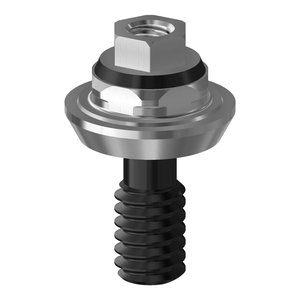
Dental Implant Compatible Parts Internal Connection Titanium Healing Abutment Scan Post Crown Restoration
Material: Grade 5 Ti-6Al-4V ELI
Precision: ±0.003mm 5-Axis CNC
Certification: CE & CoA Lot Verified
Precision OEM
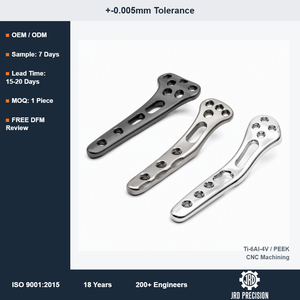
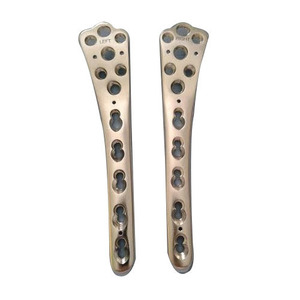
Medical Grade Orthopedic Implant Precision 5 Axis CNC Machining ±0.005mm Titanium Ti6Al4V ISO 9001 CMM Certified
Tolerance: ±0.005mm CMM Inspected
Standard: ASTM F136 / ISO 5832-3
Service: Full OEM/ODM Customization
Veterinary Trauma
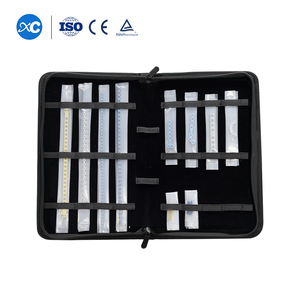
High Quality XC Medico Pet Orthopedic Implant AO/Stem System Sample Pack Stainless Steel Ti CE Certified Class III
Compatibility: Standard AO Profile
Material: 316L SS / Titanium Grade 4/5
Regulatory: CE Class III / ISO 13485
Spine & Surgical Kit
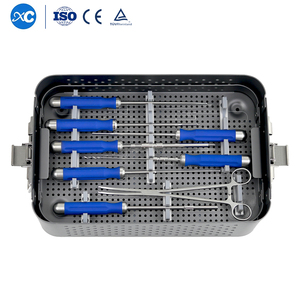
Medical Instruments Bone Surgical Kit Orthopedic Implants High Quality Orthopedic Surgical Spine Implants
System: Pedicle Screws & Rod Instrumentation
Finish: Color Anodized & Passivated
Documentation: Full Technical File & CoA
Veterinary Fixation
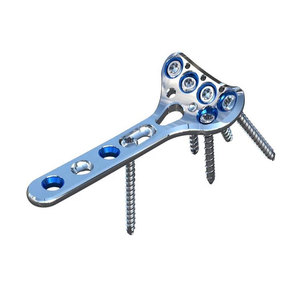
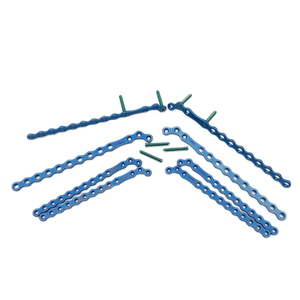
Orthopedic Animal Surgery Veterinary Titanium Bone Implants Plate Vet Kit for Dog & Cat ISO13485 Certified
Application: Small & Medium Canine/Feline
Titanium Grade: ASTM F67 Pure Titanium
Quality Standard: ISO 13485 & CE Validated
Cervical Spine
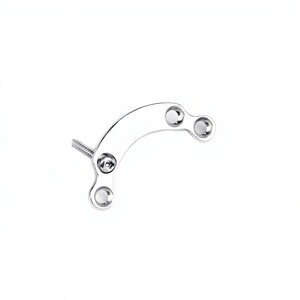
CE ISO Certified Stainless Steel Orthopedic Medical Surgical Anterior Cervical Plate Spine Implants Instrument
The Anatomy of an Authentic Orthopedic Certificate of Analysis (CoA)
In medical device procurement, a Certificate of Analysis is not merely a piece of paper—it is the legal and technical assurance of patient safety, material integrity, and regulatory compliance under EU MDR 2017/745 and FDA 21 CFR Part 820.
Why Certificate of Analysis (CoA) Verification Is Critical for Global Distributors
When procuring load-bearing titanium spine pedicle screws, locking plates, intramedullary nails, or CMF implants, international regulatory authorities require complete batch validation from raw material melt to finished sterile product. A valid Certificate of Analysis verifies that every lot meets stringent mechanical, chemical, and biological criteria.
Chemical Spectroscopy (ASTM F136 / ASTM F138): Verifies exact elemental limits (e.g., Titanium Ti-6Al-4V ELI Extra Low Interstitial carbon, nitrogen, oxygen, and iron ceilings) to prevent intra-body toxicity or corrosion.
Mechanical Tensile & Yield Strength Testing: Confirms ultimate tensile strength (≥860 MPa for Ti6Al4V ELI) and elongation percentages to withstand cyclic physiological loads without fatigue failure.
Metallurgical Microstructure Analysis: Assesses grain size (ASTM E112) and alpha-beta phase distribution to prevent micro-cracks under torsional shear.
Surface Passivation & Corrosion Immunity: Validates nitric/citric acid passivation according to ASTM F1089, ensuring a stable titanium oxide film ($TiO_2$).
Why Leading Global Brands Partner with Our Factory
Combining Swiss 5-axis precision machining, 100% CMM dimensional validation, and ISO Class 7 cleanroom packaging to deliver uncompromised medical devices.
5-Axis CNC Precision Lathes
Our facility houses high-precision Swiss Citizen and Star 5-axis CNC machining centers capable of achieving tight tolerances within ±0.005mm. Ideal for intricate pedicle screw threads, cannulated intramedullary nails, and anatomical locking plate contours.
Full Lot & Laser Traceability
Every single implant is permanently laser-etched with a unique Lot Number, SKU ID, and dimensional code. Our ERP system directly links this code to the raw material mill certificate, heat treatment batch, and CMM inspection report.
System Matched Instrumentation
We solve the common distributor pain point of mismatched surgical tools. All implants—whether spinal, trauma, or joint—are manufactured alongside custom-fitted surgical drills, taps, screwdrivers, and sterilization cases for seamless intraoperative performance.
Cleanroom & Bio-Burden Control
Implants undergo ultrasonic multi-stage cleaning using purified water systems and are processed within ISO Class 7/8 cleanrooms. Validated for gamma irradiation or steam autoclave sterilization with zero bio-burden residue.
Complete Regulatory Technical Files
We provide global partners with ready-to-submit Technical Dossiers (STED format), clinical evaluation summaries, ISO 10993 biocompatibility test reports, and CE certificate documentation to accelerate local Ministry of Health registrations.
Turnkey OEM / ODM Solutions
From custom implant geometry modification and private-label laser marking to custom brand box designs and sterile pouch sealing, we empower distributors to launch their own branded orthopedic lines smoothly.
Innovation Roadmap
Future Procurement & Technology Trends in Orthopedic Manufacturing
As orthopedics transitions toward personalized surgery and bio-active integration, keeping pace with material science evolution is vital for strategic hospital suppliers.
1. 3D Additive Manufacturing & Porous Trabecular Structures
Traditional machined solid implants are increasingly giving way to Selective Laser Melting (SLM) and Electron Beam Melting (EBM) 3D-printed titanium implants. By engineering interconnected porous scaffold micro-architectures (pore size 300–600 μm) resembling human cancellous bone, these next-generation implants encourage rapid osseointegration and reduce stress shielding.
2. Bioresorbable & Composite Biomaterials
To eliminate the secondary surgical procedures required for implant removal (especially in pediatric orthopedics and sports medicine), research is accelerating into magnesium-zinc-calcium alloys and PLGA/PLLA bioresorbable polymers. These materials maintain mechanical rigidity during bone healing and gradually resorb into non-toxic metabolic sub-components.
Implant-associated infections (HAIs) remain a major challenge in orthopedic trauma. The future lies in advanced nanostructured coatings—such as silver/copper ion implantation, plasma spray Hydroxyapatite (HA), and atomic layer deposition (ALD)—which deliver sustained antimicrobial action while promoting osteoblast cell adhesion.
4. Smart Sensor Integration & Digital Surgery Compatibility
Orthopedic fixation systems are integrating micro-electromechanical sensors (MEMS) capable of wirelessly transmitting intra-articular pressure, strain data, and early signs of loosening or infection directly to orthopedic surgeons. OEM manufacturers with precision micro-machining capabilities will lead this smart implant revolution.
Strategic Sourcing Guide
How to Evaluate & Audit an Orthopedic Implant Manufacturer
A structured 4-step framework for procurement directors, hospital tender committees, and medical device importers.
Step 01
Verify CoA & Raw Material Provenance
Never accept generic quality statements. Require raw material Mill Test Reports (MTRs) directly linked to your specific batch numbers, proving compliance with ASTM F136 or ASTM F138 specifications.
Step 02
Audit ISO 13485 & CE MDR Scope
Ensure the manufacturer's ISO 13485 and CE certificates explicitly cover the exact medical device category (e.g., Class III spine implants, Class IIb trauma plates) rather than just general medical assembly.
Step 03
Evaluate Instrument-Implant Interface
Order physical sample kits to verify driver-recess engagement, tap thread pitch fit, screw locking ring security, and tray ergonomic layout prior to placing bulk hospital orders.
Step 04
Review Regulatory Dossier Support
Confirm the OEM supplier provides complete Technical Documentation Files (STED), biocompatibility reports (ISO 10993), sterilization validation, and Instructions for Use (IFU) in your target language.
Frequently Asked Questions
Orthopedic Procurement & Certification FAQs
Direct technical answers addressing common regulatory, manufacturing, and ordering questions from international buyers.
What elements are included in your Orthopedic Implant Certificate of Analysis (CoA)?+
Our Certificate of Analysis (CoA) provides complete lot-specific validation:
Chemical Composition Analysis: Spectroscopy report verifying exact elemental thresholds for Ti-6Al-4V ELI (ASTM F136) or 316L Stainless Steel (ASTM F138).
Mechanical Strength: Yield strength, ultimate tensile strength, and percentage elongation after fracture.
Dimensional Inspection: CMM measurement records confirming critical tolerances within ±0.005mm.
Sterilization & Bio-burden: Endotoxin limits (<21.5 EU/device per LAL assay) and cleanroom particle count logs.
Do your orthopedic implants hold CE marking under EU MDR 2017/745?+
Yes. Our core orthopedic portfolios—including spinal pedicle screw systems, anterior cervical plates, intramedullary nails, and anatomical trauma locking plates—are manufactured in strict compliance with EU MDR 2017/745 and ISO 13485:2016 quality management standards. Full Technical Documentation Files (TDF) are available for verified regulatory submission.
Can you support custom OEM private-label laser marking and packaging?+
Absolutely. We offer complete private-label OEM solutions. We can laser-etch your company logo, proprietary part numbers, UDI barcode symbols, and lot numbers directly onto implants and surgical instruments. Furthermore, we support custom color-anodized tray configurations and pre-printed sterile pouch packaging according to your regional market specifications.
What biomaterials do you utilize for orthopedic implants and bone plates?+
We exclusively utilize certified medical-grade raw materials sourced from audited global suppliers:
How do you guarantee instrument compatibility with your orthopedic implant sets?+
Mismatched drivers or taps lead to intraoperative delay. We eliminate this by engineering implants and matching surgical instruments under unified CAD/CAM file definitions. Every batch of screws and plates is physically tested against its master instrument driver, depth gauge, tap, and bender in our QC laboratory prior to release.
What is the lead time for OEM sample evaluation and production orders?+
For standard catalog items and evaluation sample kits, items ship within 3 to 7 working days. For custom OEM/ODM projects requiring specialized CNC tooling setup or new anatomical plate forging, sample prototypes are delivered within 3 to 4 weeks upon final 3D engineering drawing approval. Bulk production orders typically range from 30 to 45 days.
Partner with a Certified Orthopedic Implant OEM Specialist
Whether you require complete spine instrument kits, custom trauma locking plate OEM programs, or batch-specific Certificates of Analysis for local registration, our engineering team is ready to support your market launch.