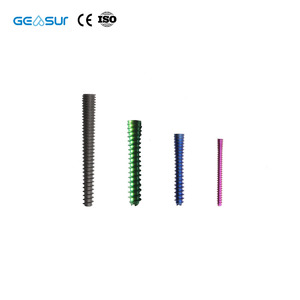
Featured Orthopedic Systems
CE & ISO Approved Orthopedic Implant Products
Explore our flagship bio-compatible titanium and stainless steel orthopedic implants, manufactured with micron-level CNC tolerances and validated packaging for global delivery.
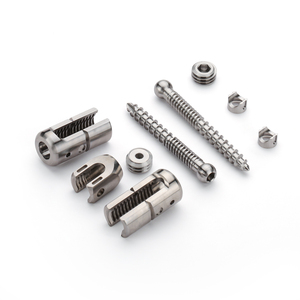
JZC High-quality Orthopedic Spinal Implant Posterior Thoracolumbar Nailing and Rod Fixation System Titanium Alloy
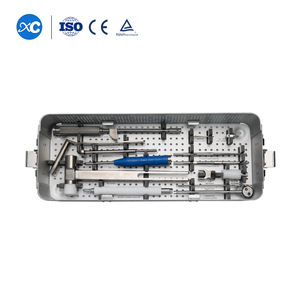
Veterinary a Type Total Hip System Surgical Instrument Orthopedic Implant Tools 1#~5# Biocompatible Durable Quality Guaranteed
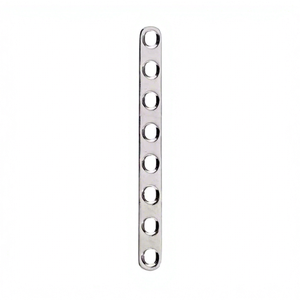
Stainless Steel Phillips Bone Plates High Quality Veterinary Bone Implants Orthopedic Implants CE ISO Approved
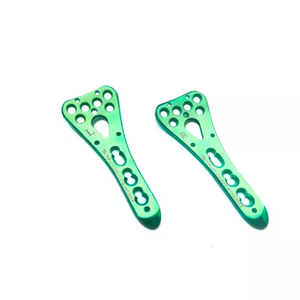
High Quality Variable Angle Volar Titanium Plate Orthopedic Veterinary Surgical Implant CE ISO Approved Titanium bone plates
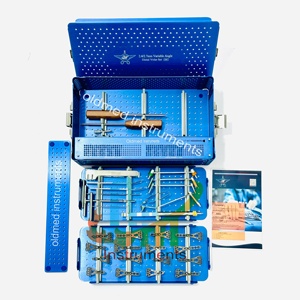
2.4/2.7mm Variable Angle Distal Radius Volar Plates Screws Instruments Orthopedic Implant Kit CE ISO Certified High Quality
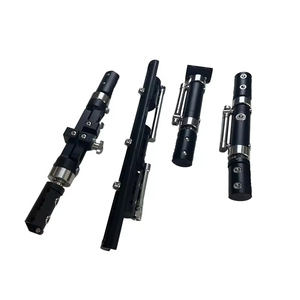
High Quality Orthopedic Surgical Instruments Tibial & Femur External Fixator System External Fixation Orthopedic Implant
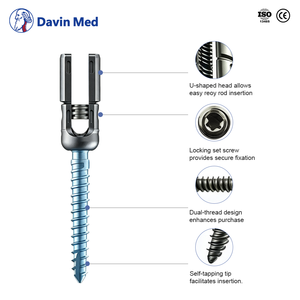
DavinMed CE/ISO Spine Polyaxial Pedicle Screw Long Tail Titanium Orthopedic Implant Sterile Packaging Anodized Surface Finish
Quality Assurance Standard
CE Certified Orthopedic Implant Quality Management System
An authoritative evaluation of medical device manufacturing compliance, metallurgical integrity, and regulatory validation for global healthcare procurement managers.
ISO 13485
Certified Quality System
100%
Lot & Material Traceability
Class 10k
ISO 7 Cleanroom Packaging
<0.01%
In-Field Defect Tolerance Rate
The Engineering Foundation of Class IIb & Class III Medical Device Safety
In modern orthopedic surgery, the structural reliability of metallic and polymeric implants directly dictates patient outcome and surgeon confidence. Operating as a premier CE Certified Orthopedic Implant Manufacturer and OEM Exporter, our enterprise operates under a fully integrated Quality Management System (QMS) compliant with ISO 13485:2016 and EU MDR 2017/745 (Medical Device Regulation) standards.
A compliant QMS for orthopedic implants goes far beyond surface-level inspection. It governs the total lifecycle of an implant—from raw titanium alloy billet verification to multi-axis CNC Swiss machining, automated ultrasonic passivating cleanroom washing, surface anodization, micro-scale CMM dimensional verification, and bio-burden sterile barrier packaging. By adhering to strict ISO 14971 Risk Management protocols, we eliminate failure modes such as fatigue micro-fractures, thread galling, and metal ion leaching.
Metallurgical Standard & Traceability
Every batch of medical-grade raw material undergoes spectral analysis and ultrasonic flaw detection prior to production entry.
- ASTM F136 Ti-6Al-4V ELI Titanium
- ASTM F138 316L Implant Stainless Steel
- ASTM F2026 PEEK Biomaterial
- Mill Test Certificates (MTC) per batch
Precision CNC Machining
Utilizing 5-axis Citizen Swiss lathe centers to achieve complex thread profiles, variable pitch cannulations, and micro-locking holes.
- Dimensional tolerance: ±0.005mm
- High-precision thread pitch execution
- Automated deburring & electro-polishing
- Zero-stress structural contouring
Sterility & Packaging Protocols
Implants are processed in ISO Class 7 cleanrooms to ensure compliance with bacterial endotoxin and bio-burden standards.
- ISO 11607 sterile barrier packaging
- Tyvek double blister sealing
- LAL Endotoxin test <20 EU/device
- UDI Direct Part Laser Marking
Orthopedic Material Standard & Application Specification Matrix
Use this reference matrix when preparing registration dossiers or verifying product tender compliance.
| Implant Material Grade | International Standard | Tensile Strength (MPa) | Primary Clinical Application | Key Quality Advantage |
|---|---|---|---|---|
| Ti-6Al-4V ELI (Extra Low Interstitial) | ASTM F136 / ISO 5832-3 | ≥ 860 MPa | Pedicle Screws, Trauma Plates, Intramedullary Nails | Superior fatigue strength, light weight, and excellent osseointegration. |
| 316L Medical Stainless Steel | ASTM F138 / ISO 5832-1 | ≥ 860 (Cold Worked) | Veterinary Bone Plates, External Fixators, Screws | High stiffness, cost-effective structural rigidity for load-bearing frames. |
| Commercially Pure Titanium (CP Ti) | ASTM F67 / ISO 5832-2 | 240 – 550 MPa | CMF Maxillofacial Plates, Titanium Mesh | High malleability for intraoperative anatomical hand-bending. |
| PEEK Optima (Polyetheretherketone) | ASTM F2026 | ≥ 95 MPa | Spinal Interbody Fusion Cages (TLIF, PLIF, ACIF) | Radiolucent (X-ray transparent) with modulus matching human cortical bone. |
| CoCrMo Alloy (Cobalt Chrome) | ASTM F1537 / ISO 5832-12 | ≥ 1000 MPa | Total Hip Femoral Heads, Total Knee Joint Components | Extreme tribological wear resistance for articulating surfaces. |
Full-Spectrum Systems
Comprehensive Orthopedic Implant Portfolio
We engineer complete surgical ecosystems comprising matched implants, dedicated reusable surgical instrumentation, and aluminum sterilization containers.
Spine Fixation & Fusion System
Complete posterior thoracolumbar pedicle screw systems, monoaxial and polyaxial options, cross-links, PEEK interbody cages, and anterior cervical locking plate sets.
- Low-profile screw heads to reduce tissue impingement
- Friction-fit polyaxial tulip articulation (up to 50°)
- T-Drive recess preventing cam-out during insertion
Anatomical Locking Trauma Plates
Pre-contoured variable angle volar radius plates, proximal humerus plates, distal femur, and tibial plateau locking plate systems engineered for anatomical restoration.
- Variable angle locking threads (±15° trajectory)
- Limited-contact underside preserving periosteal blood supply
- Type II anodized finish enhancing fatigue endurance
Intramedullary Nail Systems
Cannulated titanium femoral, tibial, and humeral intramedullary nails featuring multi-planar distal locking options and carbon-fiber radiolucent aiming guides.
- Anatomical curvature radius for easy insertion
- Dynamic and static interlocking hole configurations
- Precision reaming and distal targeting instruments
Sports Medicine Anchors & Screws
Advanced soft tissue fixation devices including titanium and PEEK suture anchors, bio-absorbable interference screws, and cortical button fixation for ACL repair.
- High pull-out strength design with UHMWPE sutures
- Tapered tip for low-torque insertion in hard bone
- Arthroscopic guides and tissue pass instrumentation
CMF Maxillofacial Micro & Mini Plates
Low-profile 1.5mm, 2.0mm, and 2.4mm titanium micro-plate systems, orbital floor meshes, and mandibular reconstruction plates for orthognathic and trauma surgery.
- Ultra-thin profile (0.6mm – 1.5mm) reducing palpability
- Color-coded screw diameters for quick OR identification
- High-ductility pure titanium for precise contouring
Joint Arthroplasty & External Fixation
Cemented/cementless total hip systems, modular knee joint prostheses, and damage-control external fixators (unilateral, ring/Ilizarov, and hybrid configurations).
- Porous titanium plasma-sprayed coating for bone ingrowth
- High cross-linked UHMWPE inserts for minimal wear rate
- Lightweight carbon-fiber connecting rods for external frames
Industry Horizon
Future Trends in Global Orthopedic Implant Sourcing
Strategic insights for medical device importers, OEM brand owners, and procurement directors navigating shifting regulatory and technological landscapes.
1. Regulatory Tightening & EU MDR Standardization
The global medical device market is witnessing rapid convergence toward EU MDR-level technical documentation. Importers can no longer rely on superficial CE certificates. Regulatory bodies in Latin America, Southeast Asia, and the Middle East now demand full Clinical Evaluation Reports (CER), Post-Market Clinical Follow-up (PMCF) data, and ISO 10993 biocompatibility dossiers. Manufacturers with robust, pre-validated technical files will dominate global tenders.
2. Shift Toward Integrated "Implant + Instrument" Kits
Hospitals and surgery centers are actively phasing out fragmented sourcing where implants come from one vendor and surgical instruments from another. Mismatched driver-to-screw tolerances cause intraoperative stripping and surgical delays. Future procurement favors turnkey manufacturers who design, validate, and supply matched implant-instrument sets in color-coded sterilization trays.
3. Additive Manufacturing & Porous Surface Coatings
3D titanium printing (Direct Metal Laser Sintering - DMLS) and porous plasma coating are transitioning from high-end specialty items to standard expectations. Trabecular metal-like surface structures foster faster secondary biological fixation (bone ingrowth) compared to traditional smooth surfaces. Contract manufacturers with 3D printing capabilities provide significant information gain and market advantage.
4. Supply Chain Resilience & Private-Label OEM
Global distributors are increasingly building their own proprietary private-label brands to safeguard margins against aggressive price erosion. Manufacturers that offer complete OEM services—including direct part laser marking (UDI), custom box packaging design, and localized instruction manual (IFU) translation—are essential long-term strategic growth partners.
Manufacturing Superiority
6-Stage Quality Control & Production Workflow
Inside our advanced manufacturing facility: how raw titanium alloy transforms into a precision clinical implant.
01
Material Spectrometry
Raw titanium and stainless steel bars undergo X-ray fluorescence spectrometry and tensile testing to guarantee ASTM standard compliance.
02
5-Axis CNC Swiss Machining
Precision turning, thread milling, and cannulation executed in single-setup machining to maintain concentricity and micro tolerances.
03
Surface Anodizing & MAO
Electrochemical anodization creates vibrant, biocompatible color coding (gold, blue, green) and increases fatigue crack resistance.
04
Optical 3D CMM Inspection
Automated optical coordinate measuring machines verify screw pitch, head diameter, and plate curvature against 3D CAD master models.
05
Ultrasonic Cleanroom Washing
Multi-stage automated ultrasonic cleaning utilizing purified water to strip all machining oils and particulates down to micro-levels.
06
UDI Marking & Blister Packaging
Permanent laser etching of lot numbers, matrix codes, and size specs followed by double-blister Tyvek heat sealing in Class 7 cleanrooms.
Buyer Guidance
Frequently Asked Questions for Importers & Distributors
Detailed technical answers to assist procurement officers during manufacturer audit and vendor qualification.
What certifications and regulatory documents do you provide for local product registration? +
We provide full technical documentation dossiers formatted for international regulatory submissions (such as STED or CSDT formats). This includes ISO 13485:2016 Quality Management System certificates, CE certificates, Material Test Certificates (MTC) per batch, Biocompatibility Test Reports under ISO 10993 standards (cytotoxicity, sensitization, systemic toxicity), Packaging & Shelf-Life Validation Reports (ISO 11607), Sterilization Validation Reports, and comprehensive Instructions for Use (IFU) in English and specified regional languages.
How do you guarantee material purity and prevent batch-to-batch variation? +
Raw material integrity is the single most critical factor in avoiding implant failure. We source exclusively medical-grade titanium (ASTM F136 Ti-6Al-4V ELI) and stainless steel (ASTM F138 316L) from certified global suppliers. Every incoming raw bar stock undergoes spectral chemical composition analysis, mechanical tensile strength verification, and microstructural grain size examination. All materials are tagged with a unique ingot lot heat number that is tracked through manufacturing and laser-etched onto the final product for 100% trace-back capability.
Can you support OEM private-label manufacturing and custom implant engineering? +
Yes. Over 60% of our production output serves international private-label OEM partners. Our engineering team can work directly from your 2D/3D CAD drawings or physical reference samples. We offer complete turnkey custom services including CAD/CAM optimization, rapid prototype sample production, customized laser logo & UDI marking, tailored blister packaging, and customized surgical instrument tray layouts engineered specifically for your surgical techniques.
What is the protocol for obtaining evaluation samples prior to placing a contract order? +
We encourage qualified medical device distributors, tender agents, and clinical teams to evaluate physical samples for surface finish, thread action, drive fit, and instrument compatibility. Non-sterile sample sets of our standard catalog products (such as pedicle screws, locking plates, or cannulated screws) can be dispatched within 3–5 business days. Contact our sales department or use the live chat function to request a sample evaluation package.
How are surgical instruments validated for compatibility with your implant systems? +
Implants and surgical instruments are co-engineered under identical tolerance schemes. For example, our Star/Torx driver recesses on pedicle screws and locking screws are machined using master gauges that perfectly pair with our 17-4PH stainless steel surgical screwdrivers. This eliminates driver wobble, slippage, and metal shedding during intraoperative insertion. Every surgical instrument set undergoes rigorous simulated cycling testing before commercial release.
What are your lead times for standard inventory versus OEM production orders? +
For standard catalog SKUs maintained in our buffer inventory, dispatch can occur within 7 to 10 days post-order confirmation. For customized OEM production orders or large tender volumes, production lead times typically range from 30 to 45 days, depending on raw material sourcing, surface treatment requirements, and cleanroom packaging schedules.
Partner with a Certified Orthopedic Implant Manufacturer
Expand your product catalog with high-margin, CE-certified spine, trauma, and joint fixation systems. Reach out to our technical export team today for pricing, technical dossiers, and sample kits.