CE Certified Orthopedic & Surgical Deburring Tools
Each instrument and implant line includes complete STED technical dossiers, ISO 13485 lot traceability, material mill test certificates, and biocompatibility verification.
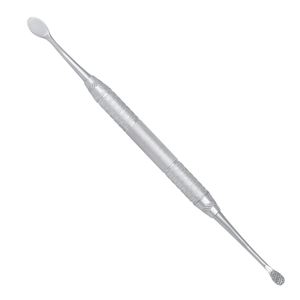
1X Miller Colburn Cross Cut Surgical Bone File Stainless Steel Dental Implant Orthopedic Deburring Finishing Tool Reusable Pro X
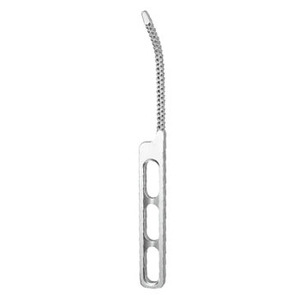
Wuyang Medical Top Quality Stainless Steel Bone File Orthopedics Surgical Instruments Intramedullary File
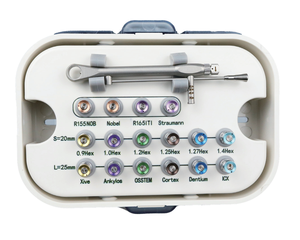
Orthocare Electric Dental Handpiece Surgical Implant Tool Box with CE Certificates for Hospital Use
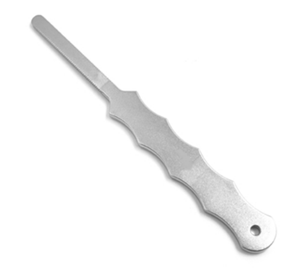
Pet-specific Stainless Steel Multi-faced Flat Bone File for Orthopedic Surgery
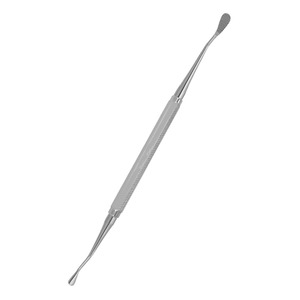
Manual Stainless Steel Bone File Miller Dental Instruments for Orthopedic Surgery Implantology Scraper High Quality CE Certified
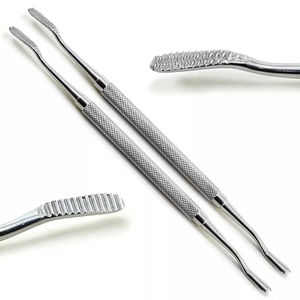
High Grade Stainless Steel Premium Quality Dental Howard Bone Files Set 2pcs Orthopedic Bone Chisel File Medic Instrument
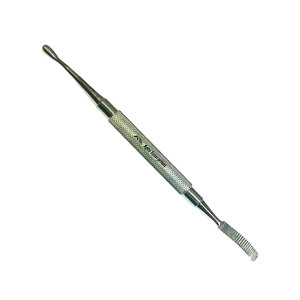
Dental Instruments Premium Implantology Orthopedic Scraper Precision Lifetime Best Quality Manual Bone Molt Elevator File Miller
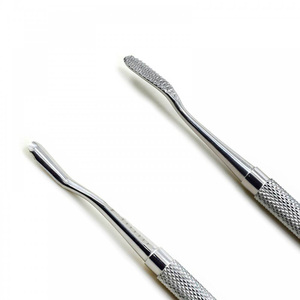
Premium Quality Double Ended Manual Dental Bone File Orthopedic Implant Scraper Non Magnet 304 Stainless Steel 6mm CE Approved
Executive Summary: The Strategic Role of Orthopedic Implant Technical Files
In the modern regulatory landscape governed by the European Union Medical Device Regulation (EU MDR 2017/745), the United States FDA 510(k)/PMA frameworks, and international ISO 13485:2016 quality management standards, an orthopedic implant technical file is no longer merely a static administrative requirement. It represents the comprehensive engineering, clinical, toxicological, and risk management evidence base that guarantees surgical safety, structural reliability, and bio-performance in human anatomy.
For global medical device importers, regional hospital contractors, and OEM private-label brand owners, partnering with a manufacturer capable of producing fully compiled, audit-ready Summary Technical Documentation (STED) dossiers is the single most critical factor in accelerating market access, passing Notified Body audits, and preventing catastrophic product recalls. Orthomanufacturer Medical Co., Ltd operates as both a high-precision contract manufacturer and a regulatory documentation partner, delivering CE-certified orthopedic implants and matching surgical deburring bone files engineered to withstand rigorous fatigue testing and clinical scrutiny.
Anatomy of a CE Certified Technical File (STED Format)
Our technical files follow the GHTF/IMDRF STED specification, providing full compliance with EU MDR 2017/745 Annex II and Annex III.
1. Device Description & Specifications
Complete product taxonomy, intended clinical use, surgical indications, CAD mechanical drawings, dimensional tolerances, raw material standards (ASTM F136 Ti-6Al-4V ELI, ASTM F138 316L, ASTM F2026 PEEK), and shelf-life aging validations.
2. ISO 14971 Risk Management File
Exhaustive Failure Mode and Effects Analysis (FMEA) evaluating design risk, manufacturing process risk, and clinical use error. Details risk mitigation controls, residual risk evaluation, and overall benefit-risk analysis.
3. Design Verification & Biomechanics
Static compression, bending fatigue, axial pull-out, and torsional shear test reports executed per ASTM F1717 (spine), ASTM F543 (bone screws), ASTM F1264 (intramedullary nails), and Finite Element Analysis (FEA) simulations.
4. ISO 10993 Biocompatibility
Toxicological assessments including cytotoxicity (ISO 10993-5), systemic toxicity (ISO 10993-11), genotoxicity (ISO 10993-3), chemical characterization (ISO 10993-18), and extractables/leachables testing for implantable metals and polymers.
5. Clinical Evaluation Report (CER)
Systematic literature reviews conducted under MEDDEV 2.7/1 Rev 4 guidelines. Demonstrates biological, clinical, and technical equivalence, outlining state-of-the-art (SOTA) clinical performance metrics.
6. PMS & PMCF Strategy
Post-Market Surveillance (PMS) plans and Post-Market Clinical Follow-up (PMCF) protocols establishing ongoing safety monitoring, proactive clinical data collection, and vigilance reporting procedures.
From Raw Bar Stock to Validated Medical Devices
Combining metallurgical expertise, multi-axis CNC machining, and controlled cleanroom finishing to eliminate manufacturing defects and ion leaching risks.
Raw Material Validation
100% spectral verification and ultrasonic flaw testing of incoming titanium (Ti-6Al-4V ELI), stainless steel (316LVM), and PEEK bar stock against ASTM F136/F138 standards.
Multi-Axis CNC Machining
High-precision Swiss-type lathes and 5-axis CNC milling centers machining pedicle screw threads, locking plate holes, and bone file tooth geometry within ±0.003mm tolerances.
Electrochemical Surface Finishing
Automated deburring, microscopic edge polishing, Type II/III color anodization, and citric acid passivation per ASTM A967 to maximize oxide layer corrosion resistance.
CMM & Optical Metrology
Contact coordinate measuring machine (CMM) dimensional verification, video measuring optical analysis, and surface roughness (Ra < 0.4 μm) profiling for every batch.
Laser Micro-Marking & UDI
Non-destructive fiber laser engraving of SKU, batch/lot numbers, and GS1-compliant UDI barcodes without inducing stress concentration sites on dynamic load-bearing surfaces.
ISO Class 7 Packaging
Ultrasonic solvent cleaning, pyrogen-free water rinsing, and double-blister barrier packaging in an ISO Class 7 cleanroom environment ready for EO or Gamma sterilization.
Orthopedic Implant System & Technical File Reference
Use this reference table to evaluate technical documentation parameters when auditing OEM supplier credentials.
| Product System Family | Material Standard | Primary Biomechanical Standard | Key Technical File Verification Tests | EU MDR Class |
|---|---|---|---|---|
| Spine Fixation System (Pedicle Screws, Rods, Cages) |
ASTM F136 Ti-6Al-4V ELIASTM F2026 PEEK |
ASTM F1717 / ASTM F2077 | Static axial compression, dynamic fatigue (5M cycles), torsional shear, cage subsidence. | Class IIb / Class III |
| Intramedullary Nail System (Femoral, Tibial, Humeral) |
ASTM F136 TitaniumASTM F138 316L SS |
ASTM F1264 | Static & dynamic bending strength, torsional stiffness, distal locking alignment fatigue. | Class IIb |
| Anatomical Locking Plate (Trauma Fixation Plates) |
ASTM F136 Ti AlloyASTM F67 CP Ti |
ASTM F382 / ISO 9585 | Four-point bending strength, bending stiffness, screw-to-plate locking mechanism shear. | Class IIb |
| CMF / Maxillofacial System (Micro/Mini Plates & Screws) |
ASTM F67 Grade 1-4 CP Ti |
ASTM F543 / ISO 14602 | Plate contour ductility, screw insertion torque, axial pull-out force, profile height limits. | Class IIb |
| Sports Medicine Implants (Suture Anchors, Buttons) |
ASTM F136 TiPEEK / PLLA |
ASTM F543 / ISO 22927 | Suture eyelet pull-out fatigue, fixation strength, enzymatic degradation rate (resorbables). | Class IIb / Class III |
| Surgical Bone Files & Tools (Miller, Howard, Deburring) |
AISI 304 / 316L SSCustom Hardened SS |
ISO 13402 / ISO 7153-1 | Corrosion resistance (boiling water & copper sulfate test), tooth sharpness, hardness (HRC 45-52). | Class I / Class IIa |
Future Development Trends in Orthopedic Engineering (2025–2035)
Strategic insights into technology shifts, regulatory evolution, and international procurement model transformations.
1. Technology Trend: Additive Manufacturing & Porous Osseointegration Structures
Traditional subtractive CNC machining of orthopedic implants is increasingly complemented by 3D printing (Direct Metal Laser Sintering - DMLS, Electron Beam Melting - EBM). The future of spinal interbody cages and joint replacement components lies in porous trabecular titanium architectures. By engineering pore sizes between 300 to 600 micrometers with porosity levels reaching 60–80%, additive manufacturing replicates human cancellous bone modulus of elasticity (reducing stress shielding) while dramatically enhancing early cell adhesion and long-term osteogenesis.
From a technical file perspective, 3D printed implants introduce new verification metrics: residual powder analysis (ASTM F3302), pore size distribution characterization, and structural fatigue evaluation under combined shear and compressive loading vectors.
2. Surface Engineering: Bioactive Coatings & Antimicrobial Topographies
Surgical Site Infections (SSI) and implant-associated bacterial biofilm formation present major clinical challenges in trauma and reconstructive surgery. The next decade will see widespread adoption of nanostructured surface topographies and bioactive hydroxyapatite (HA) plasma spraying integrated with localized ion-releasing coatings (such as silver, zinc, or copper ions) and antibiotic-eluting polymer layers.
These engineered surfaces accelerate osseointegration while actively preventing bacterial colonization. Technical dossiers for bioactive-coated implants require additional validation under ISO 10993-17 (toxicological risk assessment for extractables) and long-term coating adhesion shear testing per ASTM F1044.
3. Global Procurement Trend: Contract Manufacturing & Turn-Key Regulatory Licensing
For international healthcare distributors and medical brand owners, the financial and temporal cost of developing in-house technical documentation from scratch is becoming prohibitive. Modern medical device procurement has shifted from simple OEM purchasing to turn-key regulatory licensing models.
Distributors increasingly select contract manufacturers like Orthomanufacturer Medical Co., Ltd who provide ready-to-submit STED technical files, complete testing data packages, and validated manufacturing workflows. This enables distributors to secure local health authority registrations (such as Saudi SFDA, Brazilian ANVISA, Egyptian EDA, and Mexican COFEPRIS) in months rather than years.
Frequently Asked Questions by Global Buyers
Essential technical, regulatory, and commercial clarifications for healthcare procurement directors and medical device importers.
What specific elements are included in the CE Certified Technical File provided by Orthomanufacturer Medical Co., Ltd? +
Our EU MDR-compliant technical file dossier includes: Device Specifications & CAD drawings, GSPR Checklist (Annex I), ISO 14971 Risk Management File, Raw Material Certificates (ASTM F136/F138), Biomechanical Testing Reports (ASTM F1717, F543, F1264), ISO 10993 Biocompatibility Study Summaries, Clinical Evaluation Report (CER under MEDDEV 2.7/1 Rev 4), Packaging & Shelf-Life Validation (ISO 11607), Sterilization Validation Reports, and Post-Market Surveillance (PMS/PMCF) plans.
How do your technical files support local product registration in MENA, LATAM, and Southeast Asia? +
Our technical documentation is structured in the standard IMDRF STED format, which is accepted by health authorities across the globe (including SFDA in Saudi Arabia, EDA in Egypt, ANVISA in Brazil, COFEPRIS in Mexico, and MoH agencies throughout Southeast Asia). We provide notarized Certificates of Free Sale (CFS), ISO 13485 certificates, authenticated declarations of conformity, and dedicated regulatory team support to respond to technical queries raised by local assessors.
Which raw materials are utilized for your orthopedic bone files and implant systems? +
We strictly utilize implant-grade materials sourced from certified metallurgical suppliers: Titanium Alloy Ti-6Al-4V ELI (ASTM F136 / ISO 5832-3), Commercially Pure Titanium (ASTM F67 / ISO 5832-2), Implant-Grade 316L Stainless Steel (ASTM F138 / ISO 5832-1), Medical Grade PEEK (ASTM F2026), and surgical grade 304/316L stainless steel for reusable bone deburring files and instrumentation.
Can Orthomanufacturer Medical support private-label OEM manufacturing and custom branding? +
Yes. We provide complete OEM/ODM contract manufacturing services. This includes precision fiber laser marking of customer logos, custom SKU numbering, customized packaging and labeling compliant with ISO 15223-1, and modified product design variations based on customer engineering drawings or clinical sample evaluation.
What quality assurance steps prevent titanium ion leaching and surface contamination? +
Every implant and surgical tool undergoes ultrasonic multi-stage detergent washing, pyrogen-free water rinsing, automated citric acid passivation per ASTM A967 (to construct a dense titanium oxide passive layer), Type II anodizing, and final visual inspection under optical magnification. Cleanroom packaging in ISO Class 7 environments ensures bioburden remains within validated limits prior to sterilization.
How can qualified distributors request technical files, product samples, or catalog documentation? +
Qualified medical device distributors and hospital procurement teams can click the "Get Catalog" buttons on this page to immediately open a direct communication channel with our senior export and engineering department. We will provide technical summaries, catalog PDFs, sample evaluation protocols, and commercial proposals based on your target market requirements.
Request Full Technical File Dossier & Product Catalogs
Partner with a certified orthopedic implant manufacturer capable of supporting your local registration, OEM brand building, and hospital tender specifications with zero technical compromise.
Instant Access to STED Summaries & Engineering Specifications