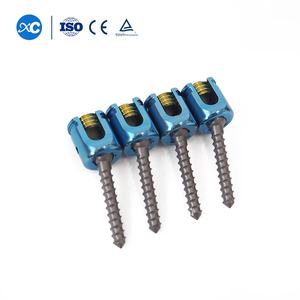
Spine Fixation
Precision-machined medical devices manufactured under ISO 13485 cleanroom conditions. Fully compatible with gamma, electron-beam, and ethylene oxide (EO) sterilization validation protocols.
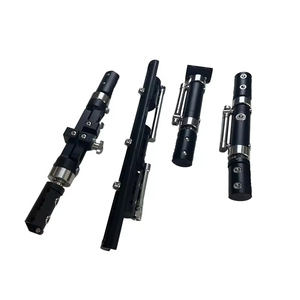
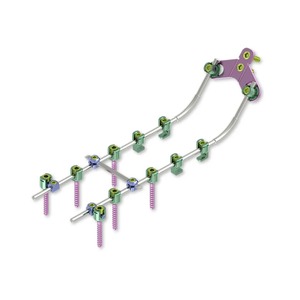
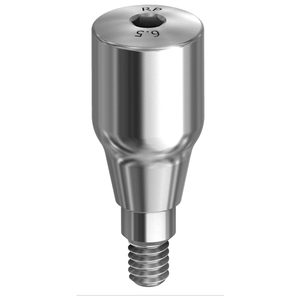
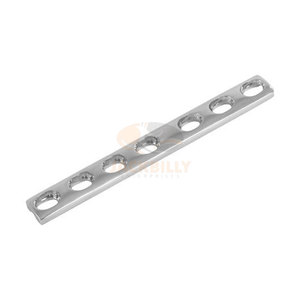
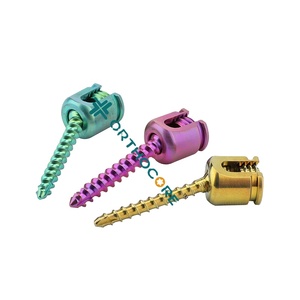
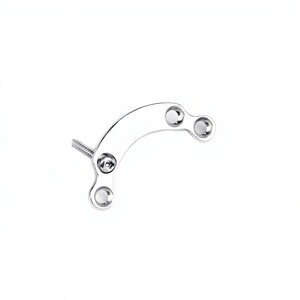
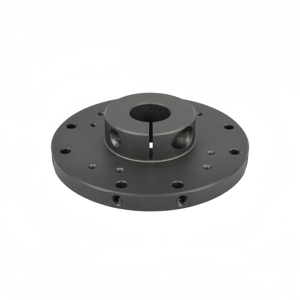
In modern medical device manufacturing, achieving terminal sterility is not merely a final process step—it is an intricate, highly regulated validation science that directly governs clinical safety, implantable device biocompatibility, and global regulatory approval. As hospital procurement teams, multinational OEM brands, and regional medical distributors evaluate potential manufacturing partners, China's leading orthopedic implant suppliers have evolved from basic CNC contract manufacturers into fully integrated, regulatory-compliant solutions providers capable of delivering Sterility Assurance Levels (SAL) of 10-6 in accordance with strict international benchmarks.
Under regulations such as EU MDR 2017/745, US FDA 21 CFR Part 820, and ISO 13485:2016, a non-validated sterilization process or inadequate sterile barrier packaging system (SBS) represents an insurmountable barrier to market access. Leading Chinese exporters maintain state-of-the-art ISO Class 7 and Class 8 cleanrooms, conducting rigorous bioburden determination, bacterial endotoxin testing (LAL), and multi-cycle validation protocols for both Radiation (ISO 11137) and Ethylene Oxide (ISO 11135) processing. This whitepaper analyzes the technical parameters, future procurement trends, material developments, and vendor qualification frameworks required to source validated sterile orthopedic implants successfully from China.
Understanding the validation physics, microbiological testing methodologies, and packaging integrity standards utilized by tier-1 Chinese manufacturers.
Validation of Cobalt-60 Gamma Radiation and High-Energy Electron Beam (E-Beam) processing utilizes Method 1 or VDmax25/VDmax15 protocols. Bioburden determination per ISO 11737-1 is performed across representative batch samples to establish the minimum sterilizing dose. Dose mapping audits in full-scale irradiators ensure target doses (typically 25 kGy) penetrate complex geometric implants like spinal cages and porous joint prostheses without inducing polymer degradation.
For moisture- or heat-sensitive implants, Ethylene Oxide (EO) gas validation follows the Overkill (Half-Cycle) approach. Biological Indicators (BIs) containing Bacillus atrophaeus spores (106 population) are strategically placed within the most difficult-to-sterilize internal lumens and screw threads. Validation requires full physical parameter monitoring (gas concentration, relative humidity >50%, temperature, exposure time) and mandatory residual aeration testing per ISO 10993-7.
Sterilization validation is incomplete without proof of Sterile Barrier System (SBS) integrity over time. Cleanroom heat-sealing of Tyvek® to rigid PETG/HPDE blisters undergoes burst testing (ASTM F1140), seal strength peel testing (ASTM F88), and bubble emission leak testing (ASTM F2096). Real-time and accelerated shelf-life aging studies (ASTM F1980) validate a 5-year sterile shelf-life for global export distribution.
Selecting the appropriate terminal sterilization strategy based on biomaterial properties, device geometry, and regulatory requirements.
| Sterilization Modality | Applicable Standards | Compatible Biomaterials | Key Validation Parameters | Sterile Barrier Package (SBS) |
|---|---|---|---|---|
| Gamma Radiation (Co-60) | ISO 11137-1/2 ISO 11737 | Ti-6Al-4V ELI, CoCrMo, 316L SS, Commercial Pure Titanium | VDmax25 verification, routine dosimetric mapping, bioburden monitoring, LAL endotoxin <20 EU/device. | Double Tyvek® pouch or rigid PETG blister tray with Tyvek® lidstock. |
| Ethylene Oxide (EO) Gas | ISO 11135 ISO 10993-7 | PEEK-OPTIMA®, UHMWPE, Bioresorbable PLA/PLLA, Metal Implants | Overkill half-cycle validation, B. atrophaeus 106 BI kill, EO/ECH residual limit clearance. | Gas-permeable Tyvek® / Poly film pouches or thermoformed blister packs. |
| Electron Beam (E-Beam) | ISO 11137-1/3 ASTM E2303 | Small metallic trauma plates, titanium cannulated screws, dental abutments | High dose-rate exposure, precise penetration calibration, material polymer cross-linking assessment. | Foil-laminated sterile barrier pouches or standard Tyvek® blister packaging. |
| Moist Heat / Steam Autoclave | ISO 17665-1 ANSI/AAMI ST79 | Reusable Surgical Instruments, External Fixation Frames, Sterilization Trays | Thermal mapping (134°C, 18-min prion cycle), F0 calculation, dry cycle time validation. | Perforated aluminum sterilization containers with PTFE filters or surgical wrap. |
Key market shifts driving global B2B buyers to select accredited Chinese orthopedic suppliers with validated sterilization infrastructure.
Hospitals worldwide are actively reducing operating room setup times and eliminating hospital Central Sterile Supply Department (CSSD) re-sterilization risks. Global distributors now overwhelmingly mandate that manufacturers supply fully sterile, ready-to-use (RTU) implants in protective double-blister Tyvek® packaging. Chinese tier-1 exporters are leading this shift by embedding cleanroom packaging and terminal sterilization validation directly into their OEM contracts.
Procurement decisions are no longer made purely on price per unit. Overseas importers require turnkey regulatory dossiers (DHF/DMR) including complete sterilization validation reports (ISO 11137/11135), packaging validation (ISO 11607), biocompatibility matrices (ISO 10993), and cleaning validation data. Top Chinese exporters provide comprehensive technical documentation packages that dramatically accelerate distributor registration in target markets.
Heightened international restrictions on Ethylene Oxide gas emissions (and strict limits on ethylene chlorohydrin residuals) have prompted orthopedic suppliers to adopt Advanced Electron-Beam (E-Beam) and X-Ray radiation facilities. E-Beam offers rapid turnaround times, minimal thermal degradation, zero chemical degassing periods, and superior environmental compliance while maintaining certified 10-6 sterility assurance.
Regulatory mandates across North America, Europe, and Asia-Pacific require full Unique Device Identification (UDI) compliance. Advanced orthopedic suppliers in China utilize ultra-short pulse femtosecond lasers to engrave high-density 2D DataMatrix codes directly onto implants. These marks survive repeated cleaning and sterilization cycles without compromising surface corrosion resistance or creating biological micro-refuges for micro-organisms.
How advancing material sciences impact surface cleanability, bioburden management, and validation complexity.
Direct Metal Laser Sintering (DMLS) and Electron Beam Melting (EBM) enable complex porous titanium spinal cages and acetabular cups that mimic human cancellous bone. However, the intricate internal lattice structure introduces residual powder entrapment risks. Leading Chinese suppliers have perfected validated multi-stage ultrasonic cleaning and bioburden extraction protocols to ensure 100% particulate removal prior to sterile packaging.
Polyetheretherketone (PEEK-OPTIMA®) offers an elastic modulus close to cortical bone and radiolucency under intraoperative fluoroscopy. Because PEEK polymers can suffer subtle surface changes under high-dose gamma irradiation, China's elite exporters validate specialized low-dose Gamma or optimized Ethylene Oxide cycles, verifying physical strength, molecular weight distribution, and zero volatile outgassing post-sterilization.
Type II Electrochemical Anodization and Plasma-Sprayed Hydroxyapatite (HA) coatings enhance osseointegration and fatigue strength in titanium locking plates and pedicle screws. Validation protocols must prove that chemical passivation and color-coding anodization layers remain chemically inert, free of heavy metals, and resistant to delamination through terminal sterilization and 5-year accelerated aging.
Orthomanufacturer Medical Co., Ltd is a premier Chinese designer, OEM manufacturer, and global exporter of high-precision orthopedic implants and surgical instruments. Our portfolio spans spine fixation systems, intramedullary nails, anatomical locking plates, sports medicine anchors, CMF maxillofacial plates, joint prostheses, external fixators, and surgical power tools.
Equipped with imported multi-axis Swiss CNC turning centers, high-precision CMM inspection stations, and automated cleanroom packaging lines, we bridge the gap between world-class engineering and affordable volume production.
Direct answers to key technical and commercial queries raised by healthcare procurement officers and regulatory managers.
Looking for validated sterile orthopedic implants, spine fixation systems, or custom OEM machining solutions? Connect with our engineering and export team to request technical dossiers, sample kits, or factory audit information.
Send an Inquiry