High-Precision Orthopedic Implants & Surgical Toolkits
Explore our export-ready trauma, spine, veterinary, and reconstructive hardware crafted from medical-grade Titanium Grade 5 (Ti-6Al-4V ELI) and 316L Stainless Steel under stringent ISO 13485 standards.
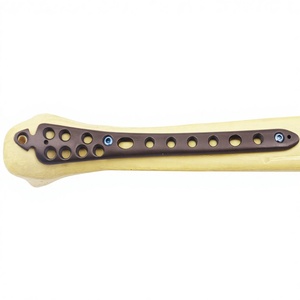
Orthopedic Titanium Trauma Implant Distal Tibial Medial Locking Plate Bone Fracture Internal Fixation
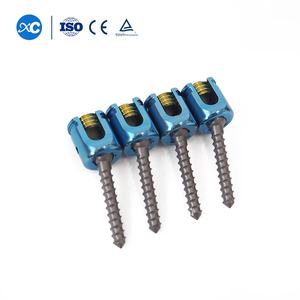
Veterinary Orthopedic Implants Polyaxial Spine Pedicle Screw Titanium Orthopaedic Implant
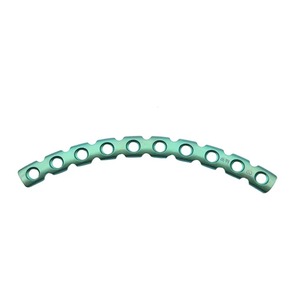
Orthopedic Implants DCP ARCH Recon Reconstruction (Dynamic Compression) 3.5mm Titanium Grade 5 Plate
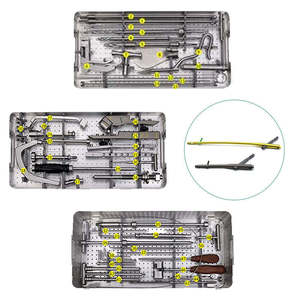
Factory Direct PFNA Interlocking Intramedullary Nail Instrument Set Proximal Femoral Fracture Trauma Implant
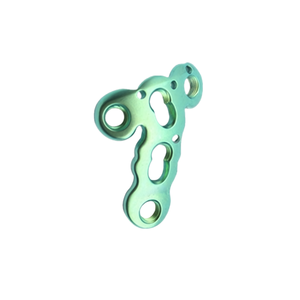
Davin Med High Quality Titanium Proximal Humeral Greater Tuberosity Locking Compression Plate
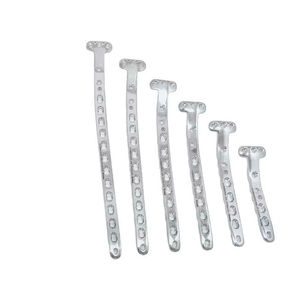
Orthopedic Implants for Veterinary Use Medial Proximal Tibia Plate (3.5mm) 12pcs Set Stainless Steel
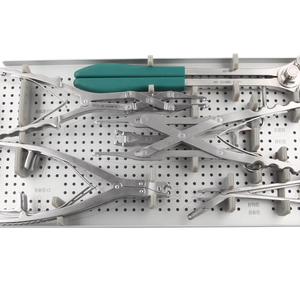
COX 6.0 Screw & Rod System Class I Implant Instruments for Orthopedic Surgery
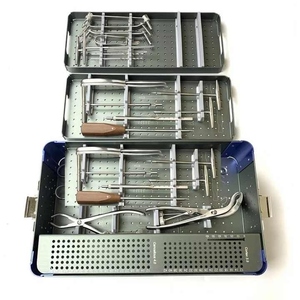
Small Fragment Instruments Orthopedic Instruments High Quality Medical Equipment Set
The Dynamics of Sourcing Orthopedic Implants from China
A technical evaluation for procurement directors on supply chain resilience, metallurgical consistency, and international regulatory alignment.
The Paradigm Shift in Medical Hardware Manufacturing
Over the past decade, the global market for medical devices has experienced a structural evolution. Importers, OEM brand owners, and hospital consortiums across Europe, Latin America, the Middle East, and Southeast Asia are increasingly consolidating their vendor bases toward leading Chinese manufacturing centers. This shift is driven not merely by cost efficiencies, but by advanced precision manufacturing infrastructure, accelerated prototyping cycles, and rigorous regulatory compliance.
China's elite orthopedic implant factories operate multi-axis CNC machining centers (such as Swiss-type lathes and DMG MORI 5-axis systems) capable of holding dimensional tolerances within micro-meters (±0.005mm). This precision ensures flawless mating between internal fixation plates, polyaxial pedicle screws, intramedullary nails, and matched surgical instrumentation sets.
When selecting a top tier export factory, procurement managers must evaluate four core pillars of operational competency: raw material traceability, mechanical testing validation, surface treatment integrity, and technical documentation support for regulatory registration (such as CE MDR dossiers and FDA 510(k) summary reports).
Critical Metallurgy Standards for Implants
Substandard raw material is the primary cause of fatigue failure and intraoperative plate snaps. Reliable exporters strictly adhere to international surgical standards:
- Titanium Ti-6Al-4V ELI (ASTM F136 / ISO 5832-3): Extra Low Interstitial grade offering superior fatigue strength, corrosion resistance, and optimal biocompatibility for load-bearing trauma and spine implants.
- Commercially Pure Titanium (ASTM F67 / ISO 5832-2): Excellent ductility and malleability, essential for intraoperative contouring of CMF maxillofacial micro-plates and reconstructive mesh systems.
- Polyetheretherketone (PEEK ASTM F2026): Radiolucent biomaterial with an elastic modulus closely matching natural human cortical bone, eliminating stress-shielding effects in spinal interbody cages.
- Implant-Grade Stainless Steel 316L (ASTM F138): Vacuum melt material utilized for temporary internal fixation plates, Schanz pins, external fixator rods, and surgical tooling.
Orthopedic Biomaterial & Regulatory Standard Reference
A comprehensive benchmark guide for procurement officers verifying technical dossiers during supplier audits.
| Biomaterial / Alloy | Standard Specification | Primary Clinical Application | Mechanical Performance Feature | Quality Control Verification |
|---|---|---|---|---|
| Ti-6Al-4V ELI Titanium | ASTM F136 / ISO 5832-3 | Pedicle Screws, PFNA Nails, Distal Tibial Plates | Yield strength ≥ 795 MPa, high fatigue threshold | 100% Ultrasonic & Mill Test Certs |
| CP Titanium (Grades 1-4) | ASTM F67 / ISO 5832-2 | CMF Maxillofacial Plates, Cranial Mesh | High elongation, easy intraoperative bending | Micro-hardness & Grain Structure Analysis |
| Implant Stainless Steel | ASTM F138 / ISO 5832-1 | DCP Recon Plates, Veterinary Tibia Plates | Pitting corrosion resistance, high rigidity | Spectrometer Chemical Composition Check |
| PEEK Polymer | ASTM F2026 | TLIF/PLIF Spinal Cages, Cervical Spacers | Radiolucent (X-ray transparent), bone-like modulus | FTIR Spectrum & Cytotoxicity Testing |
| CoCrMo Alloy | ASTM F1537 / ISO 5832-12 | Total Hip Stems, Knee Joint Articulations | Ultra-low wear rate, extreme compressive strength | Surface Roughness Measurement (Ra < 0.02 μm) |
End-to-End Precision Manufacturing & Lot Traceability
Inside China's advanced orthopedic production facilities: How uncompromised quality assurance protects clinical outcomes and distributor reputations.
Material Receiving Audit
Every bar of raw titanium, steel, or PEEK undergoes spectral chemical analysis and mechanical tensile testing before entering the machine floor.
5-Axis CNC Machining
Multi-spindle Swiss lathes machine complex thread geometries, self-tapping flutes, and cannulated centers in a single automated setup.
Surface Finishing
Electrochemical polishing and color anodization create a biocompatible titanium oxide layer while providing color-coded sizing for operating room convenience.
Optical & CMM Inspection
Coordinate Measuring Machines (CMM) and video measuring systems verify critical dimensions against 3D CAD models under controlled environment conditions.
Laser Marking & Packing
100% of implants receive permanent fiber-laser etching containing UDI barcodes, SKU numbers, and lot IDs before final cleanroom sealing.
Why Leading Global Medical Distributors Partner With Us
Combining world-class engineering capabilities with seamless export documentation to accelerate market entry across global territories.
Complete Regulatory Support
We supply full Technical Documentation Dossiers (STED format), ISO 13485 certification, CE compliance files, Material Test Certificates (MTC), and Instructions for Use (IFU) in multiple languages to facilitate local health authority registration.
Matched Instrument Systems
Implants perform only as well as the instruments that seat them. We design and supply ergonomic, autoclavable instrument sets—including drill guides, torque-limiting screwdrivers, aiming arms, and sterilization trays—eliminating intraoperative mismatch.
OEM / ODM Customization
Whether you require private-label laser etching, custom box packaging, modification of plate profiles, or co-development of proprietary spinal fixator concepts, our experienced R&D team converts technical drawings into prototype samples in under 21 days.
Future Procurement & Technological Trends in Orthopedics
Key innovations shaping the next decade of orthopedic implant production, supply chain digital integration, and clinical adoption.
1. Additive Manufacturing (3D Printing) & Trabecular Titanium
Selective Laser Melting (SLM) and Electron Beam Melting (EBM) technologies have transitioned from niche prototyping to high-volume commercial production. 3D-printed porous titanium implants mimic natural human cancellous bone architecture, encouraging rapid osteointegration and vascular ingrowth. Global sourcing managers should evaluate factory capabilities in post-processing heat treatment and powder removal verification protocols.
2. Bioactive Surface Coatings & Hydroxyapatite (HA)
Advanced surface modification techniques—such as plasma-sprayed Hydroxyapatite (HA) and anodized nanotube structures—are setting new clinical benchmarks for pedicle screws and joint replacement stems. These bioactive interfaces significantly enhance initial mechanical stability and accelerate bone-to-implant contact (BIC) ratios, diminishing failure rates in osteoporotic patient demographics.
3. Smart Unique Device Identification (UDI) Compliance
Global regulatory mandates (such as US FDA UDI and EU MDR EUDAMED) require direct part marking of GS1-compliant DataMatrix barcodes. Forward-thinking Chinese exporters are embedding automated robotic laser-marking and optical verification lines, allowing medical distributors to track individual implants through the healthcare supply chain seamlessly.
4. Expansion of Veterinary Orthopedic Hardware
The global veterinary surgery market is experiencing exponential growth. Importers are leveraging existing human-grade trauma plate geometries (such as 2.0mm, 2.7mm, and 3.5mm TPLO and locking compression plates) adapted for companion animal fracture repair. Sourcing human-quality stainless steel and titanium implants under dedicated veterinary lines offers immense commercial margins.
Frequently Asked Questions by Overseas Buyers
Essential guidance answering common questions regarding order minimums, OEM services, quality audits, and shipping logistics.
What core orthopedic product ranges are manufactured in your factory? +
Our manufacturing complex produces comprehensive internal fixation systems, including: Posterior Spine Fixation Systems (Polyaxial Pedicle Screws, Rods, PEEK Cages), Trauma Systems (Anatomical Locking Plates, Dynamic Compression Plates, Cannulated Screws), Intramedullary Nails (PFNA Proximal Femoral Nails, Tibial Nails, Humeral Nails), CMF Maxillofacial Fixation (Micro/Mini Titanium Plates), Veterinary Orthopedic Implants, External Fixation Frames, Joint Prostheses, and Autoclavable Surgical Power Tools and Toolkits.
Do you offer OEM, ODM, and private-label manufacturing options? +
Yes. We provide comprehensive OEM and private-label solutions. We can laser-etch your brand logo, part numbers, and custom lot codes directly onto implants and surgical instruments. Furthermore, we customize primary pouch packaging, outer boxes, and multi-language labeling based on your market requirements. Custom engineering from CAD files or physical samples is backed by strict Non-Disclosure Agreements (NDA).
What biomaterials are used, and can you provide Material Test Certificates? +
We source certified medical-grade biomaterials including Titanium Alloy Ti-6Al-4V ELI (ASTM F136 / ISO 5832-3), Commercially Pure Titanium (ASTM F67), Implant Stainless Steel (ASTM F138), PEEK (ASTM F2026), and CoCrMo alloy (ASTM F1537). Every production lot includes full mill test certificates (MTC) detailing chemical analysis and mechanical tensile testing for your regulatory dossier.
What regulatory certificates and technical files are available for local registration? +
Our factory operates under an ISO 13485 certified Quality Management System. We provide distributors with complete STED-format Technical Documentation Dossiers, including ISO certificates, CE conformity documentation, biocompatibility test reports (ISO 10993 series), mechanical fatigue test reports (ASTM F1717 for spine, ASTM F382 for trauma), sterilization validation data, and multi-language IFUs.
Can prospective buyers request sample evaluation prior to commercial batch orders? +
Absolutely. We encourage qualified distributors, OEM buyers, and hospital procurement teams to evaluate physical samples for dimensional accuracy, surface anodization finish, and instrument fitment. Sample kits can be dispatched via international express (DHL/FedEx/UPS) within 3 to 7 working days for standard catalog items.
What are your standard Minimum Order Quantities (MOQ) and production lead times? +
For standard catalog inventory, our MOQs are highly flexible to support distributor initial market seeding (often starting as low as 10 to 50 pieces per SKU). For custom OEM manufacturing runs, MOQs depend on part complexity. Standard lead times range from 15 to 30 days depending on order scale and surface treatment requirements.
How do you handle product packaging and cleanroom sterilization validation? +
We offer both non-sterile bulk packaging (in protective double-layer medical PE bags for local sterilization) and pre-sterilized Tyvek blister packaging options processed inside Class 100,000 (ISO Class 7) cleanrooms. Sterile barrier packaging options comply with ISO 11607 standards, ensuring a 5-year shelf-life stability.
Partner with China's Premier Orthopedic Implant Exporter
Elevate your medical product portfolio with certified titanium trauma plates, spine fixators, and customized instrument sets backed by factory-direct pricing and technical registration support.