Industry Whitepaper
Navigating China Wholesale Orthopedic Implant Procurement: Engineering Standards & Supply Chain Synergy
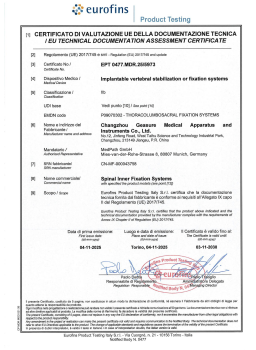
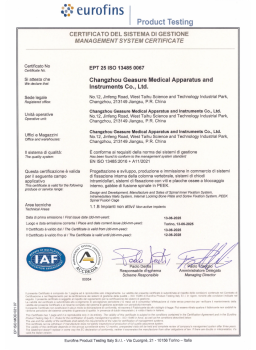
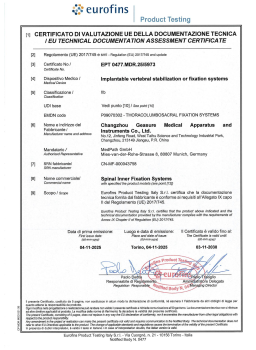
The global orthopedic medical device sector is undergoing a massive structural shift. As hospital networks and healthcare purchasing organizations (GPOs) demand stringent clinical performance alongside economic feasibility, sourcing high-grade orthopedic implants from top-tier Chinese manufacturers has become a core strategic pillar for international medical distributors. Sourcing from China is no longer merely a cost-reduction exercise; it is an integration into one of the world's most advanced precision-machining ecosystems, featuring automated 5-axis CNC machining, biomedical metallurgy research, and standardized Quality Management Systems (QMS) complying with ISO 13485 and European Union Medical Device Regulation (EU MDR 2017/745).
Information Gain Insight: The true procurement cost of orthopedic devices is not defined by the initial unit FOB price, but by regulatory friction, lot-to-lot dimensional variance, and instrument-implant interface failure rates. Tier-1 Chinese suppliers mitigate these risks through raw material certification (ASTM F136 / ASTM F2026), 100% laser UDI traceability, and pre-validated surgical instrument matching.
Biomedical Metallurgical Standards: Material Science in Trauma & Spine
A critical metric when evaluating Chinese orthopedic manufacturers is their adherence to international biomedical raw material specifications. Medical devices implanted into the human (or animal) skeletal structure must withstand severe cyclic mechanical loading, bio-corrosive fluids, and friction while exhibiting optimal osseointegration or non-inflammatory inertness. Premier manufacturers strictly source certified titanium alloys, medical steels, and engineering polymers:
| Implant Material Grade |
Standard Specification |
Mechanical Integrity & Yield Strength |
Primary Surgical Applications |
| Ti-6Al-4V ELI (Grade 23) |
ASTM F136 / ISO 5832-3 |
Yield Strength > 795 MPa, High Fatigue Limit |
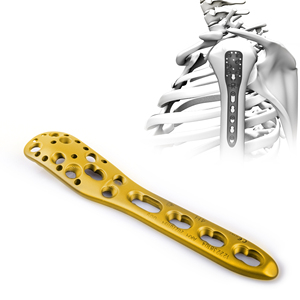
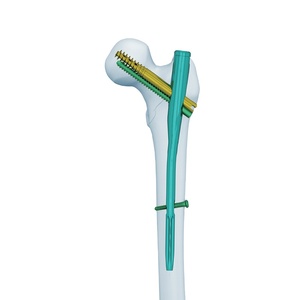
Pedicle Screws, Intramedullary Nails, Locking Fracture Plates |
| Commercially Pure Titanium (CP Ti) |
ASTM F67 / ISO 5832-2 |
Ductile, Superior Intraoperative Contouring |
CMF Maxillofacial Micro/Mini Plates, Cranial Mesh Sets |
| 316L Stainless Steel |
ASTM F138 / ISO 5832-1 |
High Tensile Strength, Passivated Surface Layer |
Trauma Plates, Schanz Pins, External Fixation Rods, Veterinary Plates |
| PEEK (Polyetheretherketone) |
ASTM F2026 |
Modulus (3.6 GPa) Matching Human Cortical Bone |
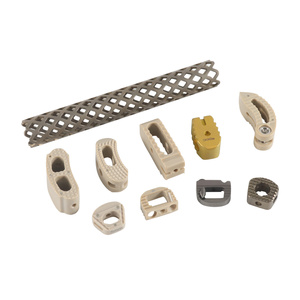
Interbody Fusion Cages (PLIF, TLIF, ALIF), Cervical Cages |
| CoCrMo Alloy |
ASTM F1537 / ISO 5832-12 |
Extreme Wear Resistance, Low Friction Coefficient |
Total Joint Arthroplasty (Hip Femoral Heads, Knee Components) |
Top OEM suppliers utilize optical emission spectrometers and ultrasonic flaw detectors for incoming inspection. This guarantees that bar stock contains no internal porosity or structural defects prior to high-speed CNC turning and milling operations.