Featured Orthopedic Implant Systems & Surgical Toolkits
Medical-grade titanium and stainless steel implant solutions engineered for trauma, spine, sports medicine, joint arthroplasty, and veterinary surgeries.
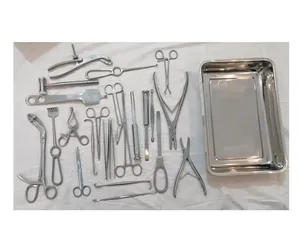
Orthopedic & Dental Surgical Instrument Kit (13/18/26 Pcs)
Send an Inquiry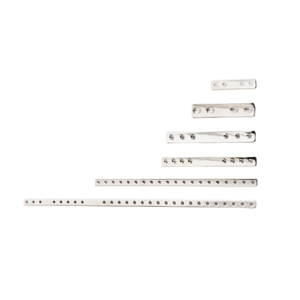
Veterinary Orthopedic Trauma Implants (2.0/2.4/2.7mm)
Send an Inquiry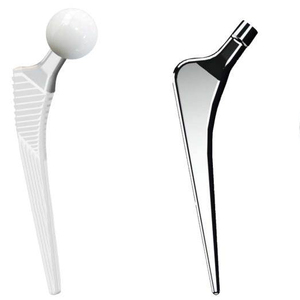
Total Knee & Hip Joint Endoprosthesis Arthroplasty System
Send an Inquiry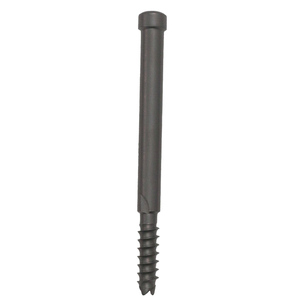
Proximal Femoral Nail (PFN) System 8.0mm Lag Screws
Send an Inquiry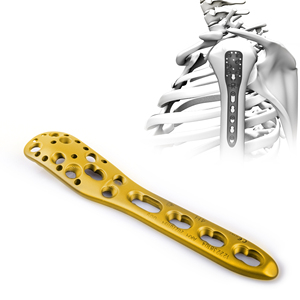
Proximal Humeral PHILOS Titanium Locking Plate System
Send an Inquiry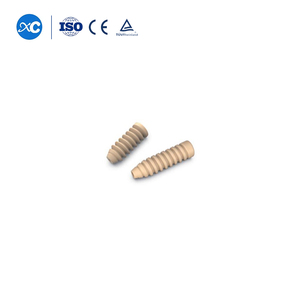
Sports Medicine PEEK & Biocomposite ACL/PCL Interference Screws
Send an Inquiry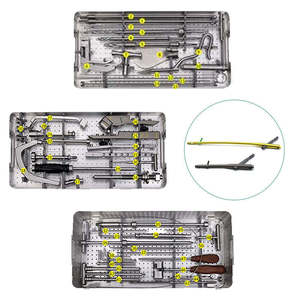
PFNA Interlocking Intramedullary Nail & Surgical Instrument Set
Send an Inquiry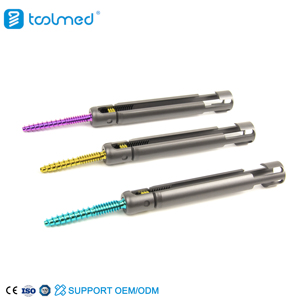
Everest 5.5 MIS Titanium Polyaxial Pedicle Screw Spine System
Send an InquiryNavigating Global Orthopedic Sourcing: China Wholesale Manufacturers vs. India Supplier Ecosystems
The global market for orthopedic implants and trauma fixation devices is undergoing a structural realignment. Driven by escalating healthcare expenditures, stringent regulatory shifts under the European Union Medical Device Regulation (EU MDR 2017/745), and the demand for cost-effective surgical devices in emerging markets, hospital procurement executives and medical device distributors are re-evaluating their supply chain partnerships. Historically dominated by Western OEMs (Original Equipment Manufacturers), procurement strategies are now shifting toward direct partnerships with high-tier contract manufacturers located in primary manufacturing clusters: notably China and India.
When evaluating titles such as "China Wholesale Orthopedic Implant Manufacturer vs. India Factories & Supplier," global buyers must move beyond superficial price-per-unit metrics. Sourcing medical implants—whether they are pedicle screws, intramedullary nails, locking compression plates, or total joint prostheses—demands an in-depth technical analysis of material purity, metallurgical fatigue strength, micro-machining capabilities, surface passivation protocols, and regulatory dossier comprehensiveness.
This technical whitepaper provides healthcare distributors, tender buyers, and OEM brand owners with an objective framework to assess manufacturing capabilities, evaluate risk profiles, and establish strategic supplier relationships with validated manufacturers like Orthomanufacturer Medical Co., Ltd.
Comparative Technical Matrix: China Wholesale Hubs vs. India Manufacturing Clusters
Both China and India have developed robust manufacturing bases for orthopedic hardware. However, systemic differences exist across raw material supply chains, equipment automation levels, surface treatment capabilities, and regulatory technical documentation capabilities.
| Assessment Parameter | China Wholesale Manufacturers (e.g., Orthomanufacturer) | India Supplier & Factory Ecosystem | Strategic Procurement Impact |
|---|---|---|---|
| Raw Material Supply Chain | Direct integration with medical-grade titanium (ASTM F136 / Ti-6Al-4V ELI) mills and imported PEEK (ASTM F2026). Full lot certification (EN 10204 3.1). | Dependence on imported raw titanium bar stock; strong domestic stainless steel (ASTM F138) casting and forging capability. | China manufacturers provide higher consistency in titanium alloy fatigue testing and lower material lead times. |
| Machining Infrastructure | High density of 5-axis DMG MORI, Citizen Swiss-type multi-axis CNC lathes, and GF AgieCharmilles EDM machines. | Combination of high-end CNC centers and semi-automated manual lathes; growing 5-axis installation base in Gujarat and Maharashtra. | Chinese suppliers achieve tighter tolerances (±0.005mm vs ±0.01mm) required for complex MIS pedicle screws and interlocking nails. |
| Surface Finishing & Anodizing | Automated Type II and Type III hard anodizing, micro-blasting, citric/nitric acid passivation, and bio-ceramic hydroxyapatite (HA) coating. | Manual to semi-automated passivation tanks; HA coating frequently outsourced to third-party specialty facilities. | Automated surface processing in China eliminates batch-to-batch color variation and ensures uniform oxide layer corrosion resistance. |
| Instrument-to-Implant Match | Integrated manufacturing of implants alongside custom autoclavable instrument sets and sterilization trays in one facility. | Specialized focus on stainless steel surgical instruments; implants and instrument sets are frequently cross-sourced across vendors. | Single-source Chinese manufacturing guarantees zero intraoperative driver slip or thread mismatch. |
| Regulatory Dossier Support | Turnkey CE MDR Technical Documentation, ISO 13485 QMS, FDA 510(k) pathway readiness, and ISO 10993 biocompatibility testing. | Strong CDSCO (India) registration files; selected top-tier suppliers possess US FDA 510(k) and CE marks. | China exporters offer streamlined documentation for fast registration in LATAM, MENA, Southeast Asia, and Eastern Europe. |
| Scalability & Lead Time | Large-scale automated batch production with standard stock programs for high-volume trauma plates and spine rods. | High flexibility for small-batch custom order modifications; longer lead times for multi-thousand unit orders. | Wholesale buyers requiring stable 30-day fulfillment cycles favor China's automated production infrastructure. |
*Data synthesized from global medical device audit reports, ISO 13485 compliance assessments, and metallurgical verification tests (2024-2025).
Implant Grade Materials & Standards Compliance
Biocompatibility and mechanical endurance start with chemical purity. Below is the technical breakdown of materials utilized by leading orthopedic manufacturers.
Titanium Alloy (Ti-6Al-4V ELI)
ASTM F136ISO 5832-3Extra Low Interstitial (ELI) grade titanium provides superior fracture toughness and fatigue resistance for load-bearing pedicle screws, trauma plates, and intramedullary nails. Yield strength ≥ 795 MPa.
Commercially Pure Titanium (CP Ti)
ASTM F67ISO 5832-2Unalloyed titanium available in Grades 1 through 4. Highly ductile for intraoperative anatomical contouring in CMF (Craniomaxillofacial) mini-plates, reconstructive mesh, and low-profile trauma systems.
Surgical Stainless Steel 316LVM
ASTM F138ISO 5832-1Vacuum Arc Remelted (VAR) stainless steel offering maximum micro-cleanliness, resistance to intergranular corrosion, and high tensile strength for temporary trauma implants and external fixators.
PEEK (Polyether Ether Ketone)
ASTM F2026Medical GradeRadiolucent polymer with an elastic modulus (3.6 GPa) closely matching human cortical bone. Eliminates stress shielding in cervical and lumbar spinal fusion interbody cages and ACL interference screws.
CoCrMo & UHMWPE Bearing Couples
ASTM F1537ASTM F648Cobalt-Chromium-Molybdenum alloys paired with Highly Cross-linked Ultra-High Molecular Weight Polyethylene (XLPE) for extreme wear resistance in total hip and knee joint prostheses.
Future Procurement Trends: What Global Importers & Hospitals Must Prepare For
As the orthopedic implant sector advances, procurement strategies are evolving from simple product sourcing to long-term technological integration. Importers, OEM distributors, and healthcare networks must align with manufacturers adopting the following transformational trends:
1. Additive Manufacturing & Porous Titanium
Direct Selective Laser Melting (SLM) 3D printing of trabecular porous structures for spine cages and joint acetabular cups. This eliminates chemical coatings while accelerating bone osseointegration.
2. Minimally Invasive Surgery (MIS) Tooling
Shift toward percutaneous trauma fixators and MIS pedicle screw systems featuring integrated extended tabs, reducing surgical incision size, blood loss, and patient recovery timelines.
3. Bioresorbable & Biocomposite Anchors
In sports medicine, traditional metal anchors are rapidly giving way to biocomposite materials (PLDLA paired with β-TCP) that gradually absorb into native bone, eliminating long-term implant hardware presence.
4. Digital Traceability & Direct UDI Marking
Global regulatory frameworks require direct laser-etched Unique Device Identification (UDI) 2D DataMatrix codes on every micro implant, ensuring end-to-end trace from raw metal heat to surgeon usage.
The 6-Stage Contract Manufacturing & Quality Control Blueprint
To eliminate quality defects, thread galling, and regulatory rejections, Orthomanufacturer Medical Co., Ltd. operates under a strictly controlled six-stage manufacturing and quality assurance pipeline:
Design & DFM Review
3D CAD modeling, finite element analysis (FEA), and Design for Manufacturability (DFM) verification by senior orthopedic engineers.
Raw Bar Inspection
Spectrographic chemical analysis and ultrasonic flaw detection on incoming titanium (ASTM F136) and stainless steel bar stock.
Swiss CNC Machining
Multi-axis precision turning, thread milling, and deep-hole cannulation under continuous CMM dimensional sampling.
Surface Passivation
Automated Type II color anodizing, electropolishing, and citric acid passivation to guarantee anti-corrosion barrier integrity.
Laser UDI Marking
Fiber laser marking of lot numbers, part dimensions, catalog references, and readable UDI DataMatrix codes.
Cleanroom Packaging
Class 10,000 (ISO Class 7) cleanroom ultrasonic cleaning, double blister pouch sealing, and Gamma / EO sterilization validation.
Orthomanufacturer Medical: Enterprise Manufacturing Capabilities
As a dedicated Chinese OEM/ODM manufacturer specializing in orthopedic implants and surgical instruments, Orthomanufacturer Medical Co., Ltd. bridges the gap between cost efficiency and uncompromised precision. Our state-of-the-art production complex is engineered to serve global medical device brands, regional distributors, and hospital tender groups.
Complete System Integration
We manufacture both the implant hardware and the dedicated surgical instrument kits in-house, ensuring 100% ergonomic alignment, driver engagement, and tray organization.
Regulatory Dossier Support
Our regulatory team assists partners with ISO 13485 quality audit reports, CE MDR technical documentation, biocompatibility test files, and local ministry of health registrations.
Flexible OEM & Private Labeling
From custom laser logo etching to localized retail packaging and custom tray configurations, we support private-label branding with zero compromise on IP protection.
Global Sourcing & Technical Procurement FAQ
Answers to common questions asked by hospital procurement departments, regulatory affairs specialists, and medical device distributors.
Partner with a Validated Orthopedic Implant Manufacturer
Request factory-direct wholesale pricing, OEM private label technical consultation, or sample evaluation kits for your target regional market.
Send an Inquiry