Strategic Overview: Sourcing China Wholesale Orthopedic Implants for Latin America
The Latin American medical device landscape is undergoing a systemic structural pivot. Historically reliant on high-cost Western multinational original equipment manufacturers (OEMs) from North America and Western Europe, regional hospital chains, public health ministries (such as Brazil's SUS and Mexico's IMSS), and independent surgical distributors are actively restructuring their procurement vectors. Rising healthcare expenditure, expanding middle-class demographics, and legislative mandates demanding cost-effective clinical care have accelerated the demand for high-precision, direct-factory Chinese orthopedic manufacturing.
As a specialized China wholesale orthopedic implants supplier for Latin America factories & factory networks, Orthomanufacturer Medical Co., Ltd operates at the intersection of metallurgical mastery, ultra-precision CNC Swiss machining, and regional regulatory compliance. Procurement officers across Brazil, Mexico, Colombia, Chile, Argentina, and Peru no longer evaluate Chinese manufacturing solely on landed unit-cost metrics. Instead, modern supply chain leadership focuses on total value engineering: verified biocompatibility, raw material certification, fatigue-life biomechanical stability, and seamless registration dossiers tailored for ANVISA, COFEPRIS, and INVIMA audits.
Information Gain Insight: Sourcing directly from an established Chinese OEM manufacturer eliminates multi-tiered regional brokerage fees, reducing landed acquisition costs by 35% to 55% while maintaining strict adherence to international material standards such as ASTM F136 (Ti-6Al-4V ELI) and ASTM F2026 (PEEK).
Macroeconomic Drivers of LatAm Orthopedic Import Growth
Latin America represents one of the fastest-growing global markets for trauma fixation, spinal fusion, and arthroplasty procedures. Factors driving this expansion include:
- Epidemiological Transitions: An aging demographic curve in Brazil, Mexico, and Argentina leading to higher incidences of degenerative disc disease, osteoarthritis, and osteoporosis requiring surgical intervention.
- Trauma Burden: Elevated rates of traffic-related orthotrauma and industrial fractures requiring anatomical locking plate systems, intramedullary nailing, and emergency external fixation.
- Public Tender Decentralization: Government healthcare tenders increasingly incentivize high-quality alternative vendors that fulfill international standards without inflated brand premiums.
Engineering Excellence: Product Classifications & Biomechanical Metallurgy
Medical implant durability is fundamentally dictated by atomic-level metallurgical purity and surface energy modification. Implants fabricated for long-term load-bearing applications in human anatomy must endure millions of cyclic stress loads without undergoing fretting corrosion, fatigue fracture, or adverse biological tissue reactions.
1. Spinal Fixation Systems (Thoracolumbar & Cervical Solutions)
Our spine portfolio incorporates both open surgical techniques and Minimally Invasive Surgery (MIS) paradigms. The flagship COXII Pedicle Screw-Rod 6.0 System features a low-profile polyaxial head architecture designed to minimize soft-tissue disruption. Utilizing dual-thread geometries, these screws achieve enhanced pedicle cortical anchorage and rapid insertion speeds. Matched with radiolucent Polyetheretherketone (PEEK) interbody fusion cages (ASTM F2026), our spinal constructs maintain optimal elasticity modulus matching natural human cancellous bone, significantly reducing stress shielding and subsidence risks.
2. Trauma & Anatomical Locking Plate Systems
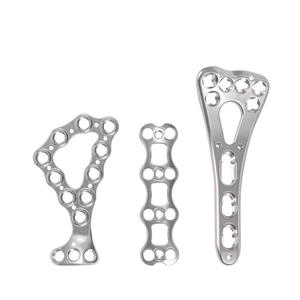
Trauma management requires precise anatomical pre-contouring to facilitate fracture reduction and early mobilization. Our 2.4/2.7mm Variable Angle Distal Radius Volar Locking Plates incorporate combi-hole technology, permitting dynamic axial compression alongside targeted angular-stable locking screw fixation. Fabricated from Commercially Pure Titanium (ASTM F67) for localized malleable adaptation or High-Strength Ti-6Al-4V ELI (ASTM F136), these systems satisfy complex intra-articular fracture reduction requirements.
3. Joint Arthroplasty & Femoral Hip Prostheses
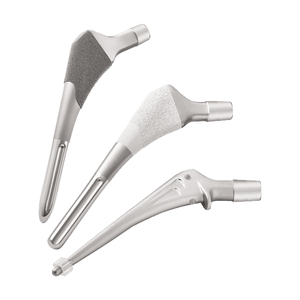
For hip reconstruction, the ZIMMER M/L 12/14 Taper Hip Prosthesis Femoral Stem standard offset represents an industrial-grade ODM benchmark. Engineered with a double-tapered wedge design and forged from high-fatigue titanium alloy, the stem promotes proximal osseointegration through grit-blasted or plasma-sprayed hydroxyapatite (HA) surface topographies. Paired with CoCrMo (ASTM F1537) femoral heads and Ultra-High-Molecular-Weight Polyethylene (UHMWPE ASTM F648) acetabular liners, these joint prostheses deliver superior tribological performance and exceptionally low wear rates.
4. Custom 3D-Printed Implants & Bio-Compatible Additive Manufacturing
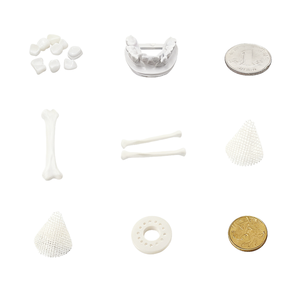
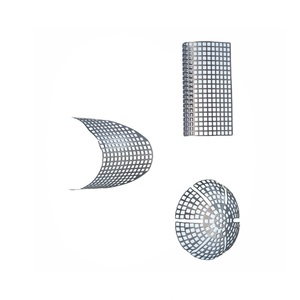
Addressing complex oncological resections and severe maxillofacial or pelvic defects, our direct metal laser sintering (DMLS) 3D printing capabilities allow custom patient-matched implants. Utilizing trabecular titanium mesh geometries, additive manufacturing yields porous architectures (60–80% porosity) that emulate natural bone trabeculae, accelerating osteoblast infiltration and biological vascularization.
Material Specification & International Standards Matrix
To assist Latin American regulatory affairs teams and hospital procurement committees during vendor audit technical reviews, the following matrix outlines our standardized material baselines:
| Implant Material Grade |
International Standard |
Tensile Strength (MPa) |
Primary Clinical Application |
Osseointegration Properties |
| Ti-6Al-4V ELI |
ASTM F136 / ISO 5832-3 |
≥ 860 |
Pedicle Screws, Intramedullary Nails |
High (Anodized Surface Option) |
| CP Titanium (Grades 2-4) |
ASTM F67 / ISO 5832-2 |
240 – 550 |
CMF Plates, Titanium Mesh |
Excellent Tissue Biocompatibility |
| 316L Stainless Steel |
ASTM F138 / ISO 5832-1 |
≥ 860 |
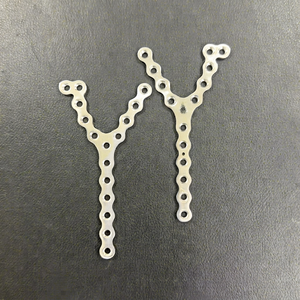
Trauma Plates, Y-Reconstruction |
Standard Corrosion Resistance |
| PEEK Optima |
ASTM F2026 |
90 – 100 |
Spinal Fusion Interbody Cages |
Radiolucent / Non-Magnetic |
| CoCrMo Alloy |
ASTM F1537 / ISO 5832-12 |
≥ 897 |
Femoral Heads, Knee Components |
Ultra-Low Wear Coefficient |
Future Trends: The Evolution of Latin American Orthopedic Supply Chains (2025–2030)
The Latin American orthopedic market is undergoing structural shifts driven by technological innovation and regulatory harmonization. Forward-thinking distributors and factory partners must align with several critical macro-trends:
1. Transition Toward Minimally Invasive & Motion-Preserving Technologies
Surgeons across major medical hubs in São Paulo, Mexico City, Bogotá, and Santiago are shifting from traditional open spinal fusion to Minimally Invasive Surgical (MIS) techniques and motion-preserving non-fusion systems. Demand is surging for percutaneous pedicle screw instrumentation, expandable interbody cages, and flexible dynamic stabilization solutions. Suppliers capable of bundling precision MIS implants with custom ergonomic cannula instrument sets gain significant competitive leverage.
2. Rapid Adoption of Patient-Specific Implants (PSI) and Additive Printing
Standard off-the-shelf trauma and revision implants frequently fail to address complex anatomical deformities. The integration of high-resolution 3D CT scanning with industrial DMLS 3D printing enables Chinese factories to manufacture patient-specific implants within accelerated 10-to-14-day turnarounds. Latin American distributors who establish direct OEM additive manufacturing channels can capture high-margin specialized surgical markets.
3. Nearshoring, Inventory Buffering & OEM Private Labeling
Global supply chain volatility has made maintaining excessive safety stock economically challenging for Latin American importers. The emerging strategy centers on direct OEM partnerships with Chinese factories offering consolidated freight shipping, custom private-label laser marking, and localized kit assembly. By receiving pre-assembled, sterile-ready or tray-ready implant systems under their own registered brand name, LATAM distributors solidify brand equity and secure long-term hospital contract renewals.
Factory Advantage: Why Orthomanufacturer Medical Co., Ltd is the Preferred Partner
Establishing an international OEM relationship requires absolute confidence in factory execution, engineering consistency, and ethical compliance. Orthomanufacturer Medical Co., Ltd has engineered a rigorous manufacturing ecosystem structured specifically around the requirements of Latin American importers.
5-Axis CNC Precision
Utilizing high-speed Japanese and Swiss CNC turning-milling centers, we achieve micron-level tolerances across micro-threads, cannulations, and complex locking hole bevels.
Complete Regulatory Dossiers
We provide full technical documentation, clinical data summaries, ISO 13485 certificates, and detailed material test reports required for ANVISA, COFEPRIS, and INVIMA filings.
100% Micro Laser Marking
Every single screw, plate, and instrument is etched with raw material heat numbers, SKU identifiers, and lot tracking codes, guaranteeing complete bi-directional audit traceability.
End-to-End OEM / ODM Process Workflow
Our collaborative OEM framework simplifies product customization from initial concept to commercial delivery:
- Requirement Mapping & Engineering CAD Review: Reviewing client drawings, target clinical indications, and regional surgical preferences.
- Prototype Machining & Mechanical Testing: Producing sample batches for dimensional validation, surface finish inspection, and static/dynamic fatigue testing.
- Regulatory Documentation Assembly: Compiling ISO 13485 certification, material mill test certificates (MTC), biocompatibility data, and sterilization validation protocols.
- Mass Production & Quality Control: Automated batch machining combined with 100% optical and CMM (Coordinate Measuring Machine) dimensional verification.
- Custom Branding & Export Packaging: Laser marking client logos, custom barcode labeling, protective packaging, and international export logistics handling.
Frequently Asked Questions (FAQ) for Latin American Importers
Addressing the key technical, regulatory, and commercial inquiries from procurement leads in Brazil, Mexico, Colombia, Argentina, and across Latin America.
What technical documentation is provided to support ANVISA, COFEPRIS, or INVIMA registration?
We supply comprehensive technical registration dossiers including ISO 13485 certificates, Certificate of Free Sale (CFS), raw material chemical/mechanical test reports (Mill Certificates), mechanical testing summaries (ASTM F543 for bone screws, ASTM F1717 for spinal constructs), biocompatibility reports, cleaning/sterilization validation guidelines, and Instructions for Use (IFU) translated into Spanish or Portuguese.
How does Orthomanufacturer Medical ensure material authenticity and raw titanium quality?
All titanium (Ti-6Al-4V ELI and CP Titanium), PEEK, and stainless steel raw bar stock is sourced exclusively from certified medical-grade raw material suppliers. Every incoming batch undergoes spectral analysis and mechanical verification. Mill Test Certificates (MTC) matching ASTM/ISO standards are linked directly to unique factory lot numbers.
Can we request custom OEM laser marking and private-label packaging for our distributor brand?
Yes. We provide comprehensive OEM private-label services. We can precision laser-etch your company logo, customized catalog part numbers, and unique lot identifiers directly onto implants and surgical instruments. Furthermore, we support customized box designs, sterile blister packaging, and localized Spanish/Portuguese labeling.
What are the typical Minimum Order Quantities (MOQ) and production lead times for LatAm shipments?
Standard catalog items maintain flexible MOQs to support initial market entry and regulatory sample evaluation. Production lead times for standard wholesale orders typically range from 15 to 30 days. For custom OEM/ODM designs requiring specialized tooling, lead times are confirmed following engineering drawing approval.
Are surgical instrument sets fully compatible with your implant systems?
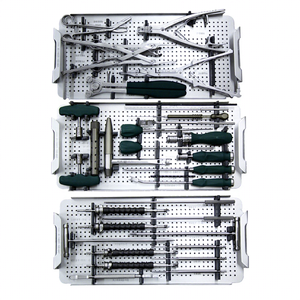
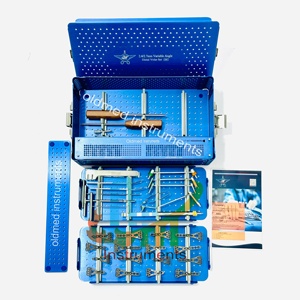
Absolutly. Every implant system—whether spinal pedicle screws, intramedullary nails, or locking plates—is supplied with a dedicated, matching surgical instrument set and sterilization container. Drivers, taps, drill bits, and benders are precision-machined to ensure perfect inter-operative fit without intra-operative stripping or slippage.
How are sample requests evaluated prior to issuing bulk purchasing agreements?
Qualified medical device distributors and hospital procurement committees can apply for physical sample kits to verify surface finishing, dimensional tolerances, thread engagement, and instrument ergonomics before finalizing formal supply contracts.
Partner with China's Premier Orthopedic OEM Manufacturer
Expand your Latin American product portfolio with CE & ISO 13485 certified spine, trauma, joint, and 3D printed medical device systems. Contact our dedicated international export engineering team today for technical catalogs, registration dossiers, and wholesale pricing.