Precision Orthopedic Implants & Surgical Fixation Systems
Engineered to strict metallurgical standards (ASTM F136 Ti-6Al-4V ELI & ASTM F138 316L Stainless Steel) with complete lot traceability for global medical device registration.
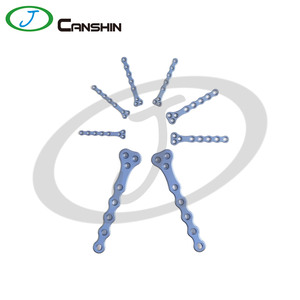
Veterinary Orthopedic T-Type Pure Titanium Locking Plate
- Material: Pure Titanium (ASTM F67 Grade 2/4)
- Low-profile contour minimizes soft tissue irritation
- Optimized for small animal fracture fixation
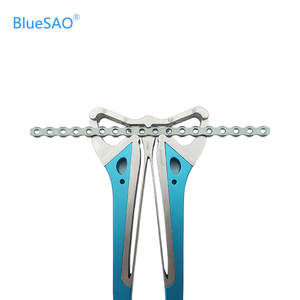
Wholesale Price Veterinary Bone Titanium Implants System
- Biocompatible Ti-6Al-4V ELI (ASTM F136)
- Multi-directional locking technology
- High fatigue resistance for active load recovery
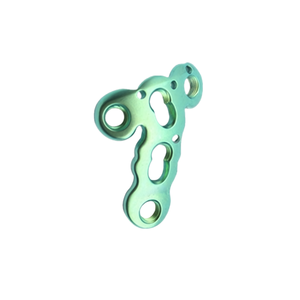
Titanium Proximal Humeral Greater Tuberosity Locking Compression Plate
- Anatomically pre-contoured right/left fit
- Divergent screw trajectory for calcar support
- Class III Medical Device certified production
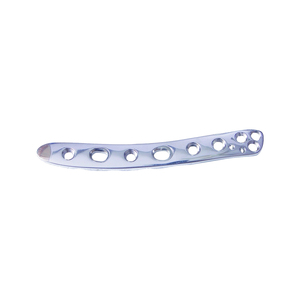
CE Certified 316L Stainless Steel Orthopedic Implants
- Implant-Grade 316L (ASTM F138) Stainless Steel
- Electropolished corrosion-resistant surface
- Cost-effective for high-volume tender compliance
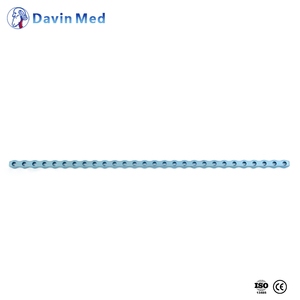
AO-Type ALPS Titanium Reconstruction Locking Plate (2.0-3.5mm)
- Micro-to-small fragment sizes (2.0/2.4/2.7/3.5mm)
- 3D contourable reconstruction plate geometry
- Color-anodized size identification system
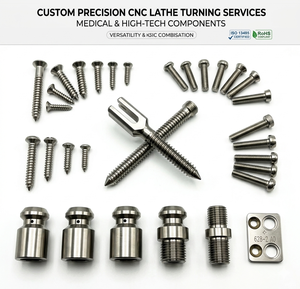
5-Axis CNC Machined Titanium Spinal Pedicle Screw System
- Polyaxial tulip angle flexibility up to 50°
- Double-lead thread design for rapid insertion
- Ti-6Al-4V ELI (ASTM F136) high pull-out force
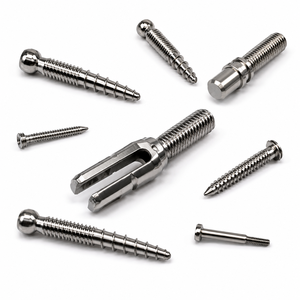
ISO 13485 Precision Titanium & Stainless Bone Screw OEM
- Cortical, Cancellous & Locking Thread configurations
- Micron-level dimensional tolerances (±0.005mm)
- Custom laser etching for lot & SKU identification
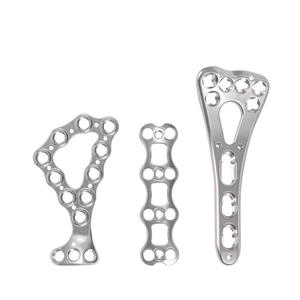
Minimally Invasive Surgery (MIS) Cannulated Pedicle Screw System
- Extended breakaway tabs for percutaneous technique
- Cannulated core for guide-wire placement
- Custom OEM engineering from customer CAD drawings
Navigating the Southeast Asian Orthopedic Implants Market Landscape
The healthcare infrastructure across Southeast Asian nations—including Vietnam, Thailand, Indonesia, the Philippines, Malaysia, and Myanmar—is undergoing a profound transformation. Rapid urbanization, expanding universal health coverage schemes, and rising road traffic trauma cases have created unprecedented demand for surgical-grade orthopedic devices. Historically, regional healthcare networks relied heavily on premium Western brands. However, shifting fiscal policies, tender cost caps, and supply disruption have driven medical equipment importers and hospital systems to seek direct OEM manufacturing partners in China capable of delivering equivalent bio-metallurgical performance at sustainable wholesale price points.
As a specialized China wholesale orthopedic implants supplier and exporter, our engineering facilities operate under rigorous ISO 13485 quality systems. We manufacture comprehensive surgical portfolios covering posterior thoracolumbar spine fixation, distal/proximal anatomical locking compression plates, intramedullary long-bone nails, CMF maxillofacial micro-plates, sports medicine suture anchors, and specialized veterinary trauma systems.
Standardized Raw Material Specifications for Implants
Regulatory authorities across Southeast Asia require absolute proof of material purity, fatigue resistance, and biocompatibility. Every batch of raw bar stock entering our production line undergoes third-party spectrographic analysis and mechanical testing.
| Material Specification | International Standard | Clinical Applications | Key Metallurgical Advantage |
|---|---|---|---|
| Titanium Alloy Ti-6Al-4V ELI | ASTM F136 / ISO 5832-3 | Pedicle screws, spinal rods, intramedullary nails, locking bone plates | Extra Low Interstitial (ELI) purity provides superior fatigue strength, reduced elastic modulus matching natural bone, and zero cytotoxicity. |
| Commercially Pure Titanium (CP Ti) | ASTM F67 / ISO 5832-2 | CMF micro/mini plates, reconstruction mesh, cranial trauma plates | Exceptional intraoperative malleability allowing surgeons to contour plates precisely to complex anatomical facial bone structures without micro-fracturing. |
| Stainless Steel 316L | ASTM F138 / ISO 5832-1 | Trauma compression plates, Schanz pins, external fixator rods, power tool bits | High mechanical tensile strength, rigid fracture fixation, and specialized passivation treatments ensuring resistance to physiological pitting corrosion. |
| PEEK Optima (Polyetheretherketone) | ASTM F2026 | Transforaminal (TLIF), Posterior (PLIF), and Cervical (ACDF) interbody cages | Radiolucent properties under fluoroscopy allow post-operative artifact-free fusion assessment; elastic modulus (3.6 GPa) closely mimics cancellous bone. |
| CoCrMo (Cobalt-Chromium Alloy) | ASTM F1537 / ISO 5832-12 | Joint prostheses, femoral heads, articulating knee joint components | Extreme wear resistance and high surface hardness polished to mirror finishes (Ra < 0.02 µm) for low friction in joint replacement. |
| UHMWPE (Ultra-High Molecular Weight PE) | ASTM F648 | Acetabular liners, tibial knee inserts, suture anchor cords | Superior impact resistance, ultra-low wear rate against metal bearing surfaces, and proven long-term clinical survivability. |
Comprehensive Medical Device Systems for B2B Supply Networks
We do not merely sell standalone components. We export complete surgical solutions comprising implants, color-coded trial instruments, and autoclavable aluminum sterilization cases.
Thoracolumbar & Cervical Spine Systems
Featuring pedicle screw systems in polyaxial, monoaxial, and MIS cannulated variations. Coupled with PEEK ACDF/TLIF cages and anterior cervical plating systems designed for high pull-out stability and zero back-out locking mechanisms.
Intramedullary Nail Interlocking Systems
Cannulated titanium nails engineered for femoral, tibial, and humeral diaphyseal fractures. Includes carbon-fiber aiming arms for shadow-free X-ray targeting, allowing distal locking screws to be placed with millimeter accuracy.
Anatomical Trauma Locking Compression Plates
Pre-contoured titanium and stainless steel plates covering distal radius, proximal humerus, distal femur, and tibial plateau. Combination holes permit intraoperative choice between angular stable locking and dynamic compression.
CMF & Maxillofacial Fixation Systems
Ultra-low profile micro (1.0mm, 1.5mm) and mini (2.0mm, 2.4mm) pure titanium plates for orthognathic, craniofacial reconstruction, and mandibular fracture trauma with color-coded self-tapping screws.
Veterinary Surgical & AO ALPS Systems
Dedicated small and large animal orthopedic lines including T-plates, reconstruction plates, and Bluesao-compatible systems. Specially heat-treated titanium alloys tailored to canine and feline biomechanical loads.
Sports Medicine & Arthroscopy Fixation
High-strength PEEK and Titanium suture anchors for rotator cuff and labral repair, cortical button suspension devices for ACL/PCL reconstruction, and interference screws engineered for rigid soft-tissue graft fixation.
Southeast Asian Orthopedic Procurement Trends (2025–2030)
Understanding regional commercial dynamics is essential for medical device exporters and local importers seeking long-term profitability. Over the next five years, four decisive procurement trends will reshape the orthopedic landscape across Southeast Asia:
Universal Health Expansion
Schemes such as Indonesia's BPJS Kesehatan, Vietnam's Health Insurance Program, and the Philippines' PhilHealth are expanding coverage to rural public hospitals. This rapid volume surge creates massive demand for high-quality, cost-contained trauma plates and bone screws.
CSDT Dossier Harmonization
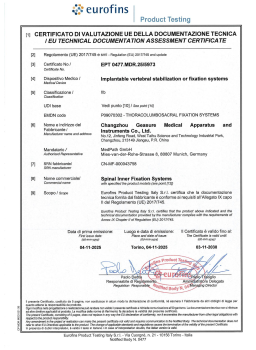
ASEAN member states are increasingly adopting the Common Submission Dossier Template (CSDT). Suppliers must provide complete technical documentation—including ISO 13485 certificates, biocompatibility studies (ISO 10993), and sterilization validation—to streamline local filings.
Turnkey System Preference
Distributors are shifting away from piecemeal component sourcing. Operating theaters demand complete implant kits accompanied by matched, ergonomic surgical power tools, drill guides, and quick-coupling drivers to prevent intraoperative tool failure.
Next-Generation Orthopedic Manufacturing Innovations
As orthopedic surgery advances toward minimally invasive procedures and personalized patient care, China’s medical manufacturing sector is investing heavily in state-of-the-art technological infrastructure. Key technological innovations currently integrated into our manufacturing lines include:
3D Printed Porous Titanium
Direct Metal Laser Sintering (DMLS) creates biomimetic trabecular structures with 60-70% porosity. This porous topology drastically accelerates osseointegration in interbody spinal fusion cages and custom acetabular defect cups.
Micro-Arc Anodization (MAO)
Advanced electrochemical surface modification producing bioactive ceramic layers on titanium implants. MAO coatings significantly enhance corrosion resistance while promoting osteoblast cell adhesion and proliferation.
MIS Percutaneous Systems
Transitioning from traditional open spine procedures to Minimally Invasive Surgery (MIS). Our cannulated pedicle screws and extended breakaway sleeves allow surgeons to perform spinal stabilization through sub-centimeter skin incisions.
Orthomanufacturer Medical Factory & OEM Capabilities
Located in China's premier medical device manufacturing hub, our state-of-the-art facility integrates raw material verification, high-precision Swiss CNC turning, multi-axis milling, and ISO Class 7 cleanroom packaging.
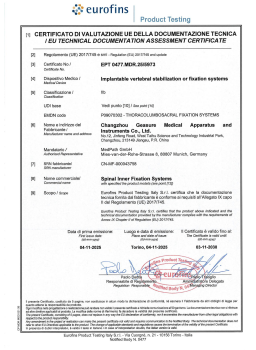
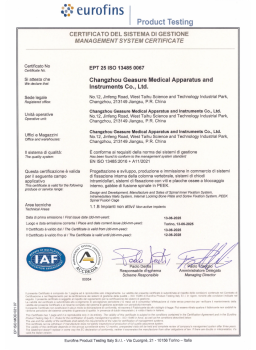
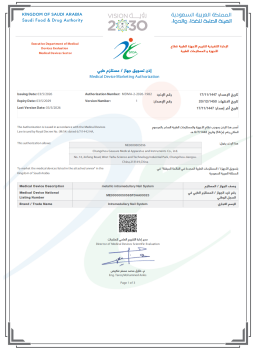
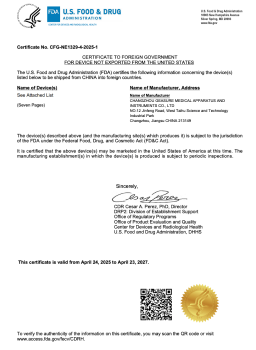
Our factory employs imported 5-axis DMG MORI and Citizen Swiss-type lathes capable of machining intricate bone screw threads and dynamic locking plate holes with repeatable tolerances within ±0.005mm. Every finished implant undergoes ultrasonic cleaning in purified water systems, automated optical dimensional verification, laser branding, and controlled packaging in compliance with international export protocols.
Frequently Asked Questions for Southeast Asian Procurement
What technical documentation is provided to support medical device registration in SE Asia?
Can Orthomanufacturer Medical accommodate custom OEM/Private Label branding?
How do you ensure batch-to-batch consistency and thread fit between screws and plates?
What are the typical Minimum Order Quantities (MOQ) and production lead times?
Are your surgical instrument sets compatible with existing Western or regional systems?
How can overseas distributors request physical evaluation samples?
Partner with China’s Premier Orthopedic OEM Exporter
Expand your product portfolio with hospital-grade spine, trauma, and CMF systems. Request complete price catalogs, regulatory dossiers, and physical sample kits today.