Featured Medical-Grade Orthopedic Implants & Surgical Hardware
Direct factory supply featuring ASTM F136 titanium alloy, ISO 13485 certified quality systems, and complete lot traceability from raw billet to sterile operating room packaging.
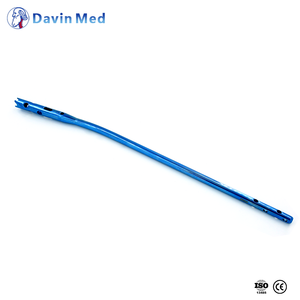
Orthopaedic Medical Implants Wholesale Titanium Hospital Use Multiple Length Cannulated Tibial Interlocking Intramedullary Nail
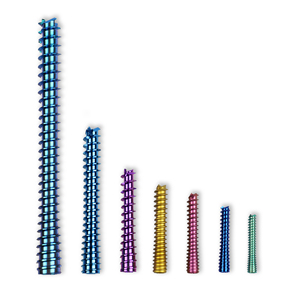
CANWELL Titanium Headless Cannulated Compression Screws Orthopedic Trauma Implant System CE Certified
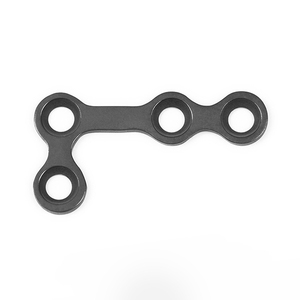
Orthopedic Implant Solutions Advanced Veterinary Fracture Repair Systems Hot Sale Surgical Orthopedic Implants with Cheap Price
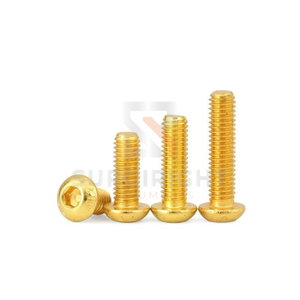
Wholesale Bone Screw Export Quality Orthopedic Implant Manufacturer And Supplier For Trauma Surgery by SurgiRight
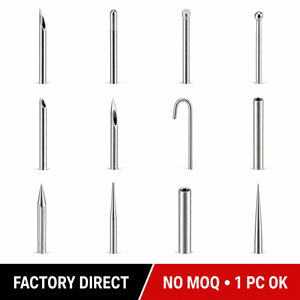
Micro Bone Screw Titanium Medical Grade Swiss CNC Machined Orthopedic Screw Component Custom OEM
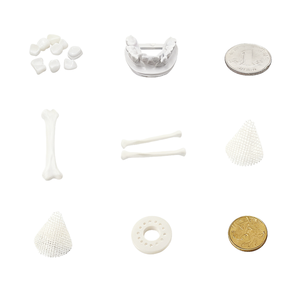
Medical Implant 3D Printing Service Custom Orthopedic Devices Bioprinting Compatibility Precision Craftsmanship
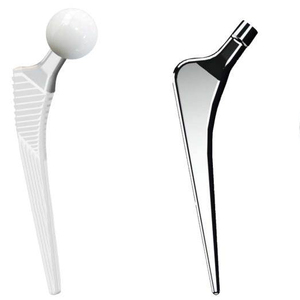
Knee Joint Prosthesis Hip System Orthopedic Implants Prosthetics Joints Endoprosthesis
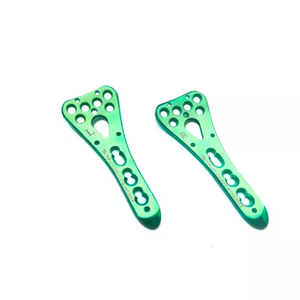
High Quality Variable Angle Volar Titanium Plate Orthopedic Veterinary Surgical Implant CE ISO Approved Titanium bone plates
The global orthopedic implant landscape is undergoing a structural realignment. Healthcare systems, medical device importers, and regional hospital networks are navigating persistent inflationary pressures, reduced reimbursement rates, and stringent regulatory compliance regimes under the European Union Medical Device Regulation (EU MDR 2017/745) and US FDA 510(k) protocols. In this economic and clinical environment, establishing direct procurement relationships with a verified China wholesale reliable orthopedic implant manufacturer is no longer merely a cost-reduction strategy—it is a cornerstone of strategic enterprise resilience and margin protection.
Over the past decade, China’s medical device manufacturing sector has evolved from secondary contract machining to advanced high-precision biomechanical engineering. State-of-the-art facilities now combine 5-axis Swiss CNC precision turning centers (such as Citizen and Star), Direct Metal Laser Sintering (DMLS) 3D titanium additive bioprinting, and fully automated multi-stage passivation and anodizing lines. By pairing advanced metallurgy—such as implant-grade Ti-6Al-4V ELI (ASTM F136 / ISO 5832-3) and PEEK (ASTM F2026)—with rigorous ISO 13485:2016 quality management systems, leading Chinese suppliers deliver implant devices that match Tier-1 Western multinational specifications at a significantly optimized total cost of ownership (TCO).
However, navigating the supplier ecosystem requires rigorous vetting. Procurement executives must evaluate technical documentation completeness, lot-level metallurgical traceability, dynamic fatigue testing compliance (ASTM F543 for bone screws, ASTM F2193 for spinal constructs, and ASTM F1264 for intramedullary nails), and instrument-to-implant interface tolerances. This technical white paper provides procurement heads, orthopedic distributors, and OEM buyers with the empirical criteria required to benchmark, audit, and partner with top-tier Chinese manufacturers.
Why Top Global Distributors Partner With Our Factory
We eliminate procurement friction by offering validated technical master files, uniform instrument matching, and zero-defect quality control across all surgical sub-specialties.
Swiss CNC Precision
Utilizing 5-axis Citizen and Star Swiss-type lathes to turn micro bone screws and intricate pedicle screw threads with tight tolerances down to ±0.003mm, eliminating intraoperative thread binding.
Advanced Metallurgy
Full batch certification for ASTM F136 Ti-6Al-4V ELI, ASTM F67 Pure Titanium, ASTM F138 316L Stainless Steel, ASTM F2026 PEEK, and ASTM F1537 CoCrMo alloys sourced from certified medical melt houses.
Complete Technical File
Ready-to-file regulatory dossiers including Biocompatibility Reports (ISO 10993), Sterilization Validations (ISO 11137 / ISO 11135), and Mechanical Test Reports to expedite local registrations.
A reliable supplier must demonstrate horizontal breadth and vertical depth across orthopedic disciplines. Below is an engineering overview of our core product systems engineered for global healthcare demands:
1. Trauma Surgery & Fracture Fixation Systems
Trauma devices require dynamic load-bearing capability and anatomical contouring to promote stable internal fixation and prompt bone healing. Our trauma portfolio encompasses:
- Anatomical Locking Plate Systems: Pre-contoured volar plates, distal radius plates, proximal humerus plates, and lateral tibial plateau plates forged from pure titanium (ASTM F67) and titanium alloy (ASTM F136). Feature combi-holes allowing both locking and cortex screws in a single construct.
- Cannulated Tibial & Femoral Intramedullary Nails: Designed with flexible distal locking options and anatomical bows to minimize soft-tissue trauma during insertion. Manufactured with deep cannulation for guide-wire insertion and polished surface finishes to reduce intramedullary friction.
- Headless Cannulated Compression Screws: Precision Swiss-machined for scaphoid fractures, intra-articular osteotomies, and small bone arthrodesis, providing uniform compression across the fracture line.
- Micro & Mini Bone Screws: Engineered with tight pitch tolerances and deep drive recesses (Torx/Star drives) to prevent cam-out and stripping during high-torque insertion into cortical bone.
2. Spinal Fixation & Interbody Fusion Systems
Spine hardware demands non-negotiable fatigue strength under complex multiaxial loading conditions. Our spinal portfolio offers comprehensive solutions for anterior, posterior, and minimally invasive surgical (MIS) approaches:
- Thoracolumbar Pedicle Screw Systems: Featuring polyaxial and monoaxial screws with dual-lead thread patterns for fast drive-in and enhanced pull-out resistance. Equipped with color-coded cross-links, titanium rods (Ø5.5mm & Ø6.0mm), and ergonomic MIS delivery instruments.
- PEEK & 3D Trabecular Titanium Interbody Cages: Cervical (ACIF) and Lumbar (PLIF, TLIF, ALIF, XLIF) cages molded from medical-grade PEEK (ASTM F2026) with tantalum radiopaque markers, or additive-manufactured with 3D porous titanium structures mimicking natural cancellous bone elasticity to reduce stress shielding.
- Balloon Kyphoplasty Systems: High-pressure inflatable balloon catheters, access needles, bone drill kits, and cement injection guns for vertebral compression fracture (VCF) restoration.
3. Joint Arthroplasty Systems (Hip & Knee Prostheses)
Joint replacement requires ultra-precise tribological surfaces to minimize wear debris and osteolysis. Our endoprosthetic offerings feature:
- Total Hip Arthroplasty (THA): Cementless titanium femoral stems featuring plasma-sprayed hydroxyapatite (HA) coating or porous titanium coating, paired with mirror-polished CoCrMo (ASTM F1537) or biolox delta ceramic heads and Highly Cross-linked Polyethylene (XLPE) acetabular liners.
- Total Knee Arthroplasty (TKA): Anatomical CoCrMo femoral components, mobile or fixed-bearing tibial trays, and ultra-high-molecular-weight polyethylene (UHMWPE ASTM F648) inserts engineered for optimized kinematics and reduced wear rates.
4. Sports Medicine & CMF Systems
- Sports Medicine Anchors: PEEK and suture anchors loaded with UHMWPE high-strength sutures for rotator cuff, labrum, and ACL/PCL reconstruction procedures.
- CMF / Maxillofacial Mini Plates: Ultra-low profile 1.5mm, 2.0mm, and 2.4mm titanium micro-plates and mesh systems for craniofacial trauma, orthognathic surgery, and mandible reconstruction.
- Veterinary Orthopedic Fixation: Specialized TPLO (Tibial Plateau Leveling Osteotomy) plates, micro locking plates, and external fixators designed for small animal and veterinary surgical repair.
Metallurgical Reference Standards for Orthopedic Implants
Review the medical-grade material specifications required for regulatory dossiers and clinical safety compliance when selecting an OEM partner.
| Material Family | International Standard | Mechanical Properties | Target Surgical Applications |
|---|---|---|---|
| Titanium Alloy (Ti-6Al-4V ELI) | ASTM F136 / ISO 5832-3 | Tensile Strength ≥ 860 MPa, High Fatigue Limit | Pedicle Screws, Trauma Locking Plates, Intramedullary Nails |
| Commercially Pure Titanium | ASTM F67 / ISO 5832-2 | High Ductility, Excellent Intraoperative Bending | CMF Mini Plates, Reconstruction Mesh, Volar Plates |
| Stainless Steel (316LVM) | ASTM F138 / ISO 5832-1 | Vacuum Arc Remelted, Corrosion Resistant | Trauma Screws, Schanz Pins, External Fixation Rods |
| Polyetheretherketone (PEEK) | ASTM F2026 | Elastic Modulus (3.6 GPa) Close to Human Bone | Spinal Interbody Fusion Cages, Suture Anchors |
| Cobalt-Chromium Alloy | ASTM F1537 / ISO 5832-12 | Superior Wear Resistance, Mirror Polished | Total Knee Femoral Components, Hip Femoral Heads |
| UHMWPE / XLPE | ASTM F648 / ISO 5834-2 | Ultra-Low Friction Co-efficient, High Impact Strength | Acetabular Liners, Tibial Poly Inserts |
The global medical supply chain is transitioning toward integrated, digitized, and agile procurement frameworks. Importers and hospital procurement groups looking to maintain a competitive advantage must align with manufacturers adopting the following technological trends:
3D Trabecular Porous Implants
Transitioning from traditional plasma spray coatings to direct 3D printed porous titanium matrices (pore size 300–500μm). This fosters rapid osteointegration and bone ingrowth directly into the implant core.
Patient-Specific Implants (PSI)
Rapid turnaround for complex oncological and maxillofacial reconstructions utilizing DICOM CT image conversion into custom-printed titanium implants within 7–10 days.
Modular & Single-Use Kits
Supplying pre-packaged, sterile, single-use surgical instrument kits bundled with implant sets to reduce operating room reprocessing costs and hospital cross-contamination risks.
UDI & Laser DataMatrix Marking
Mandatory deployment of Unique Device Identification (UDI) direct part marking via high-precision fiber laser etching to guarantee full regulatory compliance under GS1 global standards.
To avoid costly product recalls, registration rejections, or clinical failures, international buyers must perform strict audit verification before finalizing manufacturing agreements. Use this 5-point qualification framework during supplier evaluation:
- Audit the Certificate Scope: Verify that ISO 13485:2016 certificates specifically cover the design, development, and manufacturing of active and non-active surgical implants rather than simple non-medical hardware.
- Inspect Material Mill Certificates: Require heat-lot specific chemical composition and tensile test certificates from accredited laboratories (e.g., SGS or certified steel/titanium mills) for every incoming batch of raw bar stock.
- Evaluate Device History Records (DHR): Ensure the factory maintains complete 100% lot traceability linking raw material melt heats, CNC machine logs, passivating bath chemistry, laser marking logs, cleanroom particulate counts, and gamma/EO sterilization certificates.
- Verify Tooling & Instrument Matching: Request physical sample evaluation sets to confirm zero tolerance play between screwdriver tips and screw recess heads (e.g., T10/T15 Torx drives) and seamless fit between drill guides and locking plate bushings.
- Review Packaging & Cleanroom Controls: Confirm that sterile-pack products are sealed in dual-layer Tyvek-PET/PP pouches inside an ISO Class 7 (Class 10,000) or ISO Class 8 cleanroom environment with ongoing bioburden and seal integrity testing (ASTM F88 / ASTM F1929).
Frequently Asked Questions (FAQ) for Global Procurement
Detailed answers regarding regulatory support, OEM private labeling, order quantities, and technical documentation.
What regulatory documentation do you provide for local product registration? +
What is your capability for OEM contract manufacturing and private labeling? +
How do you guarantee material purity and mechanical strength? +
Can we evaluate samples for dimensional and instrument fit testing before placing volume orders? +
What are your typical Minimum Order Quantities (MOQ) and production lead times? +
How are implants washed, passivated, and packaged? +
Ready to Build Your Orthopedic Supply Chain Partnership?
Connect directly with our senior biomedical engineers and export sales team to request catalog prices, technical master files, or custom OEM manufacturing quotes.