Future Global Procurement Trends in Orthopedic Implants
The global market for orthopedic implants is undergoing a structural shift driven by demographic aging, regulatory tightening, and cost-containment mandates within hospital procurement systems. For medical device distributors and importers, maintaining competitive advantage requires adapting to four key procurement trends:
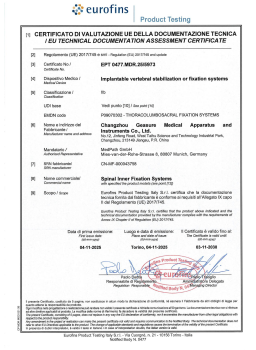
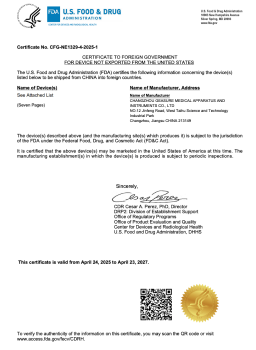
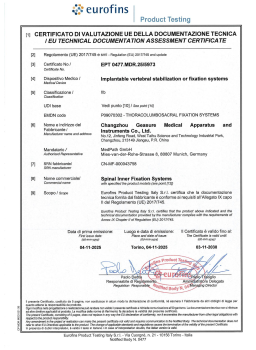
1. Strict Regulatory Harmonization (EU MDR & Global Registration Dossiers): Importers are actively divesting from unverified suppliers that lack detailed STED (Summary Technical Documentation) dossiers. Compliance with the European Union Medical Device Regulation (EU MDR 2017/745) and US FDA 21 CFR Part 820 is no longer optional—it is a baseline requirement for hospital market access.
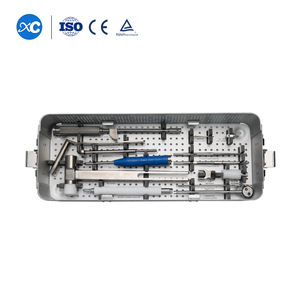
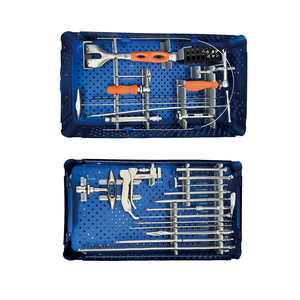
2. Consolidation into Single-Source OEM Ecosystems: Hospital purchasing committees increasingly favor full-system offerings over piecemeal component procurement. Sourcing matching implants, custom instruments, and sterilizable aluminium trays from a single accredited OEM partner minimizes intraoperative compatibility risks and reduces vendor management overhead.
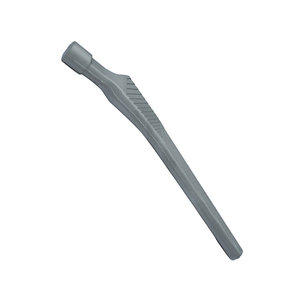
3. Accelerated Growth of Veterinary Orthopedics: Advanced veterinary procedures—such as canine Total Hip Replacement (THR) and Tibial Plateau Leveling Osteotomy (TPLO)—are seeing double-digit annual growth worldwide. Distributors expanding into veterinary trauma portfolios are achieving higher margin profiles.
4. Demand for Contract Manufacturing Transparency: B2B buyers now demand complete traceability from raw material titanium ingots down to final cleanroom laser marking. Real-time factory audits, CMM dimensional verification reports, and lot material test certificates are now integrated directly into supplier performance scoring.
Next-Generation Orthopedic Implant Technology & Development Trends
Orthopedic implant design is rapidly advancing toward biomechanical biomimicry and patient-specific customization. Key engineering breakthroughs shaping future product development include:
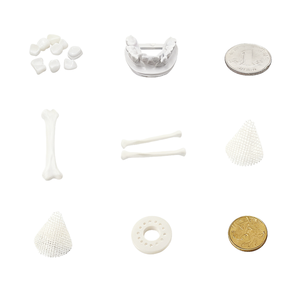
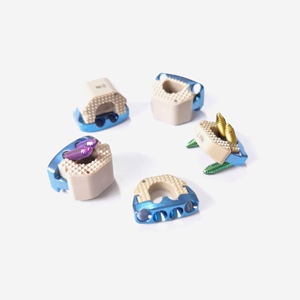
Additive Manufacturing & Porous Trabecular Lattices: Traditional solid titanium implants are being supplemented by 3D-printed selective laser melting (SLM) devices. By engineering continuous porous structures with pore sizes ranging between 400 µm and 700 µm, modern implants mirror the elastic modulus of human cancellous bone. This drastically reduces stress shielding, prevents implant loosening, and stimulates rapid bony ingrowth.
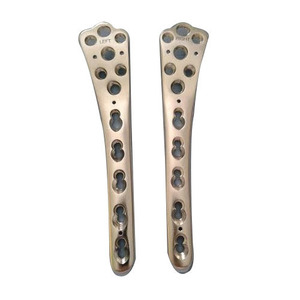
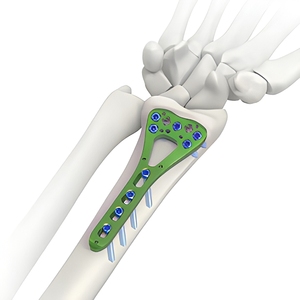
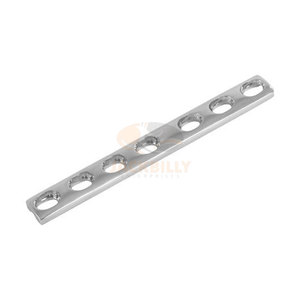
Multi-Axial Polyaxial Locking Mechanics: Conventional monoaxial locking screws are giving way to polyaxial mechanisms that allow surgeons to angle screws within a 30° cone prior to locking. This flexibility is critical for complex periarticular fractures where anatomical space is constrained.
Bioactive & Antibacterial Surface Functionalization: Research and development focuses heavily on surface coatings that deter bacterial adhesion while promoting osteoblast proliferation. Plasma-sprayed Hydroxyapatite (HA) combined with silver nanoparticle or nano-copper surface impregnation represents the next frontier in reducing post-operative surgical site infections.