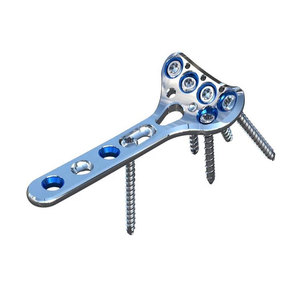
Spine Fixation
Direct factory production certified to ISO 13485 & CE standards. Full lot traceability, Swiss 5-axis CNC machining, and matched surgical instrumentation.
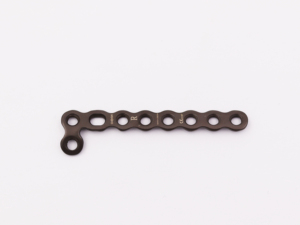
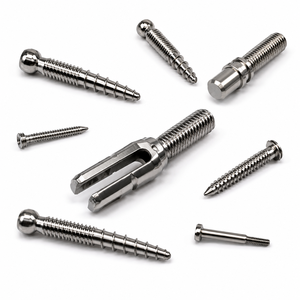
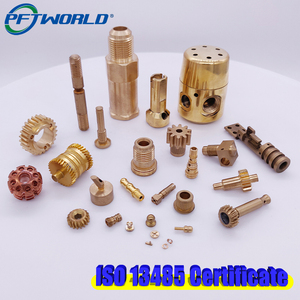
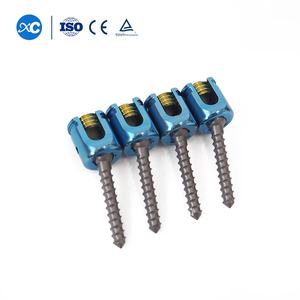
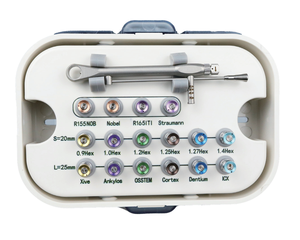
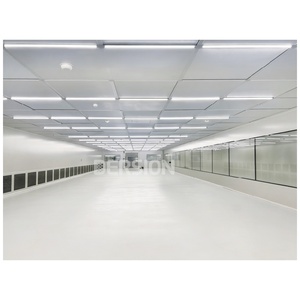
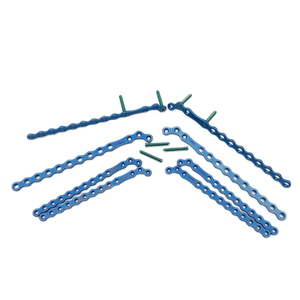
Navigating technical capabilities, material purity standards, biomechanical fatigue thresholds, and international regulatory compliance for long-term orthopedic supply chain stability.
In modern orthopedic manufacturing, selecting an OEM partner or contract supplier requires rigorous technical evaluation that goes far beyond unit pricing. Orthopedic implants—spanning spinal fixation systems, intramedullary nails, anatomical locking plates, sports medicine anchors, and maxillofacial micro-plates—operate under extreme biomechanical stress within human tissue. A failure in raw material purity, surface passivation, or thread tolerance can result in implant fatigue, revision surgery, or catastrophic clinical failure.
Global medical device buyers, OEM brand owners, and hospital purchasing consortia must systematically compare orthopedic implant manufacturers across six critical technical dimensions: raw material qualification, CNC machining tolerances, surface functionalization, cleanroom contamination control, regulatory technical documentation (DHF/DMR), and supply chain resilience.
Key Procurement Insight: The real cost of an orthopedic supply partner is determined by post-market reliability, speed of regulatory approval (CE MDR 2017/745, US FDA 510(k)), and surgical instrument compatibility. Inferior thread engagement between screwdrivers and implant recesses causes intraoperative delay—the single largest hidden cost in surgical procurement.
When comparing custom OEM manufacturers against standardized commodity suppliers, technical buyers should analyze production infrastructure using standardized engineering metrics:
Direct comparative benchmarks of medical-grade alloys and polymers utilized in certified orthopedic implant production.
| Material Alloy / Polymer | Standard Specification | Yield Strength (MPa) | Young's Modulus (GPa) | Primary Clinical Application | Key Mechanical Advantage |
|---|---|---|---|---|---|
| Titanium Ti-6Al-4V ELI | ASTM F136 / ISO 5832-3 | ≥ 795 MPa | 110 GPa | Pedicle Screws, Trauma Plates, Nails | High Fatigue Endurance |
| Commercially Pure Titanium (CP-Ti) | ASTM F67 / ISO 5832-2 | 275 - 480 MPa | 105 GPa | CMF Maxillofacial Micro Plates, Mesh | Superior Intraoperative Contouring |
| Stainless Steel 316LVM | ASTM F138 / ISO 5832-1 | ≥ 690 MPa | 190 GPa | External Fixation, Trauma Pins, Drills | High Rigidity & Cost Efficiency |
| PEEK Optima (Polyetheretherketone) | ASTM F2026 | 110 - 130 MPa | 3.6 GPa | Interbody Cervical & Lumbar Cages | Bone-Like Modulus & Radiolucency |
| Cobalt-Chromium (CoCrMo) | ASTM F1537 / ISO 5832-12 | ≥ 827 MPa | 210 GPa | Joint Arthroplasty (Hip Heads, Knees) | Extreme Wear & Friction Resistance |
| Evaluation Criterion | Precision OEM Medical Partner (Our Standards) | Low-Cost Commodity Supplier | Impact on Hospital / Distributor |
|---|---|---|---|
| Quality Management System | ISO 13485:2016 + FDA 21 CFR Part 820 Audit Ready | Basic ISO 9001 Industrial Certification | High risk of regulatory rejections and audit failures. |
| Lot Traceability | 100% UDI Laser Code mapped to Raw Material Heat # | Paper-based batch grouping with gaps | Instant product recall capability vs total liability exposure. |
| Instrument Calibration | Custom matched driver-recess tolerances (±0.005mm) | Generic machining with loose tolerances | Prevents intraoperative driver stripping in OR. |
| Cleanroom Packaging | ISO Class 7 Controlled Environment Washing & Packing | Standard industrial workshop bagging | Eliminates pyrogen and particle contamination hazards. |
End-to-end medical engineering—from rapid prototyping and FEA stress modeling to mass production and complete STED technical dossier preparation.
Our facility operates state-of-the-art Citizen and Star Swiss multi-axis lathes, producing complex thread profiles, variable-pitch pedicle screws, and cannulated implants with micrometer accuracy.
Automated ultrasonic washing lines integrated with ISO Class 7 cleanrooms guarantee minimal bioburden and bio-particle counts. Type II titanium color anodizing provides intuitive intraoperative color coding.
Every individual implant receives permanent high-resolution fiber laser marking containing SKU, lot batch number, and Unique Device Identification (UDI) matrix code for complete lifecycle tracking.
Implants perform only as well as the instruments used to place them. We manufacture complete, fully integrated instrument sets—taps, drills, aiming arms, and torque wrenches—engineered for flawless fit.
Our regulatory team provides comprehensive documentation packages, including material certificates, biocompatibility reports (ISO 10993), sterilization validation, and clinical risk analysis (ISO 14971).
We offer complete OEM private label solutions, including custom thermoformed double-blister packaging, client-branded outer cartons, IFU printing, and sterile pouch sealing tailored to target regions.
Strategic forces reshaping how medical device distributors, hospital networks, and OEM brand holders manage orthopedic supply chains.
Procurement managers are shifting away from solid machined implants toward electron beam melting (EBM) and selective laser melting (SLM) 3D printed structures. Highly porous trabecular titanium designs mimic human cancellous bone modulus (1.5 - 3.0 GPa), drastically reducing stress shielding while promoting early vascularized osseointegration.
With the full implementation of the European Union Medical Device Regulation (EU MDR 2017/745) and strict FDA Quality System Regulation (QSR) enforcement, distributors are pruning smaller, uncertified vendors. Hospitals are consolidating contract purchases with vertically integrated manufacturers capable of providing complete Design History Files (DHF).
Advancements in CT/MRI 3D reconstruction software have accelerated the market for patient-matched implants. OEM manufacturers must maintain hybrid production workflows—combining high-volume standard product lines with rapid-response custom CNC titanium plates for complex oncological and revision surgeries.
Modern orthopedic operating rooms increasingly rely on robotic navigation systems. Implants and corresponding instruments must meet stringent dimensional tolerances (within ±0.005mm) to ensure optical tracking markers and robotic arm end-effectors align seamlessly during joint replacement and spinal alignment procedures.
Exploring advanced material science, bioactive surface modifications, and smart implant technologies driving surgical evolution.
The global orthopedic implant sector is undergoing a profound paradigm shift driven by bio-materials engineering and smart device technology. Traditional bio-inert metals are rapidly evolving into functional, biologically active constructs designed to actively accelerate bone healing and eradicate postoperative infections.
Postoperative surgical site infection (SSI) remains one of the most devastating complications in orthopedic trauma and total joint arthroplasty. Next-generation OEM manufacturing incorporates advanced surface functionalization techniques:
In pediatric orthopedics and craniomaxillofacial reconstruction, the secondary procedure to remove hardware presents unnecessary patient trauma. OEM engineering is pioneering temporary, bioresorbable fixation implants:
Direct technical answers regarding quality assurance, material compliance, OEM private labeling, and global registration support.
Partner with an established ISO 13485 certified orthopedic manufacturer. Request material mill certificates, technical dossiers, or schedule an engineering drawing review with our specialists.