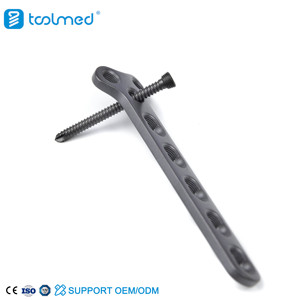
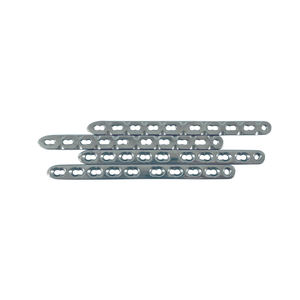
T Type Locking Plate Veterinary Orthopedic Surgical Surgery Implant for Animal Surgery
Veterinary Trauma 316L / Titanium Anatomical Contour
Get a Quote
Engineered to rigorous biomechanical tolerances using implant-grade Titanium (Ti-6Al-4V ELI, CP-Ti) and Stainless Steel (316L). Fully customizable for private-label distribution.
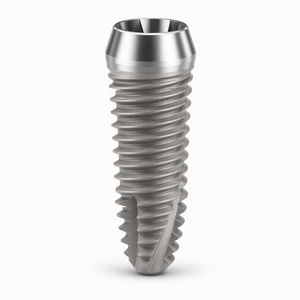
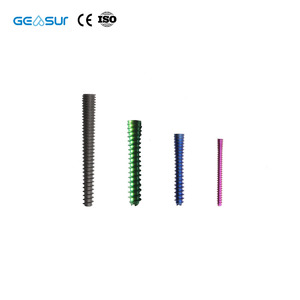
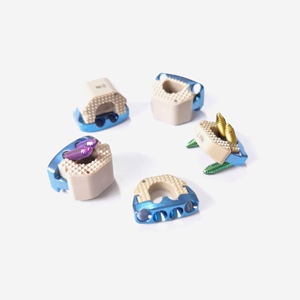
Evaluating material science, Swiss CNC micro-machining, structural biomechanics, and regulatory compliance for medical device procurement leaders.
In the highly regulated ecosystem of international medical device supply chains, selecting an authentic contract manufacturer for orthopedic implants and surgical instruments represents a critical strategic decision. Modern orthopedic procedures—ranging from complex thoracolumbar spinal reconstructions and minimally invasive trauma trauma repairs to specialized craniomaxillofacial (CMF) stabilization and joint arthroplasty—demand absolute mechanical integrity, dimensional repeatability, and surface biocompatibility.
As a specialized Custom OEM orthopedic device manufacturer, Supplier & Exporter, our production architecture bridges advanced biomechanical engineering with rigorous quality assurance protocols. Rather than functioning purely as a sub-contract machine shop, our facility operates as a fully integrated original equipment manufacturing (OEM) and original design manufacturing (ODM) partner. We handle every step of the device lifecycle: from raw titanium bar stock metallurgical verification to multi-axis CNC turn-milling, cleanroom double-sterile packaging, and local regulatory registration dossier assembly.
We supply matched implant-and-instrument systems. By manufacturing both the implant (e.g., pedicle screw or locking plate) and its surgical instrument driver in-place, we eliminate intraoperative tolerance mismatches.
Every batch shipment is accompanied by comprehensive material mill certificates, CMM dimensional inspection reports, passivated surface evaluation documents, and ready-to-file technical files for FDA, CE MDR, and national MoH registrations.
Full OEM private labeling capabilities including precision fiber laser marking (UDI compliance, SKU, lot tracking), custom tray anodization, modular instrument foam inserts, and specialized box packaging.
Medical buyers and hospital procurement directors no longer search simply for low unit costs; they evaluate supply chain resilience, lot-to-lot consistency, and rapid product development cycles. By maintaining internal control over 5-axis CNC machining centers, additive selective laser melting (SLM) for porous titanium structures, and automated Type II anodization lines, we ensure that every device meets exact international standards including ISO 13485 and ASTM biomaterial definitions.
Selecting the appropriate metallurgical substrate is fundamental to biomechanical stability and long-term osseointegration. Reference our standardized material engineering baseline below.
| Material Designation | Standard Specification | Primary Surgical Applications | Biomechanical Advantage |
|---|---|---|---|
| Ti-6Al-4V ELI (Grade 23) | ASTM F136 / ISO 5832-3 | Pedicle screws, spinal rods, intramedullary nails, locking bone plates | Extra-low interstitial grade providing high fatigue strength and low elastic modulus matching human cortical bone. |
| Commercially Pure Titanium (CP-Ti) | ASTM F67 / ISO 5832-2 | CMF maxillofacial plates, titanium mesh, micro-fixation screws | Optimal ductility allowing intraoperative hand contouring without structural micro-fracturing. |
| Surgical Stainless Steel | ASTM F138 / ISO 5832-1 | Trauma fixation plates, Schanz pins, external fixator frames, bone files | High mechanical yield strength, superior stiffness for load-bearing trauma, excellent cost-efficiency. |
| Cobalt-Chromium-Molybdenum (CoCrMo) | ASTM F1537 / ISO 5832-12 | Total hip femoral heads, total knee modular components, joint bearing surfaces | Exceptional tribological wear resistance, scratch resistance, and extreme hardness under high cyclic friction. |
| Polyetheretherketone (PEEK) | ASTM F2026 | Interbody fusion cages (PLIF, TLIF, ALIF), cranial implants | Radiolucent under CT/MRI imaging; elastic modulus (~3.6 GPa) closely mirrors human cancellous bone to prevent stress shielding. |
| UHMWPE / Cross-linked PE | ASTM F648 / ISO 5834-2 | Acetabular cup liners, tibial knee inserts, joint spacers | Ultra-low friction coefficient, high impact absorption, minimal volumetric wear debris generation. |
Key macroeconomic and clinical shifts driving orthopedic procurement strategies for healthcare distributors over the next decade.
Global healthcare providers are moving away from buying piecemeal implants from separate vendors. Modern procurement tenders prioritize suppliers capable of shipping complete pre-sterilized or tray-ready surgical kits. These kits integrate implants, color-coded trial reamers, ergonomic silicon-handle instruments, and aluminum sterilization cases. This turnkey strategy minimizes intraoperative delays, cuts hospital inventory management overhead, and ensures unified warranty coverage across all surgical tools.
With the implementation of the European Union Medical Device Regulation (EU MDR), US FDA UDI regulations, and expanded registration demands across LATAM, MENA, and Southeast Asia, hospital networks require total lot-level transparency. Distributors are eliminating suppliers that lack digital lot tracing. Contract manufacturers must now provide direct laser-etched UDI barcodes on implants down to micro-screws, tied to digital metallurgical test certificates and cleanroom bio-burden test validation.
Large regional hospital chains, Group Purchasing Organizations (GPOs), and established orthopedic distributors are increasingly developing their proprietary branded implant lines. By partnering directly with specialized custom OEM manufacturers, distributors capture 30% to 50% higher margin margins compared to distributing tier-one Western brands. This shift requires OEM manufacturers to offer flexible minimum order quantities (MOQs), custom laser logo engraving, and localized packaging design.
Geopolitical uncertainties and freight fluctuations have forced procurement officers to adopt aggressive dual-sourcing strategies. Medical device brands are establishing primary and secondary OEM manufacturing nodes to guarantee supply security. Contract manufacturers with established raw material buffer stocks, multi-facility CNC operations, and agile international export logistics are winning long-term strategic supply agreements over smaller regional machine shops.
How additive manufacturing, surface bio-functionalization, and smart biomechanics are shaping the next generation of orthopedic device manufacturing.
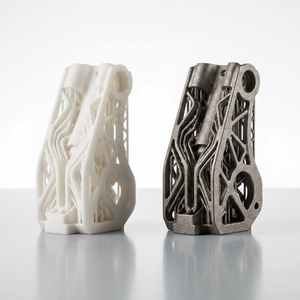
Selective Laser Melting (SLM) and Electron Beam Melting (EBM) technologies allow manufacturers to produce porous 3D titanium structures that directly mimic human cancellous bone. Unlike traditional hydroxyapatite plasma sprays, 3D-printed porous structures are monolithic—eliminating delamination risks while providing an interconnected pore matrix (60–70% porosity, 300–500 µm pore size) that significantly accelerates vascularization and early bone in-growth in spinal cages and acetabular joint cups.
Implant failure often stems from bacterial adhesion leading to surgical site infection (SSI) or aseptic loosening. Next-generation manufacturing incorporates specialized Type II hard anodization, nano-scale hydroxyapatite (nano-HA) chemical deposition, and silver/copper ion-doped surface chemistry. These coatings inhibit biofilm formation without causing systemic toxicity, dramatically increasing long-term implant survival rates in high-risk trauma patients.
The industry is rapidly evolving from standard off-the-shelf anatomical sizes to AI-assisted custom implants generated from patient CT and MRI DICOM datasets. Automated CAD algorithms design patient-specific CMF reconstruction plates, complex pelvic bone tumor defect fills, and custom spinal deformity constructs within hours. Coupled with rapid SLM 3D printing, OEM manufacturers can deliver custom patient implants within days rather than weeks.
From engineering drawing review to final cleanroom inspection, our standardized 5-stage production process guarantees medical-grade precision.
Our biomedical engineers analyze customer 2D/3D CAD models (STEP/IGES), performing Design for Manufacturability (DFM) reviews, stress-strain simulations, and thread engagement calculations before toolpath generation.
Raw medical bar stock (ASTM F136 Titanium, ASTM F138 Stainless) undergoes strict chemical spectrum analysis, tensile strength verification, and microstructural grain testing prior to entering machining centers.
High-precision 5-axis DMG MORI CNC milling and Citizen Swiss screw turning lathes cut complex bone screw threads, cannulated cores, and locking plate contours down to ±0.005mm tolerances.
Components pass through ultrasonic multi-stage degreasing, electropolishing, color-coded anodization, UDI laser etching, and ISO Class 7 cleanroom packaging to maintain ultra-low bioburden levels.
Clear, direct answers regarding quality compliance, OEM customization, sample evaluation, and international distribution support.
We provide comprehensive regulatory registration packages to support your national health authority submissions (e.g., FDA, CE MDR, SFDA, COFEPRIS, ANVISA). Dossiers include ISO 13485 quality system certificates, raw material mill certificates (ASTM F136, ASTM F138, ASTM F67), CMM dimensional inspection reports, biocompatibility test summaries (ISO 10993 series), cleaning/sterilization validation protocols, Instructions for Use (IFU) manuals, and draft localized labeling samples.
Yes. As a dedicated OEM/ODM manufacturer, we regularly produce proprietary implant systems and custom surgical instrumentation from customer-provided CAD drawings (STEP, IGES, SolidWorks files) or reverse-engineered physical samples. Our engineering team conducts full Design for Manufacturability (DFM) reviews, validates CNC toolpaths, and produces functional prototypes for your mechanical fatigue and anatomical fit testing before mass manufacturing.
Implant-to-instrument slippage or driver-recess stripping in surgery is caused when screws and screwdrivers are manufactured by disconnected suppliers. We mitigate this by manufacturing matching implant-and-instrument pairs within the same facility on calibrated Swiss CNC equipment. Every batch of pedicle screw drives, hexalobe recesses, and plate bending pliers is physically cross-checked against corresponding production implants using optical CMM measurement equipment before release.
We maintain flexible MOQ tiers designed to support regional distributors launching new product lines as well as large hospital groups. Standard catalog items with custom laser marking can be fulfilled in smaller batch runs starting from 50 to 100 units per SKU. Fully customized tooling or specialized forging runs generally require 300 to 500 units per SKU. Lead times typically range from 2 to 4 weeks for prototype samples and 4 to 6 weeks for standard production runs.
Every batch of incoming raw material bar stock receives a unique internal heat code linked to its original mill certificate. As raw material moves through CNC turning, polishing, anodization, and packaging, a high-resolution fiber laser marks each individual implant with a UDI-compliant code, lot number, and part SKU. If a distributor ever submits an inquiry, our ERP system immediately traces the specific device back to its exact CNC machine station, operator shift, anodization batch, and raw material mill heat lot.
Yes. We encourage technical and clinical evaluation. Qualified orthopedic distributors, hospital procurement managers, and OEM brand partners can apply for sample evaluation sets. We provide non-sterile sample trays containing bone plates, pedicle screws, intramedullary nails, and matching surgical instruments so your engineering and clinical teams can directly verify thread accuracy, surface finish, anodization quality, and tool ergonomics.
Ready to expand your surgical product lines, reduce supply chain lead times, or launch a proprietary private-label orthopedic brand? Speak directly with our biomedical engineering and export team today.