Featured Orthopedic Implants & Surgical Systems
Explore our standardized and custom-engineered implant families, manufactured under strict ISO 13485 and ASTM quality specifications with full lot traceability.
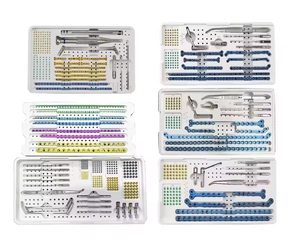
ZMD Veterinary Orthopedic Implants Kit 8.5mm Titanium Bone Plate Plasticity Surgical Instruments
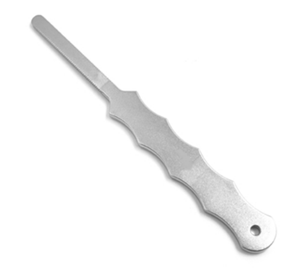
Pet-Specific Stainless Steel Multi-Faced Flat Bone File for Orthopedic Reconstructive Surgery
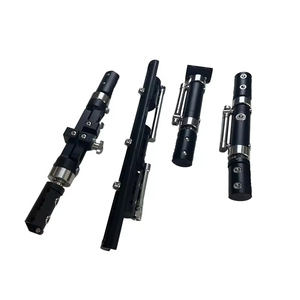
High Quality Tibial & Femur External Fixator System External Fixation Orthopedic Implant Kit
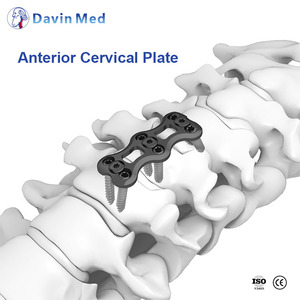
Anterior Cervical Plate System Titanium Alloy Spine Implants & Surgical Fusion Instruments
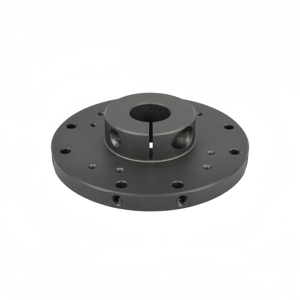
OEM Custom Orthopedic Implant Machined Components Titanium Alloy Precision CNC Parts
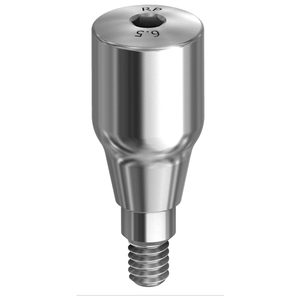
Straight & Angled Prosthetic Abutment 0° 15° 25° Morse Taper Compatible Titanium Implant
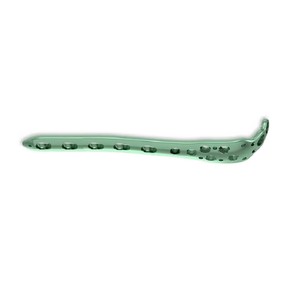
Wholesale Orthopedic Implants & Export Quality Surgical Fixation Instrumentation Solutions
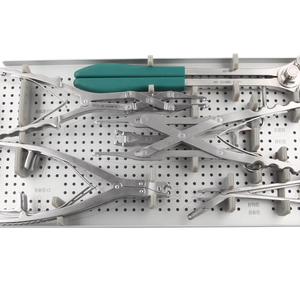
COX 6.0 Screw & Rod System Class I Implant Instruments for Spine & Orthopedic Surgery
1. The Technical Foundation of Custom OEM Orthopedic Manufacturing
In modern orthopedic reconstructive surgery and traumatology, success relies heavily on the mechanical integrity, biocompatibility, and precision fit of internal fixation devices. As a world-class custom OEM orthopedic implant manufacturer, our manufacturing paradigm bridges complex surgical biomechanics with advanced high-precision contract manufacturing. Overseas healthcare distributors, hospital networks, and medical device brand owners require contract manufacturing partners who can transform CAD models into sterile-ready, biologically inert implants with zero tolerance for mechanical drift.
The manufacturing process begins with strict material verification. Biocompatible raw bar stocks—specifically medical-grade Titanium Alloys (Ti-6Al-4V ELI per ASTM F136), Commercially Pure Titanium (CP-Ti per ASTM F67), High-Grade Stainless Steel (316L per ASTM F138), Ultra-High-Molecular-Weight Polyethylene (UHMWPE per ASTM F648), and Polyether Ether Ketone (PEEK per ASTM F2026)—undergo optical emission spectroscopy and ultrasonic non-destructive testing before entering our precision Swiss-type CNC turning centers and 5-axis simultaneous milling lines.
Critical Information Gain for B2B Procurement Teams:
Unit pricing is only a fraction of total acquisition cost in medical device imports. Vendor evaluation must prioritize lot-to-lot dimensional repeatability, surface passivation depth, thread-pitch concentricity, and complete technical documentation (Technical Files, Material Test Certificates, and IFU dossiers) to prevent costly regulatory holds and field rejections.
Spine & Thoracolumbar Fixation
Polyaxial pedicle screw threads, pre-curved rods, anterior cervical plates, and PEEK interbody fusion cages engineered for optimal load sharing and bony fusion.
Trauma & Anatomical Locking Plates
Low-profile, anatomical pre-contoured locking plates for distal radius, proximal humerus, and tibial shaft fractures featuring combination locking/compression holes.
Intramedullary Nail Systems
Cannulated femoral, tibial, and humeral intramedullary nails engineered with magnetic/calibrated targeting arms for rapid, reliable distal locking screw placement.
CMF & Maxillofacial Fixation
Micro and mini titanium plate systems (1.5mm to 2.4mm) with flexible ductility for craniomaxillofacial reconstruction and orthognathic surgical procedures.
Sports Medicine & Soft Tissue
Biocompatible suture anchors (titanium & PEEK), cortical buttons, and interference screws designed for ACL/PCL reconstruction and rotator cuff repair.
Veterinary Orthopedic Implants
Pet-specific bone plates (TPLO, ALPS, ZMD kits), micro bone files, and small animal trauma instruments optimized for canine and feline orthopedic surgery.
2. Material Engineering & Metallurgical Specifications Matrix
Selecting the optimal bio-alloy is essential for balancing tensile yield strength, fatigue limit, micro-motion wear resistance, and elastic modulus (to eliminate stress shielding effects). The table below outlines the core metallurgy and performance metrics applied across our custom manufacturing lines:
| Material Alloy | Standard Ref. | Tensile Strength (MPa) | Elastic Modulus (GPa) | Primary Clinical Applications |
|---|---|---|---|---|
| Ti-6Al-4V ELI (Gr 5) | ASTM F136 / ISO 5832-3 |
≥ 860 | 110 - 114 | Pedicle Screws, Trauma Locking Plates, Intramedullary Nails |
| Commercially Pure Ti (Gr 2/4) | ASTM F67 / ISO 5832-2 |
480 - 680 | 105 - 108 | CMF Maxillofacial Plates, Titanium Mesh, Small Bone Fixation |
| Medical Stainless Steel 316L | ASTM F138 / ISO 5832-1 |
≥ 860 (Cold Worked) | 193 - 200 | Trauma Fixation Plates, Schanz Pins, Surgical Hand Tools |
| PEEK (Polyetheretherketone) | ASTM F2026 |
90 - 100 | 3.5 - 4.0 | Radiolucent Cervical/Lumbar Interbody Cages, Suture Anchors |
| Cobalt-Chromium (CoCrMo) | ASTM F1537 / ISO 5832-12 |
≥ 1000 | 210 - 230 | Total Joint Replacements (Femoral Heads, Knee Articular Surfaces) |
3. Contract Manufacturing Workflow: From Drawing to Packaging
Our OEM supply services are engineered to streamline client product cycles. Whether you are bringing a novel proprietary spine system to market or establishing a private-label catalog of trauma implants, our contract manufacturing operation follows a validated 5-stage protocol:
- DFM & CAD/CAM Optimization: Engineering analysis of customer drawings, optimizing thread geometry, drive recesses (e.g., Torx / Star drive), and fillet radii for rapid, high-yield CNC machining.
- Swiss Multi-Axis CNC Machining: Machining raw titanium and cobalt-chromium bars on multi-axis CNC machines capable of holding tolerances within ±0.005mm in a single setup.
- Surface Processing & Anodization: Ultrasonic deburring, glass-bead blasting, electro-polishing, Type II/III color anodization (cyan, gold, magenta) for surgical size coding, and nitric acid passivation per ASTM F86.
- Quality Assurance & Metrology: 100% laser lot marking (part number, size, lot code), optical comparator inspection, coordinates measurement machine (CMM) testing, and thread gage verification.
- Cleanroom Assembly & Packaging: Ultrasonic bio-burden reduction, double-pouch Tyvek heat sealing in Class 8 cleanrooms, ready for gamma-ray or ETO sterilization.
4. Future Purchasing & Global Procurement Trends (2025–2030)
The global market for orthopedic implants is undergoing structural shifts driven by clinical advancements, regulatory harmonization, and economic pressures. Strategic B2B buyers must align with OEM partners who anticipate these global shifts:
A. Shift Toward Patient-Specific & Additive porous Structures
Standard solid implants are increasingly supplemented by 3D-printed porous titanium surfaces that mirror cancellous bone architecture. Future OEM contracts increasingly require integrated subtractive CNC finish machining combined with additive trabecular structures to accelerate osseointegration.
B. Consolidation of Implants with Matched Instrumentation
Surgeons frequently experience driver strip-out or alignment play when implants and surgical tools are sourced from disconnected vendors. Modern procurement mandates ordering complete, single-source systems where implant drive recesses match driver tolerances down to the micron level, backed by custom autoclavable aluminum storage trays.
C. Regulatory Stringency & Dossier Completeness
With the implementation of the European Union Medical Device Regulation (EU MDR) and heightened regulatory oversight across LATAM, MENA, and Southeast Asia, global distributors cannot afford gaps in technical files. OEM suppliers must provide full raw material origin certificates, biocompatibility test data, and fatigue testing reports (ASTM F2193 for spine, ASTM F382 for metallic bone plates).
D. Explosive Growth in Veterinary Orthopedics
The companion animal healthcare sector has seen unprecedented investment. Veterinary hospitals demand the same metallurgical standards, anodization colors, and micro-locking plate technology traditionally reserved for human traumatology, fueling high demand for pet-specific OEM lines like TPLO and ZMD titanium sets.
Frequently Asked Procurement & Technical Questions
Clear answers to common questions from international buyers, regulatory officers, and medical device distributors.
What full scope of orthopedic products can your facility produce?
Do you offer OEM private-label marking and custom packaging?
Which material certification standards do you guarantee for implant batches?
How do you support product registration for international market entry?
Can we request prototype or evaluation samples before committing to production volumes?
What is your typical lead time for custom OEM implant tooling and production?
Partner with a Leading Custom Orthopedic Implant OEM Manufacturer
Accelerate your product launch, reduce manufacturing defects, and secure robust supply chain pricing. Contact our engineering and export sales team today for a comprehensive quote and technical consultation.
Get a Quote