Featured OEM Orthopedic Implants & Instrument Systems
Explore our contract-manufactured portfolio engineered for global hospital tenders and private-label distributors in Brazil and Latin America. Every component features high-grade medical alloys, tight sub-micron tolerances, and complete lot traceability.
Surgical Instruments
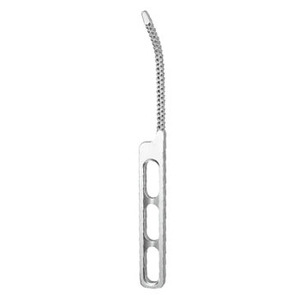
Stainless Steel Bone File & Intramedullary Rasps
High-grade 316L medical stainless steel bone files with precision-cut teeth for efficient intramedullary canal preparation during joint replacement and trauma surgery.
Inquire Now
Instrument Kit
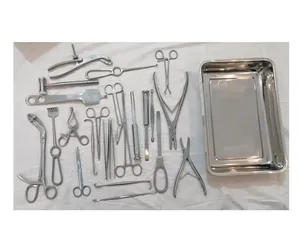
Orthopedic & Dental Surgical Instrument Sets (13/18/26 Pcs)
Autoclavable manual instrument sets supplied in custom sterilizing trays. Fully certified for specialized bone reconstruction and dental implant procedures.
Inquire Now
Trauma Fixation
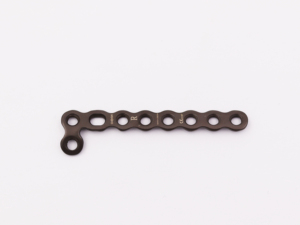
2.0 L-Type Anatomical Titanium Locking Implants
Ultra-low profile Ti-6Al-4V ELI titanium locking plates for distal radius and small bone reconstructive surgery, offering stable angular rigidity.
Inquire Now
Spine & Screws
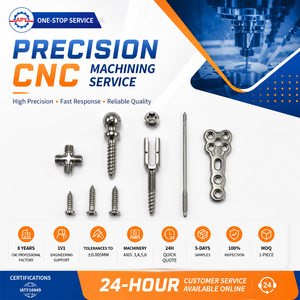
Precision CNC Titanium Bone Screws & Spinal Parts
Swiss-lathe machined titanium alloy pedicle screws and cortical bone fasteners engineered to strict micro-geometric standards for spinal constructs.
Inquire Now
Veterinary OEM
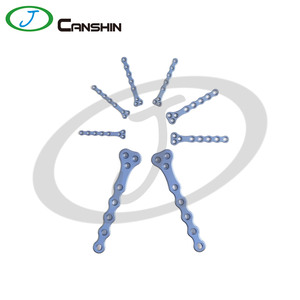
Veterinary T-Type Reconstruction Pure Titanium Plates
Biocompatible Grade 4 Pure Titanium (CP Ti) T-shape locking plates designed for veterinary orthopedics, facilitating easy intraoperative contouring.
Inquire Now
Veterinary Set
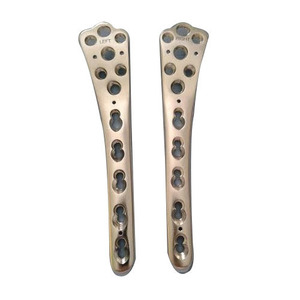
5.0mm Veterinary Distal Femoral Locking Plate Set
Comprehensive 10-piece L5/R5 anatomical stainless steel distal femur plate system configured specifically for large animal orthopedic surgery.
Inquire Now
OEM Machining
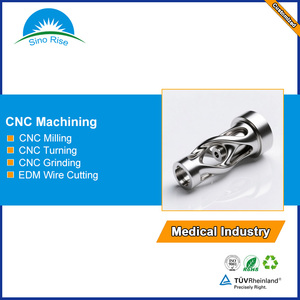
Custom 5-Axis CNC Milled Titanium Orthopedic Parts
Contract manufacturing of custom joint prostheses, CMF plates, and complex structural implant components utilizing 5-axis DMG MORI CNC milling.
Inquire Now
Spine Systems
Polyaxial Pedicle Screw Atlas 5.5 Spine Fixation System
Posterior thoracolumbar spinal fixation featuring 60-degree polyaxial screw head mobility, friction-fit rod seats, and reverse-angle thread locking set screws.
Inquire Now
100%
Material Lot Traceability
±0.005mm
CNC Machining Precision
ISO 13485
Certified Quality System
ANVISA
Technical File Compliance
The B2B Sourcing Ecosystem for Custom OEM Orthopedic Implants in Brazil & LATAM
The demand for custom OEM orthopedic implants across South America—most notably within Brazil's expansive healthcare market—is undergoing a structural evolution. Driven by an aging population, rising clinical adoption of complex spinal fusion, advanced trauma reconstruction, and joint revision surgeries, medical device importers and healthcare distributors require supply chain partners capable of delivering uncompromising precision, material integrity, and regulatory agility.
Navigating the Brazilian market demands strict alignment with ANVISA (Agência Nacional de Vigilância Sanitária) regulations, specifically RDC 185/2001 for device registration and RDC 665/2022 governing Brazilian Good Manufacturing Practices (BGMP). Overseas distributors and brand holders cannot afford quality discrepancies or paperwork delays. Partnering with a dedicated OEM factory and exporter offering complete Technical Files (STED format), ISO 13485:2016 certification, and full metallurgical traceability turns compliance bottlenecks into competitive advantages.
Strategic Procurement Insight for Importers
Successful orthopedic procurement in Brazil is not merely about finding low unit costs; it is about total lifecycle value. Importers must balance import tariff structures (such as IPI and TEC) with supplier reliability. Sourcing complete matching systems—implants, dedicated surgical instruments, and sterilization trays from a single OEM manufacturer—eliminates intraoperative tolerances issues, reduces regulatory submission cycles, and ensures long-term clinical safety.
Enterprise Manufacturing Advantages: Engineering Superiority & E-E-A-T Assurance
As a qualified global OEM factory and exporter, Orthomanufacturer Medical Co., Ltd operates under rigorous quality controls that align directly with Google’s E-E-A-T (Experience, Expertise, Authoritativeness, and Trustworthiness) standards and international medical device directives. Here is how our production infrastructure empowers global brand owners:
Sub-Micron 5-Axis CNC Precision
Utilizing DMG MORI 5-axis milling centers and Citizen Swiss-type automatic lathes, we achieve manufacturing tolerances as tight as ±0.005mm. Crucial for polyaxial pedicle screw articulation, friction-fit tapered junctions, and intricate thread profiles.
Certified Implant Materials
We manufacture exclusively from certified titanium alloys (Ti-6Al-4V ELI per ASTM F136 / ISO 5832-3), pure titanium (ASTM F67), 316L medical stainless steel (ASTM F138), CoCrMo alloy (ASTM F1537), and implant-grade PEEK (ASTM F2026).
Full Regulatory Dossier Support
We supply comprehensive technical file documentation required by ANVISA, CE MDR, and global health authorities, including mechanical fatigue testing reports (ASTM F1717 / ASTM F382), biocompatibility studies, and IFUs.
Private-Label & Custom Marking
Complete OEM/ODM customization including precision fiber-laser UDI (Unique Device Identification) etching, color-coded hard anodization (Type II / Type III), custom logo branding, and sterile/non-sterile cleanroom packaging.
100% Lot Traceability
Every finished bone screw, spinal rod, and locking plate is linked back to its original mill material batch certificate via laser-etched lot numbers, assuring absolute transparency in quality control audits.
Matched Instrument Tolerances
By co-engineering implants alongside their dedicated surgical instruments (drivers, taps, drill guides, and benders), we eliminate bit slipping, driver cam-out, and thread cross-threading during surgery.
Future Procurement & Industry Trends in Orthopedic Implant Manufacturing
The global orthopedic sector is experiencing rapid technological shifts. Hospital purchasing committees and regional medical distributors must stay ahead of technological and regulatory transformations shaping implant procurement over the next decade.
1. Additive Manufacturing & Porous Trabecular Surfaces
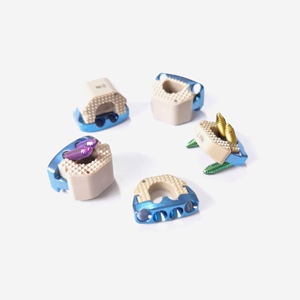
Direct metal 3D printing—specifically Selective Laser Melting (SLM) and Electron Beam Melting (EBM)—is moving from niche applications to standard production for spinal interbody cages and joint revision cups. Porous titanium structures mimicking human cancellous bone elasticity (elastic modulus ~3–5 GPa) significantly enhance biological fixation and early osseointegration compared to smooth solid implants.
2. Patient-Specific Implants (PSI) & Digital Workflows
The integration of 3D CT scan data with automated CAD/CAM software allows contract manufacturers to produce patient-matched CMF plates, custom oncological resection implants, and specialized surgical cutting guides. OEM suppliers must offer rapid prototyping capabilities with validated turnaround times.
3. Bio-Active Surface Coatings & Antimicrobial Coatings
Post-machining surface treatments are evolving beyond standard anodization. Micro-Arc Oxidation (MAO), hydroxyapatite (HA) plasma spraying, and silver/copper ion-impregnated antimicrobial surfaces are becoming key selection criteria in hospital tenders to mitigate post-operative surgical site infections (SSI).
4. Supply Chain Localization & Hybrid OEM Models
In response to global logistics disruptions, major importers in Brazil and broader South America are adopting hybrid inventory models. Importers rely on high-capacity global OEM factories for raw machining and instrument kit production while handling regional final laser etching, sterile packaging, and ANVISA compliance locally.
Implant Material Engineering & Mechanical Performance Specification Matrix
Selecting the correct raw material standard is the fundamental starting point for medical device compliance and structural performance. The table below details the core materials utilized across our OEM manufacturing lines for orthopedic, spinal, and trauma systems:
| Material Name |
Standard Specification |
Yield Strength (MPa) |
Tensile Strength (MPa) |
Primary Clinical Application |
Key Advantage |
| Ti-6Al-4V ELI (Grade 23) |
ASTM F136 / ISO 5832-3 |
≥ 795 |
≥ 860 |
Pedicle Screws, Trauma Plates, Nails |
Superior fatigue resistance, low modulus, high biocompatibility |
| Commercially Pure Titanium (CP Ti Gr4) |
ASTM F67 / ISO 5832-2 |
≥ 483 |
≥ 550 |
CMF Micro/Mini Plates, Titanium Mesh |
High ductility for precise intraoperative anatomical contouring |
| Stainless Steel 316LVM |
ASTM F138 / ISO 5832-1 |
≥ 690 |
≥ 860 |
Trauma Plates, Schanz Pins, Instruments |
Cost-effective, proven shear strength, polished corrosion resistance |
| Cobalt-Chromium-Molybdenum (CoCrMo) |
ASTM F1537 / ISO 5832-12 |
≥ 517 |
≥ 897 |
Femoral Heads, Knee Components |
Exceptional hardness, low articulation wear against UHMWPE |
| Polyetheretherketone (PEEK OPTIMA) |
ASTM F2026 |
≥ 90 |
≥ 95 |
Spinal Interbody Fusion Cages (ACIF/PLIF/TLIF) |
Radiolucent (X-ray clear), bone-like modulus (~3.6 GPa) avoiding stress shielding |
| UHMWPE / Cross-linked PE |
ASTM F648 / ISO 5834-2 |
≥ 21 |
≥ 35 |
Acetabular Liners, Tibial Bearings |
Ultra-low friction coefficient, high impact energy absorption |
Step-by-Step OEM Contract Manufacturing & Export Workflow
From initial CAD drawing review to final ANVISA registration and delivery, our standardized 5-phase manufacturing protocol ensures complete transparency and timeline predictability for international buyers:
01
Design & DFM Review
Our engineering team evaluates customer CAD models or sample components, performing DFM (Design for Manufacturability) analysis to optimize tolerances and tooling efficiency.
02
FEA & Prototyping
Finite Element Analysis (FEA) simulates mechanical stress distribution under physiological loads, followed by rapid CNC prototype production within 10 to 14 days.
03
5-Axis Production
Precision multi-axis CNC Swiss turning and milling under strict ISO 13485 quality protocols, utilizing 100% certified implant grade bar stock.
04
Finishing & Marking
Automated ultrasonic cleaning, passivation, Type II/III color anodization, fiber-laser UDI marking, and optical CMM dimensional verification.
05
Dossier & Export
Packaging inside controlled ISO Class 7 cleanrooms, final lot release inspection, and delivery of complete regulatory registration dossiers for customs clearance.
Frequently Asked Questions by International Buyers & Importers
Detailed technical responses addressing common procurement, regulatory compliance, and custom engineering queries for B2B buyers sourcing orthopedic implants.
How do you support Brazilian medical device importers with ANVISA registration?
+
We provide comprehensive technical documentation aligned with ANVISA RDC 185/2001 and RDC 665/2022 (BGMP). This includes raw material mill certificates (ASTM F136/F138), mechanical fatigue testing reports (ASTM F1717 for spine, ASTM F382 for trauma plates), biocompatibility test summaries (ISO 10993 series), sterilization validation documentation, process flow diagrams, and detailed Instructions for Use (IFUs) suitable for local translation into Portuguese.
What are your minimum order quantities (MOQs) for custom OEM implant lines?
+
For standard catalog items with custom laser marking, MOQs typically start at 50 to 100 units per SKU. For fully custom ODM implants requiring specialized tooling and CNC programming, MOQs depend on component complexity and geometry. We also offer initial prototype batching to support regulatory registration and clinical evaluation samples prior to full commercial production.
How do you guarantee thread engagement and fit between pedicle screws and drivers?
+
We design and manufacture both implants and matching surgical instruments in-house. Driver recess geometries (such as Torx, hex, or square drives) are machined with tight, matched tolerances and inspected using custom go/no-go plug gauges and 3D optical comparators. This co-engineering approach prevents intraoperative driver stripping, wobble, and driver-implant jamming.
What surface treatments can be applied to titanium locking plates and bone screws?
+
We offer Type II anodization (for improved wear resistance and fatigue life without dimensional buildup) and Type III color anodization (pink, blue, green, gold, violet) to facilitate intraoperative size identification. Additional specialized coatings, such as hydroxyapatite (HA) plasma spraying or chemical passivation per ASTM F86, are available upon request.
What is the average lead time from PO placement to export dispatch?
+
Standard OEM production cycles for catalog-based orders range from 30 to 45 business days depending on order volume and surface finishing requirements. Custom ODM engineering projects (including design review, prototyping, and mechanical testing) typically require 60 to 90 days. Expedited production slots are available for urgent hospital tender deadlines.
How are products packaged for long-distance international freight to South America?
+
Products can be supplied non-sterile in protective bulk protective sleeves or sterile-packaged inside double PE/Tyvek blisters processed within our ISO Class 7 cleanrooms. All shipments are packed into heavy-duty export master cartons lined with moisture-resistant barriers and palletized to withstand ocean or air transport transit to ports like Santos, Rio de Janeiro, or São Paulo (GRU).
Partner with a Trusted OEM Orthopedic Exporter Today
Whether you are expanding your trauma portfolio, launching a private-label spinal fixation system, or preparing for a national hospital tender in Brazil or LATAM, our engineering team is ready to assist with CAD reviews, samples, and technical regulatory dossiers.