OEM Surgical & Veterinary Implant Systems
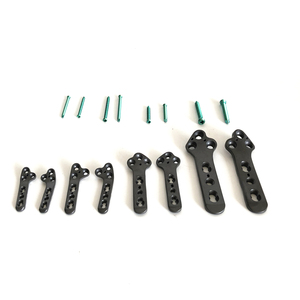
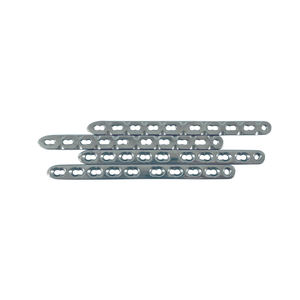
High-precision titanium and medical-grade stainless steel implant lines manufactured with strict dimensional tolerances for human trauma reconstruction and specialized veterinary orthopedic surgical applications.
Custom OEM Orthopedic Manufacturing Landscape in Egypt & MENA
The healthcare delivery ecosystem in Egypt—anchored by major university medical centers such as Cairo University (Kasr Al-Ainy), Ain Shams University Hospitals, Alexandria University, alongside expanding Ministry of Health (MoHP) facilities and private hospital groups—is undergoing a structural transformation. With an expanding population exceeding 105 million and a rising incidence of high-energy orthopedic trauma, complex spinal degenerative conditions, and sports-related musculoskeletal injuries, the demand for precision orthopedic implants across Cairo, Alexandria, Giza, and Delta region hubs has scaled exponentially.
However, Egyptian medical device importers, tenders contractors, and regional distributors face acute challenges under current macroeconomic conditions. Currency fluctuation dynamics, Central Bank of Egypt (CBE) foreign exchange directives, and stringent import clearance protocols enforced by the Egyptian Drug Authority (EDA) require distributors to move beyond simple trading models. Procurement teams increasingly demand strategic partnerships with accredited contract manufacturing factories capable of supplying certified Original Equipment Manufacturer (OEM) and Original Design Manufacturer (ODM) orthopedic devices with complete technical dossiers, localized laser branding, and guaranteed lot-to-lot traceability.
As a premier contract manufacturer specializing in human and veterinary orthopedic solutions, our factory infrastructure bridges the gap between European design standards and local market viability. By controlling every stage of high-precision CNC machining, multi-axis thread milling, electrochemical surface passivation, and Class 10,000 cleanroom packaging, we empower Egyptian device distributors to build proprietary product lines that meet both hospital tender specifications and international clinical benchmarks.
Implant Materials Chemistry & International Standards Compliance
Medical device performance begins with uncompromising raw material purity. Our manufacturing facility exclusively sources certified implant-grade alloys, subjected to rigorous chemical, mechanical, and metallographic validation prior to production release. Distributors submitting documentation to the Egyptian Drug Authority (EDA) receive fully traceable mill test certificates for every manufacturing batch.
| Material Classification | International Standard | Mechanical Characteristics | Primary Clinical Indications |
|---|---|---|---|
| Ti-6Al-4V ELI (Grade 23) | ASTM F136 / ISO 5832-3 |
Tensile Strength ≥ 860 MPa, Yield Strength ≥ 795 MPa, Fracture Toughness, Low Density | Pedicle Screws, Spinal Rods, Intramedullary Nails, Anatomical Trauma Locking Plates |
| Commercially Pure Titanium (CP Ti) | ASTM F67 / ISO 5832-2 |
High Ductility, Superior Intraoperative Contouring, Excellent Osseointegration | CMF Maxillofacial Mini Plates, Reconstruction Mesh, Cranial Fixation Screws |
| Implant Stainless Steel 316L | ASTM F138 / ISO 5832-1 |
Vacuum Arc Remelted (VAR), High Corrosion Resistance, Cost-Effective Rigidity | Veterinary TPLO/TTA Plates, Temporary Trauma Fixation, Schanz Pins, External Fixators |
| Polyetheretherketone (PEEK) | ASTM F2026 |
Modulus of Elasticity ~3.6 GPa (Bone-Matched), Radiolucent, Zero Artifacts on CT/MRI | Interbody Spinal Fusion Cages (PLIF, TLIF, ALIF), Cervical Cages, Arthroscopic Anchors |
| Cobalt-Chromium-Molybdenum (CoCrMo) | ASTM F1537 / ISO 5832-12 |
Extreme Wear Resistance, Mirror Polished Finish (Ra < 0.02 µm), High Fatigue Limit | Total Joint Prostheses Femoral Heads, Knee Articular Surfaces, Modular Hip Stems |
All raw materials undergo incoming inspection via Optical Emission Spectroscopy (OES) and microstructural grain size analysis. This rigorous gatekeeping guarantees that implants exported to Egypt exhibit zero toxic heavy metal inclusions, ensuring optimal tissue integration and reduced mechanical failure risk under cyclic physiological loads.
State-of-the-Art Machining, Surface Finishing & Cleanroom Operations
Our contract manufacturing complex incorporates advanced Swiss-type CNC turning lathe centers, 5-axis high-speed milling equipment, automated micro-deburring cells, and validated cleaning facilities engineered to maintain absolute geometric consistency.
5-Axis Swiss CNC Machining
Equipped with multi-axis Citizen and Star CNC sliding-headstock machines, we produce intricate internal cannulations, variable-pitch screw threads, and complex polyaxial head geometries with sub-micron repeatable precision down to ±0.005 mm.
Electrochemical Surface Engineering
Validated chemical passivation (ASTM F86) removes free iron particulates, while Type II gray hard-coat anodizing and Type III color anodizing provide vibrant, biocompatible size-coding to assist surgical operating theater identification.
ISO Class 7 Cleanroom Packaging
Implants undergo multi-stage ultrasonic aqueous washing using reverse-osmosis deionized water before automated transfer to an ISO 13485-certified Class 10,000 cleanroom for primary Tyvek-pouch sealing and double-sterile barrier packing.
Future Procurement & Technological Trends in Orthopedic Manufacturing
As the orthopedic industry shifts toward personalized medicine and enhanced bio-activity, Egyptian distributors must align with manufacturers investing in next-generation technologies. Understanding these global procurement vectors allows regional business leaders to stay competitive in institutional tenders and hospital procurement cycles.
1. Additive Manufacturing & Porous Trabecular Titanium
Selective Laser Melting (SLM) 3D printing enables the fabrication of porous titanium architectures mimicking human cancellous bone structure (60-70% porosity, 300-500 µm pore size). This promotes direct vascularization and rapid osteointegration, revolutionizing spinal fusion cages and complex acetabular reconstruction cups without relying on secondary surface coatings.
2. Patient-Specific Implants (PSI) & DICOM Segmentation
Advancements in 3D CT image processing allow engineering teams to convert patient DICOM data directly into patient-matched maxillofacial reconstruction plates and custom oncological resection implants. Egyptian clinical institutions are increasingly requesting custom-milled PSI kits to shorten intraoperative surgical times and reduce implant contouring stress.
3. Regulatory Dossier Harmonization (CE-MDR & EDA)
Global regulatory bodies, including the European MDR (EU 2017/745) and the Egyptian Drug Authority, have heightened technical requirements regarding clinical evaluation reports (CER), post-market surveillance (PMS), and Unique Device Identification (UDI). Future-proof suppliers must deliver comprehensive technical files formatted for seamless local registration.
4. Integrated System Procurement (Implants + Instruments)
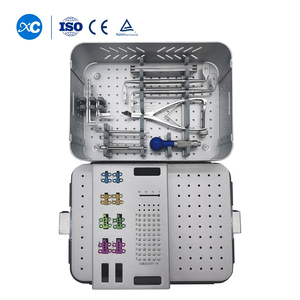
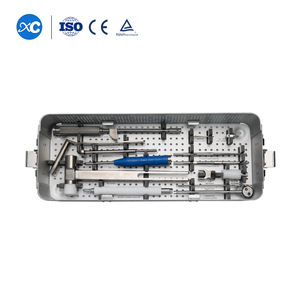
Hospitals are rejecting fragmented purchasing where implants and drivers originate from separate vendors. The future belongs to single-source OEM suppliers capable of supplying pre-matched locking plates with calibrated depth gauges, color-coded drill bits, and custom stainless steel sterilization trays engineered for rapid OR turnaround.
5-Stage OEM / ODM Execution Roadmap for Egyptian Importers
Our streamlined custom OEM manufacturing protocol guarantees full transparency from initial engineering CAD review through to final customs clearance at Alexandria or Cairo International Airport cargo terminals.
CAD/CAM Design & Drawing Review
Customers provide 2D/3D technical drawings (STEP, IGES) or physical samples. Our biomedical engineering team conducts Finite Element Analysis (FEA) to optimize stress distribution and verify manufacturing feasibility under ISO standards.
Prototype & Mechanical Testing
Sample batches are machined and subjected to destructive static compression, dynamic fatigue, and pull-out torque testing in accordance with ASTM F543 (Bone Screws) and ASTM F1717 (Spinal Constructs).
EDA Regulatory File Preparation
We assemble complete Technical Qualification Dossiers—including ISO 13485 certificates, CE certificates of conformity, material mill test reports, and ISO 10993 biocompatibility testing data required for Egyptian Drug Authority registration.
Batch Production & Laser Branding
Upon design sign-off, high-speed CNC production commences. Implants receive precise fiber laser etching with your custom brand logo, part catalog numbers, lot codes, and GS1-compliant UDI DataMatrix codes.
Cleanroom Sealing & Logistics
Finished components are sealed in double sterile barrier Tyvek pouches or supplied non-sterile in protective transit trays, packed in export-grade cartons with full customs documentation for seamless port clearance.
Custom Factory OEM vs. Generic Trading Supplier
Why leading medical equipment importers in Egypt transition from intermediate trading companies to direct factory OEM partnerships:
| Evaluated Capability Criteria | Direct OEM Factory Partnership | Standard Trading Intermediary |
|---|---|---|
| EDA Registration Dossier Support | Direct access to device master files (DMR), raw material certs, and ISO cleanroom bio-burden test validation. | Limited secondary documentation; often fails EDA audit validation checks. |
| Private-Label & Brand Etching | Custom fiber laser marking of customer logos, specific part codes, and UDI barcodes in-house. | Pre-printed generic markings or non-compliant secondary laser etching. |
| Instrument-Implant Tolerance Fit | Matching tolerances managed under one quality management system; zero intraoperative driver slip. | Mixed sourcing causing high risk of driver-screw recess stripped threads during surgery. |
| Custom Design Modification | Immediate engineering drawing updates, custom plate bending radii, and variable screw pitch options. | No modification capabilities; restricted to stock catalog items only. |
| Commercial Terms & L/C Support | Flexible contract pricing, scheduled batch shipments, and acceptance of formal L/C documents. | High markups, volatile pricing, and rigid payment demands. |
Frequently Asked Questions by Egyptian Medical Importers
Clear answers regarding regulatory compliance, minimum order volumes, material validation, and logistics for healthcare business partners operating in Egypt and the wider MENA region.
How do you support Egyptian medical distributors with Egyptian Drug Authority (EDA) registration requirements? +
What materials are used in your custom orthopedic trauma and spinal implant production? +
Can we order customized surgical instrument sets matching your OEM implants? +
What is the typical production lead time and minimum order quantity (MOQ) for custom OEM orders? +
What commercial payment terms and shipping options are available for Egyptian buyers? +
Are veterinary orthopedic implants manufactured to the same quality standards as human implants? +
Partner with a World-Class OEM Orthopedic Manufacturer
Request our complete OEM/ODM product catalog, technical dossier samples, and direct factory pricing. Join leading medical distributors across Egypt, Saudi Arabia, UAE, and the wider MENA region who rely on our engineering precision and certified quality.