Featured Orthopedic Implants & OEM Surgical Systems
Comprehensive implant configurations manufactured under rigorous ISO 13485:2016 and CE standards. Designed for precise anatomical alignment, fatigue durability, and seamless surgical workflow.
Navigating the Custom OEM Orthopedic Implants Landscape in Indonesia
The healthcare infrastructure across the Republic of Indonesia is undergoing an extraordinary modernization phase. Driven by the expansion of the universal health coverage initiative—BPJS Kesehatan (Badan Penyelenggara Jaminan Sosial Kesehatan)—and stringent regulatory frameworks implemented by the Ministry of Health (Kementerian Kesehatan Republik Indonesia - Kemenkes RI), hospital networks from Jakarta to Surabaya are experiencing unprecedented demand for surgical implants. Central to this supply chain transformation is the requirement for high-precision, bio-compatible, and clinically validated orthopedic devices spanning spinal fixation, trauma reconstruction, joint replacement, and specialized cranio-maxillofacial (CMF) applications.
For Indonesian medical device brand owners, hospital purchasing consortia, and regional distributors, securing a reliable contract manufacturing partner is no longer merely a transaction of purchasing finished goods. It demands a strategic OEM (Original Equipment Manufacturer) and ODM (Original Design Manufacturer) partnership capable of delivering customized implant geometries, complete instrument sets, validated technical dossiers for AKL (Alat Kesehatan Luar Negeri) or AKD (Alat Kesehatan Dalam Negeri) registration, and long-term supply resilience.
Information Gain Key Takeaway: The Hybrid OEM Advantage
To successfully bid for hospital tenders listed on Indonesia's e-Katalog 5.0/6.0 platform, distributors must balance cost-efficiency with uncompromising clinical quality. Partnering with a globally accredited ISO 13485 OEM factory enables local brand owners to integrate custom 5-axis CNC titanium machining with domestic assembly, packaging, or registration strategies, maximizing regulatory compliance while capturing higher market share.
Product Recommendations & Custom OEM Solutions for Indonesian Clinical Practice
Orthopedic surgical requirements in Southeast Asia present distinct anatomical characteristics and environmental considerations. Asian patient bone morphology—particularly regarding cortical bone thickness, pedicle dimensions, and femoral curvature—differs significantly from Western anatomical benchmarks. Custom OEM manufacturing provides tailored dimensions optimized for Indonesian patients.
Thoracolumbar & Cervical Spine Systems
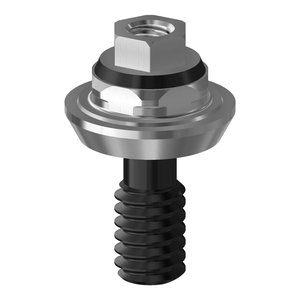
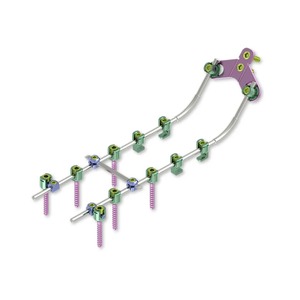
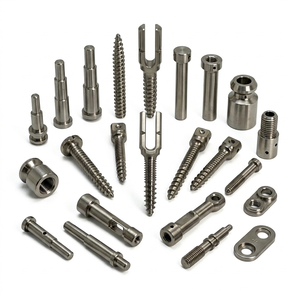
Polyaxial and monoaxial pedicle screw kits featuring low-profile tulip heads, dual-lead thread profiles for rapid insertion into osteoporotic bone, and PEEK interbody cages (PLIF, TLIF, ALIF) manufactured under ASTM F2026 specifications. Supplied with matching surgical instruments.
Trauma & Fracture Fixation Plates (LCP)
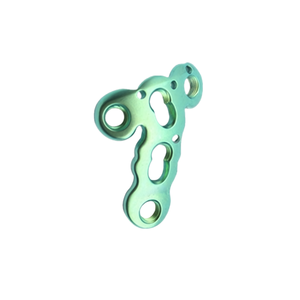
Pre-contoured anatomical Locking Compression Plates (LCP) for upper and lower extremities. Features Variable Angle (VA) locking technology allowing up to 15° screw angulation in proximal humeral, distal radial volar, and complex intra-articular tibial plateau fractures.
Intramedullary Nailing & CMF Portfolios
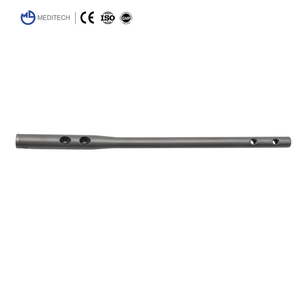
Cannulated femoral, tibial, and humeral intramedullary nails engineered from high-fatigue titanium alloy (Ti-6Al-4V ELI). Complemented by ultra-low profile micro (1.5mm) and mini (2.0mm) CMF plates for maxilla and mandible facial reconstruction.
Orthopedic Implant Material Standards & Performance Matrix
Material verification is the most vital element during Kemenkes RI regulatory evaluation and hospital quality audits. Every raw bar stock utilized in our manufacturing facility undergoes spectrographic analysis, mechanical testing, and full heat-lot documentation.
| Medical Material Grade | International Standard | Tensile Strength (MPa) | Clinical Applications | Biomechanical Advantage |
|---|---|---|---|---|
| Titanium Alloy Ti-6Al-4V ELI | ASTM F136 / ISO 5832-3 |
≥ 860 MPa | Pedicle Screws, Intramedullary Nails, Locking Plates | Extra-low interstitial grade providing high fatigue strength, bio-inertness, and reduced MRI artifact distortion. |
| Commercially Pure Titanium (CP-Ti) | ASTM F67 / ISO 5832-2 |
240 – 550 MPa | CMF Maxillofacial Micro Plates, Titanium Mesh | High intraoperative ductility allowing surgeons to easily contour plates around complex facial bony structures. |
| Stainless Steel 316L (Medical Grade) | ASTM F138 / ISO 5832-1 |
≥ 515 MPa | Trauma Pins, External Fixator Rods, Surgical Instruments | Cost-effective structural rigidity and superior resistance to pitting corrosion after passivation. |
| Polyetheretherketone (PEEK) | ASTM F2026 |
90 – 100 MPa | Lumbar & Cervical Interbody Cages, Cranial Implants | Radiolucent properties allowing post-operative radiographic fusion assessment; elastic modulus closely mimics human cancellous bone. |
| Cobalt-Chromium-Molybdenum (CoCrMo) | ASTM F1537 / ISO 5832-12 |
≥ 897 MPa | Total Knee & Hip Articular Components | Exceptional tribological wear resistance and mirror-polished surface finish for bearing interfaces. |
Future Procurement Trends Transforming Indonesian Healthcare Supply Chains
As Indonesia expands its medical manufacturing hub initiatives in West Java, Banten, and East Java, hospital procurement teams and distributors are adjusting their sourcing models. Staying competitive requires understanding four pivotal market shifts:
1. Transition to Hybrid Local-Packaging & OEM Manufacturing
To satisfy national TKDN (Tingkat Komponen Dalam Negeri) policies while retaining world-class implant tolerances, Indonesian brand owners are adopting a hybrid OEM approach. High-precision CNC machining of intricate pedicle screw threads or locking plates is executed at our ISO 13485 facility, while final laser branding, cleanroom pouch sealing, and secondary sterilization take place domestically in Indonesia.
2. Adoption of 3D-Printed Trabecular Surface Structures
Additive manufacturing is revolutionizing spine and joint reconstruction. Traditional smooth implant surfaces are rapidly being replaced by additive 3D titanium lattice structures (trabecular titanium) with controlled porosity (60-70% pore ratio, 300-500µm pore size). This encourages rapid osteoblast infiltration and biological bone ingrowth, drastically reducing cage migration rates.
3. Demand for Integrated Instrument-Implant Systems
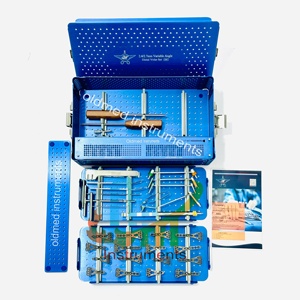
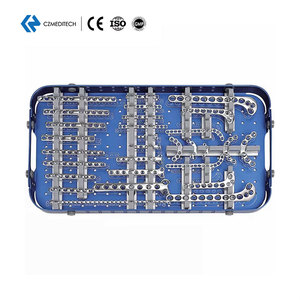
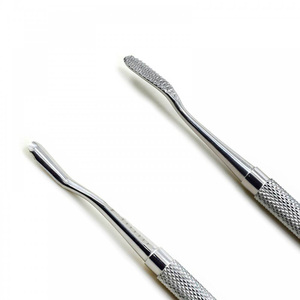
Indonesian orthopedic surgeons increasingly reject standalone implants lacking dedicated, ergonomic instrument sets. Modern procurement tenders mandate complete system solutions: implants, passivated stainless steel surgical instruments, color-coded trial sizing blocks, and autoclavable aluminum sterilization trays organized logically for OR nurses.
4. Mandated UDI (Unique Device Identification) & Traceability
In alignment with global FDA and CE MDR frameworks, Kemenkes RI is moving toward mandatory UDI laser marking on all Class III implants. OEM contract partners must provide 2D DataMatrix laser etching on every individual screw and plate to enable digital tracking from mill raw material certificates down to patient implantation records.
Enterprise Factory Capabilities & Advanced Manufacturing Workflow
Precision is non-negotiable in orthopedic device engineering. A variance of just 10 microns in a screw thread pitch or locking mechanism can result in intraoperative stripping or mechanical fatigue failure. Our manufacturing facility combines Swiss automated technology with multi-stage quality control:
Swiss 5-Axis CNC
High-speed Citizen & Star Swiss-type lathes execute complex geometry turning, cross-drilling, and cannulation in a single automated setup.
Surface Anodization
Controlled Type II anodizing and electrochemical color coding provide biocompatible corrosion resistance and visual size recognition for surgeons.
CMM & Optical Metrology
Coordinate Measuring Machines (CMM) and video measuring systems verify critical dimensions against 3D CAD models before lot release.
Cleanroom Packaging
ISO Class 7 ultrasonic cleaning and Tyvek blister pouch sealing ensure non-pyrogenic, sterile-ready barrier protection during international freight.