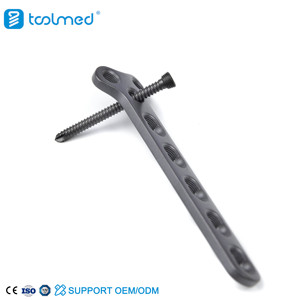
T Type Locking Plate Veterinary Orthopedic Surgical Surgery Implant for Animal Surgery
- Material: Pure Titanium / 316L SS
- Anatomical T-Shape Profile
- Low-profile contour minimizes soft tissue interference
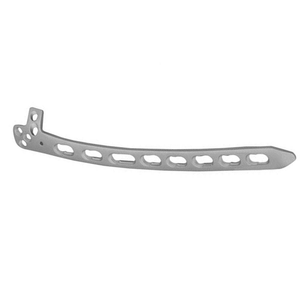
Explore our flagship orthopedic surgical implant series. Manufactured from certified raw bar stock under ISO 13485 quality systems, each system is delivered with fully matched surgical instrumentation, laser-marked lot numbers, and custom packaging configurations tailored for rapid market registration.
Sourcing custom OEM orthopedic implants involves rigorous quality oversight, material compliance, and predictable lead times. At Orthomanufacturer Medical Co., Ltd, we bridge the gap between high-precision biomedical engineering and flexible minimum order quantity (MOQ) manufacturing structures.
We utilize premium implant-grade bar stock complying strictly with ASTM F136 (Ti-6Al-4V ELI), ASTM F138 (316L Stainless Steel), ASTM F2026 (PEEK), and ASTM F1537 (CoCrMo). Every shipment includes complete mill chemical & physical test certificates.
Equipped with Swiss-type multi-axis CNC turning-milling centers, we achieve micron-level tolerances (±0.005mm) for intricate thread geometries, cannulated shafts, and micro-locking mechanism interfaces across all product lines.
From fiber-laser UDI marking to customized color anodizing (Gold, Blue, Green, Magenta) for intraoperative sizing, our OEM services allow regional brands to launch proprietary implant lines with low upfront capital investment.
We provide comprehensive regulatory submission packages (STED format technical files, biocompatibility ISO 10993 evaluation reports, cleaning/sterilization validations, and mechanical fatigue test results per ASTM F1717 / ASTM F382).
The global orthopedic implant market is experiencing a profound paradigm shift driven by advanced materials, bio-functional surface modification, additive manufacturing, and patient-specific anatomical matching. B2B importers must align with agile suppliers capable of integrating these advancements into standard product catalogs.
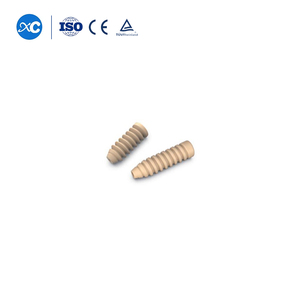
While Ti-6Al-4V remains the gold standard for load-bearing trauma plates, Polyetheretherketone (PEEK-OPTIMA) and hydroxyapatite (HA) filled biocomposites dominate modern spine interbody cages and sports medicine interference screws. PEEK offers an elastic modulus (3.5–4.0 GPa) closely matching human cortical bone, substantially reducing stress shielding and accelerating fusion verification under X-ray and MRI imaging without metal artifact disruption.
Electron Beam Melting (EBM) and Direct Metal Laser Sintering (DMLS) are revolutionizing joint replacement and revision hip acetabular cups. By creating biomimetic interconnected porous structures (500–700 µm pore size with 60–70% porosity), additive manufacturing promotes rapid osteoblast ingrowth and primary mechanical fixation, drastically decreasing long-term implant loosening risks in complex joint arthroplasty.
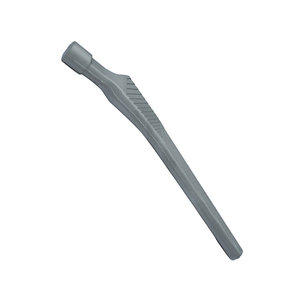
Modern clinical buyers mandate biocompatible surface engineering. Type II anodic oxidation creates a hardened, wear-resistant titanium oxide surface layer that minimizes ion release and fretting corrosion in modular pedicle screw assemblies. Furthermore, vacuum plasma-sprayed (VPS) Hydroxyapatite (HA) coatings on femoral hip stems accelerate bio-integration, providing superior long-term survival rates in cementless total hip replacements.
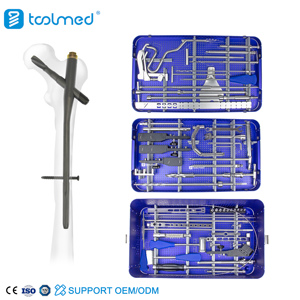
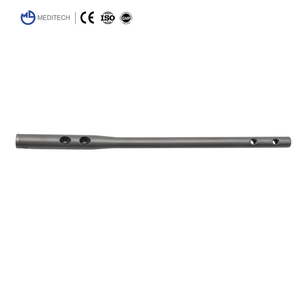
Implants are no longer evaluated in isolation; hospital procurement committees buy complete procedural ecosystems. Suppliers must provide low-profile implants alongside ergonomically calibrated MIS delivery instruments—such as percutaneous pedicle screw extension towers, radiolucent carbon fiber aiming frames for intramedullary nails, and quick-coupling torque-limiting screwdrivers.
Navigating international healthcare supply chains requires adapting to evolving regulatory mandates, cost-containment pressures, and the operational necessity for lower minimum order commitments.
Traditional OEM contracts requiring thousands of units per SKU are becoming obsolete. Importers now seek contract manufacturers offering tiered MOQs (e.g., 5–20 sets for market entry, scaling up to bulk production post-registration). This flexible capital expenditure model reduces inventory holding costs while testing new regional surgical markets.
With the full implementation of EU MDR (2017/745) and strict country-specific health authority audits, distributors require OEM partners with established ISO 13485 QMS documentation, full material traceability, process validation (IQ/OQ/PQ), and continuous post-market clinical follow-up (PMCF) technical support.
Hospitals are progressively migrating toward pre-packaged, pre-sterilized (ETO or Gamma irradiated) implants to cut operating theater autoclave sterilization overhead and prevent cross-contamination. B2B exporters supplying validated double-blister Tyvek packaging give local distributors a distinct competitive tender edge.
Selecting the correct raw material specification is vital for mechanical longevity, fatigue resistance, and regulatory approval. The table below outlines standard biomedical alloys and engineering polymers supplied by Orthomanufacturer Medical Co., Ltd.
| Material Name | International Standard | Tensile Strength (MPa) | Biocompatibility & Clinical Application | Key Mechanical Advantage |
|---|---|---|---|---|
| Ti-6Al-4V ELI | ASTM F136 / ISO 5832-3 | ≥ 860 MPa | Pedicle Screws, Trauma Plates, Intramedullary Nails | High strength-to-weight ratio, high fatigue limit, low elastic modulus vs SS. |
| Pure Titanium (Grades 1-4) | ASTM F67 / ISO 5832-2 | 240 - 550 MPa | CMF Maxillofacial Micro/Mini Plates, Titanium Mesh | Superior ductility for intraoperative manual bending and contouring to bone. |
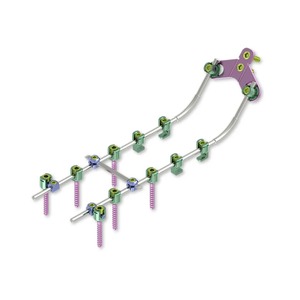
| 316L Stainless Steel | ASTM F138 / ISO 5832-1 | ≥ 860 MPa | Trauma Screws, Kirschner Wires, External Fixator Rods | Cost-effective, excellent shear resistance, proven clinical history. |
| PEEK-OPTIMA® Polymer | ASTM F2026 | 90 - 100 MPa | Cervical/Lumbar Interbody Cages, Interference Screws | Bone-like modulus (3.5 GPa), radiolucent, eliminates metal allergy concerns. |
| Co-Cr-Mo Alloy | ASTM F1537 / ISO 5832-12 | ≥ 1000 MPa | Femoral Heads, Total Knee Arthroplasty Components | Exceptional tribological properties, high wear resistance against UHMWPE liners. |
We simplify custom orthopedic contract manufacturing through a transparent, 5-stage engineering workflow engineered specifically for international medical equipment distributors and OEM brand owners.
Submit your 2D CAD blueprints, 3D STEP models, or physical samples. Our biomedical engineering team conducts a thorough Design for Manufacturability (DFM) assessment to optimize thread tolerances, tool clearance, and production costs.
We manufacture functional prototype samples (MOQ as low as 5–10 pieces) for physical inspection, mechanical bench testing, and surgeon fit-and-feel evaluations before full commercial tooling investment.
Upon sample approval, high-speed multi-axis CNC Swiss machines execute main production runs. Processes include ultrasonic automated cleaning, electro-polishing, plasma surface treatment, and precise color anodizing.
100% optical CMM dimensional verification is conducted. Implants receive high-resolution fiber-laser etching featuring GTIN barcodes, lot codes, reference numbers, and custom brand logos for strict lot traceability.
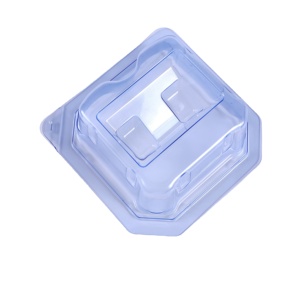
Items are packaged in ISO Class 7 cleanrooms using protective double blister packs or sealed Tyvek pouches, packed into sturdy export master cartons, and shipped with complete inspection release certificate documentation.
Clear answers to crucial operational, regulatory, and commercial inquiries from global medical device procurement officers.
Our operational model is engineered for high flexibility. For standard catalog products (such as locking plates, pedicle screws, and intramedullary nails), our sample evaluation MOQ starts at 1 to 10 sets. For fully custom OEM projects built from client CAD drawings, pilot production runs typically start at 20 to 50 pieces per SKU depending on material complexity and tooling requirements.
Yes. We offer complete turnkey private-label solutions. This includes custom fiber-laser engraving of your brand logo, custom catalog part numbering, color-coded anodization, customized sterilization tray layout design, and brand-tailored outer box packaging with multi-language labeling compliant with target country regulations.
Orthomanufacturer Medical Co., Ltd operates under an ISO 13485 certified quality system. We provide comprehensive technical dossiers to facilitate local health authority registration (such as CE, FDA, or local MOH registrations). This includes Material Test Certificates (MTRs), Bio-compatibility reports (ISO 10993), Mechanical Fatigue Test reports (ASTM F1717 / ASTM F382), and Validated Cleaning/Sterilization Instructions (IFUs).
Absolutely. Every implant family (spine, trauma, sports medicine, joint arthroplasty) is backed by dedicated, fully matched surgical instrument sets. Our reusable instruments are manufactured from surgical-grade stainless steel (17-4PH, 420, 316L) and high-performance polymers (RADEL/PEEK handles), delivered in autoclavable aluminum alloy graphic sterilization cases.
Standard in-stock catalog products ship within 7 to 14 business days. Custom OEM production runs generally require 30 to 45 days for manufacturing, quality inspection, and cleanroom packaging. Express prototype sampling can be expedited in as few as 15 days following CAD blueprint approval.
Every incoming bar stock lot undergoes rigorous material validation against ASTM specifications via optical emission spectroscopy and mechanical testing. Each finished implant is laser-marked with a unique lot identification number, allowing 100% backward traceability to the exact raw material batch and manufacturing run.
Contact our international engineering sales department today to request OEM pricing catalogs, technical dossiers, or pilot sample evaluations with flexible low MOQs.