Executive Technical Overview: The Nigerian Orthopedic Market Dynamics
The Federal Republic of Nigeria represents the largest and most rapidly expanding healthcare market in Sub-Saharan Africa. With an increasing population exceeding 220 million and significant infrastructural investments in major healthcare hubs such as Lagos, Abuja, Port Harcourt, Kano, and Enugu, the demand for specialized musculoskeletal interventions has escalated dramatically. Trauma cases resulting from high-energy road traffic accidents (RTAs), complex joint degenerative conditions, dynamic spinal disorders, and pediatric skeletal deformities require a steady, uncompromised supply of medical-grade surgical implants and matched precision instrumentation.
However, procurement officers, hospital directors, and surgical supply distributors in Nigeria face formidable operational challenges. Historically, the market relied on fragmented trading channels, resulting in high landed costs, variable product quality, inconsistent batch-to-batch metallurgy, and an absence of dedicated private-label manufacturing support. Establishing direct OEM (Original Equipment Manufacturer) and ODM (Original Design Manufacturer) supply partnerships with validated global factories is now a critical strategic imperative for Nigerian healthcare stakeholders.
This technical whitepaper delivers an exhaustive analysis of custom OEM orthopedic implant manufacturing, regulatory registration frameworks under NAFDAC (National Agency for Food and Drug Administration and Control), material science criteria (ASTM F136 Ti-6Al-4V ELI, ASTM F138 316L Stainless Steel, ASTM F2026 PEEK), future procurement trends, and advanced product development trajectories tailored for the West African medical ecosystem.
Recommended Orthopedic Systems & Surgical Equipment
Full-system orthopedic portfolios engineered to international regulatory standards, supplied with matched surgical tool sets and cleanroom packaging for immediate distribution across Nigerian hospital networks.
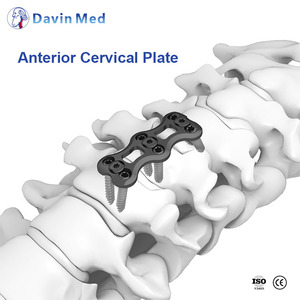
CE ISO Anterior Cervical Plate System Titanium Alloy Spine Implants Surgical Instruments
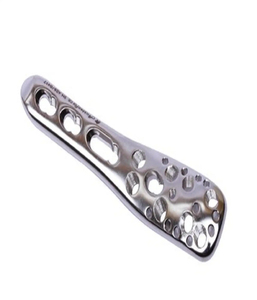
SureMed Instruments Orthopedic Implants Set PHILOS Plate 3.5 Manual Power Instruments
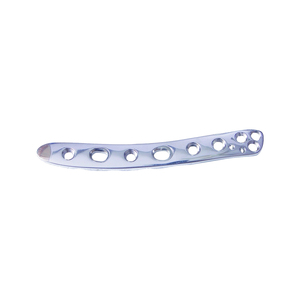
Wholesale Rate Stainless Steel Orthopedic Implants High Quality CE Certified Customizable
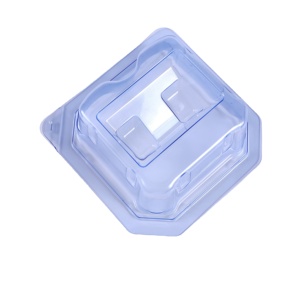
ETO Sterilization Compatible Thermoforming Blister Packaging for Implantable Devices
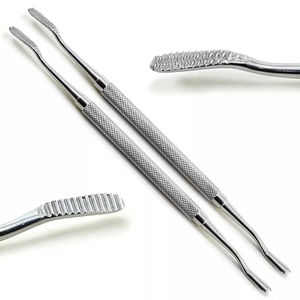
High Grade Stainless Steel Dental Howard Bone Files Set 2pcs Orthopedic Bone Chisel File
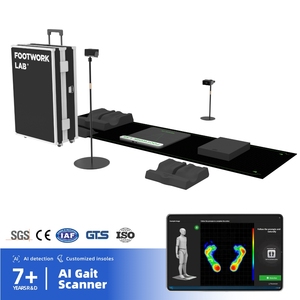
Hot Selling Orthopedic Foot Scanner USB Podiatry Assessment Device for Gait Analysis
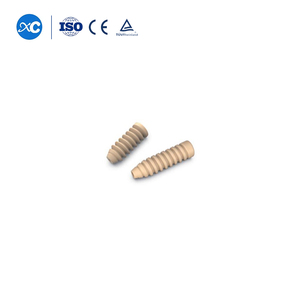
Sports Medicine Biocomposite ACL PCL Reconstruction PEEK Interference Screw System
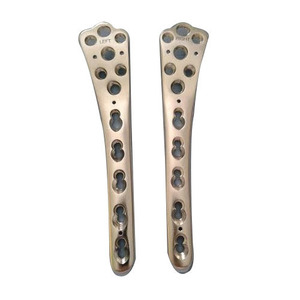
Basis Surgical Distal Femur Plates 5.0mm Set 10pcs OEM L5/R5 Stainless Steel Implants
Enterprise Manufacturing Capabilities & Metallurgical Integrity
Orthopedic implants operate under grueling mechanical loads within biologically reactive tissue environments. Ensuring structural integrity, micro-fatigue resistance, and bio-inertness requires rigorous adherence to global manufacturing standards. Our modern production facility utilizes high-precision 5-axis CNC Swiss-type lathes, automated optical inspection system arrays, and ultrasonic multi-stage passivation washing stations.
Every single implant—whether an anterior cervical plate, pedicle screw, intramedullary nail, or locking compression plate—is manufactured strictly from certified implant-grade raw materials. The table below outlines the core material standards made available for OEM procurement partnerships in Nigeria:
| Material Designation | International Standard | Primary Clinical Indications | Biomechanical & Quality Advantages |
|---|---|---|---|
| Ti-6Al-4V ELI (Grade 23) | ASTM F136 / ISO 5832-3 | Pedicle screws, spinal rods, intramedullary nails, trauma plates | Extra Low Interstitial (ELI) grade provides superior fatigue strength and fracture toughness over standard Ti-6Al-4V. |
| Commercially Pure Titanium (CP-Ti) | ASTM F67 / ISO 5832-2 | CMF maxillofacial plates, cranial mesh, reconstructive implants | Optimal ductility allowing intraoperative bending and contouring to intricate anatomical bony structures. |
| Stainless Steel 316L | ASTM F138 / ISO 5832-1 | Trauma compression plates, Schanz pins, external fixator rods | High tensile modulus, economical cost-structure, rigorous resistance to pitting corrosion after passivation. |
| Polyetheretherketone (PEEK) | ASTM F2026 | Cervical & lumbar interbody cages, suture anchors, interference screws | Radiolucent properties under X-ray/CT; elastic modulus (3.6 GPa) closely matches natural human cancellous bone. |
| Cobalt-Chromium-Molybdenum (CoCrMo) | ASTM F1537 / ISO 5832-12 | Total hip femoral heads, total knee articular components | Exceptional tribological wear resistance for load-bearing dynamic joint articulation surfaces. |
| Ultra-High-Molecular-Weight Polyethylene | ASTM F648 / ISO 5834-2 | Acetabular liners, tibial bearing inserts, glenoid components | High impact strength combined with extremely low coefficient of friction against metallic surfaces. |
Complete System Integration: Implants, Instruments & Packaging
A primary point of failure for medical importers in West Africa is the procurement of un-matched components—purchasing implants from one vendor and surgical manual drivers from another. This mismatch leads to intraoperative recess stripping, incorrect screw torqueing, and prolonged operating theater times.
Our OEM solutions deliver fully integrated system trays. Every implant SKU corresponds precisely to its dedicated surgical drill guide, tap, reamer, and depth gauge housed inside autoclavable anodized aluminum sterilization containers. Furthermore, packaging is executed within Class 100,000 (ISO 7) cleanroom facilities, utilizing ETO (Ethylene Oxide) or Gamma-sterilization-compatible thermoformed Tyvek blister trays engineered to withstand tropical humidity and transport stress.
Future Procurement Trends for Orthopedic Implants in Nigeria
The landscape of medical device procurement in Nigeria is undergoing a structural evolution driven by regulatory tightening, economic shifts, and clinical specialization. Forward-thinking distributors and hospital procurement panels must align their purchasing strategies with four key trends:
1. Shift from White-Label Trading to Owned OEM Brand Equity
Nigerian medical supply firms are transitioning away from acting as traditional commission agents for foreign brands. By partnering directly with OEM factories to produce private-label implant lines (complete with customized laser etching, localized branding, and customized packaging), Nigerian distributors build lasting enterprise valuation and secure exclusive long-term supply rights in tenders.
2. Stringent NAFDAC Regulatory & Technical Dossier Enforcement
The National Agency for Food and Drug Administration and Control (NAFDAC) has significantly upgraded its oversight of class III implantable medical devices. Procurement decisions now hinge on a factory's capability to provide comprehensive registration technical files, including CE Certificates, ISO 13485 audit reports, biocompatibility testing (ISO 10993), raw material mill certificates, and validated sterilization protocol reports. OEM suppliers with established export documentation channels drastically accelerate product approval timelines.
3. Value-Based Healthcare & Economic Efficiency
Fluctuations in foreign exchange rates (Naira devaluation pressures) have forced public tertiary health institutions (Federal Medical Centers and University Teaching Hospitals) and private orthopedic centers to seek cost-effective implant solutions without sacrificing biometallurgical safety. Direct factory OEM procurement cuts out multi-layered middleman markups, lowering the total cost per procedure by 35% to 50%.
4. Matched Modular Instrument Consignment Models
Hospitals in Lagos and Abuja are increasingly demanding consignment and modular kit provisioning. Suppliers who can offer modular, multi-size implant sets (e.g., 3.5mm/5.0mm anatomical locking plate kits or universal intramedullary nail boxes) paired with durable power tools and manual instrument sets gain immediate competitive advantage in institutional procurement bids.
Future Technological & Product Development Horizons
The global orthopedic device manufacturing sector is experiencing rapid technological convergence. For distributors seeking to introduce state-of-the-art technologies into the West African market, four key technological frontiers are reshaping orthopedic surgery:
3D Additive Manufacturing & Trabecular Titanium Matrices
Direct Metal Laser Sintering (DMLS) 3D printing allows for the creation of porous titanium implants mimicking human trabecular bone architecture. These porous structures achieve superior osteoconduction and osseointegration compared to traditional solid titanium surfaces. Applications include custom spinal fusion cages, revision acetabular cups, and complex oncological bone defect reconstruction plates.
Bioresorbable Polymers & Advanced Biocomposites
In sports medicine arthroscopy (ACL/PCL reconstruction and rotator cuff repair), biocomposite interference screws composed of Poly-L-Lactic Acid (PLLA) combined with Hydroxyapatite (HA) or β-Tricalcium Phosphate (β-TCP) are gradually replacing permanent metal screws. These implants provide initial rigid fixation while gradually degrading and being replaced by natural host bone, eliminating the need for secondary implant removal surgeries.
Antibacterial & Bio-Active Surface Coatings
Post-operative surgical site infection (SSI) remains a major concern in trauma care globally. Advanced surface modification techniques—such as nano-silver ion implantation, hydroxyapatite plasma spraying, and anodic oxidation color coding—are being integrated directly into OEM manufacturing workflows to reduce bacterial adhesion and stimulate cellular adhesion.
Patient-Specific Anatomical Plates (PSI)
Utilizing preoperative CT scan data and 3D CAD modeling, custom-fit anatomical locking plates are produced for complex cranio-maxillofacial (CMF) deformities and severe multi-fragment trauma cases. This custom OEM approach minimizes intraoperative plate contouring time, preserves mechanical strength, and improves surgical accuracy.
Custom OEM/ODM Private-Label Partnership Workflow
Partnering with our factory for custom OEM implant production follows a streamlined, transparent 5-stage industrial engineering process designed to take your brand from initial drawing to market delivery in Nigeria:
Engineering Consult
Review of target product specifications, sample analysis, CAD drawing evaluation, and target market clinical requirements.
CAD/CAM Prototyping
Tooling setup, 3D modeling, stress distribution simulation (FEA analysis), and initial prototype fabrication.
Sample Validation
Physical sample inspection, dimensional auditing, surface roughness verification, and surgeon fitting trials.
NAFDAC Dossier Prep
Provision of certified technical documentation, ISO/CE certificates, material test reports, and IFUs for registration.
Batch Production
Swiss CNC mass manufacturing, fiber laser lot marking, cleanroom blister packaging, ETO sterilization, and export dispatch.
Comprehensive Procurement FAQ for Nigerian Importers & Hospital Boards
Find authoritative answers to critical technical, regulatory, financial, and logistical questions regarding orthopedic implant procurement for the Nigerian market.
1. How does your factory support NAFDAC product registration for Nigerian distributors? +
2. What material certifications accompany each consignment of orthopedic implants? +
3. Can we order custom-branded implants with our own company logo and catalog numbers? +
4. How do you guarantee the instrument sets match the imported implant sizes perfectly? +
5. What are the typical lead times for OEM production and shipping to Lagos or Abuja? +
6. How are payment terms structured for high-volume hospital tender supply orders? +
7. Can we request physical evaluation samples before committing to large volume orders? +
Partner with a Leading OEM Orthopedic Implant Manufacturer
Elevate your orthopedic product line in Nigeria. Contact our export engineering team today to request product catalogs, sample kits, or customized OEM manufacturing proposals.