Featured Medical-Grade Orthopedic Implants
Engineered to ISO 13485 & ASTM Standards with Complete Surgical Toolkits & Lot Traceability
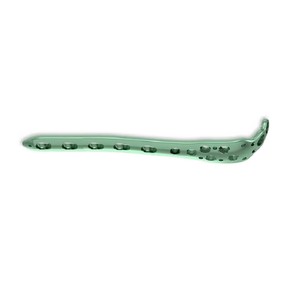
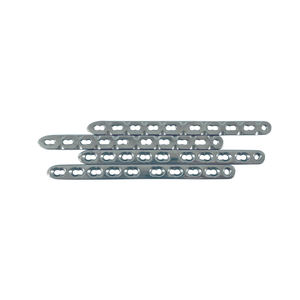
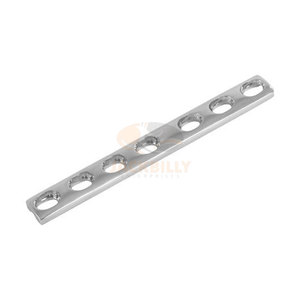
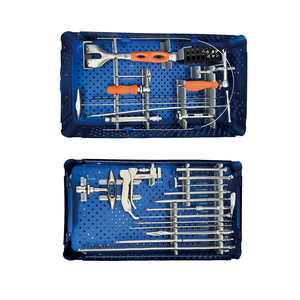
Executive Whitepaper: Strategic Sourcing of OEM Orthopedic Implants in Southeast Asia
Addressing Regulatory Compliance, Engineering Precision, and Supply Chain Resiliency
The global orthopedic implant market is experiencing a profound paradigm shift. As healthcare expenditure across Southeast Asian nations—including Vietnam, Thailand, Indonesia, the Philippines, Malaysia, and Singapore—expands rapidly, medical device procurement officers, hospital networks, and regional distributors are increasingly re-evaluating their sourcing strategies. The historical reliance on high-cost Western original equipment manufacturers (OEMs) is giving way to direct strategic partnerships with specialized contract manufacturing facilities and tier-1 original equipment suppliers.
Orthomanufacturer Medical Co., Ltd stands at the forefront of this industrial transformation. Operating as a premier manufacturer and global OEM partner, our organization specializes in the end-to-end design, precision machining, surface treatment, and regulatory support of complex orthopedic implant portfolios. Our engineering philosophy centers on removing the hidden operational risks of medical device procurement: registration bottlenecks, dimensional tolerances mismatches between implants and surgical tools, and material lot batch inconsistencies.
Our operational infrastructure unites precision Swiss multi-axis CNC turning centers, validated cleanroom washing and packaging facilities, and an exhaustive quality assurance regimen compliant with ISO 13485, CE Class IIa/IIb certification, and US FDA regulatory standards. Whether providing ready-to-register standardized systems or executing custom patient-specific implants (PSI) via OEM contract manufacturing, we empower distributors to launch competitive, highly reliable orthopedic lines.
Enterprise Strengths & Contract Manufacturing Infrastructure
Why Leading Distributors and Hospital Groups Partner with Orthomanufacturer Medical
Complete System Matching
We supply implants paired strictly with dedicated, ergonomically validated surgical instrument sets and sterilization trays. Matching thread pitch and recess drive dynamics eliminates intraoperative driver slipping and galling.
Registration Technical Packages
Accelerate local market access in Southeast Asia. We supply full technical dossiers, material mill certificates, bio-compatibility reports, cleaning validation, and localized IFUs for seamless regulatory filing.
100% Micro-Laser Traceability
Every single screw, locking plate, interbody cage, and intramedullary nail undergoes deep fiber laser marking. Part numbers, lot numbers, and dimensional sizes are permanently traceable to the original raw bar stock certificate.
Precision Multi-Axis CNC Turning
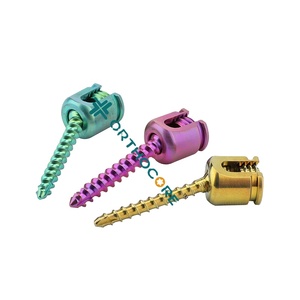
Utilizing high-precision Swiss-type 9-axis CNC machines, we hold ultra-tight mechanical tolerances (±0.005mm) on intricate pedicle screw threads, cannulated cortical screws, and complex anatomical curves.
Private Labeling & Packaging
Complete white-label and private-label customization options. From customized color anodization (size coding) to sterile blister packaging with custom branded box labels ready for immediate commercial distribution.
Comprehensive Portfolio Depth
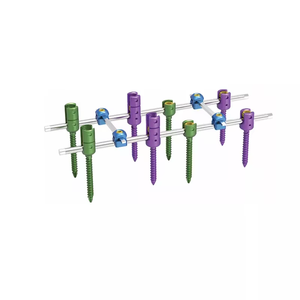
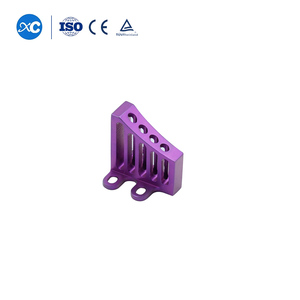
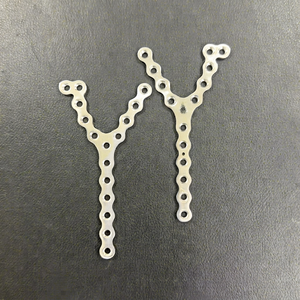
Spine fixation systems, intramedullary nails (PFNA/Tibial/Humeral), locking compression plates (LCP), sports medicine suture anchors, CMF maxillofacial plates, joint prostheses, and surgical power tools under one manufacturer roof.
Southeast Asia Orthopedic Market: Strategic Sourcing & Procurement Trends
Market Drivers, Regulatory Harmonization (AMDD), and Supply Chain Evolution (2025–2035)
Southeast Asia represents one of the fastest-growing medical device sectors globally. The implementation of universal healthcare frameworks in countries like Indonesia (BPJS Kesehatan) and Thailand (Universal Coverage Scheme), combined with expanding private healthcare infrastructure in Vietnam and the Philippines, has generated unprecedented demand for surgical implants. To successfully capitalize on these opportunities, healthcare procurement executives must navigate three core market trends:
1. Harmonization of the ASEAN Medical Device Directive (AMDD)
Historically, medical device registration across the ten ASEAN member states suffered from fragmented regulatory hurdles. The ongoing implementation of the ASEAN Medical Device Directive (AMDD) has standardized technical dossier requirements into the Common Submission Dossier Template (CSDT). Suppliers capable of delivering pre-formatted CSDT packages—including comprehensive risk analysis (ISO 14971), clinical evaluation data, and biocompatibility testing (ISO 10993)—allow regional distributors to reduce approval lead times from 18 months down to less than 6 months.
2. Transition from Import Dependency to Regional OEM Contracting
Public hospital tenders across Southeast Asia are under intense fiscal pressure to optimize surgical budgets without compromising clinical outcomes. Premium Western brands often carry inflated pricing models driven by high marketing overheads. Consequently, health ministries and major private hospital groups are shifting procurement preferences toward OEM suppliers who offer identical raw material standards (e.g., Ti-6Al-4V ELI imported from certified ASTM suppliers) at realistic factory-direct cost structures. This strategy allows distributors to capture substantial tender margins while delivering tier-1 clinical efficacy.
3. Surge in Trauma and Minimally Invasive Spine Procedures
Rapid urban developments and infrastructure expansion in ASEAN nations have correlated with an increased incidence of road traffic accidents and complex orthopedic trauma. Simultaneously, an aging population in urban centers is driving surgical volume in degenerative spinal disorders. Demand is shifting heavily toward cannulated interlocking intramedullary nail systems (PFNA), anatomical locking plates with low profile contours to preserve soft tissue, and minimally invasive spine (MIS) pedicle screw systems that reduce patient hospital stays.
Future Development Trends: Technology Innovations Shaping Orthopedics
Biomaterial Advancements, Additive Manufacturing, and Smart Surgical Tools
The orthopedic implant industry is moving beyond standard "one-size-fits-all" off-the-shelf components. Over the next decade, strategic suppliers and factories must integrate advanced manufacturing technologies into their standard OEM workflows:
3D Printed Trabecular Titanium
Direct Metal Laser Sintering (DMLS) allows the creation of implants with open porous trabecular structures that mimic natural human cancellous bone. This porous architecture significantly enhances early osseointegration and vascularization compared to traditional smooth titanium surfaces.
PEEK & Carbon-PEEK Biomaterials
In spinal cage and load-bearing applications, Polyetheretherketone (PEEK ASTM F2026) offers an elastic modulus (approx. 3.6 GPa) closely matching human cortical bone, reducing stress-shielding effects. Advanced Carbon-PEEK formulations are further improving radiolucency during intraoperative X-ray imaging.
Patient-Specific Implants (PSI) & Digital Surgery
Combining preoperative 3D CT reconstructions with CAD modelling enables factories to manufacture custom implants tailored precisely to complex maxillofacial (CMF) defects or severe oncological bone resections, shortening surgical operating times.
Metallurgy & Material Engineering Standards Reference
Rigorous Raw Material Validation for Medical Grade Compliance
The longevity and structural fatigue performance of an orthopedic implant rely directly on metallurgical purity. Orthomanufacturer Medical Co., Ltd enforces strict material qualification protocols. Every bar stock shipment is verified via chemical composition analysis and mechanical tensile testing before entering our production lines.
| Biomaterial Standard | Material Classification | Core Mechanical Properties | Primary Surgical Application |
|---|---|---|---|
| ASTM F136 / ISO 5832-3 | Titanium Grade 5 ELI (Ti-6Al-4V) | Tensile Strength ≥ 860 MPa, High Fatigue Limit, Low Density | Pedicle Screws, Spinal Rods, Intramedullary Nails, Trauma Plates |
| ASTM F67 / ISO 5832-2 | Commercially Pure Titanium (CP Ti Grade 2/4) | High Ductility, Excellent Intraoperative Malleability | CMF Maxillofacial Mini Plates, Cranial Reconstruction Mesh |
| ASTM F138 / ISO 5832-1 | 316L Implant-Grade Stainless Steel | High Yield Strength, Cost-Effective Corrosion Resistance | Trauma Compression Plates, Schanz Pins, Veterinary Implants |
| ASTM F2026 | Medical Grade PEEK Polymer | Bone-like Elastic Modulus, Radiolucent, Autoclavable | Cervical & Lumbar Interbody Fusion Cages (PLIF/TLIF/ALIF) |
| ASTM F1537 / ISO 5832-12 | Cobalt-Chromium-Molybdenum (CoCrMo) | Exceptional Wear Resistance, Ultra-Smooth Surface Finish | Femoral Heads, Knee Joint Artoculating Components |
| ASTM F648 | UHMWPE (Ultra-High Molecular Weight Polyethylene) | Low Friction Coefficient, High Impact Resistance | Acetabular Liners, Tibial Knee Bearing Inserts |
Strategic Buyer Guide: Evaluating Orthopedic OEM Suppliers
Four Critical Audit Steps to Ensure Quality Control & TCO Optimization
1. Instrument Interface Mapping
Never audit implants in isolation. Verify that the supplier’s screwdrivers, drills, taps, and benders interface perfectly with the screw drive recesses (Hex, Torx, Star drive) to prevent intraoperative stripping.
2. Anodization & Cleaning Audit
Uncontrolled color anodization can create surface micro-cracks or leave toxic chemical residues. Ensure your OEM factory utilizes validated ultrasonic multi-stage cleaning line processes with purified RO water.
3. Dynamic Fatigue Testing Verification
Inquire whether spinal constructs and intramedullary nails undergo static bending and dynamic fatigue cycle testing according to ASTM F1717 (Spinal Constructs) and ASTM F1264 (Intramedullary Nails).
4. Flexible Minimum Order Quantities (MOQs)
A reliable supplier supports regional distributors by providing reasonable trial batch MOQs for product registration samples before scaling up to full commercial batch runs.
Frequently Asked Questions (FAQ) - OEM & Procurement
Addressing Common Inquiries from International Distributors and OEM Procurement Teams
What full product lines can Orthomanufacturer Medical manufacture under OEM?
We provide full-spectrum contract manufacturing for Spine Fixation Systems (pedicle screws, cervical plates, PEEK cages), Intramedullary Nails (PFNA, Tibial, Femoral), Locking Plate Systems (small & large fragment anatomical plates), Sports Medicine Anchors, CMF Maxillofacial Implants, Joint Prostheses, External Fixator Frames, and Surgical Power Tools.
How do you support market registration in Southeast Asian countries?
We provide complete regulatory support dossiers formatted for AMDD CSDT standards. This includes ISO 13485 certificates, CE documentation, raw material mill test certificates, sterilisation validation reports, biocompatibility testing (ISO 10993), and dynamic fatigue test data required by health authorities in Vietnam, Thailand, Indonesia, Philippines, and Malaysia.
Can you produce custom implants based on engineered drawings or sample parts?
Yes. Our R&D engineering team works directly from customer 2D/3D CAD drawings or physical samples. We execute DFM (Design for Manufacturability) analysis, prototype machining, dimensional inspection reporting, and sample validation prior to full-scale batch production.
What are the quality control protocols enforced during manufacturing?
Our quality control operates at three levels: 100% incoming raw bar material spectral verification, in-process CMM dimensional checks during CNC turning, and final optical surface inspection alongside permanent laser lot-marking prior to cleanroom packaging.
What options are available for private labeling and packaging?
We offer customized laser-etching of your brand logo, custom catalog part numbers, specific size color-anodization, custom-printed box packaging, user instruction manuals (IFUs), and sterile double-blister packaging configurations.
How can international buyers request product samples for surgical trial evaluation?
Qualified medical distributors, importers, and hospital procurement representatives can apply for sample evaluation sets directly through our export sales desk by initiating an inquiry. Sample sets are dispatched promptly with full inspection sheets.
Expand Your Medical Device Portfolio Today
Partner with a trusted, certified OEM orthopedic implant factory. Contact our export engineering team to request technical dossiers, sample kits, or customized factory price quotations for Southeast Asia and global distribution.
Send an Inquiry