Precision-Engineered Orthopedic Implants & Surgical Tools
Factory-direct OEM solutions engineered to ISO 13485 standards, offering lot-traceable biocompatible titanium, stainless steel, and PEEK constructs for international orthopedic distributors.
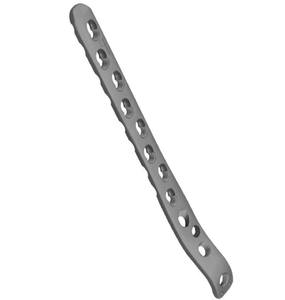
Titanium Orthopedic Implant – Manufacturer Direct, Limited Compression Surgical Implant
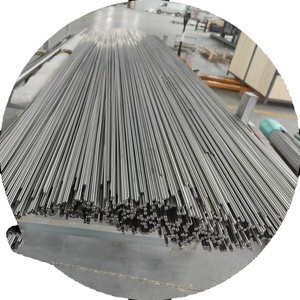
Titanium bar Grade 5 Eli Orthopedic Implants 3mm 4mm 5mm Dental Surgical Implant Price Per kg
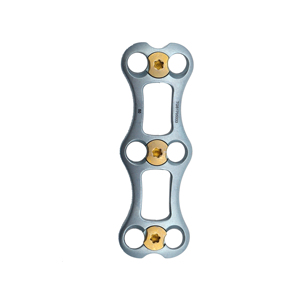
Medical Titanium Anterior Cervical Spine Locking Plate Orthopedic Spinal Fracture Fixation Surgical Bone Implant Device
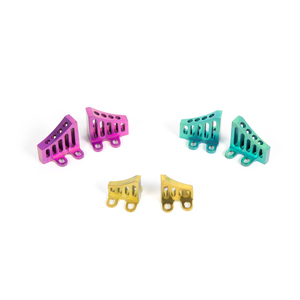
Veterinary Tibia Trauma Orthopedic Surgery Machined Type TTA Implant with 3D and Machined Types
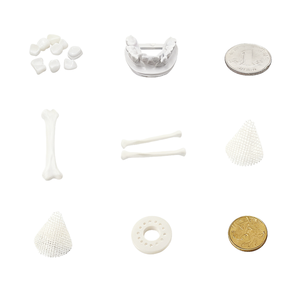
Medical Implant 3D Printing Service Custom Orthopedic Devices Bioprinting Compatibility Precision Craftsmanship
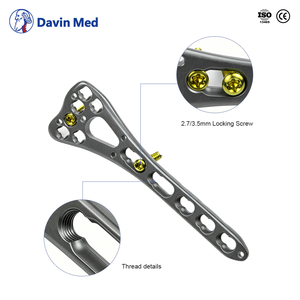
Davin Med Titanium Distal Radius Locking Plate System with Screws Kit 2.4mm Orthopedic Implant for Wrist Fracture Fixation
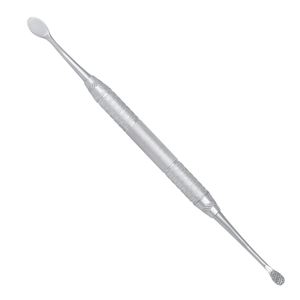
1X Miller Colburn Cross Cut Surgical Bone File Stainless Steel Dental Implant Orthopedic Deburring Finishing Tool Reusable Pro X
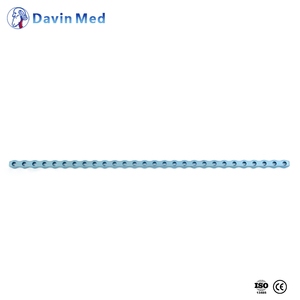
Dog Cat Various Size Vet Orthopedic Surgical Implants 2.0/2.4/2.7/3.5 mm AO Type ALPS Titanium Reconstruction Locking
Custom OEM vs. Branded Orthopedic Implants: The Economic & Clinical Paradigm Shift
For decades, Tier-1 multinational medical device brands (such as DePuy Synthes, Zimmer Biomet, Stryker, and Medtronic) controlled the global surgical market through brand equity and bundled hospital contracts. Today, global healthcare cost containment and national tender restructuring are driving a structural transition toward Direct-from-Factory Custom OEM and Private-Label Orthopedic Systems.
| Evaluation Parameter | Tier-1 Branded Implants (MNEs) | Custom OEM / Direct Factory Suppliers | Strategic Impact on Distributors & Hospitals |
|---|---|---|---|
| Cost Structure & Pricing | Includes high sales commissions, corporate overhead, and direct marketing expenses. Premium 300%–600% markup over production cost. | Direct factory manufacturing price based on raw material, precision CNC machine time, and ISO packaging. | High Margin Recovery Frees capital for hospital expansion or margin capture by local distributors. |
| Metallurgical Specifications | Standard Ti-6Al-4V ELI (ASTM F136) or PEEK (ASTM F2026). High quality but standardized. | Identical raw material grades sourced from certified medical-grade titanium and PEEK suppliers (ASTM F136, ASTM F138). | Clinical Parity Equivalent fatigue strength, tensile yield, and biological safety profiles. |
| Customization & Agility | Rigid product lines. Custom modifications require multi-year corporate approval and high minimum budgets. | Flexible OEM/ODM engineering. Swift modification of plate geometries, screw pitch, and custom instrument kits. | Market Responsiveness Enables fast adaptation to regional surgical techniques and anatomical variations. |
| Branding & IP Rights | Promotes multinational brand equity. Distributor acts as a non-exclusive reseller with contract vulnerability. | Private label laser marking and custom packaging allow distributors to build their own proprietary brand asset. | Brand Equity Building Long-term equity remains with the distributor rather than the manufacturer. |
| Regulatory Dossier Support | Provides pre-registered products, but limited access to underlying technical manufacturing documentation. | Full technical documentation (CE, ISO 13485, ASTM material test reports, sterilization validation files) provided for local registration. | Turnkey Registration Streamlines MOH / National Regulatory Agency submission pathways. |
Metallurgical Rigor & Biomechanical Precision in OEM Manufacturing
The myth that OEM implants are inferior to branded devices is dispelled by rigorous material analysis and mechanical testing standards. Precision contract manufacturing relies on identical international ASTM and ISO standards used by major global brands.
Medical Titanium Alloys (ASTM F136 & ASTM F67)
For load-bearing trauma plates, spinal locking constructs, and intramedullary nails, we utilize Ti-6Al-4V ELI (Extra Low Interstitial - ASTM F136). This alloy provides exceptional fracture toughness, superior fatigue resistance, and low modulus of elasticity close to human cortical bone. Commercially Pure (CP) Titanium (ASTM F67 Grade 2–4) is processed for CMF micro-plates requiring ductile intraoperative contouring.
High-Performance Polymer Constructs (PEEK ASTM F2026)
Our spinal interbody fusion cages (ALIF, PLIF, TLIF, Cervical) are CNC-machined from implant-grade Polyetheretherketone (PEEK Optima / ASTM F2026). PEEK exhibits radiological radiolucency, allowing seamless post-operative X-ray and CT imaging of bone fusion without metallic artifacts, matching human cancellous bone elastic modulus to prevent stress shielding.
Advanced Anodization & Surface Passivation
All finished titanium components undergo Type II electrochemical anodization and citric/nitric acid passivation according to ASTM F86 standards. Type II anodization eliminates micro-fissures, reduces friction between screw heads and plate holes, increases fatigue limit, and provides color-coded sizing visual cues for operating room surgical efficiency.
Sub-Micron CNC Milling & Thread Precision
Utilizing multi-axis Citizen and Star Swiss-type automatic lathes along with 5-axis CNC machining centers, implant thread profiles (AO type, variable angle locking, cannulated screws) are produced within micro-tolerances. Every screw thread geometry is verified via optical shadowgraph and CMM to ensure pull-out resistance under biomechanical strain.
Future Sourcing Trends in the Global Orthopedic Implant Industry
As health system budgets tighten and medical tender structures shift globally, four key procurement trends are defining the future of orthopedic implant manufacturing and distribution from 2025 to 2030.
1. Decentralization of Hospital Supply Chains
Major private hospital networks and regional health authorities are bypassing traditional distributor markups by contracting directly with ISO 13485 certified OEM factories. This direct model cuts procurement expenses while allowing health institutions to mandate custom instrument configurations tailored to their surgical staff.
2. Rapid Growth of 3D Printed Patient-Specific Implants (PSI)
Additive manufacturing (Selective Laser Melting - SLM and Electron Beam Melting - EBM) is transitioning from rapid prototyping to mass customization. OEM factories with integrated 3D bioprinting lines can manufacture complex titanium mesh structures with porous trabecular surfaces that promote direct bone ingrowth (osseointegration) for revision hip, knee, and CMF surgeries.
3. Stringent MDR Compliance & Supply Security
With the full implementation of EU MDR (2017/745) and similar regulatory tightening across Latin America, Asia, and the Middle East, importers require factory partners capable of providing complete clinical documentation packages, technical files, risk assessment reports (ISO 14971), and full supply chain lot traceability.
4. Matched Implant-Instrument Set Bundling
Distributors are moving away from piecemeal sourcing. Sourcing complete product ecosystems—where implants, custom instruments (driver bits, depth gauges, drill guides, bending pliers), and autoclavable sterilization trays are designed simultaneously—eliminates intraoperative intra-system mismatches and reduces surgical delays.
Why Global Importers Partner with Orthomanufacturer Medical
Our state-of-the-art production facility operates as an extended engineering arm for medical device brand owners and international distributors.
Full OEM & Private-Label Customization
We provide complete private-label services including laser etching of part numbers, lot codes, and company logos directly onto implants. Custom packaging solutions range from bulk non-sterile protective double-pouch systems to certified cleanroom sterile packaging with barcoded blister packs.
ISO Class 7 & Class 8 Cleanroom Operations
Final ultrasonic washing, bioburden-controlled assembly, and primary packaging are conducted in certified ISO Class 7 and Class 8 cleanrooms. Our cleaning processes remove machining oil residue to micro-gram thresholds, preventing end-toxin or inflammatory reactions in tissue post-implantation.
100% Quality Inspection & Material Traceability
Every batch of raw titanium bar or PEEK stock is verified with chemical spectroscopy and mechanical pull testing. Completed implants undergo optical image measurements, thread ring gauge tests, and 100% visual inspection before release, supported by raw-material-to-implant lot traceability records.
Common Sourcing Questions from Medical Device Importers
Answers to essential technical, regulatory, and commercial inquiries when qualifying an OEM orthopedic supplier.