Certified Orthopedic Implants & OEM Solutions
Explore our CE and ISO 13485 certified medical devices, precision machined in Class 100,000 cleanroom facilities for trauma, spinal, veterinary, and reconstructive surgeries.
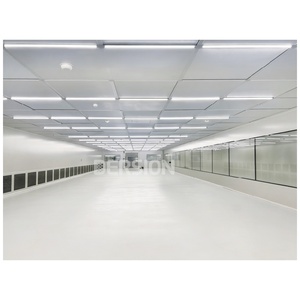
Orthopedic Implant Cleanroom Manufacturing
ISO Class 8 cleanroom washed, packaged, and sterile-ready OEM orthopedic implant manufacturing solutions.
Send an Inquiry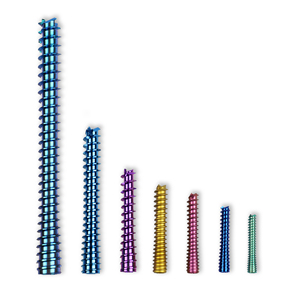
CANWELL Titanium Headless Cannulated Compression Screws
CE certified titanium compression screw system designed for minimally invasive intra-articular trauma fixation.
Send an Inquiry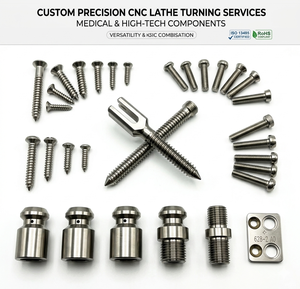
5-Axis CNC Titanium Spinal Pedicle Screws
Custom bone screws precision-milled via 5-axis CNC machining, featuring micro-thread profiles and biocompatible finishing.
Send an Inquiry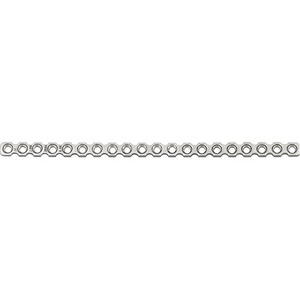
Meditech Veterinary 1.5 Straight Reconstruction Plate
CE & ISO certified veterinary orthopedic implants crafted from high-purity medical-grade titanium for bone reconstruction.
Send an Inquiry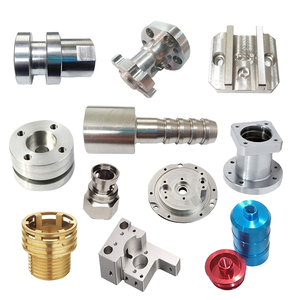
Precision CNC Milled Aluminum & Titanium Parts
Complex custom OEM/ODM contract machining for medical hardware, titanium instruments, and surgical assembly components.
Send an Inquiry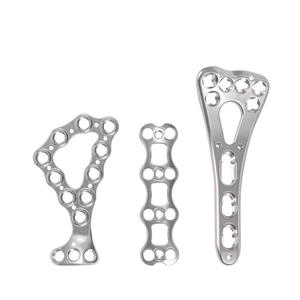
Minimally Invasive MIS Pedicle Screw System
High-quality titanium spinal implants engineered from custom client drawings for percutaneous posterior thoracolumbar fixation.
Send an Inquiry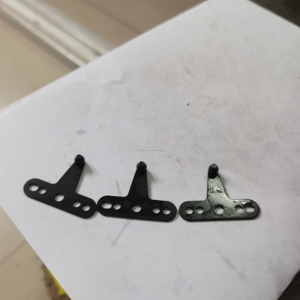
AM ORTHO Right Angled Titanium Trauma Implants
Medical grade titanium right-angled anatomical trauma plates engineered for specialized osteotomy and distal fracture fixation.
Send an Inquiry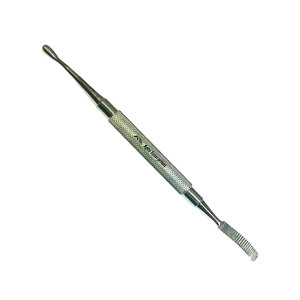
Premium Bone Molt Elevator & Surgical Scraper File
Handcrafted surgical instruments with ergonomic handles for precise tissue elevation, periosteal scraping, and bone preparation.
Send an InquiryNext-Generation Orthopedic Implant Manufacturing: Technical Trends & Engineering Paradigms
An authoritative guide for medical device procurement directors, orthopedic brand owners, and OEM distributors navigating the evolving landscape of orthopedic implant manufacturing, material science, and regulatory compliance.
1. Advanced Material Science: ASTM F136 Titanium, PEEK-OPTIMA, and Surface Anodization
The performance of permanent joint replacements, spinal pedicle screws, and trauma locking plates is fundamentally limited by material fatigue and osseointegration capability. As a certified OEM/ODM manufacturer, our metallurgical engineering teams strictly utilize medical-grade raw titanium conforming to ASTM F136 (Ti-6Al-4V ELI) and ASTM F67 (Commercially Pure Titanium), as well as ultra-high-molecular-weight polyethylene (UHMWPE ASTM F648) and polyetheretherketone (PEEK ASTM F2026).
For spinal fusion cages, radiolucent PEEK-OPTIMA polymers provide an elastic modulus (3.6 GPa) closely matching human cortical bone, thereby eliminating the phenomenon of stress shielding. Simultaneously, micro-porous titanium surface coatings—achieved through controlled plasma spraying or 3D additive selective laser melting (SLM)—promote early bone cell adhesion and rapid trabecular ingrowth.
2. 5-Axis Swiss Machining & Micro-Tolerance Cleanroom Production
Precision orthopedic trauma implants, such as headless cannulated compression screws and variable-angle locking plates, demand micro-scale manufacturing accuracy. Machining complex thread profiles, cannulated guide wire channels (diameters down to 1.1mm), and self-tapping flutes requires state-of-the-art 5-axis Swiss CNC automatic lathes.
Our manufacturing infrastructure integrates multi-axis Citizen and Tsugami CNC turning centers capable of holding tolerances within ±0.005mm. Following machining, implants undergo automated ultrasonic cleaning, acid passivation in accordance with ASTM F86, Type II color anodization (for instant surgical size identification), and laser marking before being sealed inside ISO Class 8 (Class 100,000) cleanroom environments.
3D Porous Titanium Structures
Additive manufacturing enables biomimetic lattice structures with controlled porosity (60-80%), dramatically enhancing biological fixation for spinal interbody cages and joint reconstructive implants.
Minimally Invasive (MIS) Compatibility
Implant geometry is increasingly optimized for percutaneous delivery. Slim pedicle screw extensions, self-holding screwdrivers, and radiolucent carbon-fiber aiming instruments facilitate smaller surgical incisions.
Bi-Modular Instrument Integration
Surgical instrument ergonomics are directly paired with implant driver recesses, eliminating cam-out, screw head stripping, and intraoperative misalignment during high-torque bone fixation.
3. Regulatory Evolution: Navigating EU MDR 2017/745 & Global Compliance
The global orthopedic industry faces tighter regulatory oversight under the European Union Medical Device Regulation (EU MDR 2017/745) and US FDA 510(k) mandates. OEM contract manufacturers must provide comprehensive Technical Documentation Files (TDF), complete Design History Files (DHF), biocompatibility data (ISO 10993), and mechanical fatigue test results (ASTM F1717 for spinal implants, ASTM F382 for metallic bone plates).
By partnering with an ISO 13485 certified manufacturer equipped with full lot traceability, brand owners and regional hospital suppliers can streamline their regulatory filing timelines by 40-60%, ensuring unbroken supply chain continuity across North American, European, Latin American, and Asian markets.
Future Procurement Trends in Orthopedic Implant Supply Chains
Key considerations for hospital purchasing committees, OEM distributors, and contract manufacturing partners over the next decade.
Turnkey Private-Label Solutions
Distributors are moving away from multi-vendor component Sourcing towards single-source OEM partners who supply fully matched sets: implants, specialized instruments, custom laser marking, and sterile packaging.
Supply Chain Resilience & Dual-Sourcing
Geopolitical shifts and freight fluctuations drive healthcare enterprises to partner with agile manufacturing hubs capable of rapid engineering prototyping (NPI) and stable multi-year bulk export contracts.
Strict Metallurgical Verification
Distributors demand raw material certification (Mill Test Reports) for every production lot. Third-party spectrographic chemistry and tensile strength testing are now mandatory qualification steps.
Orthopedic Implant Material Standards & Mechanical Performance
Engineering comparison of medical-grade alloys and polymers utilized across our OEM production lines.
| Material Grade | Standard Specification | Tensile Strength (MPa) | Primary Clinical Applications | Key Engineering Advantage |
|---|---|---|---|---|
| Titanium Ti-6Al-4V ELI | ASTM F136 / ISO 5832-3 | ≥ 860 MPa | Spine pedicle screws, intramedullary nails, locking trauma plates | Superior fatigue strength, low modulus, bio-inert oxide layer |
| Commercially Pure Ti (CP Gr 4) | ASTM F67 / ISO 5832-2 | ≥ 550 MPa | CMF mini plates, titanium mesh, small fragment reconstructive screws | High ductility allowing intraoperative contouring without fracturing |
| Stainless Steel 316LVM | ASTM F138 / ISO 5832-1 | ≥ 860 MPa (Cold worked) | Trauma pins, Kirschner wires, external fixation frames, surgical tools | Cost-effective, high yield strength, vacuum melt purity |
| PEEK-OPTIMA Polymer | ASTM F2026 | 90 - 100 MPa | Cervical cages, PLIF/TLIF interbody spinal spacers | Radiolucent (CT/MRI compatible), bone-like elastic modulus (3.6 GPa) |
| Cobalt-Chromium (CoCrMo) | ASTM F1537 / ISO 5832-12 | ≥ 1000 MPa | Total hip femoral heads, total knee arthroplasty components | Exceptional abrasive wear resistance for articulating joint surfaces |
Why Global Brands Choose Our OEM/ODM Manufacturing
End-to-end contract manufacturing capabilities backing your brand's international reputation.
ISO 13485 & Cleanroom Facilities
Our state-of-the-art production base operates under audited ISO 13485 quality management systems. Implants are processed through automated ultrasonic passivation lines and assembled inside certified Class 8 cleanrooms to guarantee minimal bioburden and particulate counts.
Custom Drawing & Reverse Engineering (ODM)
Have a proprietary implant design or customized surgical instrument concept? Our R&D team converts customer 3D CAD files (STEP, IGES, SolidWorks) into validated CNC tooling paths, complete with rapid DFM (Design for Manufacturability) analysis.
Matched Instrument Kit Engineering
Implant success relies on precise instrumentation. We develop complete surgical trays—including torque-limiting screwdrivers, bone drills, depth gauges, bending pliers, and quick-coupling handles—housed in custom aluminum sterilization boxes.
100% Optical Inspection & Traceability
Every individual implant receives permanent fiber-laser etching detailing SKU numbers, lot tracking codes, and dimensional indicators. High-precision CMM (Coordinate Measuring Machines) and optical comparators verify 100% of critical dimensions.
Frequently Asked Procurement Questions (FAQ)
Technical and commercial answers for international healthcare buyers, hospital distributors, and OEM brand managers.
Partner with a Certified Orthopedic Implant Manufacturer
Accelerate your product launch with precision-machined, ISO 13485 certified spinal, trauma, CMF, and veterinary implants backed by total lot traceability and turnkey OEM engineering.