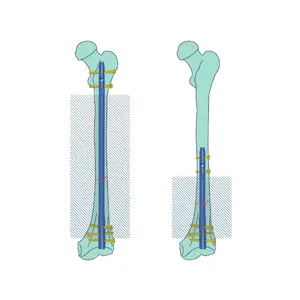
Trauma / Femoral System
Direct factory production lines operating under ISO 13485:2016 quality systems. Full lot traceability, validated surface passivations, and technical documentation ready for Notified Body audits.
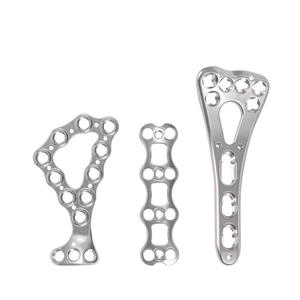
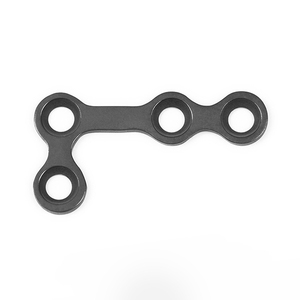
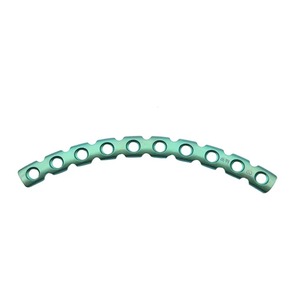
An authoritative technical analysis for global importers, brand owners, and hospital networks on ensuring supply chain continuity under European medical device regulations.
The implementation of the European Union Medical Device Regulation (EU MDR 2017/745), replacing the legacy Medical Device Directive (MDD 93/42/EEC), has fundamentally restructured the global contract manufacturing ecosystem for orthopedic devices. Importers, brand distributors, and healthcare procurement bodies face stringent requirements surrounding technical documentation (TD), clinical evaluation reports (CER), post-market surveillance (PMS), and Unique Device Identification (UDI) data models. Partnering with certified, compliant OEM/ODM factories is no longer merely a pricing consideration—it is a prerequisite for market access and risk mitigation.
Under EU MDR, contract manufacturers providing private-label or custom OEM/ODM orthopedic implants must deliver transparent, audit-ready technical files aligned with Annex I General Safety and Performance Requirements (GSPR). Legacy equivalency routes previously utilized under MDD have been significantly restricted. Every implantable screw, locking plate, intramedullary nail, and spinal interbody cage must be backed by:
Regulatory Advisory: OEM buyers sourcing Class IIb trauma plates or Class III joint prostheses must verify that contract manufacturers possess direct control over raw material melt sources (ASTM F136 Ti-6Al-4V ELI, ASTM F2026 PEEK) and maintain full lot-level mill test reports (MTR) with 100% chemical composition verification.
The regulatory transition shifts operational burdens from simple product declaration to continuous life-cycle compliance. The following technical matrix highlights the critical operational differences required from OEM/ODM exporters:
| Regulatory Dimension | Legacy MDD (93/42/EEC) Requirement | Current EU MDR (2017/745) Standard | Impact on OEM / ODM Sourcing |
|---|---|---|---|
| Device Classification | Class IIa / IIb for most surgical implants based on duration. | Upclassified: Surgical invasive/reconstructive implants pushed toward Class IIb (long-term) or Class III. | Requires deeper Notified Body audit participation and comprehensive Technical File submission. |
| Clinical Evidence | Literature review allowed based on "substantially equivalent" devices. | Rigorous Clinical Evaluation Report (CER) with actual clinical data; strict limits on equivalence. | OEM suppliers must provide robust post-market clinical follow-up (PMCF) data packages to distributors. |
| Supply Chain Traceability | Batch traceability from primary packaging down to box level. | Mandatory UDI (Unique Device Identification) assigned at unit level; registered in EUDAMED database. | Factories must integrate high-precision micro laser-marking systems compliant with GS1 standards. |
| Material Transparency | General material declaration on technical data sheets. | Full disclosure of CMR substances (Carcinogenic, Mutagenic, Toxic) >0.1% w/w under GSPR 10.4. | Requires strict control of raw materials (Ti6Al4V ELI, PEEK, 316L VM) and certified chemical testing certificates. |
| Post-Market Surveillance | Reactive feedback collection and periodic vigilance report updates. | Proactive PMS continuous updates; Periodic Safety Update Reports (PSUR) submitted annually for Class IIb/III. | OEM/ODM contracts must define clear quality agreements detailing shared post-market data obligations. |
Engineering excellence from raw titanium bar stock to micro-finished, bio-compatible surgical implants.
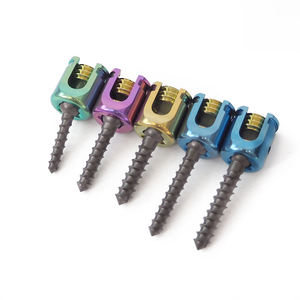
We utilize Extra Low Interstitial (ELI) Titanium alloys engineered for enhanced fracture toughness, superior fatigue resistance, and bio-inertness. Ideal for polyaxial pedicle screw systems, cannulated intramedullary nails, and high-load anatomical locking plates.
Polyetheretherketone (PEEK Optima) provides Radiolucency under fluoroscopy and an elastic modulus (3.6 GPa) closely matching human cortical bone, reducing stress-shielding effects. Manufactured for spinal interbody fusion cages and orthopedic sports medicine anchors.
Execution of specialized surface enhancements including Type II Electrochemical Anodization (anti-galling thread hardening), Type III Color Anodization (size-coded surgical identification), Hydroxyapatite (HA) plasma spraying, and porous titanium trabecular coating for biological bone ingrowth.
Contract buyers must ensure raw materials comply strictly with medical-grade ASTM and ISO standards. Our factory enforces 100% incoming material verification using Optical Emission Spectrometry (OES) and microstructural analysis.
| Material Classification | International Standard | Biomechanical Profile | Primary Clinical Application |
|---|---|---|---|
| Ti-6Al-4V ELI Alloy | ASTM F136 / ISO 5832-3 |
High yield strength, high dynamic fatigue endurance, low density. | Pedicle Screws, Spine Rods, Trauma Locking Plates, Intramedullary Nails. |
| Commercially Pure Titanium (CP Ti) | ASTM F67 / ISO 5832-2 |
Exceptional ductility for intraoperative contouring and shaping. | CMF Maxillofacial Micro/Mini Plates, Cranial Mesh, Reconstructive Mesh. |
| Stainless Steel 316L / 316LVM | ASTM F138 / ISO 5832-1 |
Cost-effective, excellent shear force resistance, rigid temporary fixation. | Trauma Compression Plates, Kirschner Wires, External Fixation Pins. |
| Cobalt-Chromium-Molybdenum (CoCrMo) | ASTM F1537 / ISO 5832-12 |
Extreme wear resistance, low friction coefficient, polished surface integrity. | Joint Arthroplasty (Hip Femoral Heads, Knee Articular Surfaces). |
| Medical Grade PEEK Polymer | ASTM F2026 |
Radiolucent, zero artifact on CT/MRI scans, biomechanical elasticity. | Spinal Interbody Fusion Cages (PLIF, TLIF, ALIF, Cervical Cages). |
How additive manufacturing, digital surgical workflows, bioresorbable polymers, and regulatory consolidation are defining the next decade of contract procurement.
Traditional subtractive machining is rapidly integrating with Direct Metal Laser Sintering (DMLS) and Electron Beam Melting (EBM). Additive manufacturing allows factories to construct biomimetic porous titanium surfaces with interconnected pore diameters ranging from 300 to 600 microns. This geometry mimics natural human cancellous bone, driving rapid osteointegration and vascularization without requiring secondary plasma-coatings. Distributors sourcing spinal cages and acetabular hip cups are increasingly shifting contract procurement toward 3D printed monolithic titanium devices.
Advancements in high-resolution DICOM processing software enable contract manufacturers to convert patient CT scans into custom 3D CAD models within hours. Factories with integrated 5-axis CNC micro-milling can produce Patient-Specific Implants (PSI) for complex oncological reconstructions, severe CMF maxillofacial trauma, and revision joint arthroplasty. Procurement managers must select OEM partners capable of managing direct digital design loops with surgeon input under ISO 13485 design control protocols.
In sports medicine (rotator cuff repair, ACL reconstruction), surgeon demand is transitioning away from permanent metal hardware toward bioabsorbable materials like PLLA (Poly-L-Lactic Acid) and HA/TCP bio-composite interference screws and suture anchors. These materials maintain mechanical strength during soft-tissue healing and gradually resorb into the body over 18 to 36 months, eliminating secondary removal surgeries. OEM exporters with cleanroom polymer injection molding infrastructure are positioned to capture high-margin market share.
Global medical device distributors are consolidating vendor rosters to combat geopolitical and regulatory volatility. Procuring standalone implants from separate vendors often leads to surgical driver-recess mismatches, thread tolerances drift, and failed sterile package compatibility. The prevailing sourcing trend favors fully bundled turnkey systems: implants, dedicated matched surgical instruments, reusable sterilization trays, and complete regulatory dossiers sourced from a single qualified OEM contract factory.
Refining precision contract manufacturing through automated infrastructure, stringent quality control, and turn-key registration assistance.
Our facilities house multi-axis CNC turning-milling centers, automatic optical measuring systems, and Coordinate Measuring Machines (CMM) sensitive down to ±0.001mm. Every manufacturing step follows validated IQ/OQ/PQ protocols under our ISO 13485:2016 quality management framework.
We provide full private-label services, including micro laser engraving of custom brand logos, part reference numbers, lot numbers, and GS1 DataMatrix UDI symbols directly onto titanium and stainless steel surfaces without altering mechanical fatigue integrity.
Shorten your time-to-market in Europe, Latin America, Southeast Asia, and the Middle East. We provide qualified distributors with comprehensive technical documentation packages, material test certificates, instructions for use (IFU), and sterile packaging validation reports.
Before executing a OEM supply contract, procurement executives should evaluate factory candidates against four core operational metrics:
Essential information for medical supply distributors, OEM brand owners, and hospital procurement departments.
Partner with an established, ISO 13485 certified manufacturer capable of delivering EU MDR compliant technical dossiers, precision CNC manufacturing, and dependable global export support.