Export-Grade Orthopaedic Implants & Precision Surgical Instruments
Explore our CE and ISO 13485 certified Class IIb and Class III orthopaedic systems. Every SKU is produced under strict metallurgical control and micro-milling tolerances for seamless surgical execution.
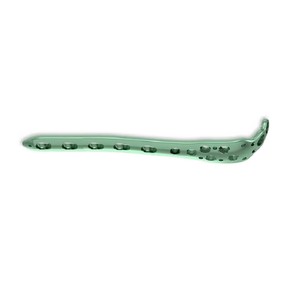
Wholesale Orthopedic Implants Export Quality Surgical Implant Manufacturer
Class III hospital-grade trauma and spine implants built from certified Ti-6Al-4V ELI alloy. Engineered for high fatigue resistance and immediate primary stability.
Get a Quote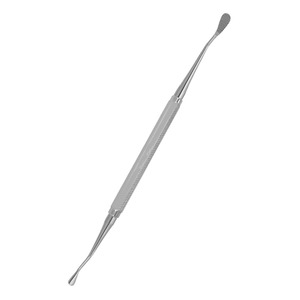
Manual Stainless Steel Bone File Miller Surgical Scraper Instrument
Precision-ground 316L surgical stainless steel bone rasps and scrapers designed for bone bed preparation, joint debridement, and dental implantology.
Get a Quote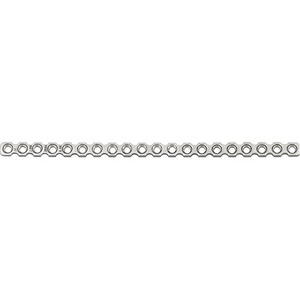
Veterinary Orthopedic 1.5 Straight Reconstruction Bone Plate System
Ultra-low profile micro-reconstruction plates crafted for small animal trauma repair. Offers exceptional contouring flexibility without sacrificing yield strength.
Get a Quote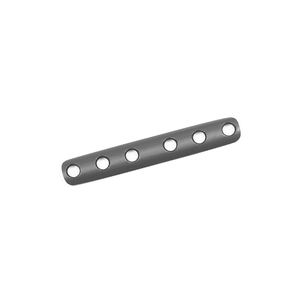
Class III Small Fragment 1/3 Tubular Plate Upper Limb Fixation System
Anatomically pre-contoured small fragment trauma plates for fibula, radius, and ulna fractures. Compatible with standard 3.5mm cortical and locking screws.
Get a Quote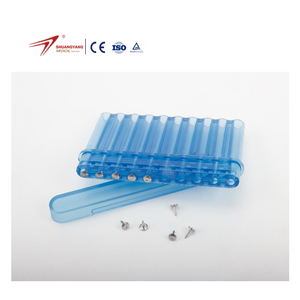
Titanium Alloy GBR Membrane Bone Tack & Screw Fixation System
Guided Bone Regeneration (GBR) micro tack system for maxillofacial and dental bone augmentation procedures. Precision-threaded for immediate mechanical grip.
Get a Quote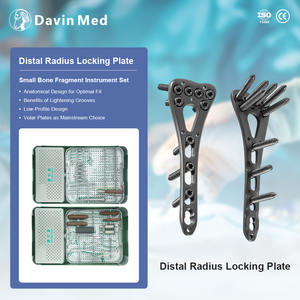
Multi-Axial Volar Distal Radius Locking Plate Fixation System
Advanced polyaxial locking plate allowing variable-angle screw trajectory (+/- 15 degrees) for precise articular fragment reconstruction in distal radius fractures.
Get a Quote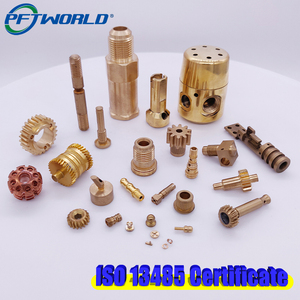
Custom OEM/ODM CNC Machined PEEK & Titanium Implant Components
Contract precision manufacturing for custom orthopaedic devices, spinal cages, and joint components utilizing 5-axis Swiss lathes and certified PEEK Optima.
Get a Quote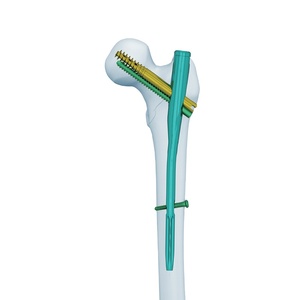
Class III Hospital Use Titanium Alloy Orthopedic Trauma Implant System
Best-selling universal traumatology plate series engineered for high load-bearing long bone osteosynthesis. Complete with color-coded surgical tool trays.
Get a QuoteWhy Leading Global Brands Partner With Orthomanufacturer Medical
In high-risk medical device procurement, the true cost of an orthopaedic supplier is measured by regulatory safety, batch consistency, and surgical instrument tolerance. Here is how our contract manufacturing model mitigates global distributor risk.
Full Metallurgical Lot Traceability
Every single titanium screw, PEEK cage, and stainless steel bone plate produced in our facility undergoes rigorous raw material verification against mill test certificates. We exclusively utilize certified implant-grade alloys including ASTM F136 Ti-6Al-4V ELI, ASTM F2026 PEEK Optima, and ASTM F138 316LVM.
Unique Device Identification (UDI) laser marking ensures 100% batch-to-melt traceability from raw bar stock to finished sterile-ready packaging, facilitating effortless local registration and hospital auditing.
5-Axis CNC Precision Micro-Milling
Mismatched driver-recess dimensions and burred screw threads can cause catastrophic intraoperative failure. Our manufacturing plant operates state-of-the-art Swiss-type multi-axis CNC lathes and high-speed milling centers capable of maintaining dimensional tolerances within ±0.008 mm.
By controlling micro-roughness ($R_a < 0.4 \mu m$) and executing controlled Type II grey anodization, we prevent galling in locking screw threads and dramatically enhance primary mechanical fixation.
Turnkey Regulatory Dossier Support
Expanding into new national healthcare sectors requires seamless regulatory approval. We provide global B2B importers with comprehensive technical dossier bundles, including STED-format design files, ISO 10993 biocompatibility testing, mechanical fatigue test reports (ASTM F1717 / ASTM F543), and cleanroom sterilization validation protocols.
We actively empower distributors in Asia, Latin America, the Middle East, and Europe to accelerate local MOH registration timelines by up to 60%.
Orthopaedic Biomaterial Engineering & Mechanical Comparison
Selecting the optimum substrate is critical for stress shielding prevention, fatigue endurance, and osseointegration. Reference our standardized engineering data matrix below when establishing OEM product specs.
| Biomaterial Standard | Elastic Modulus (GPa) | Yield Strength (MPa) | Fatigue Limit (Cycle Range) | Radiolucency / MRI | Primary Clinical Applications |
|---|---|---|---|---|---|
| Ti-6Al-4V ELI (ASTM F136 / ISO 5832-3) | 110 – 114 GPa | ≥ 795 MPa | > 107 Cycles (High Stress) | Non-Magnetic / Slight Artifact | Spinal Pedicle Screws, Trauma Locking Plates, Intramedullary Nails |
| PEEK Optima (ASTM F2026 Polymer) | 3.5 – 4.0 GPa (Bone-like) | 110 – 130 MPa | > 5 × 10⁶ Cycles | 100% Radiolucent / Zero Artifact | Cervical & Lumbar Interbody Fusion Cages, Cranial Plates |
| 316L Stainless Steel (ASTM F138 / ISO 5832-1) | 190 – 200 GPa | ≥ 690 MPa | > 5 × 10⁶ Cycles | Ferromagnetic / High Artifact | Temporary Trauma Fixation, External Fixator Rods, Surgical Rasps |
| CP Titanium Grade 2/4 (ASTM F67 / ISO 5832-2) | 103 – 105 GPa | 275 – 480 MPa | Moderate Fatigue Life | Non-Magnetic / Low Artifact | CMF Maxillofacial Micro-Plates, GBR Membrane Tacks, Titanium Mesh |
| CoCrMo Alloy (ASTM F1537 / ISO 5832-12) | 210 – 230 GPa | ≥ 840 MPa | > 107 Cycles (Extreme Wear) | High Density Artifact | Total Joint Arthroplasty Femoral Heads, Knee Articular Surfaces |
Advanced Surface Engineering for Accelerated Osseointegration
Mechanical strength alone does not guarantee surgical success; surface topography dictates the biological cascade post-implantation. Orthomanufacturer Medical integrates multi-stage biochemical surface treatments:
- Type II Hard Anodization: Generates a non-shedding, corrosion-resistant titanium oxide layer ($TiO_2$) that decreases thread friction coefficients by 40%, preventing cold welding between locking screws and plate holes.
- Plasma-Sprayed Hydroxyapatite (HA) Coating: Applied to uncemented joint stems and interbody cages to achieve a porous crystalline layer (60–80% porosity, pore diameters 100–300 $\mu m$), facilitating rapid osteoblast infiltration and biological secondary fixation.
- Sandblasted, Large-Grit, Acid-Etched (SLA) Micro-Roughness: Creates a dual-scale micro/nano topographical surface on titanium implants, significantly shortening the bone-to-implant contact (BIC) timeline during early postoperative recovery.
Future Procurement Trends in the Global Orthopaedic Market
As healthcare reimbursement models tighten and regulatory scrutiny intensifies under EU MDR and international MOH guidelines, global procurement strategies are undergoing structural shifts.
1. Shift to Complete System Purchasing (Implants + Matched Toolkits)
Hospitals are refusing to buy standalone implants due to intraoperative mismatch risks. Modern tender requirements mandate fully integrated system kits — combining anatomically contoured locking plates with pre-calibrated torque limiters, depth gauges, and autoclavable aluminum sterilization trays.
Overseas distributors must partner with OEM suppliers capable of manufacturing both the implant and matched surgical instrumentation within the same ISO-certified quality management umbrella.
2. Demand for Complete Regulatory Dossier Readiness
Tender evaluation boards no longer accept basic certificates of free sale. Sourcing teams prioritize vendors that provide turnkey technical files containing finite element analysis (FEA), clinical evaluation reports (CER), and accelerated shelf-life stability test data ($Q_{10}$ validation).
Importers prioritizing regulatory-ready OEM partners eliminate costly registration back-and-forth, reducing market access lead time from years to months.
3. Private Labeling & Custom Brand Localization
Leading regional distributors are moving away from selling third-party brands and are establishing their own private-label device portfolios to protect profit margins and build long-term enterprise value.
Our custom contract manufacturing program provides laser logo engraving, localized dual-language labeling, standardized box packaging, and customized Instructions for Use (IFU) tailored to regional regulatory requirements.
4. Total Acquisition Cost Optimization over Unit Price
Low upfront unit costs quickly erode if a supplier exhibits high scrap rates, delayed deliveries, or poor thread fitment leading to surgical complaints. Advanced procurement officers evaluate Total Cost of Ownership (TCO).
By guaranteeing zero-defect incoming inspection via 3D CMM optical comparators and offering flexible MOQ buffers, we deliver lower overall supply chain risk and sustained margin expansion for our partners.
Next-Generation Orthopaedic Development Trends
Medical device engineering is undergoing rapid convergence with digital manufacturing, additive 3D printing, and minimally invasive surgical paradigms.
3D-Printed Porous Trabecular Titanium
Direct Metal Laser Sintering (DMLS) enables the creation of biomimetic trabecular titanium implants with interconnected porosity (65–75% void volume). These structures match the biomechanical properties of cancellous bone, eliminating stress shielding and promoting rapid cell vascularization.
Expandable MIS Spine Technology
Minimally Invasive Surgery (MIS) interbody cages feature expandable internal mechanical linkages. Inserted through smaller surgical corridors, they expand in situ to restore disc height and lordotic angle while reducing tissue disruption and postoperative patient recovery times.
Patient-Specific CMF Implants (PSI)
Utilizing high-resolution patient CT DICOM datasets, AI-assisted CAD systems design custom cranio-maxillofacial reconstruction plates and 3D mesh. The customized implants fit patient bone contours exactly, drastically reducing operating room time during complex trauma procedures.
Structured OEM/ODM Contract Manufacturing Workflow
From initial 2D/3D CAD drawing evaluation to sterile cleanroom packaging, our five-stage contract engineering process guarantees seamless delivery.
Design & DFM Review
Our biomedical engineers perform Design for Manufacturability (DFM) audits on customer CAD models, optimizing toolpaths, thread pitch tolerances, and material choices.
Rapid Prototyping
Swiss lathe precision machining creates functional prototype samples for mechanical bench testing, dimensional CMM check, and surgeon fitment validation.
Validation & IQ/OQ/PQ
Production lines undergo complete Installation, Operational, and Performance Qualification (IQ/OQ/PQ) to ensure absolute batch-to-batch manufacturing stability.
Cleanroom Packaging
Finished implants undergo ultrasonic cleaning, passivated coating verification, laser UDI marking, and double-blister Tyvek cleanroom sealing.
Frequently Asked Questions for B2B Importers & OEM Partners
Get authoritative answers regarding regulatory documentation, custom tooling, minimum order quantities, and quality assurance protocols.
What orthopaedic device product families does Orthomanufacturer Medical specialize in?
+
Can your factory support OEM private-label laser marking and custom packaging?
+
What raw material grade certificates accompany export orders?
+
What regulatory documentation is provided to support local MOH product registration?
+
Can prospective buyers request physical sample sets before placing volume contracts?
+
What is the standard production lead time for OEM/ODM orders?
+
How do you ensure matching tolerances between implants and surgical instruments?
+
Partner with a Certified Orthopaedic Implant Manufacturer Today
Whether you are expanding your trauma implant product catalog, submitting tenders for hospital groups, or engineering custom OEM spinal devices, our biomedical engineering team is ready to accelerate your project.
Get a Quote