Precision OEM/ODM Implants & Surgical Instrumentation
Explore our core surgical systems manufactured from implant-grade Titanium (Ti-6Al-4V ELI / CP Ti), 316L Stainless Steel, and PEEK under strict ISO 13485 quality standards.
China's Evolution into a High-Precision OEM/ODM Medical Sourcing Hub
Strategic shift from commercial sourcing to advanced contract manufacturing for global medical device brands.
The Paradigm Shift in Orthopedic Sourcing
The global market for orthopedic trauma, spinal reconstruction, sports medicine, and craniomaxillofacial (CMF) implants is undergoing a structural realignment. Healthcare systems worldwide demand superior biomechanical efficacy, uncompromising biocompatibility, and cost containment. As a result, international medical brands, regional distributors, and hospital procurement groups are moving beyond conventional off-the-shelf purchasing toward high-precision OEM (Original Equipment Manufacturer) and ODM (Original Design Manufacturer) partnerships with audited Chinese manufacturers.
Leading Chinese medical device companies have invested millions in Swiss-type multi-axis CNC lathing, ultra-precision EDM wire cutting, cleanroom automated packaging, and rigorous metallurgical validation. China has established itself as an indispensable manufacturing backbone for medical devices, delivering quality that meets ASTM F136 titanium standards while maintaining structural cost advantages.
Key Information Gain for Sourcing Directors
When selecting a Chinese contract manufacturer for Class IIb and Class III orthopedic implants, unit cost represents less than 30% of total commercial risk. True enterprise value depends on lot-to-lot dimensional consistency, complete metallurgical raw material certificates (MTR), surface passivation integrity under ASTM F86, and regulatory dossier technical files (STED) ready for local registration.
Bio-Material Specification Matrix for Orthopedic Manufacturing
Technical compliance overview of medical-grade metals and polymers utilized in permanent and temporary internal fixation.
| Material Classification | International Standard | Mechanical & Biomechanical Attributes | Primary Clinical Application | Surface Treatment Options |
|---|---|---|---|---|
| Titanium Alloy (Ti-6Al-4V ELI) | ASTM F136 ISO 5832-3 | High strength-to-weight ratio, ultimate tensile strength ≥ 860 MPa, superior fatigue resistance, low elastic modulus close to cortical bone. | Pedicle screws, intramedullary nails, anatomical locking plates, trauma screws. | Type II/III Color Anodization, Micro-arc Oxidation (MAO), Sandblasting. |
| Commercially Pure Titanium (CP Ti) | ASTM F67 ISO 5832-2 | Excellent ductility and intraoperative malleability; Grade 2 to Grade 4 yield strength range 275–483 MPa. | CMF micro/mini plates, cranial reconstructive mesh, reconstructive bone tacks. | Electrochemical Polishing, Acid Etching, Anodization. |
| Stainless Steel (316L / 316LVM) | ASTM F138 ISO 5832-1 | High mechanical rigidity, cost-effective load-bearing capability, vacuum melt refined for minimal nickel segregation. | Veterinary trauma plates, external fixation pins, manual surgical instrumentation sets. | Nitric / Citric Passivation (ASTM F86), Mirror Polishing. |
| Cobalt-Chromium Alloy (CoCrMo) | ASTM F1537 ISO 5832-12 | Extreme hardness, superior tribological properties, high resistance to adhesive and abrasive wear under articulation. | Joint prosthesis components, total hip femoral heads, total knee condylar resurfacing. | Super-finishing (≤ 0.02 μm Ra), Thermal Spray Coatings. |
| PEEK (Polyetheretherketone) | ASTM F2026 | Radiolucent (X-ray transparent), elastic modulus (~3.6 GPa) closely matching cancellous bone, zero metallic artifact in MRI/CT. | Interbody spinal fusion cages (PLIF, TLIF, ACDF), radiolucent aiming sleeves. | Precision CNC Machining, Plasma Etching, Titanium Plasma Spraying. |
Future Procurement & Technology Trends in Orthopedic Manufacturing
Key developments shaping the next decade of global orthopedic supply chain management and product design.
Additive Manufacturing & Porous Titanium
3D printing (Selective Laser Melting - SLM) allows direct fabrication of porous titanium lattice structures mimicking trabecular bone structure. This accelerates osteointegration and bone ingrowth in spinal fusion cages and joint acetabular cups, replacing traditional secondary coating processes.
Patient-Specific Implants (PSI) & Digital Workflows
Rapid conversion of DICOM CT scan data into patient-matched custom CMF plates, complex pelvic reconstructive implants, and custom drill guides. OEM suppliers must support end-to-end digital ODM workflows from 3D CAD modeling to rapid validation within 5–7 working days.
EU MDR (2017/745) & Global Regulatory Rigor
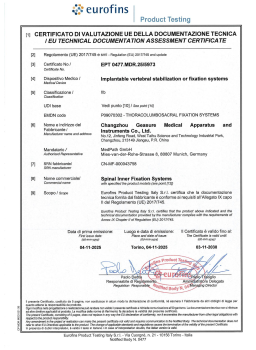
With stricter post-market surveillance (PMS) and clinical evaluation report (CER) requirements under EU MDR, global distributors are consolidating vendor lists, preferring established OEM manufacturers with pre-validated technical documentation and raw material lot traceability.
Expansion of Veterinary Orthopedic Systems
The global veterinary surgical market is experiencing double-digit growth. Sourcing partners are leveraging human-grade orthopedic manufacturing facilities to produce dedicated veterinary locking plates (TPLO, ALPS), micro-screws, and specialized animal spine instruments.
Smart Surgical Kits & Color Anodized Error-Proofing
Modern surgical suites require intuitive layout kits. OEM clients demand color-coded implant screw sizes, laser-etched scale markings on drills and depth gauges, and modular sterilization tray layouts designed to streamline procedure times and prevent intraoperative component mismatch.
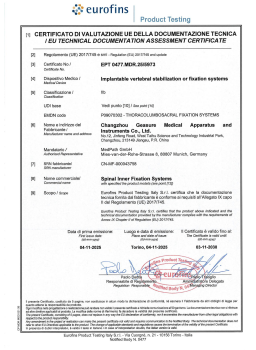
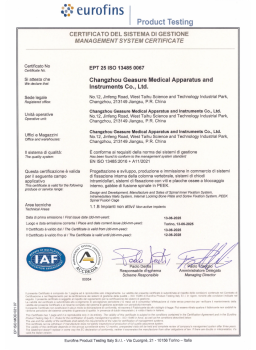
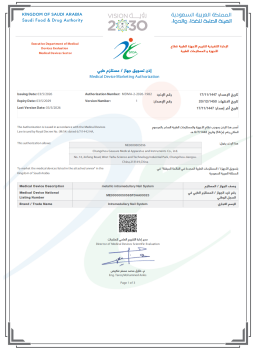
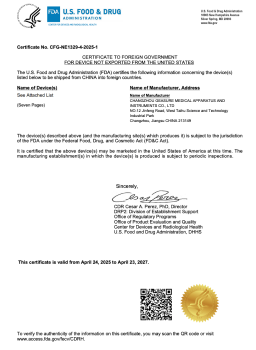
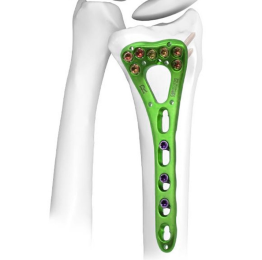
Orthomanufacturer Medical Factory & Quality Control Floor
State-of-the-art precision machinery, cleanroom packaging, and high-precision inspection technologies.
End-to-End OEM/ODM Contract Manufacturing Workflow
A transparent 6-stage engineering roadmap ensuring your private-label orthopedic system moves smoothly from design concept to commercial delivery.
Technical Design Review
Submission of 2D/3D CAD drawings or physical samples. Our engineering team conducts a feasibility review, assessing thread pitches, radius transitions, locking mechanics, and material selection.
Prototyping & Validation
Rapid CNC machining of prototype batches. Verification of mechanical tolerances using Coordinate Measuring Machines (CMM) and surgeon feedback on ergonomic instrument feel.
Tooling & CAM Optimization
Custom fixture creation, tool path programming for Swiss Citizen lathing and 5-axis DMG MORI milling centers, establishing repeatable process capability (Cpk ≥ 1.33).
Mass Production & Surface Finish
Controlled batch machining, ultrasonic degreasing, deburring, Type II color anodizing, and electrochemical polishing under validated cleanroom standards.
Laser Marking & Lot Control
Precision fiber laser marking of part numbers, lot codes, UDI barcoding, and branding onto each implant, linking back to the raw material mill certificate.
Regulatory Dossier & Delivery
Assembly of technical documentation (Declaration of Conformity, MTRs, Sterilization Validation Data, IFUs) and final export packaging in compliant double-peel pouches.
Distributor Checklist for Auditing Orthopedic Implant Suppliers in China
Essential criteria procurement directors must evaluate during vendor qualification audits.
Common Sourcing Pitfalls
- Sourcing from trading companies lacking direct control over CNC machining tolerances and anodization processes.
- Accepting generic material certificates without third-party mill test reports verifying ASTM F136 or F138 compliance.
- Overlooking instrument-to-implant fit testing, leading to intraoperative driver stripping or misaligned drill guides.
- Partnering with suppliers unable to supply technical documentation for local FDA/Ministry of Health registrations.
Orthomanufacturer Strategic Advantage
- 100% direct-factory manufacturing with in-house CNC lathing, anodization, and cleanroom packaging facilities.
- Full traceability from raw titanium bar stock to finished sterile-ready implant via laser lot code tracking.
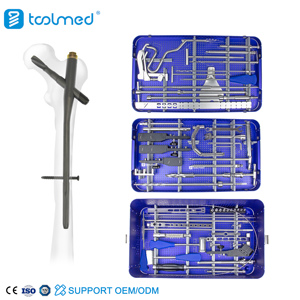
- Comprehensive system approach: matching implants, custom instruments, and autoclavable sterilization trays.
- Dedicated regulatory engineering support delivering CE/ISO technical files to streamline registration.
Frequently Asked Questions by Global Medical Procurement Directors
Direct technical answers regarding OEM/ODM collaboration, regulatory documents, minimum order quantities, and quality assurance.
What medical product lines does Orthomanufacturer Medical Co., Ltd specialize in?
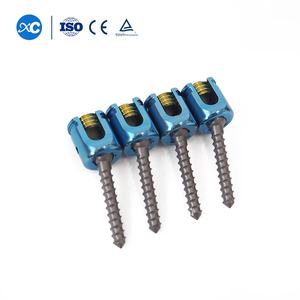
- Spine Fixation Systems: Pedicle screws, titanium rods, cross-links, ACDF/PLIF/TLIF PEEK interbody cages, and cervical plates.
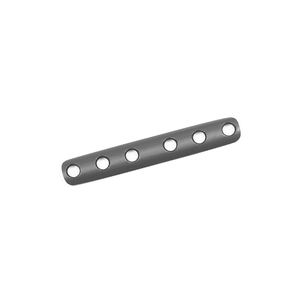
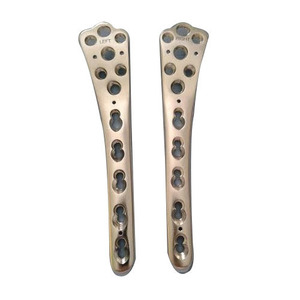
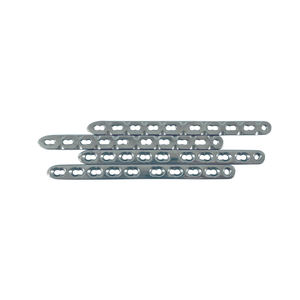
- Trauma Fixation Systems: Anatomical locking compression plates (LCP), small and large fragment plates, cannulated screws, and intramedullary nails (PFNA, Femoral, Tibial, Humeral).
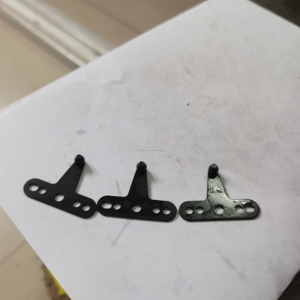
- Craniomaxillofacial (CMF): 1.5mm/2.0mm micro and mini titanium plates, reconstructive bone tacks, and GBR membrane systems.
- Sports Medicine & Joints: Suture anchors, interference screws, and joint prostheses components.
- Veterinary Implants & Power Tools: Dedicated animal trauma plates, veterinary spinal screws, and autoclavable surgical power drills/saws.
How do you support OEM private-label branding and custom design (ODM)?
What bio-materials are used, and can you provide material certification?
- Titanium Alloy: Ti-6Al-4V ELI (ASTM F136 / ISO 5832-3)
- Commercially Pure Titanium: CP Ti Grade 2 & Grade 4 (ASTM F67 / ISO 5832-2)
- Stainless Steel: Implant Grade 316L (ASTM F138 / ISO 5832-1)
- Polymer: PEEK OPTIMA (ASTM F2026)
What documentation do you provide for local product registration?
Can qualified distributors request samples before placing bulk orders?
What are your typical production lead times and Minimum Order Quantities (MOQ)?
Accelerate Your Orthopedic Product Line Today
Request our comprehensive product catalog, surgical technique guides, or schedule an engineering consultation with our OEM export team.