ISO 13485 & CE-Compliant Direct Part Marking (DPM) Laser Tracing | Precision 5-Axis Titanium & Stainless Steel Surgical Solutions
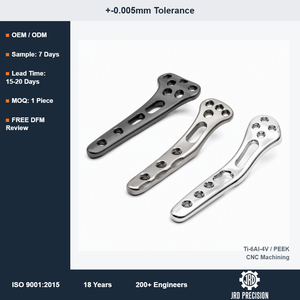
±0.005mm
CNC Machining Precision
100%
GS1 DataMatrix Traceability
ASTM F136
Medical Ti6Al4V ELI Alloy
ISO 13485
Quality Systems Certified
Product Portfolio Showcase
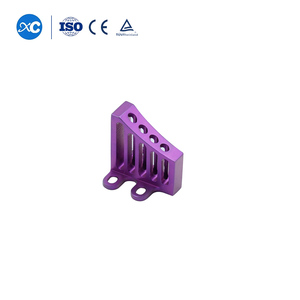
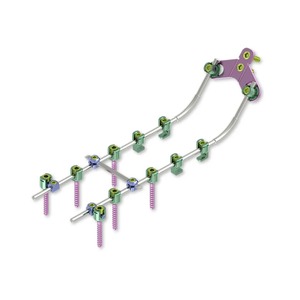
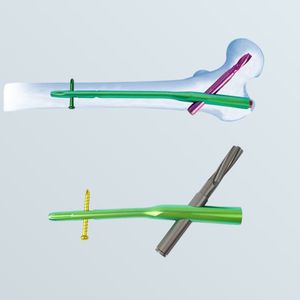
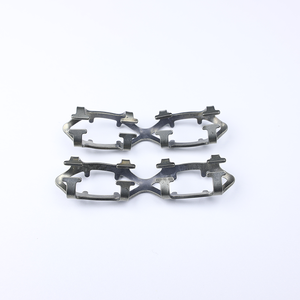
Featured Precision Implants & OEM Fixation Systems
Engineered for absolute biocompatibility, accurate fit, and compliant Unique Device Identification (UDI) marking for seamless international registration and clinical tracking.
XC MEDICO Premium MINI Double Action Hip System-Veterinary Orthopedic Implants for Animal Hip Joint Prosthesis Surgery
Technical Whitepaper: Direct Part Marking (DPM) & UDI Traceability in Orthopedic Implant OEM Manufacturing
In global healthcare logistics and surgical compliance, the adoption of Unique Device Identification (UDI) systems—mandated by the United States Food and Drug Administration (US FDA 21 CFR Part 830) and the European Union Medical Device Regulation (EU MDR 2017/745 Article 27)—has fundamentally shifted OEM/ODM manufacturing standards. For orthopedic device distributors, hospital procurement boards, and private-label brand owners, specifying high-precision Direct Part Marking (DPM) on metallic and polymer implants is no longer merely a regulatory checkbox; it is a critical safeguard against counterfeiting, supply chain disruption, and clinical liability.
Orthomanufacturer Medical Co., Ltd operates at the intersection of metallurgical metallurgy, micro-laser physics, and automated optical inspection. Manufacturing permanent, high-contrast, non-corrosive UDI laser marks on load-bearing components like pedicle screws, femoral intramedullary nails, and anatomical locking plates requires balancing laser energy fluence against material corrosion resistance (per ASTM F1089). High-energy laser marking can disrupt the chromium oxide ($Cr_2O_3$) passive layer on 316L stainless steel or cause localized micro-cracks in Grade 5 Titanium (Ti-6Al-4V ELI). As a specialized OEM/ODM supplier, we deploy dark thermal laser annealing and ultrafast picosecond laser technology to create machine-readable GS1 DataMatrix codes without altering surface topography or bio-mechanical fatigue strength.
1. The Mechanics of Non-Destructive UDI Laser Marking on Orthopedic Alloys
Orthopedic implants are exposed to physiological stresses, cyclic loading, and aggressive physiological fluids containing sodium chloride. Traditional deep laser engraving disrupts the material substrate, forming stress concentrators that compromise fatigue endurance under cyclic loading. Our contract manufacturing facilities utilize short-pulse fiber laser annealing and picosecond laser etching configured for cold ablation:
Titanium Alloys (ASTM F136 / ISO 5832-3): We utilize controlled optical oxide thickness modulation. By heating the titanium surface below its melting point, an optically transparent titanium dioxide ($TiO_2$) thin film is created. The interference of light generates a permanent, high-contrast dark mark without removing metal or inducing titanium micro-porosity.
Stainless Steel 316L (ASTM F138): Laser annealing oxidizes the iron-chromium matrix in a localized atmosphere, preserving the underlying protective oxide layer. All marked components undergo chemical passivation per ASTM A967 to ensure full corrosion resistance.
PEEK & UHMWPE Polymers: For interbody spinal cages and acetabular liners, optical laser additives or low-wavelength UV lasers (355nm) induce photochemical transformations that yield ultra-sharp 2D DataMatrix codes without thermal melting.
Select the optimal material substrate for custom OEM product lines. The table below details mechanical properties, standard compliance, UDI mark durability, and clinical indications for our primary implant materials.
Material Substrate
International Standard
Tensile Strength ($\sigma_b$)
Elastic Modulus ($E$)
UDI Marking Method
Primary Clinical Indication
Ti-6Al-4V ELI
ASTM F136 / ISO 5832-3
$\ge 860$ MPa
110 GPa
Thermal Oxide Annealing (Non-ablative)
Spine Pedicle Screws, Trauma Locking Plates, PFNA Nails
Veterinary Bone Plates, External Fixation Schanz Screws
CoCrMo Alloy
ASTM F1537 / ISO 5832-12
$\ge 1000$ MPa
220 GPa
Picosecond Laser Cold Etching
Total Hip Prosthesis Femoral Heads, Knee Articular Surfaces
PEEK-OPTIMA
ASTM F2026
$90 - 100$ MPa
3.6 GPa (Bone-matched)
355nm UV Cold Laser Photochemical Marking
Cervical & Lumbar Interbody Fusion Cages
Nitinol (Ni-Ti Alloy)
ASTM F2063
$\ge 895$ MPa
28 - 75 GPa
Low-Energy Picosecond Micro-Structuring
Patellar Claw Shape Memory Devices, MIS Staples
*Note: All components undergo 100% optical inspection using ISO/IEC 15415 standards for DataMatrix grade verification (A/B grade target minimum score 3.0/4.0).
OEM/ODM Contract Manufacturing Process & Quality Audit Pipeline
From initial blueprint consultation to final sterile barrier packaging, Orthomanufacturer Medical Co., Ltd maintains rigorous quality control across every operational step. We help healthcare clients launch custom product lines while eliminating supply chain risks.
01
Design & DFM Audit
Engineering review of 2D/3D CAD models, thread profiles, screw recess geometry, and UDI placement zones for mechanical stability.
02
5-Axis Precision Machining
Swiss-type turning and 5-axis CNC milling achieve tight tolerances within $\pm 0.005\text{ mm}$ for complex contoured plates and cannulated nails.
03
Surface Finishing
Controlled glass bead blasting, electropolishing, and Type II anodization optimize surface roughness ($Ra$) for bony ingrowth or friction control.
04
Laser UDI Marking
High-resolution DPM DataMatrix marking encoding DI (Device Identifier) and PI (Production Identifier: Lot, Expiry, Serial Number).
05
CMM & Optical Metrology
Full dimensional validation via Zeiss Coordinate Measuring Machines (CMM), optical profilometers, and DataMatrix scanner verification.
06
Cleanroom Packaging
Ultrasonic multi-stage cleaning and double-sterile barrier pouching inside ISO Class 7 cleanrooms ready for Gamma or EO sterilization.
Future Sourcing & Technological Trends in Orthopedic Manufacturing
The global orthopedic implants market is evolving rapidly, driven by aging demographics, minimally invasive surgical procedures, and stringent regulatory demands. Procurement leaders must align with suppliers offering technical foresight:
1. Integration of Smart UDI with Hospital ERP & RFID
Simple laser etching is shifting toward intelligent inventory integration. Modern hospital networks use automated optical scanners that instantly capture DataMatrix signals during surgery to auto-populate patient electronic health records (EHR) and update inventory systems.
3D titanium printing allows the creation of biomimetic porous structures that replicate human cancellous bone. Merging 3D additive core manufacturing with subtractive 5-axis CNC machining yields implants with superior osseointegration properties.
Regulatory hurdles are squeezing smaller suppliers out of the market. Distributors are consolidating vendors down to certified OEM manufacturers who supply complete Technical Files, STED documentation, and validated ISO 13485 quality systems.
Combining engineering expertise, regulatory fluency, and OEM/ODM manufacturing agility under one roof.
Vertical Integration
From raw titanium forging and bar stock inspection to CNC machining, surface anodization, UDI laser marking, and cleanroom pouching, 100% of operations are managed in-house.
Full Lot Traceability
Every single implant carries a unique UDI code linked directly to mill test reports (MTR), heat lot treatment certificates, CNC machine logs, and final inspection records.
Custom Private Labeling
We provide turnkey OEM services, including custom laser etching of your brand logo, customized sterilization trays, color-coded instrument sets, and branded outer packaging.
Procurement FAQ
Frequently Asked Technical & Sourcing Questions
Get authoritative answers on regulatory compliance, UDI specifications, and OEM cooperation details.
What is UDI Direct Part Marking (DPM) and why is it mandatory for implants?+
UDI Direct Part Marking (DPM) involves applying machine-readable barcodes (typically GS1 DataMatrix) directly onto the surface of an implant. It is mandated by the US FDA (21 CFR 830) and EU MDR (2017/745) to ensure lifelong traceability from manufacturing through surgical implantation and post-market surveillance, preventing mix-ups and aiding in rapid recall management.
Does UDI laser marking degrade the corrosion resistance of titanium or stainless steel implants?+
When done incorrectly, standard laser ablation can disrupt the passive oxide layer ($Cr_2O_3$ or $TiO_2$), leading to corrosion. Orthomanufacturer Medical utilizes non-ablative fiber laser thermal annealing for titanium and ultra-short picosecond lasers for stainless steel. This process generates high-contrast dark marks beneath the surface without removing material, followed by chemical passivation per ASTM A967/F1089 to preserve full corrosion resistance.
What regulatory support documentation do you provide for local product registration?+
We provide complete regulatory dossiers to support distributor registrations worldwide. This includes ISO 13485 certificates, CE documentation, Material Test Reports (MTR per EN 10204 3.1), Biocompatibility Reports (ISO 10993 series), Mechanical Test Protocols (e.g., ASTM F543 for bone screws, ASTM F1717 for spine constructs), Sterilization Validation files, and Instructions for Use (IFU).
Can you manufacture custom orthopedic implants based on our proprietary CAD drawings or samples?+
Yes. Our ODM contract manufacturing team specializes in custom implant development. You can submit 2D/3D CAD models (STEP/IGES) or physical samples. Our engineering team conducts a Design for Manufacturability (DFM) audit, develops 5-axis CNC toolpaths, produces prototype samples for dimensional and biomechanical validation, and executes batch production with UDI laser marking.
What quality standards are used to verify UDI DataMatrix barcode readability?+
All laser-marked UDI codes are verified using inline optical barcode verifiers conforming to ISO/IEC 15415 and ISO/IEC 15434. We grade parameters including contrast, modulation, axial non-uniformity, and grid non-uniformity, ensuring every mark achieves a minimum grade of 3.0 (B) or 4.0 (A) for flawless readability by hospital scanners.
What are your typical Minimum Order Quantities (MOQs) and lead times for OEM production?+
For standard catalog products with private-label UDI laser marking, our MOQs start as low as 50–100 units per SKU. For custom ODM projects requiring dedicated tooling and initial validation runs, MOQs depend on design complexity. Typical production lead times range from 3 to 5 weeks post sample approval.
Accelerate Your Medical Device OEM Program Today
Partner with an established OEM/ODM orthopedic implant manufacturer. Request our comprehensive engineering catalog, technical specifications, and UDI validation protocols.