Precision Orthopedic Implants & Instrument Systems
Explore our ISO 13485 & CE-compliant product families engineered for trauma, spine, CMF, and veterinary surgical applications.
Navigating the Next Decade in Orthopedic OEM/ODM Contract Manufacturing
The global orthopedic medical device market is undergoing a structural transformation. Driven by stringent regulatory evolutions—such as the transition to the European Union Medical Device Regulation (EU MDR 2017/745), heightened US FDA 510(k) post-market surveillance demands, and national central-procurement policies (VBP)—medical device distributors, hospital consortia, and brand owners are re-evaluating their supply chain strategies. Contracting with an authoritative OEM/ODM white label orthopedic instruments manufacturer & supplier is no longer merely a cost-reduction tactical move; it is a fundamental strategic imperative for ensuring supply chain resilience, regulatory speed-to-market, and technical differentiation.
1. Technical Evolution of Materials & Surface Engineering
Modern clinical success hinges on biocompatibility, biomechanical strength, and surface bio-integration. Standard implant production has evolved beyond basic machining toward multi-layered material science:
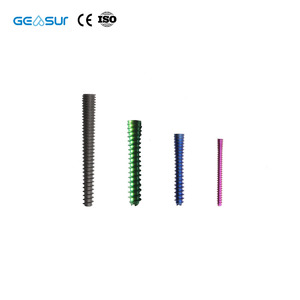
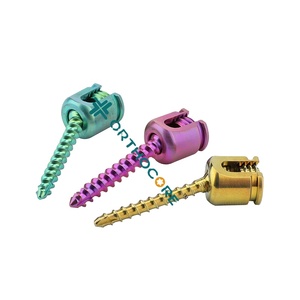
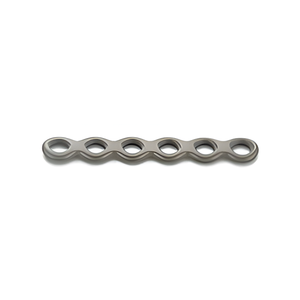
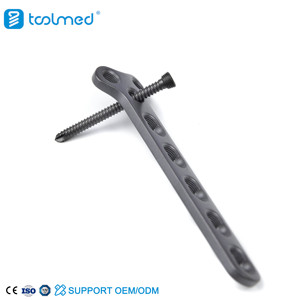
Titanium Alloys (ASTM F136 / ISO 5832-3): Ti-6Al-4V ELI (Extra Low Interstitial) remains the gold standard for load-bearing implants including pedicle screws, intramedullary nails, and trauma locking plates. The reduced oxygen content enhances fracture toughness and fatigue limit under cyclic physiological loads.
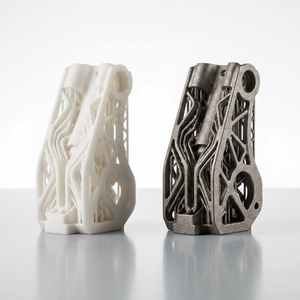
Additive Manufacturing (SLM 3D Printing): Selective Laser Melting (SLM) enables the creation of biomimetic porous titanium structures (trabecular metal). With pore sizes engineered between 400–700 μm and porosity exceeding 65%, 3D printed interbody cages and joint revision shells promote rapid osteo-conduction, eliminating the need for extensive bone grafting.
Polyetheretherketone (PEEK ASTM F2026): Unfilled and carbon-fiber-reinforced PEEK implants offer an elastic modulus (approx. 3.6 to 18 GPa) closely matching human cortical bone, suppressing stress-shielding effects while maintaining radiolucency during intraoperative X-ray fluoroscopy.
Sub-Micron Precision Machining
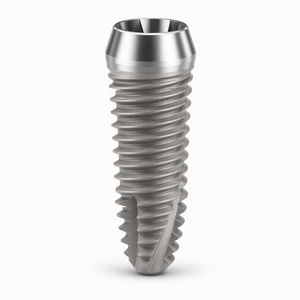
Utilizing high-rigidity 5-axis and 9-axis Swiss-type automatic lathes (Citizen, Tsugami), our complex thread profiles and micro-cannulations are executed in single-setup operations to ensure absolute concentricity.
Controlled Anodization & Passivation
Automated Type II and Type III (color) anodic oxidation processes generate uniform protective TiO2 oxide layers, delivering distinct color-coding for surgical sizing while preventing ion leaching.
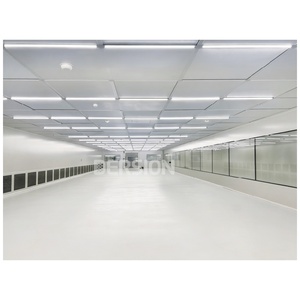
ISO 14644-1 Cleanroom Operations
Cleanroom washing using multi-stage ultrasonic deionized water cascades, bio-burden inspection, and automated primary pouching occur strictly inside ISO Class 7 / Class 10,000 cleanroom environments.
2. The Procurement Paradigm Shift: OEM vs. ODM vs. White-Label Manufacturing
For procurement officers and brand executives, selecting the appropriate B2B business collaboration framework dictates long-term margin potential and regulatory ownership:
| Collaboration Model | IP & Design Ownership | Manufacturing & DFM Role | Time-to-Market | Best Suited For |
|---|---|---|---|---|
| White Label Supply | Manufacturer Owned | Pre-validated, standard inventory laser-marked with partner brand. | Immediate (4–8 Weeks) | Regional distributors expanding product portfolios rapidly with zero R&D outlay. |
| OEM (Original Equipment Mfg) | Client Owned / Joint | Production strictly according to client's engineering blueprints & tolerances. | Medium (12–16 Weeks) | Established medical brands transferring manufacturing to optimized cost-center hubs. |
| ODM (Original Design Mfg) | Shared / Transferable | Turnkey design, prototyping, FEA testing, and regulatory technical file creation. | Structured (16–24 Weeks) | Innovators seeking clinical translation of custom surgical concepts without internal plants. |
3. Global Regulatory Compliance & Risk Mitigation Architecture
In the medical device supply chain, regulatory non-compliance represents total business failure. A validated contract manufacturer provides end-to-end audit defense:
Unique Device Identification (UDI) Traceability: High-resolution fiber laser marking applies GS1-compliant Datamatrix codes directly onto micro-scale implants and reusable surgical instruments, guaranteeing complete lot history tracking from raw titanium bar stock to sterile surgical tray packaging.
Technical Dossier Assistance: We provide global partners with robust technical documentation suites—including raw material mill certificates, bio-compatibility test reports (ISO 10993), mechanical static/fatigue test data (ASTM F543 for bone screws, ISO 18192 for wear), and cleaning/sterilization validation protocols.
Why Partner With Our Manufacturing Platform?
Engineered for excellence, operational reliability, and clinical safety.
1. Fully Integrated Tooling & Instrument Kits
We do not merely supply implants; we engineer matching ergonomic surgical instrument trays. Driver tips, drill bits, reamers, and depth gauges are calibrated to fit implant geometry precisely, preventing intraoperative cam-out or metal stripping.
2. Advanced Additive & Subtractive Hybrid Line
Combining industrial SLM 3D printers with high-speed 5-axis CNC machining centers allows rapid prototyping of complex anatomical plates and custom spinal fusion cages within days, accelerating your R&D iteration cycle.
3. Rigorous Quality Management System (QMS)
Operating under strict ISO 13485 quality control, every batch undergoes coordinate measuring machine (CMM) inspection, optical profile verification, micro-hardness testing, and surface roughness (Ra) measurement.
B2B Procurement & Technical FAQ
Addressing key technical, logistical, and regulatory questions from international B2B buyers.
Accelerate Your Orthopedic Product Pipeline Today
Partner with an industry-leading OEM/ODM contract manufacturer. Contact our engineering team for technical consults, product catalogs, and confidential price quotations.