Featured Medical & Veterinary Orthopedic Implants
Explore precision-engineered spinal, trauma, CMF, and veterinary surgical systems available for online procurement and direct OEM factory dispatch.
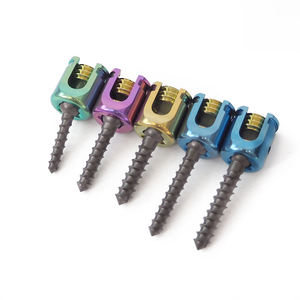
Veterinary Orthopedic Implants Polyaxial Spine Pedicle Screw Titanium Implant with Warranty and Online Technical Support
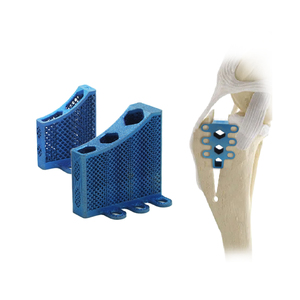
Cheap Price High Quality Titanium 3D TTA Implants and Instruments Set for Veterinary Orthopedic Surgery
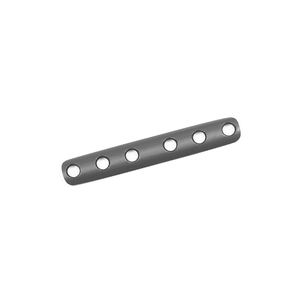
CE ISO Hengchee/OEM/ODM Brand Class III Orthopedic Implant Model 1224 Surgical Intervention Cheap Small Fragment Upper Limbs 1/3
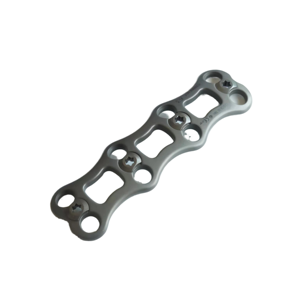
Anterior Cervical Plate Spine Implants Steel Manual MOL CE Certified Minimally Invasive Orthopedic Implants by Blush Surgical
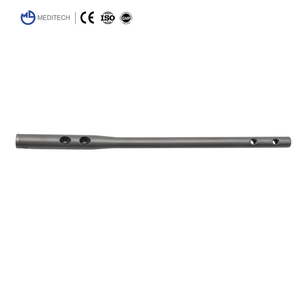
Factory Price High Quality CZMEDITECH Titanium Alloy Orthopedic Intramedullary Nail Implants CE ISO Certified Class III Model
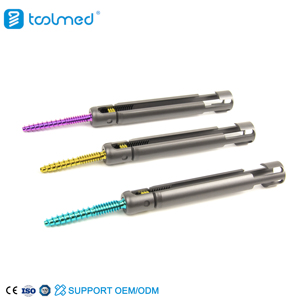
Professional Manufacturer Everest 5.5 MIS Titanium Polyaxial Pedicle Screw System Orthopedic Spine Implants
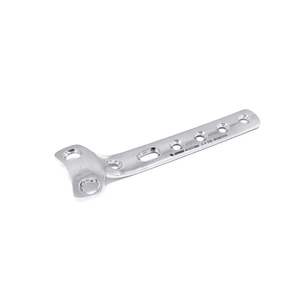
Special German Orthopedic Implants Set Philos Plate LCP 3.5 Orthopedic Instrument of Manual Power Steel Material
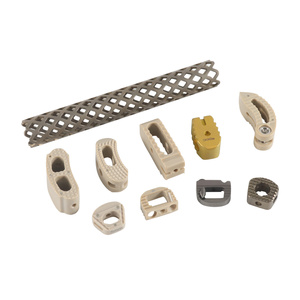
Variety of Orthopedic Spine Anterior Cervical Implant Titanium Plate Good Price Factory Ce Approved Orthopedic Implants
Executive Overview: The Evolution of Global Online Procurement for Orthopedic Implants
The global orthopedic implant procurement landscape is undergoing a structural transition. Traditionally governed by multi-tiered intermediary brokers, local stocking agents, and localized sales networks, hospital procurement departments, clinical directors, and international medical device distributors are increasingly seeking direct digital procurement models. Buying orthopedic implants online—when conducted through certified OEM manufacturers—offers dramatic reductions in total cost of ownership (TCO), eliminates supply chain latency, and grants direct access to engineering design modifications.
However, purchasing medical devices online requires rigorous risk mitigation protocols. Implants used in trauma fixation, spinal fusion, joint reconstruction, and cranio-maxillofacial (CMF) procedures are classified as Class IIb or Class III medical devices under major international regulatory bodies. To maintain clinical efficacy and patient safety, buyers must look beyond basic unit pricing and evaluate direct manufacturing capabilities, metallurgical certifications, cleanroom validation standards, and total instrument-implant interface matching.
Top 10 Sourcing Criteria for Purchasing Orthopedic Implants Online
When evaluating global orthopedic implant manufacturers and online B2B suppliers, procurement teams must benchmark candidates against ten technical and operational pillars:
1. Metallurgical Purity & ASTM Standards
Verification that raw material bar stock adheres to ASTM F136 (Ti-6Al-4V ELI), ASTM F67 (Unalloyed Titanium), ASTM F138 (316L Stainless Steel), or ASTM F2026 (PEEK). Mill test reports (MTRs) must accompany every batch.
2. Precision CNC Machining & Tolerances
Multi-axis Swiss-type turning centers capable of holding tolerances within ±0.005mm. Smooth thread transitions prevent cross-threading during rapid intraoperative insertion.
3. Regulatory Technical Dossiers (MDR / ISO)
Complete technical documentation packages (Design History Files, Risk Management per ISO 14971, Biocompatibility Evaluation per ISO 10993) to enable fast national registration.
4. Surface Passivation & Anodization
Electrochemical anodization providing standardized color-coding (e.g., green for 3.5mm screws, blue for 4.5mm screws) alongside thick oxide layers for enhanced corrosion resistance.
5. Laser Marking & Full Traceability
Permanent fiber laser marking of catalog numbers, lot codes, and UDI (Unique Device Identification) symbols directly on implant bodies for 100% post-market surveillance integrity.
6. Integrated Surgical Instrument Sets
Turnkey supply of autoclavable, graphic aluminum storage trays containing ergonomic torque-limiting screwdrivers, drills, taps, and drill guides configured to exact implant geometries.
Material Science Comparison Matrix: Implant Alloys & Polymers
A crucial step in qualifying online suppliers is confirming that raw materials match clinical load-bearing requirements. Below is a structural comparison of primary implant materials utilized by Tier-1 OEM manufacturers:
| Material Classification | International Standard | Mechanical Properties | Primary Clinical Applications | Biocompatibility Advantages |
|---|---|---|---|---|
| Titanium Ti-6Al-4V ELI | ASTM F136 / ISO 5832-3 | Yield Strength ≥ 795 MPa Density: 4.43 g/cm³ |
Pedicle Screws, Spine Rods, Intramedullary Nails, Locking Plates | Ultra-low interstitial elements (ELI) maximize fatigue resistance and osseointegration. |
| Commercially Pure Titanium | ASTM F67 / ISO 5832-2 | Tensile Strength: 240–550 MPa High Ductility |
CMF Micro/Mini Plates, Titanium Mesh, Anterior Cervical Plates | Excellent intraoperative bendability for matching anatomical skeletal contours. |
| Stainless Steel 316L | ASTM F138 / ISO 5832-1 | High Stiffness & Tensile Strength (≥ 860 MPa) | Trauma Fragment Plates, Schanz Pins, External Fixator Rods | Cost-effective temporary internal fixation with proven bio-passivated corrosion resistance. |
| Cobalt-Chromium (CoCrMo) | ASTM F1537 / ISO 5832-12 | Extreme Wear & Abrasion Resistance | Femoral Heads, Total Knee Arthroplasty Bearings | Ideal low-wear surface polish for load-bearing joint articulation. |
| PEEK-OPTIMA Polymer | ASTM F2026 | Elastic Modulus: 3.6 GPa (Close to Cortical Bone) |
Cervical & Lumbar Interbody Fusion Cages (TLIF, PLIF, ALIF) | Radiolucent properties allow clear X-ray assessment of fusion tissue growth. |
Manufacturer Capabilities: Orthomanufacturer Medical Co., Ltd
As a specialized direct manufacturer and OEM supplier, Orthomanufacturer Medical Co., Ltd bridges the gap between raw manufacturing capability and international B2B buyer demands. Operating advanced multi-axis CNC production facilities, the enterprise delivers complete implant and surgical instrument systems to global hospital networks and private-label distributors.
Why Purchasing Directors Partner With Us
We eliminate common risks associated with buying orthopedic implants online by delivering validated quality, full technical registration files, and synchronized instrument tooling.
Direct Factory Inquiry
Connect with our senior engineering team for OEM pricing, technical dossiers, and volume distributor terms.
Inquire NowFuture Trends in Orthopedic Implant Purchasing & Manufacturing
The global orthopedic market is projected to surpass USD 65 Billion by 2030. Sourcing professionals must align their online procurement strategies with four key technological transformations:
1. 3D Printing & Porous Trabecular Structures
Additive manufacturing via Selective Laser Melting (SLM) or Electron Beam Melting (EBM) allows direct fabrication of 3D porous titanium surfaces. These structures mimic natural cancellous bone, significantly boosting osseointegration rates in spinal cages and joint prostheses compared to traditional smooth surfaces.
2. Veterinary Orthopedic Market Surge
Veterinary orthopedic surgery is experiencing exponential global growth. Advanced procedures such as Tibial Tuberosity Advancement (TTA), Tibial Plateau Leveling Osteotomy (TPLO), and polyaxial spinal screw fixation are becoming standard practice. Suppliers who manufacture both human and high-grade veterinary systems (such as 3D TTA implants) provide distributors with diverse revenue streams.
3. Minimally Invasive Spine (MIS) Systems
Surgeons are shifting away from large open spinal procedures toward percutaneous MIS approaches. Pedicle screw systems now feature extended breakaway tabs, cannulated screw shafts for guide-wire insertion, and low-profile rod inserters, requiring ultra-precise engineering tolerances from online manufacturers.
4. Streamlined Regulatory Harmonization & Digital Dossiers
With the adoption of EU MDR (2017/745) and strict FDA 510(k) clearances, online B2B platforms must supply pre-packaged regulatory documentation. Direct digital access to material test certificates, ISO 13485 audits, cleanroom environmental monitoring reports, and sterilization validation speeds up national registration in emerging markets.
Frequently Asked Questions for Online B2B Procurement
Clear answers to regulatory, commercial, and technical questions asked by international hospital buyers and device importers.