Featured Medical-Grade Orthopaedic Implants
Explore precision-engineered orthopedic solutions engineered for trauma, spinal, and reconstructive surgery. Compliant with international regulatory frameworks.
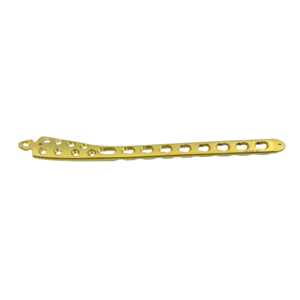
Lightweight Orthopedic Implants Top Trending Best Style Premium Quality Reasonable Price Orthopedic Implants with Custom Logo
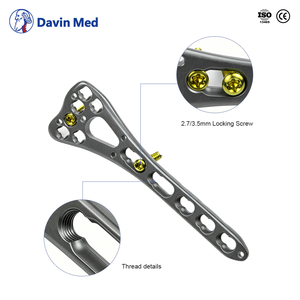
Davin Med Titanium Distal Radius Locking Plate System with Screws Kit 2.4mm Orthopedic Implant for Wrist Fracture Fixation
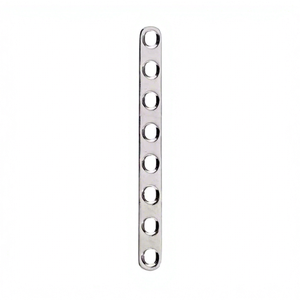
Stainless Steel Phillips Bone Plates High Quality Veterinary Bone Implants Orthopedic Implants CE ISO Approved
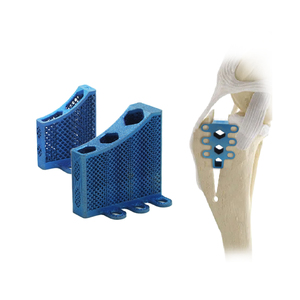
Cheap Price High Quality Titanium 3D TTA Implants and Instruments Set for Veterinary Orthopedic Surgery
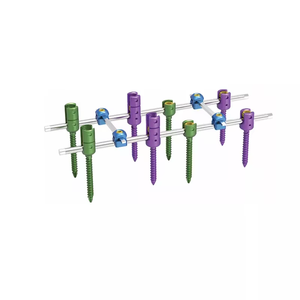
Factory Price Straight Pedicle Screw Spinal Screw Orthopedic Implants Orthopedic Instruments Bone Implants
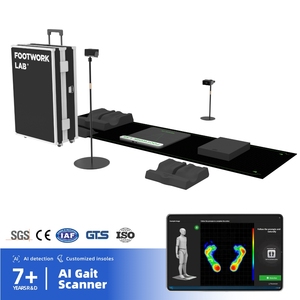
Hot Selling Orthopedic Foot Scanner USB Interface Podiatry Assessment Device for Orthotics Scan and Gait Analysis in Stock
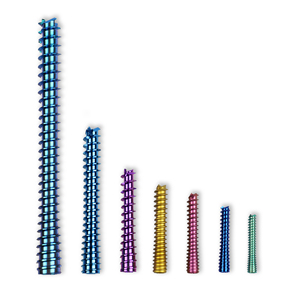
CANWELL Titanium Headless Cannulated Compression Screws Orthopedic Trauma Implant System CE Certified
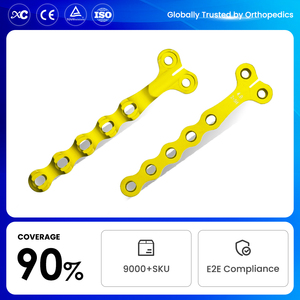
XC MEDICO Veterinary Orthopedic Surgical Implant Plate 4.0mm T-Type Locking Plate Class III Medical Device 1 Year Warranty
Selecting Top Orthopaedic Implants Manufacturers & Global OEM Suppliers: A Comprehensive 2025 Sourcing Standard
The global orthopaedic implants market is undergoing a seismic shift driven by advancing surgical techniques, aging demographic profiles, and rising demand for minimally invasive interventions. As hospital procurement officers, regional distributors, and OEM brand owners evaluate candidates among the Top 10 orthopaedic implants manufacturer suppliers & exporters, the evaluation framework extends far beyond nominal unit pricing. Sustainable commercial success requires rigorous verification of material biostability, precision 5-axis CNC tolerance execution, regulatory dossier integrity (STED format), and full-lifecycle lot traceability.
Top-tier orthopaedic manufacturing demands strict adherence to international metallurgical protocols including ASTM F136 (Ti-6Al-4V ELI), ASTM F67 (Unalloyed Titanium), ASTM F138 (316L Stainless Steel), and ASTM F2026 (PEEK). Modern exporters must deliver fully integrated systems—pairing anatomically pre-contoured implants with ergonomically validated surgical instrumentation sets to minimize intraoperative failure rates.
1. Evaluation Framework for Qualifying Top Orthopaedic Manufacturers
When conducting technical audits of potential supplier factories, procurement authorities must analyze manufacturing capabilities across four critical operational pillars:
A. Quality Management & Regulatory Compliance
Leading exporters maintain ISO 13485:2016 certification and offer comprehensive technical documentation (Technical Files/Dossiers) supporting market registrations under US FDA 510(k), EU MDR (2017/745), and regional health authority frameworks. Cleanroom packaging must conform to ISO 14644 Class 7/Class 8 standards to guarantee sterile-ready integrity.
B. Machining Precision & Metallurgical Engineering
Sub-micron manufacturing precision utilizing multi-axis Swiss-type CNC automatic lathes (such as Citizen or Star) ensures perfect thread geometry on pedicle screws and distal locking plates. Advanced anodizing processes create biological passive layers that prevent ion release and optimize wear resistance.
C. Complete System Matching & Ergonomics
A primary cause of intraoperative delays is mismatch between trauma plates and driver shafts or taps. Tier-1 manufacturers produce custom-matched instrument kits—drills, taps, depth gauges, and sleeve guides—alongside implants to ensure frictionless torque transfer and drill-bit centering.
D. Full Lot Traceability & Private Label OEM
Every micro-implant must carry fiber-laser etched SKU and batch codes linked to raw material mill test reports (MTR). OEM partners require flexible private-label marking, custom color anodization, and specialized blister packaging designed for local registration success.
2. Comprehensive Technical Specifications & Material Matrix
Material selection directly impacts implant fatigue life, elastic modulus matching to human cortical bone, and post-operative radiolucency. The following benchmark matrix highlights standardized material specifications used by leading global exporters:
| Implant Material Grade | Standard Specification | Mechanical Properties | Primary Clinical Applications | Biocompatibility Advantage |
|---|---|---|---|---|
| Ti-6Al-4V ELI | ASTM F136 / ISO 5832-3 | Tensile Strength ≥ 860 MPa Yield Strength ≥ 795 MPa |
Pedicle screws, intramedullary nails, locking plates | High fatigue strength, low density, superior osseointegration layer |
| CP Titanium (Grades 1-4) | ASTM F67 / ISO 5832-2 | Yield Strength: 170 - 480 MPa High Ductility |
CMF mini-plates, mesh, small reconstructive fragments | Optimal intraoperative intra-articular contouring and bending flexibility |
| 316L Stainless Steel | ASTM F138 / ISO 5832-1 | Tensile Strength ≥ 860 MPa High Stiffness |
Trauma pins, external fixator rods, veterinary implants | Cost-effective structural rigidity with validated passivation corrosion protection |
| PEEK Optima | ASTM F2026 | Flexural Modulus ~ 3.5 - 4.0 GPa (Close to native bone) |
Spinal interbody fusion cages (PLIF, TLIF, ALIF) | Radiolucent for artifact-free MRI/CT imaging; prevents stress shielding |
| CoCrMo Alloy | ASTM F1537 / ISO 5832-12 | High Wear & Hardness Polishability < 0.05 µm Ra |
Total hip joint femoral heads, total knee articular components | Exceptional tribological performance in metal-on-polyethylene joint bearings |
3. Future Procurement & Technological Trends (2025–2030)
As hospital procurement channels shift toward value-based healthcare, orthopaedic suppliers must innovate across next-generation manufacturing technologies. Key trends reshaping international supply chains include:
3D Additive Porous Titanium
Direct Metal Laser Sintering (DMLS) allows the creation of biomimetic trabecular structures. These porous surfaces encourage rapid bony ingrowth and immediate primary stability without needing hydroxyapatite (HA) coatings.
Patient-Specific Implants (PSI)
Integrating preoperative DICOM CT data with 3D CAD modeling enables the production of custom maxillofacial and complex joint revision implants, significantly reducing intraoperative surgical time.
Biodegradable Magnesium Implants
Emerging bioabsorbable alloys (Mg-Zn-Ca) gradually degrade in vivo after bone fracture healing is complete, eliminating secondary implant removal procedures in pediatric and extremity surgery.
4. Corporate E-E-A-T Strengths & Factory Capabilities
As a dedicated original equipment manufacturer (OEM) and global exporter of orthopaedic medical devices, Orthomanufacturer Medical Co., Ltd operates under a robust quality control architecture designed to support distributors and hospital buyers worldwide:
- Vertical Integration: From raw titanium rod inspection to automated anodizing, micro-machining, and cleanroom packaging, every process is conducted under unified ISO 13485 controls.
- Custom OEM / Private Label Solutions: Complete support for custom laser-marking of distributor logos, localized language labeling, custom box packaging, and tailored tray configurations.
- Regulatory Support Dossiers: Provision of complete technical files, biocompatibility test reports (ISO 10993), packaging validation reports, and IFUs to expedite local MOH registrations.
- Sample Verification Program: Fast-track prototype evaluation allows surgical teams and procurement managers to verify mechanical tolerances, surface finishes, and instrument feel prior to bulk ordering.
Frequently Asked Questions by Overseas Buyers
Essential technical, regulatory, and logistics answers for hospital purchasing agents and medical equipment distributors.
We supply a complete portfolio of orthopaedic implants and matching surgical instrument sets, including Thoracolumbar Spine Fixation Systems, Cervical Plates, Intramedullary Nail Systems (Femoral, Tibial, Humeral), Anatomical Locking Plates, Sports Medicine Suture Anchors, CMF Micro/Mini Plates, Joint Prostheses (Hip & Knee), External Fixation Frames, and Surgical Power Tools.
Depending on the targeted mechanical requirements, we strictly utilize implant-grade materials meeting international standards: Ti-6Al-4V ELI Titanium Alloy (ASTM F136), Commercially Pure Titanium (ASTM F67), 316L Stainless Steel (ASTM F138), Medical-Grade PEEK (ASTM F2026), and CoCrMo Alloy (ASTM F1537). Mill test certificates are provided with every shipment.
Yes. We offer turnkey OEM/ODM services including fiber laser logo marking, custom anodization color schemes, custom tray configuration, customer-specified packaging, and manufacturing according to customer-provided CAD drawings or physical prototypes.
We assist distributors by supplying comprehensive technical dossiers, ISO 13485 certificates, CE certificates, sterilization validation summaries, material safety data sheets (MSDS), Instructions for Use (IFU), and labeling artwork tailored to local regulatory requirements.
Yes. Qualified medical distributors and hospital procurement teams can request sample implant sets and instrument cases to verify tactile feel, thread meshing, surface passivation, and instrument ergonomics before entering formal commercial agreements.
Partner with a World-Class Orthopaedic Implant Manufacturer
Expand your regional distribution footprint or launch your private-label orthopedic brand with certified manufacturing excellence, competitive factory pricing, and full regulatory documentation.