Featured Orthopaedic Implants & Surgical Instruments
Engineered to strict international bio-compatability standards, featuring complete instrumentation kits, extreme dimensional accuracy, and lot-level traceability.
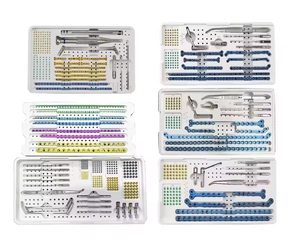
ZMD Veterinary Orthopedic Implants Kit 8.5mm Titanium Bone Plate Plasticity Instruments
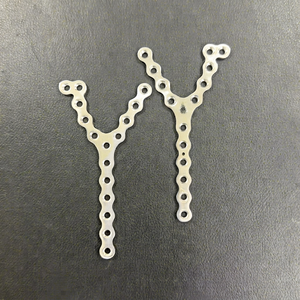
Orthopedic Implants Y-reconstruction High Grade 3.5mm 6 Holes Stainless Steel Manual Class II CE ISO
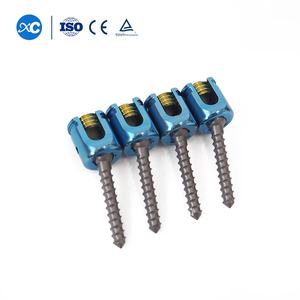
Veterinary Orthopedic Implants Polyaxial Spine Pedicle Screw Titanium Orthopaedic System
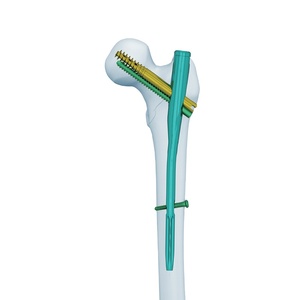
CZMEDITECH CE/ISO13485 Certified Class III Titanium Alloy Orthopedic Implant System
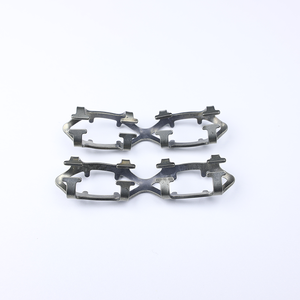
Yi Fantai Orthopedic Nickel-Titanium Patellar Claw Shape Memory Alloy Fracture Fixation
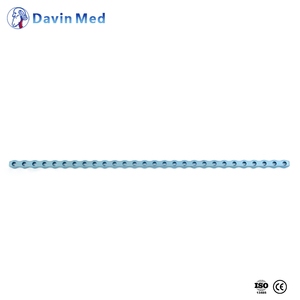
Vet Orthopedic Implants 2.0/2.4/2.7/3.5 mm AO Type ALPS Titanium Reconstruction Locking System
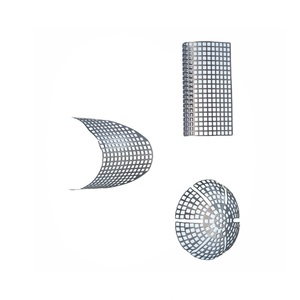
Competitive Price Titanium Alloy Material MESH Orthopedic Implants for Hospital Surgery
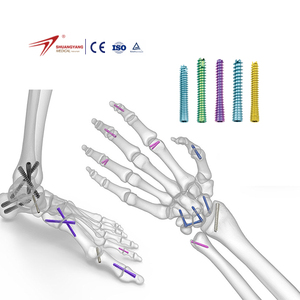
Titanium Orthopedic Screws Surgical Implants Herbert Cannulated Compression Screws
Executive Summary: The Global Landscape of Orthopaedic Instrumentation
The global orthopaedic implant and surgical instrument market is undergoing a structural paradigm shift. Valued at over USD 45 billion and expanding at a compound annual growth rate (CAGR) exceeding 6.2%, procurement strategies are transitioning rapidly from transactional component purchasing toward integrated, procedural system sourcing. Hospital supply chain executives, regional distributors, and original equipment manufacturer (OEM) partners face heightened scrutiny regarding regulatory compliance under the European Medical Device Regulation (MDR 2017/745), US FDA 21 CFR Part 820 standards, and global ISO 13485:2016 frameworks.
In orthopaedic surgery—spanning spinal fixation, trauma reconstruction, joint arthroplasty, and craniomaxillofacial (CMF) procedures—the synergy between the implant (e.g., locking plates, pedicle screws, intramedullary nails) and the delivery instrumentation (e.g., drill guides, taps, benders, insertion wrenches) directly dictates surgical outcomes and operating room (OR) efficiency. Selecting a manufacturer is no longer merely a pricing calculation; it is a comprehensive risk management assessment encompassing metallurgical consistency, precision multi-axis CNC Swiss machining, surface passivating integrity, and supply chain continuity.
Key Insight for B2B Procurement Teams: Evaluating top-tier orthopaedic manufacturers requires auditing raw material traceability (e.g., ASTM F136 Ti-6Al-4V ELI vs. ASTM F138 316L Stainless Steel), checking fatigue testing protocols under ISO 14801 / ASTM F543, and ensuring matched instrument-implant interface tolerances to prevent intraoperative driver cam-out or thread stripping.
Metallurgical Excellence
100% certified implant-grade titanium alloys (Ti-6Al-4V ELI ASTM F136), shape memory Nitinol, and ultra-clean 316L stainless steel (ASTM F138) with mill test reports for every heat number.
Swiss CNC Precision
Sub-micron tolerances achieved on 9-axis CNC Swiss-turning centers, ensuring flawless thread pitch engagement, self-tapping flutes, and zero wobble on driver bits.
Full Regulatory STED
Complete technical documentation dossiers (STED format), biocompatibility reports (ISO 10993), and process validations ready for local hospital tenders and market registration.
Criteria for Benchmarking Top 10 Orthopaedic Manufacturers
Use this objective 4-pillar benchmark framework when auditing potential contract manufacturing partners and original equipment suppliers.
| Evaluation Pillar | Critical Quality Parameters | Material / Testing Standard | Risk Mitigation Target |
|---|---|---|---|
| 1. Metallurgical Integrity | Chemical composition analysis, microstructural phase analysis (Alpha-Beta phase distribution in Ti-6Al-4V ELI), inclusions test. | ASTM F136 / ISO 5832-3ASTM F138 (316L SS) |
Prevents premature fatigue fracture under cyclical physiological loading. |
| 2. Machining & Geometric Tolerance | Thread runout, driver star/hex recess depth precision, plate profile contouring, cannulation concentricity. | ISO 2768-mK3D CMM Inspection |
Eliminates intraoperative stripping, driver disengagement, and anatomical mismatch. |
| 3. Surface Finish & Passivation | Type II/III anodization color coding, electropolishing, passive chromic oxide layer thickness, corrosion resistance testing. | ASTM F86Citric / Nitric Passivation |
Prevents ion release, metallosis, tissue inflammatory response, and fretting corrosion. |
| 4. Quality System & Traceability | Direct Part Marking (UDI Laser Marking), batch history records (DHR), ISO 13485 cleanroom packaging environment (Class 8). | ISO 13485:2016ISO 11607 Packaging |
Guarantees 100% lot recall capability and rapid global regulatory registration approval. |
Product & Technology Trends Shaping Orthopaedic Procurement
1. Transition to Additive Manufacturing & Porous Titanium Lattice Structures
Traditional solid machined implants are increasingly giving way to 3D-printed selective laser melting (SLM) and electron beam melting (EBM) titanium implants. By fabricating biomimetic porous lattice structures (emulating human trabecular bone porosity between 60%–80% and pore sizes of 300–600 μm), these advanced implants drastically reduce the elastic modulus mismatch between titanium alloy and cortical bone. This directly mitigates stress shielding while accelerating early osseointegration in spine interbody cages, acetabular cups, and revision joint prostheses.
2. Shape Memory Alloys (Nitinol) in Minimally Invasive Fracture Fixation
As highlighted by advanced fracture fixation devices such as Nickel-Titanium (NiTi) Patellar Claws, shape memory alloys are revolutionizing trauma surgery. Operating on temperature-dependent martensitic-to-austenitic phase transformations, Nitinol devices exert dynamic continuous compressive forces across fracture lines upon reaching human body temperature (37°C). Procurement leaders are seeing high demand for NiTi memory staples, patellar claws, and flexible intramedullary reaming rods due to shorter surgical times and superior healing kinetics.
3. Robot-Assisted Navigation Compatible Surgical Tooling
With the rapid adoption of robotic surgical platforms (such as MAKO, ROSA, and NAVIO) in knee, hip, and spine surgeries, orthopaedic instrument manufacturing must comply with optical and electromagnetic tracker integration. Instruments now require ultra-precise array attachment points, non-reflective micro-bead-blasted anti-glare coatings, and tighter concentricity tolerances to ensure sub-millimeter positional fidelity under optical guidance cameras.
4. Single-Use Kits vs. Modular Reusable Instrument Sets
While hospital groups continue to rely on robust, autoclavable surgical stainless steel instrument sets for high-volume procedures, there is an accelerating growth curve for sterile single-use surgical kits in outpatient and Ambulatory Surgical Centers (ASCs). Pre-packaged, pre-sterilized procedure kits reduce hospital reprocessing costs, eliminate cross-contamination risks, and streamline inventory control for emergency trauma cases.
Why Partner With Orthomanufacturer Medical
Combining advanced German and Japanese CNC machine tools with strict quality control to deliver high-performance implants and instruments to global healthcare providers.
End-to-End OEM / Private Label
From initial CAD/CAM design modeling, FEA mechanical simulation, and rapid prototyping to high-volume manufacturing, laser marking, and customized box packaging.
Comprehensive Product Portfolio
Complete systems for Spine (Pedicle Screws, PEEK Cages), Trauma (Locking Plates, IM Nails), Sports Medicine (Suture Anchors), CMF Micro-Plates, Power Tools, and Laparoscopy.
Global Registration Support
We provide global partners with ready-to-file regulatory packages, including ISO 13485 certificates, material mill certificates, sterilization validation, and IFUs in multi-language formats.
Frequently Asked Questions (FAQ)
Critical operational and regulatory answers for hospital buyers, medical device importers, and OEM distributor teams.
What orthopaedic product lines does Orthomanufacturer Medical supply? +
Do you support full OEM, ODM, and private-label manufacturing for overseas brands? +
Which exact metallurgical material grades are utilized in your orthopaedic implants? +
What regulatory certificates and technical documentation are available for registration? +
How do you guarantee the precise fitting between implants and surgical instruments? +
Can qualified hospital buyers and distributors request sample evaluation kits? +
What is the typical production lead time for custom OEM orthopaedic orders? +
How can our company initiate a quote or technical review with your engineering team? +
Accelerate Your Orthopaedic Supply Chain Today
Partner with an established ISO 13485 certified manufacturer. Whether launching a new spine portfolio, entering hospital trauma tenders, or expanding private-label instrument lines, our engineering team delivers precision, compliance, and competitive cost advantage.