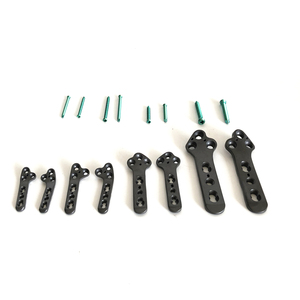
Explore medical-grade titanium (Ti-6Al-4V ELI), PEEK, and stainless steel devices engineered to meet rigorous ISO 10993 cytotoxicity, mechanical fatigue, and dimensional CMM criteria.
In modern orthopedic implant engineering, biocompatibility is not merely a single testing checkpoint—it is a comprehensive bio-risk management continuum defined by the ISO 10993 and FDA Blue Book Guidance series. Permanent implantable medical devices (such as spinal pedicle screws, total joint prostheses, trauma locking plates, and intramedullary nails) remain in contact with human bone and vascular tissue for periods exceeding 30 days. Consequently, establishing cytotoxicity, systemic toxicity, subchronic toxicity, genotoxicity, hemocompatibility, and local tissue effects after implantation is the cornerstone of regulatory clearance (FDA 510(k), EU MDR CE mark, and NMPA class III registration).
To achieve sustainable biological safety, global OEMs and contract manufacturers must rigorously evaluate chemical characterization (ISO 10993-18) and toxicological risk assessments (ISO 10993-17) before committing devices to costly in vivo bioassays. By identifying Extractables and Leachables (E&L) at microgram-per-gram levels, manufacturers prevent trace heavy metal toxicity (e.g., free nickel, vanadium, or residual machining lubricants) from compromising patient health or triggering sterile inflammatory osteolysis.
The following data visualization matrix outlines the core biological evaluation endpoints required for permanent implantable orthopedic hardware under ISO 10993-1:2018 standards.
| Biological Test Endpoint | Standard Reference | Testing Modality & Target | Primary Clinical Risk Evaluated | OEM Compliance Benchmark |
|---|---|---|---|---|
| In Vitro Cytotoxicity | ISO 10993-5 | L929 Mouse Fibroblast Elution / MTT Assay | Immediate cellular lysis and metabolic inhibition | Grade 0–1 (No cell lysis; >80% viability) |
| Chemical Characterization | ISO 10993-18 | GC-MS, LC-MS, ICP-MS Extractables & Leachables | Organic residual coolants and heavy metal leaching | Below ISO 10993-17 Toxicological Thresholds |
| Sensitization & Irritation | ISO 10993-10 | Murine Local Lymph Node Assay (LLNA) / Intracutaneous | Type IV delayed hypersensitivity (e.g., Nickel allergy) | Zero erythema or edema reaction |
| Implantation Effects | ISO 10993-6 | Subcutaneous & Femoral Bone Implantation (12–52 wks) | Fibrous encapsulation vs direct osteointegration | Physiological bone remodeling without osteolysis |
| Subchronic & Systemic Toxicity | ISO 10993-11 | Acute/Subacute systemic exposure via polar/non-polar extract | Organ pathology (liver, spleen, kidney bioaccumulation) | No systemic toxic reactions observed |
| Genotoxicity & Carcinogenicity | ISO 10993-3 | Ames Test & In Vitro Mammalian Chromosome Aberration | Mutagenic changes induced by metal wear debris | Negative mutagenic response across strains |
An objective comparative analysis of the world's premier orthopedic device contract manufacturers, testing laboratories, and integrated OEM solution providers driving medical device validation.
Selecting a partner for orthopedic implant manufacturing and biological validation requires evaluating both contract laboratory testing depth and precision machining quality. The following top 10 organizations represent the industry standard for ISO 10993 compliance, materials validation, and OEM device fabrication:
As regulatory scrutiny tightens globally under EU MDR (2017/745) and FDA guidance, procurement strategies among hospital purchasing syndicates and regional orthopedic distributors are undergoing fundamental shifts:
The convergence of material science and precision manufacturing is giving rise to next-generation bio-interactive surfaces designed to accelerate osseointegration while minimizing bacterial adhesion:
Creates a non-reflective, highly corrosion-resistant titanium oxide film. Type II anodization significantly increases fatigue strength of titanium spinal screws and eliminates micro-fretting particle release.
Polyetheretherketone (PEEK ASTM F2026) cages matched with plasma-sprayed HA coatings combine radiological transparency (radiolucency) with direct bone graft bonding capability.
High-speed CNC milling utilizing vegetable-based or bio-degradable cutting fluids followed by multi-stage ultrasonic deionized water cascade wash loops to ensure zero toxic carbon residue.
Fiber laser marking of GS1-compliant Unique Device Identification (UDI) barcodes on micro-implants without compromising oxide layer integrity or creating focal corrosion pits.
Combining state-of-the-art 5-axis CNC machining, rigorous cleanroom washing, and complete technical document dossiers for seamless overseas registration.
100% certified implant-grade Ti6Al4V ELI (ASTM F136), PEEK (ASTM F2026), and 316L (ASTM F138). Every bar stock batch includes full chemical composition and tensile mill certificates.
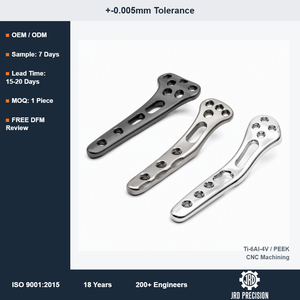
Swiss-type multi-axis lathe centers achieving dimensional accuracy down to ±0.005mm for complex threads, pedicle screw tulip contours, and interbody cage tooth geometries.
Validated citric/nitric acid passivation according to ASTM F86 standards. Multi-stage ultrasonic cleaning ensures residual hydrocarbon contamination is below detection limits.
Zeiss Coordinate Measuring Machines (CMM) and optical video measuring systems verify 100% of critical tolerance features with archived digital inspection reports.
Custom laser marking (brand name, SKU, lot code), custom color anodization coding, and tailored packaging solutions (cleanroom double-pouch or non-sterile bulk packaging).
Provision of technical files, biological safety reports, surgical technique manuals, and IFUs to accelerate product registration in target international markets.
Direct technical answers to common queries from regulatory leads, procurement officers, and orthopedic distributors.
For permanent bone-contacting implants (>30 days exposure), the ISO 10993-1 matrix requires: (1) Cytotoxicity (ISO 10993-5), (2) Sensitization (ISO 10993-10), (3) Irritation/Intracutaneous Reactivity (ISO 10993-10), (4) Systemic Toxicity (ISO 10993-11), (5) Subchronic Toxicity (ISO 10993-11), (6) Genotoxicity (ISO 10993-3), (7) Implantation Effects (ISO 10993-6), and (8) Chemical Characterization via Extractables & Leachables (ISO 10993-18). If the device is delivered pre-sterilized by Ethylene Oxide, ISO 10993-7 EO residual testing is also required.
We utilize water-soluble, bio-compatible machining coolants verified under ISO 10993-5 cytotoxicity guidelines. Following machining, implants undergo an automated multi-stage ultrasonic cleaning process featuring alkaline degreasing, multi-cascade deionized water rinsing, and thermal vacuum drying. Final cleanliness is validated through total organic carbon (TOC) and gravimetric residue analysis.
ELI stands for "Extra Low Interstitial." ASTM F136 Ti6Al4V ELI specifies reduced maximum limits for interstitial elements such as oxygen (≤0.13%), iron (≤0.25%), carbon, and nitrogen. Lowering these interstitials substantially improves fracture toughness, fatigue resistance, and ductility while mitigating micro-structural embrittlement in dynamic load-bearing applications like pedicle screws and intramedullary nails.
Yes. We provide sample sets for physical evaluation, dimensional verification, instrument fit testing, and surface finish inspection. Each sample shipment is accompanied by raw material mill test certificates (MTC), mechanical testing data, and dimensional CMM inspection reports to support your engineering and regulatory appraisal.
ISO 10993-18 chemical characterization uses high-sensitivity analytical techniques (ICP-MS, GC-MS, LC-MS) to quantify organic and inorganic compounds extracted from the implant under exaggerated temperature conditions. If toxicological risk assessment (ISO 10993-17) confirms that all extracted compounds fall below Toxicological Thresholds of Concern (TTC), regulatory agencies (FDA, Notified Bodies) may allow the manufacturer to bypass lengthier animal testing, thereby shortening clearance timelines by 6 to 12 months.
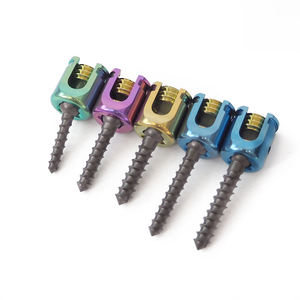
We provide full private-label OEM services. Implants and surgical instruments can be laser-marked with your custom brand logo, part numbers, and unique device identification (UDI) matrix codes. Titanium anodization (Type II structural or Type I color anodization for size identification, e.g., blue for 3.5mm screws, magenta for 4.0mm screws) is performed in-house under validated chemical bath controls to preserve fatigue strength.
Whether expanding your trauma portfolio, launching a custom spinal fixation brand, or requiring validated ISO 13485 contract manufacturing, our engineering team is ready to assist.