Top 10 Orthopedic Implant Company Suppliers & Exporters

Industry B2B Procurement Whitepaper: Technical Benchmarks, Material Standards (ASTM F136/F67), Global Regulatory Pathways, and Future Manufacturing Trends

100%
Lot Traceability & Micro-Laser Marking
ISO 13485
Certified Cleanroom Manufacturing
ASTM F136
Medical-Grade Titanium ELI Alloy
50+
Global Export Markets Supported
High-Precision Systems

Featured Medical Implants & Surgical Instrument Sets

Engineered for seamless clinical performance, rigid biostability, and full compatibility with standardized surgical technique trays.

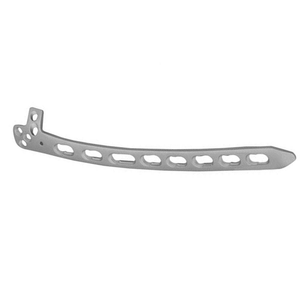
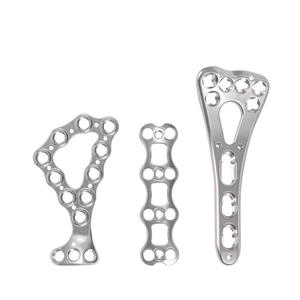
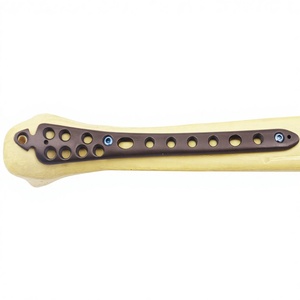
Trauma System Orthopedic Titanium Trauma Implant Distal Tibial Medial Locking Plate

Distal Tibial Medial Locking Compression Plate

Anatomic low-profile titanium plate designed for complex distal tibia intra-articular and extra-articular fracture internal fixation. Features combi-holes accepting both cortex and locking screws.
Ti-6Al-4V ELI Anatomical Fit CE / ISO 13485
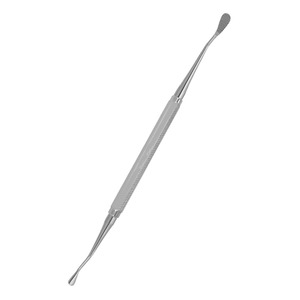
Instruments Manual Stainless Steel Bone File Miller Dental & Orthopedic Instruments

Manual Stainless Steel Miller Bone File Scraper

Precision ergonomic surgical bone file manufactured from high-grade German stainless steel (ASTM F138). Features cross-cut serration for smooth bone contouring in orthopedic and CMF procedures.

Stainless Steel 316L Autoclavable High Polish
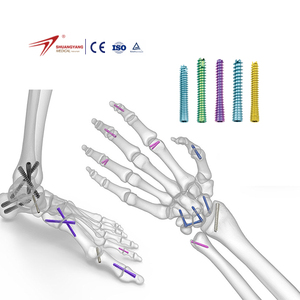
Micro-Fixation Titanium Orthopedic Screws Herbert Cannulated Compression Screw

Titanium Herbert Cannulated Compression Screw System

Headless variable-pitch cannulated screws designed for scaphoid, osteochondral, and small bone intra-articular fracture compression. Provides rigid interfragmentary compression without soft tissue impingement.

Cannulated Variable Pitch ASTM F136
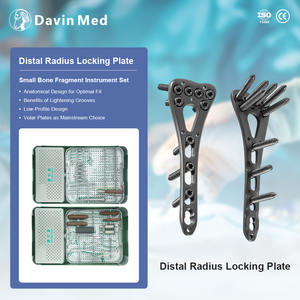
Upper Extremity Titanium Volar Distal Radius Locking Plate System

Multi-Directional Volar Distal Radius Locking Plate

Anatomic polyaxial locking plate allowing variable-angle screw placement (±15°) to capture specific articular fragments. Features ultra-low profile border to minimize flexor tendon friction.

Polyaxial Locking Low Profile Color Anodized
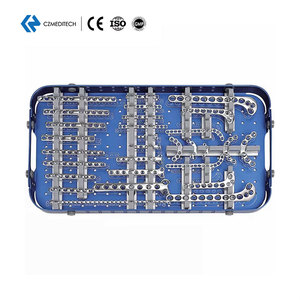
Surgical Solutions Premium Orthopedic Implants Stainless Steel and Titanium Solutions

Comprehensive Trauma & Reconstruction Implant Sets

Full suite of standardized bone plates, cortex screws, and dynamic compression locking modules. Built to international ISO/ASTM tolerances for high-volume tender distribution.

Complete Sets OEM Customization Cleanroom Sealed
Veterinary Care Veterinary LCP Bone Plate Kit Animal Fracture Compression Implant

Veterinary LCP Locking Compression Bone Plate Kit

Dedicated veterinary orthopedic trauma system including micro-plates (1.5mm to 3.5mm) for small animal fracture management. Includes specialized instrumentation and aluminum sterilization tray.

Micro-LCP Vet Specific OEM Tray Kit
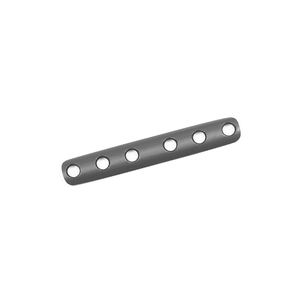
Upper Limbs Class III Orthopedic Implant Upper Limbs 1/3 Tubular Plate

Class III 1/3 Tubular Locking Compression Plate

Designed for fibula, olecranon, and lateral malleolus internal fixation. Thin profile allows easy manual contouring during surgery while delivering optimum dynamic axial compression.

Class III Medical 1/3 Tubular 3.5mm System
Industry Whitepaper

Navigating the Global Orthopedic Implant Sourcing Ecosystem

An engineering and commercial analysis of supplier capability, regulatory compliance, material verification, and total cost of ownership for medical distributors.

Information Gain & Quality Guidelines (Google E-E-A-T Insights)

Procuring medical Class IIb and Class III orthopedic implants demands far more than evaluating unit FOB prices. Modern healthcare tenders and institutional buyers evaluate suppliers based on metallurgical purity, micro-machining tolerances, lot-to-lot consistency, cleanroom validation, and complete technical regulatory dossiers. Selecting an unverified supplier introduces severe operational risks—ranging from intraoperative screw thread stripping and stress-shielding revision surgeries to immediate customs rejections caused by insufficient technical files (STED) under EU MDR (2017/745) or US FDA Class III 510(k)/PMA frameworks.

Comparative Matrix: Top Global Brands vs. Specialized OEM/ODM Export Manufacturers

Understanding the structural differences in supply chain flexibility, customization options, regulatory support, and unit economic structures.

Evaluation Metric Tier-1 Global Multinationals (e.g., Stryker, Synthes) Specialized OEM Export Manufacturers (e.g., Orthomanufacturer Medical)
Primary Target Market Direct hospital procurement in Tier-1 countries Global distributors, regional brands, hospital tenders
Raw Material Certifications ASTM F136 Titanium / ASTM F138 Stainless ASTM F136 Ti-6Al-4V ELI / ASTM F67 / PEEK ASTM F2026
Customization / OEM Capability Rigid catalog; zero custom laser marking/design 100% Flexible (Custom drawings, private label, modified geometries)
Lead Times (Production & Shipping) 12–24 weeks allocation backorders 2–4 weeks rapid batch dispatch
MOQ Requirements Extreme volume contracts required Flexible MOQs for market entry & registration samples
Instrument Tray Matching Proprietary closed system locking Universal surgical instrument compatibility & matched trays
Industry Horizon

Key Technological & Procurement Trends Shaping Orthopedics

Analysis of emerging manufacturing technologies, advanced biomaterials, and shifting global tender specifications over the next decade.

1. Additive Manufacturing & Trabecular Titanium

Selective Laser Melting (SLM) and Electron Beam Melting (EBM) 3D printing technologies allow for creation of porous surface structures mimicking human cancellous bone. This accelerates early osseointegration in spinal fusion cages and joint reconstruction cups, reducing reliance on plasma-spray coatings.

2. Bioresorbable & PEEK Biomaterials

Transitioning beyond traditional metals, radiolucent PEEK (Polyetheretherketone) per ASTM F2026 allows artifact-free post-operative MRI/CT monitoring. Simultaneously, magnesium alloy bio-resorbable screws are gaining momentum in soft tissue repair, eliminating secondary hardware removal surgeries.

3. Advanced Surface Treatments

Modern surgical requirements demand surface modifications such as Type II Anodization for fatigue enhancement, Hydroxyapatite (HA) bio-active coatings, and physical vapor deposition (PVD) titanium nitride (TiN) hard-coatings to drastically decrease wear debris in total joint wear surfaces.

4. Turnkey System Procurement

Hospitals are abandoning fragmented purchasing. Distributors are moving toward turnkey solutions where anatomical locking plates, variable angle screws, custom color-coded drill bits, depth gauges, and autoclavable sterilization trays are supplied as a single, validated reference code.

5. Stringent Regulatory Harmonization

With the transition to EU MDR and stricter enforcement by SFDA (Saudi Arabia), ANVISA (Brazil), and health authorities across LATAM and Asia, manufacturers must supply fully traceable raw material heat numbers, biomechanical fatigue test reports (ASTM F382 / ASTM F543), and clinical evaluation reports (CER).

6. Private Label & OEM Partnerships

Emerging regional brand owners are avoiding the tens of millions in capital expenditures required for 5-axis CNC machines. Instead, they partner with established OEM factories to apply custom laser logos, custom surgical box designs, and tailored packaging configurations.

Manufacturing Excellence

Orthomanufacturer Medical OEM/ODM Execution Framework

From raw bar stock inspection to ISO Class 7 cleanroom primary packaging—how we guarantee precision and zero-defect quality control for global importers.

01

Metallurgical Verification

Raw Ti-6Al-4V ELI & 316L stock undergoes spectroscopic material certification against ASTM F136/F138 standards before machining.

02

Swiss 5-Axis CNC Milling

Ultra-precise thread cutting, cannulation drilling, and contour milling under tight tolerances (±0.005mm) on Japanese/Swiss turning centers.

03

Finishing & Anodizing

Electropolishing, automated deburring, and color anodization to provide immediate visual identification of implant sizes in operating theaters.

04

Laser Marking & CMM

100% micro-laser engraving of part numbers, lot numbers, and dimensions combined with CMM optical dimensional verification.

05

Cleanroom Packaging

Ultrasonic washing in purified water loops followed by medical double-tyvek blister sealing in ISO Class 7 environment.

Buyer Guidance

Frequently Asked Questions by Orthopedic Importers

Technical, regulatory, and commercial queries addressed by our senior biomedical engineering and export team.

1. Which material standards are mandated for implantable orthopedic devices?
For titanium load-bearing implants (pedicle screws, locking plates, intramedullary nails), the global gold standard is Titanium-6Aluminum-4Vanadium ELI (Extra Low Interstitial) matching ASTM F136 / ISO 5832-3. For micro-fixation micro-plates (such as CMF maxillofacial plates), Commercially Pure Titanium matching ASTM F67 / ISO 5832-2 is used for its superior intraoperative bendability. Stainless steel implants must comply strictly with ASTM F138 / ISO 5832-1 (316L Implant Grade) to prevent stress corrosion cracking.
2. How do you handle private-labeling and OEM customization for regional distributors?
We offer end-to-end OEM and private label support. Distributors can supply custom engineering 2D/3D CAD drawings, or request custom laser marking (brand name, logo, custom SKU sequence, matrix codes) directly on our existing catalog items. Furthermore, we customize primary and secondary packaging (Tyvek pouches, color box labeling, IFUs) and assemble custom anodized aluminum sterilization trays tailored to your local surgeon preferences.
3. What technical documentation is supplied for health authority product registration?
We provide comprehensive regulatory dossiers designed to streamline product approval under SFDA, ANVISA, MoH, and European notified bodies. Documentation includes ISO 13485:2016 factory certificates, CE mark conformity certificates, raw material mill test reports, mechanical static/dynamic fatigue test summaries (e.g., ASTM F382 plate bending, ASTM F543 screw torque testing), biocompatibility assessment summaries (ISO 10993 series), and validated sterilization process protocols.
4. Why is implant-instrument fit critical during surgical procedures?
Surgical delays and complications often stem from micro-tolerances between screwdriver tips and screw recess heads (e.g., Torx or Star drives stripping under high insertion torque). By manufacturing both the orthopedic implants and matched surgical instrument kits in-house using standardized CNC programs, we guarantee perfect mechanical engagement, exact thread pitch alignment, and wobble-free screw holding capacity.
5. What is the typical lead time and sample evaluation policy for international buyers?
Standard catalog sample evaluation sets can be dispatched within 3 to 7 working days via express international air freight. For customized OEM production orders, typical manufacturing turnarounds range between 14 to 30 days depending on batch size, surface treatment complexity, and cleanroom packaging requirements.

Partner with a Lead Manufacturer & Exporter of Orthopedic Solutions

Whether you are expanding your trauma range, tendering for government hospital systems, or launching a private label spine portfolio, our engineering support team is standing by.