Class III Surgical Implants & Veterinary Systems
Explore our certified precision orthopedic implants and specialized instruments manufactured under stringent cleanroom environments, engineered for maximum bio-compatibility and operational reliability.
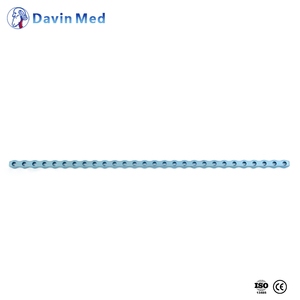
System: 2.0/2.4/2.7/3.5 mm ALPS AO Standard
Indication: Small Animal Reconstruction & Fracture Fixation
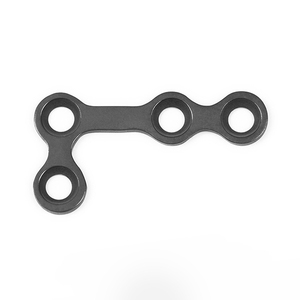
Feature: High-Strength Locking Compression System
Certification: ISO 13485 Compliant Manufacturing
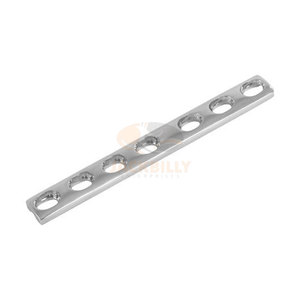
Tooling: Ergonomic Precision Surgical Hand Tools
Traceability: 100% Laser-Marked Lot Identification
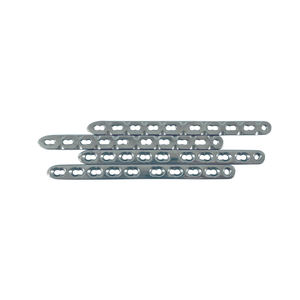
Finish: Passivated Electrolytic Surface
Compatibility: Universal Standard AO Drill Bits
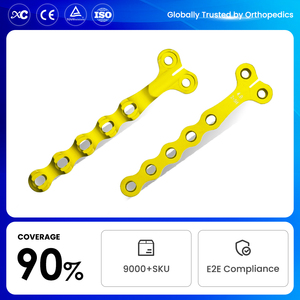
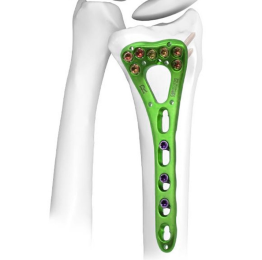
Design: 4.0mm T-Type Low Profile Locking Plate
Quality Assurance: Mechanical Fatigue Tested
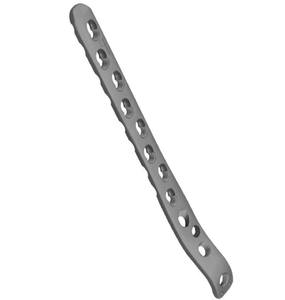
Biocompatibility: ASTM F136 Ti-6Al-4V Grade
Feature: Dynamic Limited Compression Hole Design
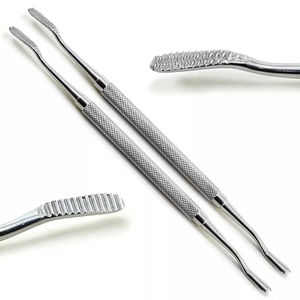
Autoclavable: Resistant to High Temperature Sterilization
Use Case: CMF, Oral & Orthopedic Bone Resection
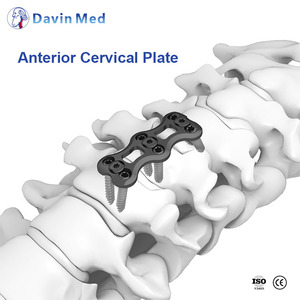
Mechanism: Zero-Profile / Low-Profile Locking Mechanism
Kit: Complete Implants + Matched Instrument Tray
China's Class III Orthopedic Device Export Landscape
An authoritative analysis on regulatory frameworks, manufacturing evolution, bio-metallurgical engineering, and global supply chain integration for orthopedic distributors and hospital groups.
The global orthopedic implant market is experiencing a profound paradigm shift. As healthcare systems worldwide demand a rigorous balance between surgical precision, biocompatibility, and economic sustainability, China’s Class III medical device orthopedic factories have emerged as foundational pillars of the international medical supply chain. Class III medical devices—defined under National Medical Products Administration (NMPA), European Union MDR (2017/745), and US FDA classifications—represent the highest risk category of implantable products, including spinal fusion systems, trauma locking plates, intramedullary nails, total joint prostheses, and cranio-maxillofacial (CMF) implants.
Historically, global orthopedic distribution was dominated by Western original equipment manufacturers (OEMs). However, over the past decade, substantial investments in multi-axis CNC machining centers (such as Swiss-type Citizen and Tsugami lathes), cleanroom automation, surface anodization technologies, and metallurgical validation have transformed leading Chinese exporters into high-precision manufacturing powerhouses. Today, top Chinese orthopedic exporters supply fully certified, high-fatigue-resistant implants to over 120 countries across Europe, Latin America, the Middle East, Southeast Asia, and Africa.
Regulatory Conformance & Quality Management Systems (E-E-A-T Framework)
For international procurement directors, regulatory documentation is as critical as physical product performance. Class III orthopedic implants require an exhaustive Technical Documentation Package (TDP) to achieve market clearance in any jurisdiction. Reputable Chinese exporters maintain rigorous Quality Management Systems certified under ISO 13485:2016, supplemented by ISO 9001 standards and compliant with Good Manufacturing Practice (GMP) mandates.
Key technical dossiers provided by top-tier Chinese orthopedic manufacturers for market registration include:
- Raw Material Biocompatibility Certificates: Chemical composition and mechanical testing reports verifying compliance with ASTM F136 / ISO 5832-3 (Ti-6Al-4V ELI titanium alloy), ASTM F138 / ISO 5832-1 (316L implant-grade stainless steel), and ASTM F2026 (PEEK polymer).
- Mechanical Fatigue Testing Validation: Static and dynamic fatigue testing data compliant with ASTM F382 (Metallic Bone Plates), ASTM F543 (Metallic Medical Bone Screws), ASTM F2193 (Spinal Implants), and ASTM F1264 (Intramedullary Fixation Devices).
- Sterilization Validation Protocols: Ethylene Oxide (EtO) sterilization validation per ISO 11135 or Gamma Radiation sterilization per ISO 11137, guaranteeing a Sterility Assurance Level (SAL) of 10-6.
- Cytotoxicity & Biocompatibility Assessments: ISO 10993 full-series testing reports covering systemic toxicity, intracutaneous reactivity, sensitization, pyrogenicity, and long-term implantation response.
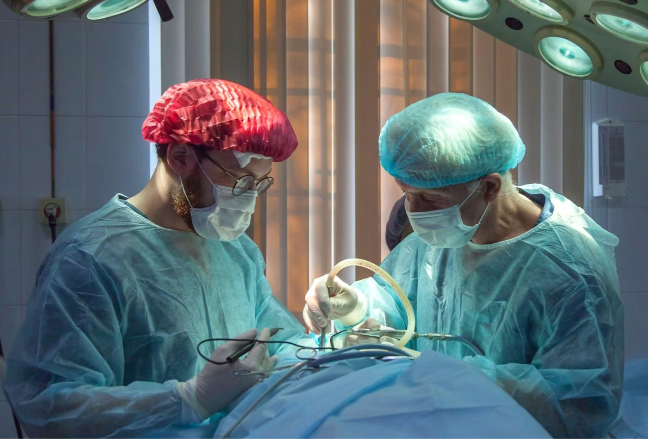
Precision Engineering for Clinical Excellence
Surgical performance depends on accurate anatomical fitting and failure-proof screw-plate interfaces. Advanced Chinese factories utilize finite element analysis (FEA) during product design, ensuring optimal load distribution that mitigates stress shielding while preventing implant fatigue failure in load-bearing fracture fixations.
By pairing implants with dedicated, color-coded, autoclavable instrument sets, surgical workflow efficiency is maximized while intraoperative surgical risks are substantially reduced.
Metallurgical Specifications & Material Standards
A comprehensive comparison of implantable bio-materials used across Class III trauma, spine, joint, and veterinary implant production in premier Chinese factories.
| Material Name | Standard Specification | Tensile Strength (MPa) | Young's Modulus (GPa) | Primary Clinical Applications | Key Bio-Mechanical Advantage |
|---|---|---|---|---|---|
| Ti-6Al-4V ELI Alloy | ASTM F136 / ISO 5832-3 | ≥ 860 | 110 | Pedicle Screws, Trauma Plates, Intramedullary Nails, CMF | Superior strength-to-weight ratio, low density, high fatigue limit, excellent MRI compatibility. |
| CP Titanium (Grade 2/4) | ASTM F67 / ISO 5832-2 | 480 – 680 | 105 | CMF Micro/Mini Plates, Cranial Mesh, Reconstructive Plates | Exceptional ductility for intraoperative contouring and adaptation to complex bone surfaces. |
| 316L Stainless Steel | ASTM F138 / ISO 5832-1 | ≥ 860 | 190 – 210 | Veterinary Implants, Temporary Trauma Fixation, K-Wires | High yield strength, cost-efficient, proven torsional resistance for manual surgical tools. |
| CoCrMo Alloy | ASTM F1537 / ISO 5832-12 | ≥ 960 | 220 – 240 | Total Joint Prostheses (Femoral Heads, Knee Components) | Ultra-low wear rate, extreme hardness, high resistance to fretting corrosion under dynamic loads. |
| PEEK Optima | ASTM F2026 | ≥ 95 | 3.5 – 4.0 | Cervical Cages, Lumbar Interbody Fusion (PLIF/TLIF/ALIF) | Elastic modulus closely matching cancellous bone; completely radiolucent for post-op imaging. |
| UHMWPE / Crosslinked | ASTM F648 / ISO 5834-2 | ≥ 40 | 0.8 – 1.2 | Acetabular Liners, Tibial Articular Inserts | Extremely low coefficient of friction, high impact strength, optimized wear particle resistance. |
2025-2030 Orthopedic Procurement & Tech Trends
Understand the emerging technological transformations shaping Class III orthopedic exports from China over the next decade.
Additive Manufacturing & Porous Lattice Structures
Direct metal 3D printing via Selective Laser Melting (SLM) and Electron Beam Melting (EBM) is revolutionizing joint and spine implants. Leading Chinese factories are integrating 3D-printed porous titanium matrices with biomimetic trabecular pore sizes (300-600μm), accelerating early osseointegration and eliminating the need for plasma-spray coatings.
Patient-Specific Implants (PSI) & Digital Surgery
Shift from standardized stock implants to patient-matched reconstructive solutions. By utilizing CT-derived 3D anatomical models, Chinese OEM manufacturers rapidly manufacture customized CMF plates, complex oncological bone resection implants, and patient-specific surgical cutting guides within compressed lead times.
Bioresorbable Polymer & Magnesium Alloys
The next generation of pediatric trauma and sports medicine repair relies on bioabsorbable materials. Chinese R&D facilities are advancing magnesium-zinc alloys and High-Molecular-Weight PLLA/PGA interference screws that provide initial mechanical stability while gradually degrading into non-toxic biological metabolites, eliminating second-stage removal surgeries.
Advanced Spinal Fixation & Kyphoplasty Solutions
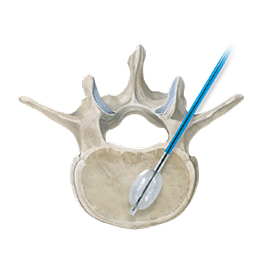
Vertebral compression fracture interventions demand absolute instrument integrity. Specialized Chinese factories produce complete Minimal Invasive Surgery (MIS) spine portfolios—ranging from percutaneous pedicle screw systems to Balloon Kyphoplasty Kits incorporating high-pressure inflation devices, access cannulas, radiopaque bone cement, and precision drill guides.
These integrated systems ensure seamless intraoperative handoff, reducing surgical time and improving patient recovery metrics across clinical trials.
End-to-End OEM / Private-Label Manufacturing Workflow
A transparent, structured 5-stage manufacturing pipeline that guarantees design accuracy, compliance verification, and punctual global fulfillment.
Technical Review
Evaluation of customer 2D/3D CAD drawings, material specs, target market regulation, and estimated annual usage (EAU).
DFM & Tooling
Design for Manufacturability (DFM) engineering analysis, custom fixture setup, and CNC tool path programming optimization.
Prototype & Sample
First-article inspection (FAI) samples manufactured, laser marked, surface finished, and dispatched for dimensional audit.
Batch Production
Automated Swiss CNC lathe machining, deburring, electrochemical anodizing, cleanroom washing, and 100% lot tracking.
Release & Export
Packaging in sterile blister packs or non-sterile bulk, complete with Certificate of Analysis (CoA) and registration support.
Why Partner with Orthomanufacturer Medical Co., Ltd?
Delivering robust engineering expertise, flexible production lines, and complete regulatory dossiers for worldwide distributors.
Full Portfolio System Integration
Instead of fragmented sourcing across multiple vendors, we deliver turnkey systems—matching every titanium locking screw, anatomically contoured plate, PEEK cage, or intramedullary nail with its dedicated surgical instrument tray and sterilization container.
Comprehensive Registration Dossiers
We actively assist overseas distributors in accelerating national healthcare registrations (Ministry of Health / Food and Drug Authority approvals) by providing complete technical dossiers, material mill certificates, sterilization reports, and FDA/CE technical equivalents.
Rapid Prototype & MOQ Flexibility
Whether you require localized private labeling for tender bids or small-batch customized implant runs, our flexible production scheduling accommodates scalable minimum order quantities (MOQs) without sacrificing manufacturing rigor.
Frequently Asked Questions by International Buyers
Addressing crucial inquiries regarding Class III compliance, OEM customization, regulatory support, quality control, and shipping logistics.