Featured Precision Implants & Surgical Instrument Systems
Explore our medical-grade titanium, stainless steel, and PEEK orthopedic implants produced via Swiss 5-axis CNC micro-machining with full lot traceability.
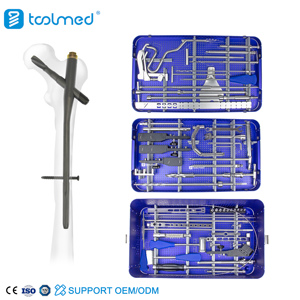
Orthopedic Implant PFNA Femoral Intramedullary Nail Orthopedic Instrument Set Orthopedic Titanium Trauma Nail Implants
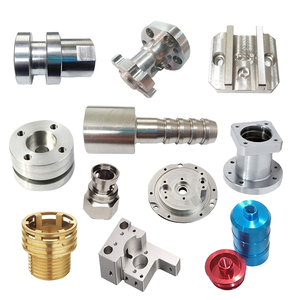
ISO9001 Certified Precision CNC Machining Manufacturer for Complex Custom Aluminum Stainless Steel and Titanium Parts
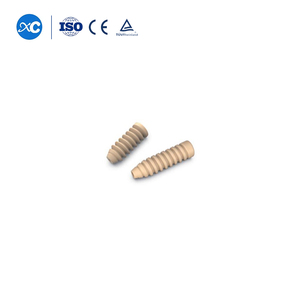
Sports Medicine Biocomposite ACL PCL Ligament Reconstruction Femoral Fixation Trauma Surgery PEEK Interference Screw
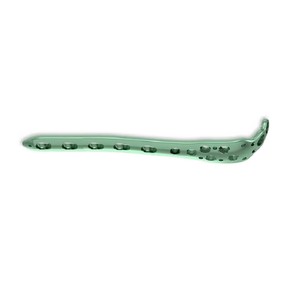
Wholesale Orthopedic Implants Export Quality Surgical Implant Manufacturer and Supplier
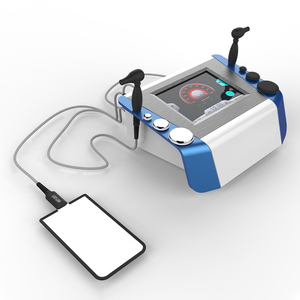
New Arrival Orthotic Physiotherapy Equipment Scan Machine Physiotherapy Leg Machine Physiotherapy Electrode Machine
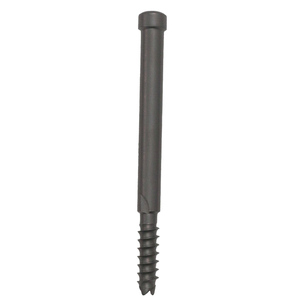
Leading Manufacturer of Excellent Quality Orthopedic Implant Proximal Femoral Screw (P.F.N) 8.0 mm for Hospital Usage
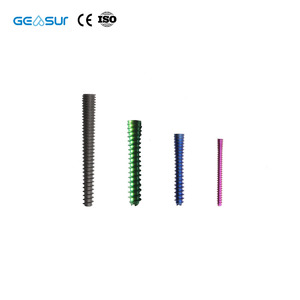
Geasure CE ISO Certified Class III Titanium Alloy Headless Compression Cannulated Screw-Orthopedic Implant for Orthopedic
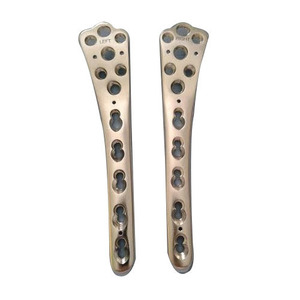
Basis Surgical Veterinary Distal Femur Plates 5.0mm Set 10pcs OEM L5/R5 Stainless Steel Manual Orthopedic Implant CE Certified
Strategic Architecture of Orthopedic Contract Manufacturing in China
An authoritative evaluation of raw material metallurgy, Swiss 5-axis precision machining, and regulatory file compliance for OEM global procurement directors.
The global orthopedic medical device sector is undergoing a profound structural shift. Leading multinational brand owners, regional distributors, and hospital procurement groups are moving beyond transactional spot-purchasing toward strategic contract manufacturing partnerships. As orthopedic surgical procedures demand tighter anatomical conformity, biostability, and fatigue endurance, selecting a premier China contract manufacturing orthopedic implants factory requires rigorous technical evaluation beyond simple unit pricing.
At Orthomanufacturer Medical Co., Ltd, contract manufacturing is anchored in biomedical engineering excellence, continuous quality control, and full supply chain transparency. Modern China-based manufacturing hubs now operate state-of-the-art multi-axis CNC Swiss sliding-head lathes, high-speed 5-axis milling centers, and wire EDM machinery specifically calibrated for medical-grade metals (Ti-6Al-4V ELI, CP Titanium, 316L Stainless Steel, CoCrMo) and implantable polymers (PEEK OPTIMA, UHMWPE).
1. Metallurgical Purity & Material Traceability Protocols
Contract manufacturing of Class IIb and Class III orthopedic devices begins with absolute raw material integrity. Every bar stock of Titanium Grade 5 ELI (conforming to ASTM F136 / ISO 5832-3) or PEEK (conforming to ASTM F2026) undergoes rigorous incoming inspection. We demand full mill test certificates (MTC) detailing chemical composition, tensile strength, yield strength, and grain size distribution. This guarantees that intramedullary nails, pedicle screws, and locking plates exhibit superior biomechanical fatigue strength under long-term cyclic loading.
2. Precision Machining, Surface Finishing & Anodization
Surgeons demand consistent tactile feedback and zero intraoperative component jamming. Machining complex geometry—such as cannulated inner cores of PFNA femoral nails, anatomical curvature of distal radius locking plates, or reverse-thread interference screws—demands tight dimensional control within ±0.005mm. Furthermore, our post-machining surface treatment processes include automated micro-deburring, electropolishing, Type II hard-anodizing, and color-coded anodization. The resultant oxide layer enhances corrosion resistance, eliminates metallic particle debris, and provides quick visual identification of screw diameters in surgical operating theaters.
Core Enterprise Capabilities & OEM Infrastructure
Why leading global medical distributors rely on Orthomanufacturer Medical Co., Ltd as their trusted private-label manufacturing partner.
ISO 13485 & Cleanroom Manufacturing
Our facility operates under strict ISO 13485:2016 quality management systems. Ultrasonic cleaning, DI-water passivations, and final double-pouch sealing are executed inside ISO Class 8 (Class 100,000) cleanrooms to guarantee low bioburden prior to sterilization.
Complete Implant-Instrument System Matching
We eliminate intraoperative driver slippage and thread cross-matching by engineering matching surgical instrument sets concurrently with implants. Every drill bit, tap, aiming arm, and torque limiter is calibrated to perfect mechanical harmony.
Regulatory Technical Dossier Support (STED)
Expedite local market product registration. We supply comprehensive technical documentation files (STED format), biocompatibility test summaries (ISO 10993), raw material certificates, and validated Instructions for Use (IFU) for regulatory submission.
Future Procurement Trends in Global Orthopedic Sourcing
Key shifts transforming OEM contract manufacturing, vendor evaluation, and medical device procurement across international markets.
1. Shift Toward Pre-Sterilized Single-Use Procedure Kits
Hospitals are aggressively seeking ways to reduce sterilization center bottlenecks and eliminate cross-contamination risks. Global procurement is shifting from bulky non-sterile multi-use trays toward pre-sterilized, single-use procedure packs containing pre-packaged anatomical locking plates, cannulated screws, and disposable instrument drivers. Contract manufacturers in China are responding by expanding automated blister thermoforming and EO/Gamma sterilization integration.
2. Supply Chain Consolidation & Dual-Sourcing Risk Mitigation
geopolitical uncertainties and logistics shifts have prompted global buyers to streamline vendor bases while maintaining resilient dual-sourcing operations. Procurement directors are favoring tier-1 China factories capable of offering end-to-end capabilities—from raw bar stock extrusion, rapid prototyping, and toolmaking to private-label packaging—eliminating reliance on fragmented sub-contractors.
3. Mandatory Unique Device Identification (UDI) Laser Marking
Regulatory bodies including US FDA, EU MDR, and China NMPA strictly enforce Unique Device Identification (UDI) tracking down to individual SKUs. Modern orthopedic contract manufacturers must integrate automated fiber-laser marking systems capable of etching high-density GS1 2D DataMatrix codes onto micro-screws and narrow implants without disrupting passivated surface integrity.
4. Accelerated Demand for Biocomposite & Radiolucent Implants
Traditional stainless steel implants are rapidly giving way to high-performance radiolucent polymers (PEEK) and bioresorbable biocomposites (PEEK + β-TCP / Hydroxyapatite). In sports medicine and spinal fusion, surgeons require implants that produce zero artifacts on MRI/CT scans while allowing clear radiographic evaluation of bone ingrowth and ligament healing.
Product Development & Bio-Engineering Evolution
How advanced manufacturing techniques are driving the next generation of spine, trauma, and sports medicine implant designs.
3D-Printed Porous Lattice Structures
Additive manufacturing via Selective Laser Melting (SLM) enables the creation of biomimetic porous titanium surfaces with porosity levels mimicking natural human cancellous bone (60–80% porosity). This accelerates bone ingrowth and osseointegration in interbody cages and joint replacement cups.
Anatomical Pre-Contouring & Variable-Angle Locking
Modern locking plate systems incorporate variable-angle (VA) locking hole technology allowing screws to be trajectory-steered up to ±15 degrees off-axis. Pre-contoured anatomical profiles fit specific bony structures, dramatically reducing intraoperative plate bending time for surgeons.
Patient-Specific Implants (PSI) & CMF Reconstruction
Utilizing 3D patient CT scan data, contract manufacturing lines can rapidly fabricate custom craniomaxillofacial (CMF) titanium mesh and patient-matched trauma reconstruction plates for complex oncology or severe vehicular trauma cases.
Implant Metallurgy & Material Technical Specifications
Use this comparative reference matrix when qualifying raw material standards and biomedical grade selections for custom contract orders.
| Material Class | Standard Specification | Typical Clinical Applications | Mechanical & Biocompatibility Attributes |
|---|---|---|---|
| Titanium Alloy (Ti-6Al-4V ELI) | ASTM F136 / ISO 5832-3 | Pedicle Screws, Intramedullary Nails, Locking Plates, Trauma Screws | High fatigue strength, low density, extra low interstitial (ELI) purity preventing brittle fracture. |
| Commercially Pure Titanium (CP Ti) | ASTM F67 / ISO 5832-2 | CMF Mini Plates, Cranial Mesh, Small Fragment Recon Plates | Superior ductility and malleability, allowing precise hand contouring to complex craniofacial bone contours. |
| Stainless Steel 316L | ASTM F138 / ISO 5832-1 | Trauma Fixation Plates, Schanz Pins, Veterinary Implants, Instruments | Cost-effective structural rigidity, excellent corrosion resistance following passivation treatment. |
| Cobalt-Chromium-Molybdenum (CoCrMo) | ASTM F1537 / ISO 5832-12 | Total Joint Prostheses, Femoral Heads, Knee Articulating Components | Exceptional tribological wear resistance and extremely low friction coefficient on joint bearing surfaces. |
| PEEK Polymer (Polyetheretherketone) | ASTM F2026 | Cervical / Lumbar Spinal Cages, Ligament Interference Screws | Radiolucent (MRI transparent), modulus of elasticity closely matched to human cortical bone (3.5 GPa). |
| UHMWPE (Ultra-High Molecular Weight PE) | ASTM F648 | Acetabular Liners, Tibial Bearings for Total Knee Arthroplasty | Ultra-low wear rate, high impact resistance, and validated friction properties for joint replacement. |
Frequently Asked Questions for Global Procurement
Clear, direct answers regarding quality assurance, OEM branding, lead times, and regulatory compliance.
What technical documentation do you provide for local medical device registration? +
Can Orthomanufacturer Medical support private-label OEM laser marking and custom packaging? +
How do you ensure matching tolerances between implants and surgical instruments? +
What are your raw material sourcing standards and lot traceability policies? +
What is the typical production lead time for sample validation and bulk orders? +
Ready to Launch Your Private-Label Orthopedic Product Line?
Partner with China's leading contract manufacturer for spine, trauma, and sports medicine implants. Speak directly with our biomedical engineering and export team today.