Spine Fixation
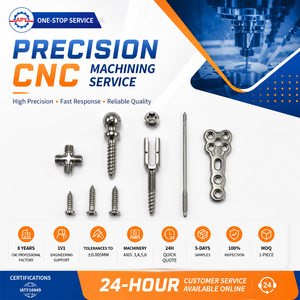
Precision-engineered titanium alloy, commercially pure titanium, and medical-grade PEEK implants developed for seamless clinical integration and international registration compliance.
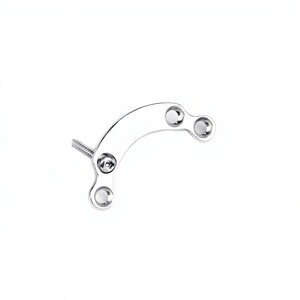
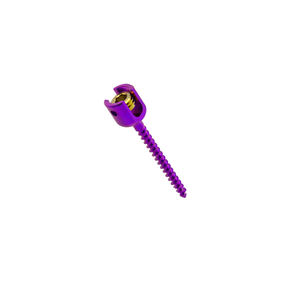
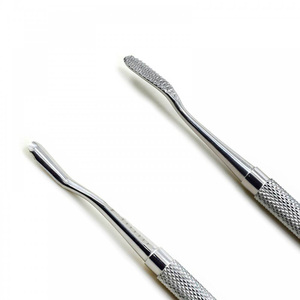
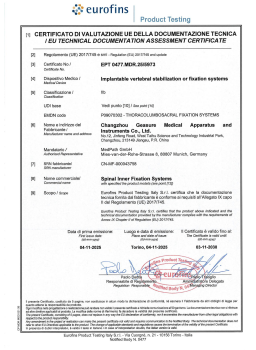
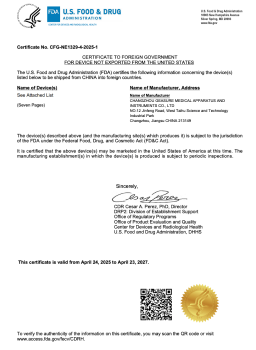
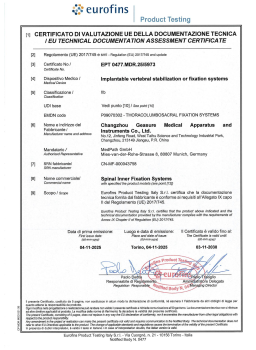
The transition from the Medical Devices Directive (MDD 93/42/EEC) to the European Medical Device Regulation (EU MDR 2017/745) represents the most comprehensive overhaul of medical device governance in three decades. For healthcare distributors, hospital procurement boards, and private-label OEM partners, verifying manufacturer compliance is paramount to eliminating market access barriers.
Under MDR 2017/745, implants require exhaustive General Safety and Performance Requirements (GSPR) documentation. Our manufacturing workflows integrate rigorous Clinical Evaluation Reports (CER), bio-compatibility testing according to ISO 10993 standards, and extensive fatigue testing (ASTM F543 for bone screws and ISO 14801 for dynamic fatigue) to ensure lifetime structural integrity under physiological load.
Mandatory Unique Device Identification (UDI) laser marking is executed across all surgical devices and load-bearing implants. Every pedicle screw, intramedullary nail, and anatomical locking plate carries a high-precision laser-etched UDI-DI and UDI-PI code, connecting final physical products directly to raw material heat numbers, CNC mill lot records, and sterile barrier packaging validation files.
We maintain fully structured Technical Files (TD) formatted per Annex II and III of EU MDR 2017/745. Overseas distributors receive complete support for local health authority filings, including Risk Management Files (ISO 14971), Post-Market Surveillance (PMS) plans, Periodic Safety Update Reports (PSUR), and cleanroom packaging validation (ISO 11607).
Selecting the appropriate biomaterial is vital for osseointegration, fatigue resistance, and radiolucency. The table below outlines our standard medical-grade raw materials certified under ASTM and ISO specifications.
| Biomaterial Grade | International Standard | Yield Strength (MPa) | Biomechanical Advantage | Clinical Indications |
|---|---|---|---|---|
| Ti-6Al-4V ELI (Grade 23) | ASTM F136 / ISO 5832-3 | ≥ 795 MPa | Extra-low interstitial elements for maximum fracture toughness & fatigue limit. | Pedicle Screws, Intramedullary Nails, Locking Plates, Joint Stems |
| CP Titanium (Grade 2 & 4) | ASTM F67 / ISO 5832-2 | 275 – 480 MPa | Optimal ductility permitting intraoperative cold-bending without stress risers. | CMF Mini Plates, Cranial Mesh, Small Fragment Recon Plates |
| Medical Grade PEEK | ASTM F2026 | ≥ 110 MPa | Modulus of elasticity matching human cancellous bone; 100% radiolucent. | Cervical & Lumbar Interbody Fusion Cages (PLIF/TLIF/ALIF) |
| CoCrMo Alloy | ASTM F1537 / ISO 5832-12 | ≥ 827 MPa | Exceptional tribological properties, high hardness, ultra-low wear rate. | Hip Femoral Heads, Knee Articular Bearings, Modularity Sleeves |
| 316L Stainless Steel | ASTM F138 / ISO 5832-1 | ≥ 690 MPa | High mechanical strength, rigid fixation, cost-effective clinical utility. | Trauma Pins, External Fixators, Veterinary Plates, Surgical Tools |
Orthomanufacturer Medical Co., Ltd manufactures nine specialized product lines designed to fulfill hospital tender demands and specialized surgical procedures.
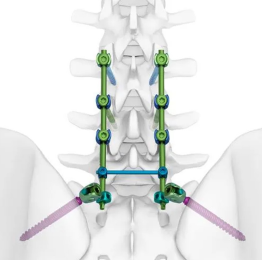
Comprehensive thoracolumbar pedicle screw systems featuring low-profile polyaxial and monoaxial screws, cross-links, occipitocervical plates, and radiolucent PEEK interbody cages. Designed for both open surgery and Minimally Invasive Surgery (MIS) pedicle screw placement.
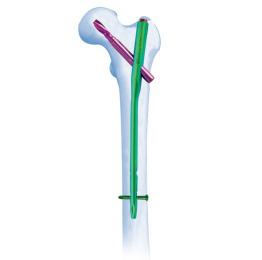
Cannulated titanium interlocking intramedullary nails engineered for femoral, tibial, and humeral fracture management. Supplied with carbon-fiber aiming arms that ensure high X-ray radiolucency and accurate distal locking screw placement.
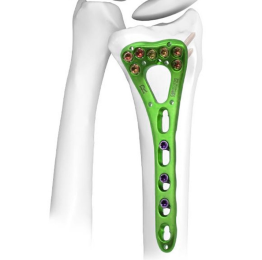
Pre-contoured anatomical titanium locking compression plates (LCP) for distal radius, proximal humerus, distal femur, and tibial plateau. Feature combi-holes allowing choice between angular stable locking screws or dynamic compression cortical screws.
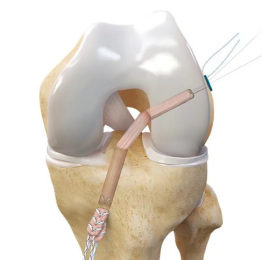
Advanced sports medicine implants including titanium and PEEK suture anchors, Peek interference screws for ACL/PCL reconstruction, and cortical fixation buttons paired with high-strength UHMWPE suture tapes.
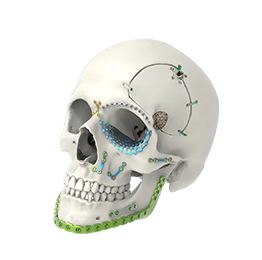
Ultra-low profile micro (1.5mm) and mini (2.0mm/2.4mm) pure titanium plates and screws for trauma reconstruction, orthognathic surgery, and neurosurgical cranial closure. Engineered for precise intraoperative bending.
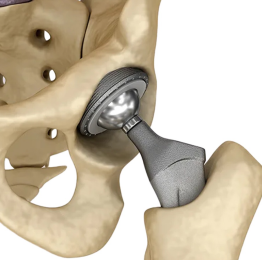
Primary and revision hip joint replacement systems featuring cementless plasma-sprayed titanium femoral stems, porous coated acetabular cups, CoCrMo femoral heads, and highly cross-linked UHMWPE liners.
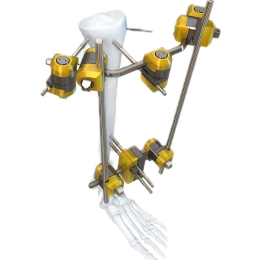
Modular external fixator frames including unilateral trauma fixators, hybrid limb lengthening systems, carbon fiber rods, and self-drilling Schanz pins designed for damage control orthopedics and limb reconstruction.
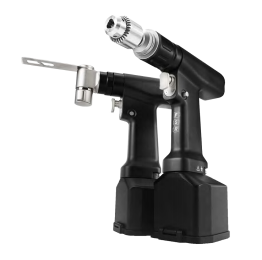
Brushless autoclavable surgical power tool systems including cannulated drills, acetabular reamers, oscillating saws, and sternum saws equipped with lithium-ion batteries and ergonomic lightweight handpieces.
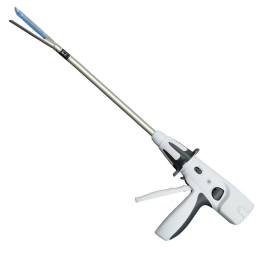
Modular reusable laparoscopic instruments incorporating ergonomic handles, 360-degree rotation knobs, insulated shafts, and detachable jaw tips for endoscopic surgical procedures.
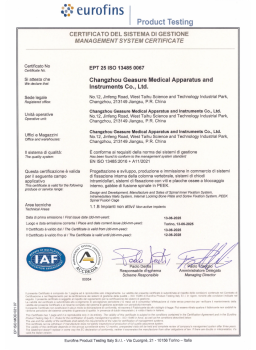
From raw bar stock verification to final cleanroom double-blister sealing, our production lines follow rigid ISO 13485 quality management guidelines.
Spectral metal analysis and ultrasonic flaw detection on incoming ASTM F136 titanium bar stock and ASTM F2026 PEEK rods to ensure zero internal voids or material impurities.
High-speed 5-axis Swiss-type CNC machining centers achieve 0.002mm micro-tolerances on complex bone screw threads, cannulated cores, and locking plate combi-holes.
Type II color anodization for size visual coding in the operating room, micro-bead blasting, electro-polishing, and ultrasonic bio-cleaning to remove machining oils.
Coordinate Measuring Machine (CMM) multi-point dimensional scanning, optical profile matching, and 100% thread gauge verification for flawless instrument engagement.
High-resolution fiber laser marking applies permanent UDI DataMatrix codes, lot numbers, SKU codes, and brand logos without compromising surface anti-corrosion properties.
Cleaned in purified water systems and packaged inside Class 100,000 (ISO Class 7) cleanrooms using Tyvek double-blister sterile packaging ready for Gamma or EtO sterilization.
Analysis of macro-economic, regulatory, and surgical shifts impacting how medical device distributors evaluate original equipment manufacturers (OEM).
As small-tier European manufacturers exit due to high MDR re-certification costs, global distributors are turning to top-tier Chinese manufacturers who possess complete technical files, ISO 13485 certification, and audited quality management systems capable of fulfilling EU market demands.
Hospitals are rejecting mixed-source implants and non-standard drivers. Sourcing preference is shifting heavily toward single-source suppliers offering fully integrated systems—implants, matched ergonomic surgical instruments, and autoclavable sterilization trays under one unified quality system.
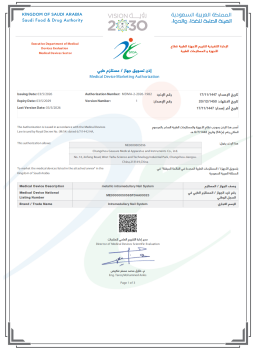
Distributors in emerging markets (LATAM, MENA, SEA) are establishing proprietary brands to win government tenders. Success requires manufacturers with low MOQs, custom laser marking capabilities, rapid prototyping services, and localized regulatory dossier support.
Key information regarding technical documentation, OEM private labeling, sample evaluation, and export procedures.
Contact our engineering and export team today to request complete system catalogs, regulatory dossiers, and competitive OEM quotations for your target market.