Featured China Orthopedic Implants & Surgical Systems
Directly access high-precision titanium implants, anatomical locking plates, spinal constructs, and surgical instruments manufactured under strict international quality frameworks.
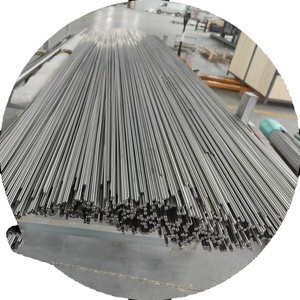
Titanium Bar Grade 5 ELI Orthopedic Surgical Implant Stock (3mm-5mm)
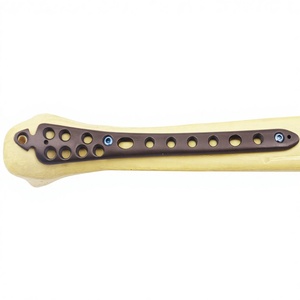
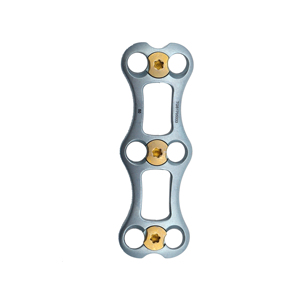
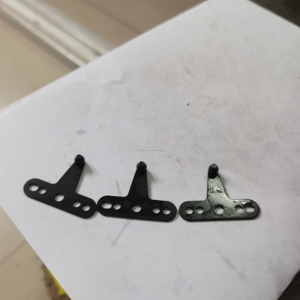
Right-Angled Titanium Trauma Drive Gear & Manual Instrument System
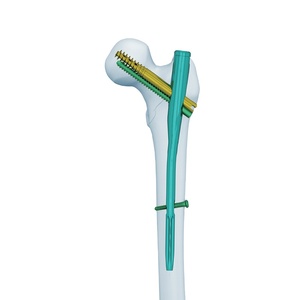
Class III Hospital-Grade Titanium Alloy Orthopedic Implant System
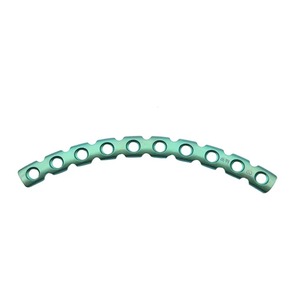
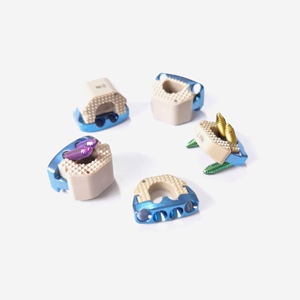
Polyaxial Pedicle Screw 5.5mm Posterior Thoracolumbar Spine Construct
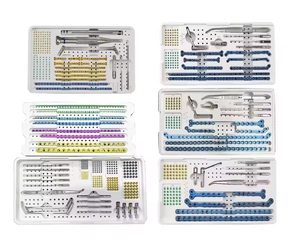
The global medical device market is undergoing a seismic structural shift. As healthcare budgets face tighter constraints and public tender systems in Latin America, Southeast Asia, the Middle East, and Eastern Europe demand higher cost-efficiency without compromising clinical safety, China has emerged as the premier manufacturing powerhouse for medical-grade orthopedic implants. Modern Chinese medical manufacturing hubs in Jiangsu, Zhejiang, and Sichuan have moved far beyond basic OEM casting—they now lead in high-precision 5-axis CNC titanium milling, 3D trabecular metal additive manufacturing, and PEEK (Polyetheretherketone) spinal cage fabrication.
However, for global distributors, orthopedic brand owners, and hospital procurement boards, requesting a top China orthopedic implant catalogue download is only the first step in a complex qualification journey. Sourcing Class IIb and Class III surgical implants requires evaluating deep technical parameters: titanium micro-structural purity (ASTM F136 ELI vs. ASTM F67), static and dynamic fatigue limits under ASTM F1717 and ISO 14801 test protocols, cleanroom bioburden compliance under ISO 14644 Class 7 standards, and technical dossier availability in Common Submission Dossier Template (CSDT) or STED formats.
"In modern orthopedic supply chains, the operational risk does not stem from unit FOB price variances, but from regulatory submission rejection, mismatched driver-to-screw recesses during surgery, and inconsistent batch metallurgy."
This comprehensive industry report breaks down product categorizations, metallurgical specifications, global regulatory standards, future technological developments, and a structured procurement framework to assist medical importers in identifying certified, top-tier Chinese exporters.
Core Orthopedic Systems & Future Procurement Trends
Analysis of the primary product verticals requested in modern China orthopedic catalogues, alongside emerging 2025–2030 surgical implant technology trends.
Spine systems form over 35% of international catalogue download inquiries. Core products include top-loading polyaxial pedicle screws (5.5mm / 6.0mm systems), cross-links, titanium spinal rods, anterior cervical plates, and interbody fusion cages (PEEK-OPTIMA and 3D porous titanium).
Trend: Shift toward minimally invasive spine (MIS) percutaneous pedicle screw systems and 3D-printed porous titanium cages promoting faster osseointegration.
The workhorse of orthopedic trauma departments. Encompasses anatomical locking plates for distal radius, proximal humerus, distal tibia, and femoral fractures, dynamic compression plates (DCP), cannulated intramedullary nails, and Schanz external fixation pins.
Trend: Polyaxial locking plate technology permitting multi-directional screw insertion, paired with radiolucent carbon fiber external fixator frames.
Ultra-low profile micro (1.5mm) and mini (2.0mm/2.4mm) pure titanium plates, orbital floor mesh, and mandibular reconstruction plates designed for delicate facial skeletal trauma and orthognathic reconstructive surgery.
Trend: Rapid adoption of Patient-Specific Implants (PSI) manufactured via selective laser melting (SLM) directly from patient CT scan DICOM data.
Total Hip Replacement (THR) and Total Knee Replacement (TKR) systems utilizing Cobalt-Chromium-Molybdenum (CoCrMo) alloy articulating heads, highly cross-linked polyethylene (XLPE) liners, and cementless porous-coated titanium stems.
Trend: Ceramic-on-ceramic friction pairs and robotic-assisted surgical instrumentation compatibility for precise component alignment.
Fixation devices for soft tissue to bone repair, including suture anchors (Titanium, PEEK, and bioabsorbable PLGA), ACL/PCL interference screws, cortical fixation buttons, and reusable arthroscopic hand instruments.
Trend: Knotless suture anchor design and biocomposite materials that gradually resorb and undergo osteoconductive bone substitution.
Dedicated veterinary trauma kits featuring 1.5mm to 3.5mm TPLO (Tibial Plateau Leveling Osteotomy) plates, micro bone screws, and specialized power tools designed specifically for small companion animals and equine orthopedics.
Trend: Rapidly expanding global veterinary surgery market driving high-margin demand for complete modular pet surgical kits.
When reviewing a vendor's product catalogue, verifying raw material grades against international standards is paramount. Medical implants demand exact biocompatibility, corrosion resistance, and modulus of elasticity close to human cortical bone.
| Material Name | International Standard | Key Mechanical Properties | Primary Clinical Application | Audit Verification Point |
|---|---|---|---|---|
| Titanium Ti-6Al-4V ELI | ASTM F136 / ISO 5832-3 | Tensile Strength ≥ 860 MPa, High fatigue strength, Extra Low Interstitial purity | Pedicle screws, spinal rods, intramedullary nails, trauma locking plates | Verify Material Test Certificate (MTC) for O, N, C, H element limits |
| Commercially Pure Titanium | ASTM F67 / ISO 5832-2 | Grades 1-4, excellent ductility for intraoperative cold bending, low density | CMF micro/mini plates, titanium orbital mesh, cranial reconstruction plates | Check bending fatigue cycle limits and surface anodization uniformity |
| Stainless Steel 316LVM | ASTM F138 / ISO 5832-1 | Vacuum Arc Remelted (VAR), high yield strength, cost-effective rigidity | Trauma compression plates, Schanz pins, temporary external fixators | Confirm nickel release tests and passivation passivity (ASTM A967) |
| Cobalt-Chromium Alloy | ASTM F1537 / ISO 5832-12 | Extreme wear resistance, low friction coefficient, high hardness | Total hip femoral heads, total knee condylar components, spinal cross-links | Inspect surface roughness (Ra < 0.02 µm) on articulating joint surfaces |
| PEEK-OPTIMA Polymer | ASTM F2026 | Elastic modulus (~3.6 GPa) matching cortical bone, radiolucent in X-ray/CT | Interbody spinal fusion cages (TLIF/PLIF/ALIF), sports suture anchors | Require Invibio raw material origin verification and HPLC purity reports |
| UHMWPE Polyethylene | ASTM F648 / ISO 5834-2 | Ultra-High Molecular Weight, high impact resistance, wear resistance | Acetabular cups, tibial inserts for total knee joint replacement | Validate gamma irradiation cross-linking dosage and oxidation index |
* Note: Leading Chinese orthopedic manufacturers provide raw material heat-lot traceability numbers laser-marked on every individual sterile or non-sterile implant SKU.
The 4-Step China Orthopedic Supplier Audit Blueprint
A structured technical audit framework for hospital purchasing committees, medical distributors, and private-label OEM brand owners prior to contract signing.
Metallurgical Traceability Audit
Require batch-specific Certificate of Analysis (CoA) from certified mills (e.g., Baoti, Western Superconducting). Audit chemical composition reports to ensure interstitial elements like Oxygen (< 0.13%) meet ELI standards.
Precision CNC Machining Evaluation
Inspect 5-axis Swiss-type lathe precision (Star, Citizen) and 3D optical coordinate measuring machines (CMM). Verify that screw thread pitch tolerance stays within ±0.01mm to avoid intraoperative driver stripping.
Cleanroom & Washing Validation
Verify ISO Class 7/8 cleanroom packaging facilities. Audit automated ultrasonic cleaning systems to confirm complete removal of CNC cutting fluids and residual particulate bioburden prior to final pouch sealing.
Regulatory Technical Dossier (STED)
Ensure the supplier provides complete ISO 13485 technical files, ISO 10993 biocompatibility testing, ASTM F1717 dynamic fatigue test reports (5 million cycles without fracture), and CE/FDA registration documentation.
Advanced OEM/ODM Capabilities for Global Health Providers
Our state-of-the-art manufacturing facility combines decades of biomedical engineering expertise with world-class German and Japanese machining technology. We partner with global medical distributors to streamline implant catalogue downloads, custom product development, and international market registrations.
- ✓ Turnkey OEM/Private-Label Support: Laser marking, custom anodization colors, barcode UDI labeling, and customized surgical tray layouts.
- ✓ Matched Surgical Instrument Sets: Ergonomic, color-coded, autoclavable instrument kits engineered specifically for seamless implant coupling.
- ✓ Rapid Prototype Development: 3D CAD design validation and functional sample delivery within 14 working days for tender samples.
- ✓ Full Regulatory Compliance: ISO 13485:2016 quality management system certified with supporting technical dossiers for seamless local MOH registration.
Frequently Asked Questions by Overseas Medical Buyers
Essential answers addressing technical compliance, minimum order quantities, catalogue downloads, OEM branding, and international shipping logistics.
How can I request and download the complete 2025 China Orthopedic Implant Catalogue? +
You can immediately request the full 200+ page master catalogue in digital PDF format by clicking the "Contact Us" or "Download Catalogue" buttons on this page. Our export team will provide instant access to complete technical schematics, screw dimensions, plate sizing tables, matching surgical instrument sets, and global pricing tier schedules.
What quality certifications do your orthopedic implants carry for local MOH registration? +
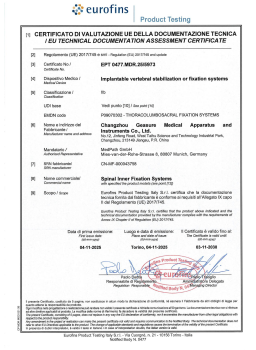
Our orthopedic implants and surgical power tools are manufactured under an ISO 13485:2016 certified Quality Management System. Selected product lines carry CE certification under EU MDR 2017/745 and US FDA 510(k) clearances. We provide comprehensive technical dossiers (STED/CSDT format), Free Sales Certificates (FSC), ISO 10993 biocompatibility test reports, and sterilization validation documents to support your local Ministry of Health registration.
Are raw materials 100% traceable, and can we request Material Test Reports (MTR)? +
Yes. All raw materials—including Ti-6Al-4V ELI (ASTM F136), Commercially Pure Titanium (ASTM F67), Stainless Steel 316LVM (ASTM F138), and PEEK-OPTIMA (ASTM F2026)—are sourced exclusively from verified medical metallurgy mills. Every production batch includes a mill Certificate of Analysis (CoA). Furthermore, every single implant features laser-etched UDI numbers linking it directly back to its raw material heat lot.
Do you provide OEM, custom dimensions, and private-label packaging services? +
Absolutely. We specialize in OEM and private-label contract manufacturing for established orthopedic brands and regional distributors. Services include customized laser logo etching, custom anodization color coding (blue, gold, green, magenta for easy OR size identification), custom sterile pouch packaging, localized language IFUs (Instructions for Use), and tailored surgical tray layouts.
What is the typical Minimum Order Quantity (MOQ) and lead time for export orders? +
For standard catalogue items, our MOQs are flexible to accommodate new distributor market trials (e.g., 5 to 10 sets per implant SKU). Production lead times for standard catalogue orders range between 15 to 30 days. Custom OEM projects involving specialized tool manufacture or novel plate geometries typically take 45 days including prototype sample validation.
Can distributors order evaluation sample sets prior to placing a bulk container order? +
Yes, we encourage qualified hospital procurement teams and distributors to apply for physical evaluation sample kits. Sample sets allow your engineering and surgical team to physically test thread engagement smoothness, surface anodization quality, driver recess alignment, and surgical instrument ergonomics prior to finalizing contract agreements.
How do you ensure matching tolerances between implants and surgical instruments? +
Operating room failures frequently occur when implants and hand tools are sourced from different suppliers. We engineer implants and dedicated surgical instruments as integrated single systems. Drivers, benders, drill guides, and reamers are manufactured in-house on matching CNC machine centers, guaranteeing zero wobble, slip, or stripping during surgical procedures.
What mechanical dynamic testing is performed on spinal and trauma implants? +
Our implants undergo rigorous mechanical testing in accredited third-party laboratories. Pedicle screw constructs undergo dynamic axial fatigue and torsion testing under ASTM F1717 protocols (5 million cycles). Locking bone plates undergo four-point bending fatigue testing according to ASTM F382 standards. Full mechanical test reports are available upon request.
Ready to Access the 2025 Master Orthopedic Implant Catalogue?
Connect directly with our senior biomedical export engineering team. Download complete technical schematics, request material certificates, or order your physical evaluation sample kit today.