Featured Medical-Grade Orthopedic Fixation Implants & Systems
Fully validated implantable hardware engineered from implant-grade Titanium alloys (Ti-6Al-4V ELI), Nickel-Titanium Shape Memory Alloys, and Surgical Stainless Steel (316L). Complete with lot traceability and CE/ISO registration dossiers.
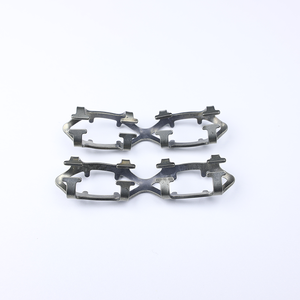
Yi Fantai Orthopedic Nickel-Titanium Patellar Claw Fixation
Shape memory anatomical patellar claw designed for minimally invasive knee fracture fixation. Features superelastic continuous dynamic compression.
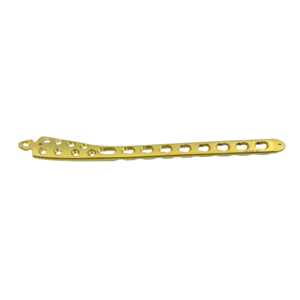
Lightweight Premium Anatomical Orthopedic Implants
Low-profile titanium bone plates engineered for reduced soft tissue irritation and optimized stress distribution across fracture lines.
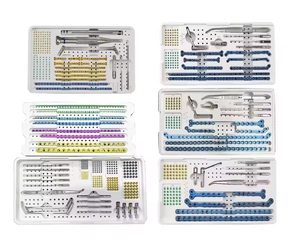
ZMD Veterinary Titanium 8.5mm Bone Plate & Instrument Set
High-plasticity titanium reconstructive plate system with matched surgical instrumentation crafted specifically for companion animal trauma care.
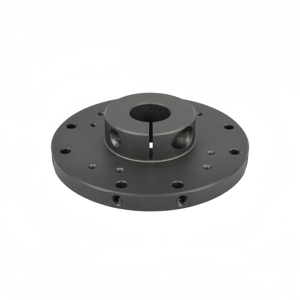
OEM Precision Machined Titanium Alloy Implant Components
Custom 5-axis CNC turned and milled bone screws, anchors, and internal sleeves built according to client CAD drawings and ISO tolerances.
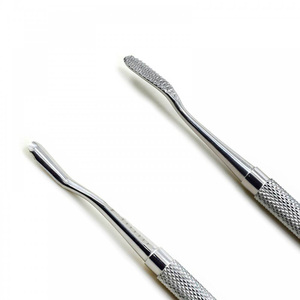
Double-Ended Orthopedic & Dental Bone Rasp Scraper 6mm
Non-magnetic stainless steel manual bone file with ergonomic knurled grip, fully autoclavable and CE marked for bone grafting procedures.
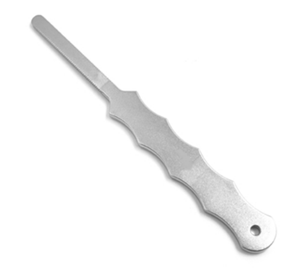
Multi-Faced Stainless Steel Flat Bone File for Pet Surgery
Precision-ground serrations for rapid bone contouring and smoothing in osteotomy and fracture realignment procedures.
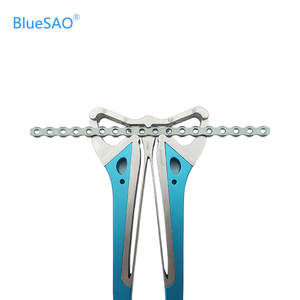
Titanium Veterinary Orthopedic Implants & Fixation System
High-strength, biocompatible titanium bone plates and locking screws configured for high-stress veterinary orthopedic trauma cases.
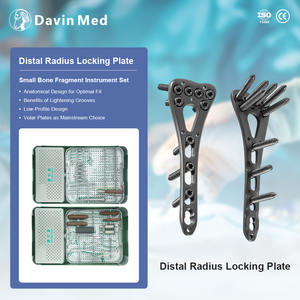
Titanium Volar Distal Radius Multi-Directional Locking Plate
Advanced anatomical volar plate utilizing variable-angle locking technology to accommodate complex intra-articular wrist fractures.
Navigating China’s Orthopedic Implant Supply Chain: Sourcing Agents vs. Factory-Direct OEM
A comprehensive evaluation of procurement models for medical device importers, regional distributors, and brand owners seeking high-margin, regulatory-compliant orthopedic hardware.
The Role of Orthopedic Sourcing Agents in China
Navigating China’s medical manufacturing ecosystem requires granular knowledge of regional manufacturing clusters—such as Changzhou (Spine & Trauma hubs), Suzhou (Precision Instruments & Joint Prostheses), and Shenzhen (Surgical Power Tools & Electronics). A specialized orthopedic implant sourcing agent acts as an on-the-ground technical intermediary.
Agents provide market access for smaller distributors who lack local auditing teams. However, sourcing through traditional trading intermediaries frequently adds 15% to 35% in margin stack up, introduces communication bottlenecks regarding engineering change orders (ECOs), and risks masking sub-tier subcontractor reliance.
Direct Factory Partnerships & Hybrid OEM Integration
Leading global distributors are rapidly shifting toward direct OEM/ODM engagement with certified Changzhou and Jiangsu manufacturing facilities. Direct factory integration eliminates broker markups while granting direct access to cleanroom packaging lines, 5-axis CNC machining data, and primary material heat treat certificates.
By leveraging factory-direct engineering resources, buyers can co-develop customized implant systems, execute private-label laser marking, and receive comprehensive Device Master Files (DMF) essential for local Ministry of Health registrations.
Key Procurement Takeaway for Medical Device Importers
When selecting a sourcing pathway in China, insistence on direct audit rights for sub-tier suppliers (e.g., anodizing facilities, raw bar stock suppliers, gamma irradiation facilities) is mandatory. High-performing sourcing models utilize local technical auditors while establishing direct commercial contracting with the underlying ISO 13485 certified manufacturer.
Key Technological Trends Shaping Orthopedic Manufacturing
From additive manufacturing to shape memory alloys, the global orthopedic industry is experiencing rapid shifts in biomaterial processing, biomechanical design, and surface modification.
1. Advanced Biomaterials & PEEK Integration
While Titanium Alloy (Ti-6Al-4V ELI) remains the gold standard for load-bearing fracture plates and pedicle screws, Polyetheretherketone (PEEK) and Carbon-Fiber Reinforced PEEK (CFR-PEEK) have revolutionized spinal interbody fusion and oncological fracture stabilization due to their radiolucency and bone-matched elastic modulus (~3.6 GPa).
2. Shape Memory Alloys (Nitinol)
Nickel-Titanium (NiTi) shape memory alloys—as seen in specialized patellar claw implants and dynamic staple systems—utilize thermo-elastic martensitic transformation to exert continuous, controlled dynamic compression across fracture sites, promoting accelerated primary bone healing.
3. Surface Modifications & Anodization
Modern orthopedic factories employ Type II and Type III titanium anodization, hydroxyapatite (HA) plasma spraying, and micro-arc oxidation (MAO) to enhance fatigue life, improve osseointegration, and minimize bacterial adhesion on permanent implant surfaces.
4. Polyaxial Locking Screw Technology
Transitioning from rigid monoaxial locking plates to multi-directional (polyaxial) locking mechanisms allows surgeons to angle screws up to 15 degrees off-axis, facilitating complex peri-articular fracture reconstruction without sacrificing construct stability.
5. Precision 5-Axis Machining & Tooling
High-speed Swiss-type CNC automatic lathes equipped with live tooling permit single-pass machining of complex helical threads and cannulations, significantly decreasing surface roughness ($Ra < 0.4 \mu m$) and eliminating stress-concentration risers.
6. Integrated System Sourcing (Implants + Sets)
Overseas procurement teams are prioritizing suppliers who offer fully matched, instrument-to-implant systems contained in custom graphic sterilization trays—eliminating intraoperative driver slippage and fitment errors during surgery.
Orthopedic Biomaterial Specification Matrix
Rigorous compliance with international standard specifications is non-negotiable for medical device market authorization. Review standard grades utilized in our manufacturing facilities.
| Material Class | International Standard | Tensile Strength (MPa) | Primary Clinical Application | Biomechanical Advantages |
|---|---|---|---|---|
| Ti-6Al-4V ELI | ASTM F136 / ISO 5832-3 | ≥ 860 | Pedicle Screws, Intra-Medullary Nails, Trauma Plates | Superior fatigue resistance, low modulus relative to steel, excellent biocompatibility. |
| CP Titanium (Grades 2 & 4) | ASTM F67 / ISO 5832-2 | 483 - 680 | CMF Micro/Mini Plates, Titanium Mesh | High intraoperative ductility allowing complex anatomical contouring without spring-back. |
| Stainless Steel 316L | ASTM F138 / ISO 5832-1 | ≥ 860 (Cold Worked) | Temporary Fixation, Schanz Pins, Wire, External Fixators | High shear strength, cost-effective structural stiffness, time-tested clinical profile. |
| Nitinol (NiTi Alloy) | ASTM F2063 | 890 - 1100 | Patellar Claws, Compression Staples, Memory Clips | Superelasticity and thermal shape memory properties for active dynamic fracture gap closure. |
| Unfilled PEEK | ASTM F2026 | 90 - 100 | Spinal Interbody Fusion Cages (PLIF, TLIF, ACIF) | Radiolucent (X-ray transparent), elastic modulus closely matches human cancellous bone. |
| CoCrMo Alloy | ASTM F1537 / ISO 5832-12 | ≥ 897 | Total Joint Arthroplasty (Knee/Hip Articulating Surfaces) | Extremely high wear resistance, low friction coefficient when paired with cross-linked UHMWPE. |
Future Sourcing & Global Procurement Trends (2025–2030)
How leading orthopedic importers are adapting to shifting regulatory landscapes, supply chain diversification, and digital quality auditing.
Harmonized Regulatory Dossiers (MDR & FDA QSR Integration)
With the European Union’s Medical Device Regulation (EU MDR 2017/745) enforcing strict clinical evaluation requirements and post-market surveillance (PMS), China-based manufacturers are dramatically updating technical files. Importers now demand suppliers who can directly provide complete Technical Documentation Packages, including ISO 10993 biocompatibility testing, mechanical fatigue validation (ASTM F1717 / ASTM F382), and validated cleanroom bioburden data.
Total Cost of Ownership (TCO) vs. Initial Unit Price
Professional procurement officers are moving past simple unit-cost comparisons. Sourcing evaluations now factor in the Total Cost of Ownership—calculating costs associated with incoming quality control failure rates, customs registration delays, batch-to-batch thread pitch inconsistency, and packaging seal integrity failures. Sourcing directly from automated factories with zero-defect optical sorting systems reduces overall business operational risk.
Why Global Distributors Partner with Our Manufacturing Hub
We bridge technical engineering expertise with streamlined export logistics to deliver reliable OEM/ODM solutions worldwide.
Comprehensive Product Portfolio
Offering end-to-end orthopedic systems: Spine Fixation (pedicle screws, cages), Intramedullary Nails, Locking Plates, CMF Micro Plates, Sports Medicine Anchors, Joint Prostheses, External Fixation, and Surgical Power Tools.
Full OEM & Private Label Support
Custom fiber-laser marking for distributor branding, standardized UDI barcode generation, specialized anodization color coding, and localized packaging designs suited for target country regulations.
100% Raw Material & Lot Traceability
Every product batch is tied directly to raw material mill test certificates (MTC). Inspection logs, dimensional CMM reports, and cleanroom bioburden records are archived per lot number.
Frequently Asked Questions (FAQ) for Global Sourcing Managers
Technical, operational, and commercial answers regarding medical device procurement from Chinese manufacturers.
How do you guarantee material purity and mechanical compliance for titanium implants?
All raw titanium bar stock is sourced exclusively from certified medical grade suppliers complying strictly with ASTM F136 (Ti-6Al-4V ELI) and ASTM F67 (Unalloyed Titanium). Each incoming lot undergoes chemical spectrum analysis, microstructural evaluation, and mechanical tensile testing before entering CNC machining lines. Mill Test Certificates (MTC) are attached to every shipment dossier.
What is the difference between working with a sourcing agent versus direct factory engagement?
Sourcing agents act as external procurement consultants who help locate suppliers, assist with language barriers, and perform third-party audits. Direct factory engagement involves contracting directly with an ISO 13485 certified manufacturer. While agents offer broader product exposure, direct factory engagement reduces unit margins by 15-30%, grants direct access to engineering change orders (ECOs), and provides unblinded technical documentation necessary for regulatory registrations.
Can you provide full technical documentation for local Ministry of Health registration?
Yes. We support overseas distributors by providing comprehensive registration dossiers, including ISO 13485 certificate copies, CE documentation, Certificates of Free Sale (CFS), material certificates, mechanical fatigue test reports, ISO 10993 biocompatibility summaries, and Instructions for Use (IFU) formatted for localization.
How are custom OEM design requests and private labeling handled?
OEM requests begin with an engineering review of your 2D/3D CAD drawings or physical reference samples. Once tolerances, material specs, and surface finishes are aligned, our tooling team produces prototype samples for dimensional verification. We execute customized laser marking (logo, SKU, lot number, matrix codes) and packaging design prior to batch production.
What are the standard lead times for custom orthopedic production runs?
Standard catalog products typically ship within 15 to 30 days depending on lot volume. Custom OEM implant projects require approximately 30 to 45 days, allowing for custom CNC programming, prototype validation, surface anodization, cleaning, and final quality control inspection.
How do you ensure surgical instruments match imported implant systems?
We supply complete integrated systems where bone plates, locking screws, drills, taps, screwdrivers, and benders are engineered simultaneously. Screwdriver drive recesses (e.g., Star/Torx, Hexagonal) are optical-gauge tested against corresponding screw heads to guarantee zero intraoperative stripping or clearance slop.
Ready to Scale Your Orthopedic Product Portfolio?
Connect directly with our engineering team to request full product catalogs, CAD specifications, material test certificates, or evaluation samples.