Strategic Procurement Whitepaper: China's Orthopedic Implant Supply Chain Evolution
The global market for orthopedic implants and trauma fixation hardware has entered a transformational era driven by value-based healthcare, expanding surgical access in emerging markets, and rigorous international regulatory harmonization. For institutional healthcare buyers, government tender managers, and regional medical device importers, sourcing high-grade titanium bone plates, pedicle screw systems, intramedullary nails, and veterinary implants from leading Chinese manufacturing hubs has transitioned from a cost-reduction tactic to a core supply-chain strategy.
However, achieving commercial success in orthopedic distribution requires far more than identifying competitive unit pricing. It demands absolute alignment with metallurgical standards, validated cleanroom manufacturing protocols, strict tolerance matching between implants and surgical instruments, and flawless lot-level traceability. This whitepaper analyzes the key engineering, regulatory, and market dynamics shaping the bulk procurement of orthopedic devices from China.
1. Metallurgical Science & Biocompatibility Standards
The primary determinant of an orthopedic implant's clinical success is its material composition and structural integrity under cyclic fatigue loading. Implants exported for human trauma and spinal fusion must conform strictly to international standards established by ASTM International and ISO:
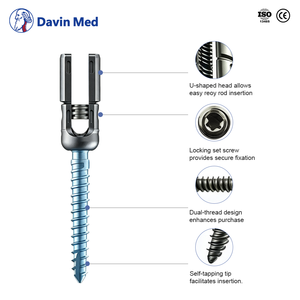
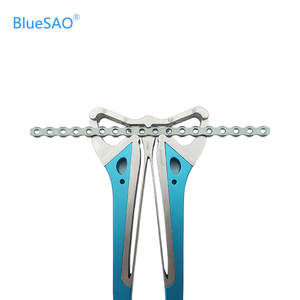
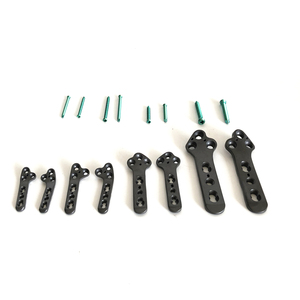
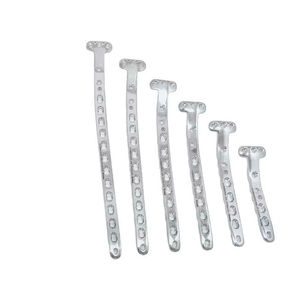
- Ti-6Al-4V ELI (Extra Low Interstitial) - ASTM F136 / ISO 5832-3: The benchmark titanium alloy for load-bearing trauma locking plates, intramedullary nails, and pedicle screws. Reduced oxygen, nitrogen, and iron content provides superior fracture toughness and fatigue resistance compared to standard industrial grades.
- Commercially Pure Titanium (CP Ti Grade 1 to 4) - ASTM F67 / ISO 5832-2: Highly ductile material ideal for craniofacial (CMF) mini-plates, anterior cervical plates, and titanium mesh where intraoperative anatomical contouring is essential.
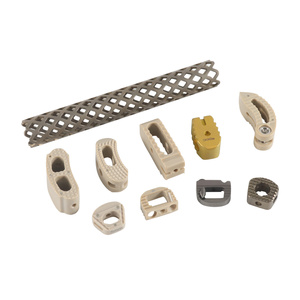
- Implant-Grade PEEK (Polyetheretherketone) - ASTM F2026: Radiolucent radiopaque polymer exhibiting an elastic modulus closely matching natural human cancellous bone. Extensively utilized in interbody fusion cages (PLIF, TLIF, ACDF) to minimize stress shielding and subside rates.
- Medical Stainless Steel (316L / 316LVM) - ASTM F138 / ISO 5832-1: High-nickel, low-carbon stainless steel specified for heavy-load external fixation frames, Schanz pins, dynamic hip screw systems, and veterinary trauma plates.
2. Material & Application Technical Reference Matrix
The following technical reference outlines the primary material standards, mechanical characteristics, and validated clinical applications across our primary manufacturing line:
| Material Classification |
Standard Specification |
Yield Strength (MPa) |
Elongation (%) |
Primary Clinical Indications |
| Titanium Ti-6Al-4V ELI |
ASTM F136 / ISO 5832-3 |
≥ 795 MPa |
≥ 10% |
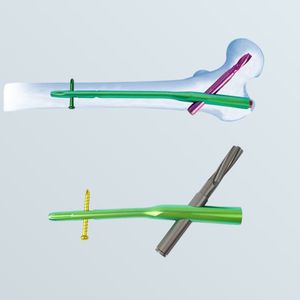
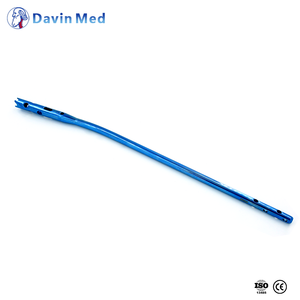
Spinal Pedicle Screws, PFNA Intramedullary Nails, Locking Bone Plates |
| Commercially Pure Ti (Gr 4) |
ASTM F67 / ISO 5832-2 |
≥ 480 MPa |
≥ 15% |
Anterior Cervical Plates, CMF Maxillofacial Mini Plates, Cranial Mesh |
| Medical Stainless Steel 316L |
ASTM F138 / ISO 5832-1 |
≥ 690 MPa |
≥ 12% |
Veterinary Tibia Plates, External Fixator Rods, Schanz Pins, K-Wires |
| Implant PEEK Polymer |
ASTM F2026 |
90 - 100 MPa |
15 - 30% |
Interbody Fusion Cages (PLIF/TLIF/ACDF), Subtalar Arthroereisis Implants |
| CoCrMo Superalloy |
ASTM F1537 / ISO 5832-12 |
≥ 827 MPa |
≥ 12% |
Total Joint Arthroplasty Femoral Heads, Knee Condylar Components |
3. Modern Future Procurement Trends (2025–2030)
As healthcare organizations push for increased clinical precision and supply chain efficiency, major trends are redefining how international procurement teams buy orthopedic hardware:
- Integrated System Procurement: Importers are stepping away from sourcing implants and surgical instruments from separate vendors. Mismatches between driver bits, sleeve guides, and screw recesses lead to intraoperative stripping. Turnkey procurement of matched implant kits, instruments, and sterilizing trays from a single OEM manufacturer resolves tolerance conflicts.
- Rise of Private Label & OEM Brand Customization: Global distributors are building proprietary brands to capture higher market margin. Contract manufacturing partners must provide cleanroom laser marking, custom anodization color coding, dual-language UDI labeling, and custom blister packaging.
- Expansion of Specialized Veterinary Orthopedics: The companion animal healthcare sector is growing rapidly. Advanced techniques such as TPLO (Tibial Plateau Leveling Osteotomy) and specialized locking plate systems for veterinary surgeons are experiencing surge demand in North America, Europe, and Asia-Pacific.
- Additive Manufacturing & Porous Structure Integration: 3D printing (Direct Metal Laser Sintering - DMLS) allows for porous trabecular titanium surfaces on spinal fusion cages and joint prostheses, enhancing immediate cellular osseointegration over traditional solid devices.
Partner With a Proven China Orthopedic Manufacturer
Whether expanding your distribution portfolio, entering regional hospital tenders, or launching a specialized OEM brand, our engineering and export team provides complete technical, quality, and commercial support.
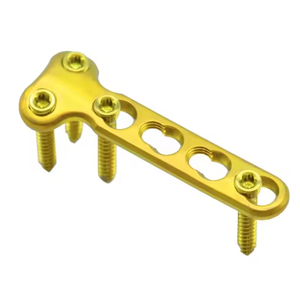 ASTM F136 Ti6Al4V