1. Featured Orthopedic Implant & Instrument Portfolio
Engineered to ISO 13485 and ASTM standards. Select a surgical implant or instrument set below to initiate direct factory inquiries.
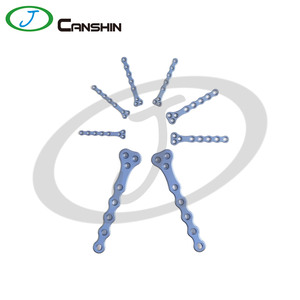
Veterinary Orthopedic Surgery Implant T Type Locking Plate T Shape Reconstruction Locking Plate with Pure Titanium
Biocompatible Grade 2 pure titanium reconstruction plate for canine and feline orthopedic procedures. Features low-profile anatomical contouring and locking screw stability.
Inquire Now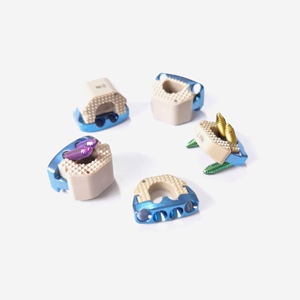
Polyaxial Pedicle Screw Atlas 5.5 Posterior Thoracolumbar Spinal System Titanium Orthopedic Surgical Implant for Spine Surgery
Ti-6Al-4V ELI polyaxial pedicle screws offering 50-degree articulation cone, friction-head design, and buttress thread mechanics for complex thoracolumbar spine stabilization.
Inquire Now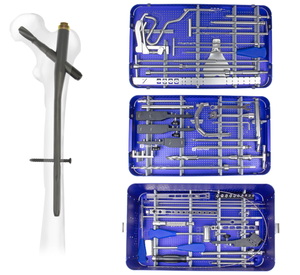
Orthopedic Implants PFNA Femoral Intramedullary Nail Orthopedic Instrument Set Orthopedic Titanium Trauma Nail Implants
Proximal Femoral Nail Antirotation (PFNA) system engineered for trochanteric fractures. Includes helical blade design for superior rotational stability in osteoporotic bone.
Inquire Now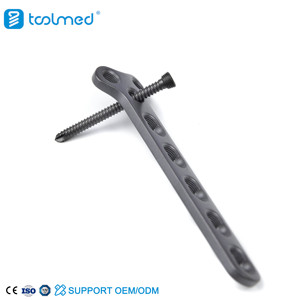
T Type Locking Plate Veterinary Orthopedic Surgical Surgery Implant for Animal Surgery
Precision-machined veterinary T-locking compression plate system designed for distal radius and tibia fractures in companion animals. Combines dynamic compression with locking rigidity.
Inquire Now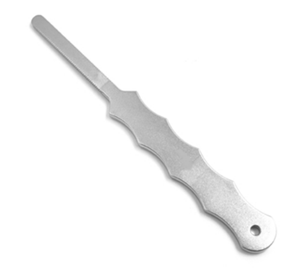
Pet-specific Stainless Steel Multi-faced Flat Bone File for Orthopedic Surgery
Surgical-grade 316L stainless steel multi-faced rasp for smooth bone contouring and graft site preparation in veterinary orthopedic reconstructions.
Inquire Now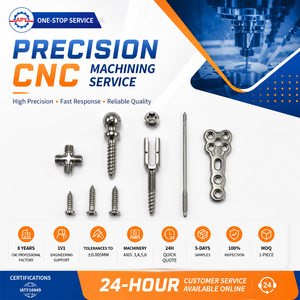
Precision CNC Machined Orthopedic Implants Titanium Bone Screws Spinal Fixation Parts OEM Custom Medical Components Manufacturer
Custom OEM machining services utilizing 5-axis Swiss CNC lathes. High-precision manufacturing of titanium bone screws, spinal cross-links, and complex implant hardware.
Inquire Now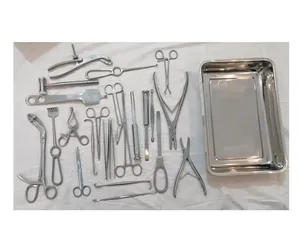
High Quality Orthopedic Surgical Instruments Set Dental Implant Kit Manual 13pcs/18pcs/26pcs CE Certified Durable
Ergonomic, autoclavable surgical instrument kits housing osteotomes, drivers, depth gauges, and taps housed in anodized aluminum sterilization trays.
Inquire Now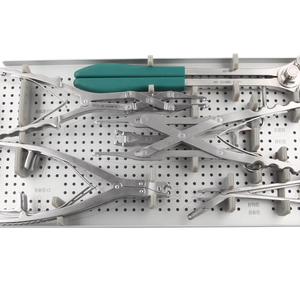
COX 6.0 Screw & Rod System Class I Implant Instruments for Orthopedic Surgery
Comprehensive 6.0mm spinal rod and pedicle screw instrumentation system providing structural rigidity, tactile feedback, and streamlined intraoperative workflow.
Inquire Now2. Latin America Orthopedic Implants Market: Sourcing Trends & Growth Analysis (2025–2030)
The Latin American medical device ecosystem is undergoing a dramatic structural transformation. Healthcare spending across key markets—most notably Brazil, Mexico, Colombia, Chile, and Argentina—is surging, driven by an aging population, rising rates of traumatic injury, and expanding public-private health coverage. For orthopedic device importers, hospital purchasing managers, and healthcare distributors, identifying Top China orthopedic implants Latin America Manufacturers has shifted from a cost-reduction tactic to a core strategic necessity.
Healthcare Demographics & Trauma Demand
Latin America’s demographic trajectory reflects a rapidly expanding geriatric demographic prone to degenerative spinal disorders, osteoporotic fractures, and joint osteoarthritis. Simultaneously, high urban traffic density maintains elevated demand for trauma stabilization solutions such as locking plate systems, intramedullary nails, and external fixators. Public hospital systems (e.g., SUS in Brazil, IMSS in Mexico) require high-volume, highly reliable implants that balance clinical efficacy with strict budget caps.
Regulatory Convergence & Harmonization
Regulatory authorities across Latin America are modernizing their compliance standards. ANVISA (Brazil) under RDC 665/2022, COFEPRIS (Mexico), INVIMA (Colombia), and ANMAT (Argentina) are aligning closely with international standards such as ISO 13485:2016 and the Medical Device Single Audit Program (MDSAP). Leading Chinese manufacturers have responded by establishing fully compliant quality management systems, complete STED (Summary Technical Documentation) technical files, and validated sterilization protocols.
Supply Chain Diversification & Direct OEM Sourcing
Historically, Latin American medical suppliers depended on expensive tier-1 Western brands. However, aggressive price erosion, currency fluctuations, and healthcare tender budget constraints have forced distributors to seek direct OEM/ODM partnerships with top-tier Chinese factories. Modern Chinese manufacturers offer equivalent metallurgical purity (ASTM F136 Ti-6Al-4V ELI, ASTM F2026 PEEK) at 40% to 60% lower life-cycle costs, enabling local importers to secure competitive government tenders.
3. Emerging Manufacturing & Engineering Trends in Orthopedic Implants
The global orthopedic implant sector is advancing rapidly in material science, surface modification, and precision machining. To maintain a competitive edge in Latin America, distributors must align with manufacturers adopting next-generation technological standards.
| Technology Vector | Legacy Sourcing Standard | Next-Gen Chinese OEM Standard | Clinical & Commercial Advantage for LATAM Buyers |
|---|---|---|---|
| Spine Pedicle Systems | Monoaxial/Standard Polyaxial, stainless steel 316L | Ti-6Al-4V ELI low-profile polyaxial screws with friction heads & dual-lead threads | Faster insertion speed, reduced intraoperative fatigue, zero magnetic resonance interference. |
| Trauma Fixation Plates | Standard non-locking compression plates (DCP) | Anatomically pre-contoured Titanium Locking Compression Plates (LCP) with combi-holes | Eliminates intraoperative bending, secures osteoporotic bone, speeds up bone healing. |
| Intramedullary Nailing | Solid stainless steel nails with manual targeting | Cannulated titanium nails with carbon-fiber precision distal aiming guides | Minimally invasive insertion, superior rotational locking accuracy, minimal fluoroscopy exposure. |
| Surface Coatings | Untreated machined smooth metal surfaces | Anodized color coding, Type II anodization, micro-arc oxidation, HA spray coatings | Instant size recognition in operating room, improved osseointegration, anti-galling thread properties. |
| Veterinary Implants | Repurposed human mini plates | Dedicated species-specific T-plates, micro-locking systems, specialized rasps | Surging companion animal healthcare market in Brazil/Mexico; tailored geometry for animal anatomy. |
Material Quality Benchmarks
Distributors must verify that their manufacturing partners utilize verified implant-grade raw materials backed by mill test certificates (MTC). Top China suppliers utilize:
- Titanium Alloy (Ti-6Al-4V ELI): Conforming to
ASTM F136/ISO 5832-3for superior fatigue strength in spinal rods and trauma nails. - Commercially Pure Titanium (CP Ti): Conforming to
ASTM F67for maximum ductility in CMF micro-plates and reconstruction grids. - PEEK Polymer: Conforming to
ASTM F2026for radiolucent interbody fusion cages (ALIF, PLIF, TLIF, Cervical). - Stainless Steel (316LVM): Conforming to
ASTM F138/ISO 5832-1for heavy-duty trauma instruments and temporary fracture fixation pins.
4. Regulatory Compliance & Quality Assurance for LATAM Importers
Successfully importing orthopedic medical devices into Latin American nations requires rigorous documentation to satisfy customs agencies and national health authorities. A qualified OEM partner must serve not merely as a machine shop, but as a full-service regulatory partner.
ANVISA Registration (Brazil)
Brazil represents the largest medical device market in Latin America. Class III spinal and trauma implants require ANVISA product registration under RDC 665/2022 (Good Manufacturing Practices). Chinese suppliers must provide certified ISO 13485 QMS documentation, validated packaging integrity testing (ASTM F1929 / ASTM F88), mechanical fatigue test reports (ASTM F1717 for spine, ASTM F382 for plates), and full biocompatibility evaluations (ISO 10993 series).
COFEPRIS Equivalence & Registration (Mexico)
Mexican health authorities enforce strict compliance via COFEPRIS. Importers can utilize streamlined registration pathways if the Chinese manufacturing partner holds robust reference approvals or comprehensive STED dossiers. Unique Device Identification (UDI) barcoding per GS1 standards is rapidly becoming mandatory for seamless hospital supply chain tracing across Mexican private and public hospital networks.
INVIMA, ANMAT & Andean Community Access
For Colombia (INVIMA), Argentina (ANMAT), Peru (DIGEMID), and Chile (ISP), manufacturers must supply Certificate of Free Sale (CFS), legalized ISO 13485 certificates, detailed Instructions for Use (IFU) translated into Spanish, and comprehensive raw material origin certificates. Working with an experienced Chinese exporter ensures all regulatory dossiers are pre-assembled to prevent costly custom clearance delays.
5. Orthomanufacturer Medical: Enterprise Strengths & OEM Capabilities
As a premier engineering-driven manufacturer specializing in medical-grade implants and surgical instruments, Orthomanufacturer Medical Co., Ltd bridges the gap between high-precision Chinese manufacturing and Latin American market requirements.
Advanced CNC Machining Infrastructure
Our production facilities house state-of-the-art 5-axis Swiss-type automatic CNC lathes (Citizen, Tsugami) and high-speed vertical machining centers. We maintain tolerances down to ±0.005mm, guaranteeing flawless thread matching between pedicle screws, locking plates, and surgical instruments.
Class 100,000 Cleanroom & Anodizing
All cleaning, passivation, color anodization, and primary packaging take place within ISO Class 8 (Class 100,000) cleanroom environments. Automated ultrasonic multi-stage washing ensures zero organic or particulate contamination prior to final packaging.
Turnkey OEM / ODM & Private Label
We provide full private-label services for Latin American distributors, including custom fiber laser etching (brand logo, lot number, UDI matrix code), customized color-coded anodization, localized packaging, and dedicated instrument kit development.
6. Technical Procurement FAQ for Latin American Importers
Answers to critical regulatory, technical, and commercial questions asked by orthopedic device buyers across Latin America.
What makes Orthomanufacturer Medical a top choice among China orthopedic implant manufacturers for Latin America?
How do you ensure material compliance for titanium and PEEK implants?
Can you assist with local registration requirements for ANVISA, COFEPRIS, or INVIMA?
Are instrument sets provided matching the implant systems?
What is the typical lead time for custom OEM private label orders to Latin America?
Do you offer sample kits for evaluation prior to placing bulk orders?
What surface treatments are available for titanium plates and screws?
How are veterinary orthopedic implants customized compared to human implants?
Partner with a Leading China Orthopedic Implant OEM
Expand your product portfolio in Latin America with ISO 13485 certified spine, trauma, joint, and veterinary implant systems. Contact our engineering and export team today to request product catalogs, technical documentation, or sample evaluation kits.