Featured Medical Implants & Surgical Tooling Systems
Engineered to strict ISO 13485 and CE standards, our orthopedic implant systems provide Mexican healthcare providers with uncompromised mechanical stability, precise anatomic matching, and full lot traceability.
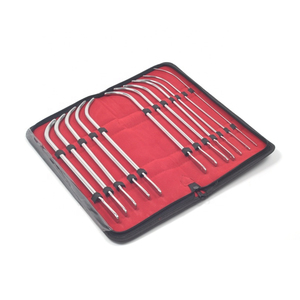
Orthopedic Surgical Implants L-Plate 6 Holes Thick Orthognathic Stainless Steel
Precision-manufactured 316L stainless steel L-type plates designed for manual orthognathic and maxillofacial fixation with maximum bending yield strength.
Inquire Now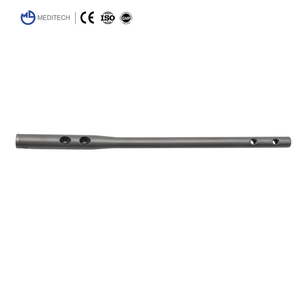
Titanium Alloy Intramedullary Nail System (CE & ISO Certified Class III)
Cannulated Ti-6Al-4V ELI intramedullary nails engineered for femoral and tibial diaphyseal fractures, featuring multi-planar distal locking options.
Inquire Now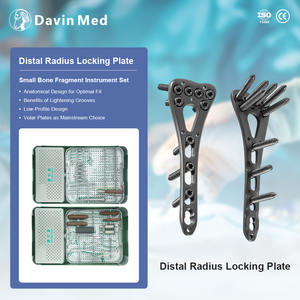
Titanium Volar Distal Radius Multi-Directional Locking Plate System
Anatomically pre-contoured volar plates utilizing polyaxial locking technology to secure complex intra-articular and extra-articular distal radius fractures.
Inquire Now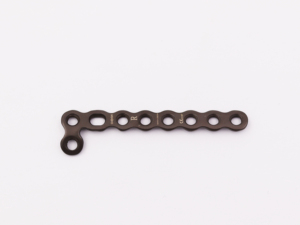
Surgical 2.0 L-Type Locking Bone Implants (Titanium & Stainless Steel)
Micro-fragment 2.0mm system tailored for hand, wrist, and small bone reconstruction, ensuring low-profile biomechanical stability.
Inquire Now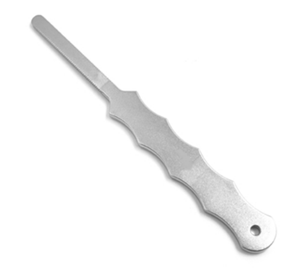
Veterinary Stainless Steel Multi-Faced Flat Bone Rasp & File
Ergonomic, autoclavable multi-faced rasp for veterinary orthopedic procedures, crafted for smooth bone contouring and precise margin preparation.
Inquire Now
Full Range Titanium Orthopedic Bone Screw System Set
Complete distributor kit containing self-tapping cortex, locking, and cancellous screws across various diameters (2.4mm–6.5mm) with sterilization storage racks.
Inquire Now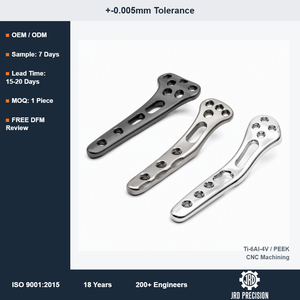
Custom OEM/ODM 5-Axis CNC Precision Titanium Medical Components
Ultra-precision Contract Manufacturing achieving ±0.005mm tolerances for customized complex spinal cages, joint components, and trauma hardware.
Inquire Now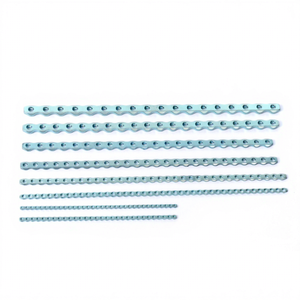
Veterinary Titanium ALPS Reconstruction Locking Plate System
Advanced low-contact contourable titanium reconstruction plates tailored for feline and canine fracture repair, minimizing periosteal damage.
Inquire NowNavigating the Mexican Medical Device Market: Why Leading Factories in China Are Strategic Partners
The Mexican orthopedic healthcare market is undergoing a significant transformation. Driven by expanding public hospital tenders through institutions such as IMSS (Instituto Mexicano del Seguro Social) and ISSSTE, alongside rapidly growing private hospital networks in Mexico City, Guadalajara, and Monterrey, the demand for high-grade trauma hardware, spinal reconstruction systems, and specialized maxillofacial implants has reached unprecedented levels. Historically, procurement teams faced a stark trade-off between exorbitantly priced North American/European brands and low-tier alternatives lacking adequate structural integrity. Today, direct partnerships with premier Chinese OEM manufacturers offer a third, superior option: medical-grade implants built to identical metallurgical standards at a cost structure optimized for Latin American healthcare economics.
For Mexican medical device importers and distributors, establishing a direct OEM/ODM relationship with qualified Chinese factories provides a decisive competitive edge. Leading Chinese manufacturers operate state-of-the-art cleanrooms (Class 100,000 / ISO Class 8) equipped with high-precision Swiss-type lathes and 5-axis CNC machining centers from DMG Mori and Citizen. By utilizing certified implant materials—primarily Ti-6Al-4V ELI (ASTM F136), commercially pure titanium (ASTM F67), and surgical-grade 316L stainless steel (ASTM F138)—these facilities deliver implants that match or exceed Western performance metrics in fatigue resistance, torque limits, and biomechanical biocompatibility.
Strict COFEPRIS Dossier Alignment
Sanitary Registration via COFEPRIS (Comisión Federal para la Protección contra Riesgos Sanitarios) requires flawless technical dossiers. Top factories provide ISO 13485:2016 certification, Free Sale Certificates (FSC), biocompatibility reports (ISO 10993), and mechanical test summaries ready for submission.
Comprehensive Matching Tooling
In surgical settings, implant failure is often caused by driver slipping or instrument misalignment. Our factories manufacture matched, reusable surgical instrument kits and autoclavable container systems that guarantee seamless intraoperative performance.
Optimized Logistics & Customs Clearances
Direct shipping corridors from Ningbo/Shanghai ports to major Mexican sea gateways like Manzanillo and Veracruz ensure efficient customs processing, low freight latency, and buffer inventory management for regional distributors.
Engineering Rigor & Quality Management Systems
Manufacturing orthopedic implants demands absolute consistency. A deviation of just a few microns in thread pitch can lead to screw loosening, micro-motion, or implant fracture under cyclic load. Recognized as a leading supplier for Mexican distributors, our production ecosystem is built around four pillar engineering standards:
1. Sub-Micron Machining & CMM Inspection
Utilizing multi-axis CNC swiss-turning centers, complex geometries—such as polyaxial pedicle screw tulip heads and anatomical volar radius curvature—are machined in single-setup operations. Every production lot undergoes automated dimensional verification via 3D Coordinate Measuring Machines (CMM) and optical profile projectors.
2. Surface Finishing & Anodization Control
Surface morphology directly affects osseointegration and bacterial adhesion. Implants undergo ultrasonic cleaning, electropolishing, and Type II/Type III electrochemical anodization. Color-coded anodizing is precisely executed for easy intraoperative size recognition by operating room personnel.
3. Metallurgical Material Integrity
We source raw titanium bar stock exclusively from verified mills with complete chemical analysis and mechanical testing certificates. Material structure is tested for tensile strength, elongation, and grain size conformity to prevent premature fatigue failure in load-bearing implants.
4. Laser Marking & Full Lot Traceability
Each plate, nail, and screw is laser-etched with unique SKU IDs, lot numbers, and dimensional markings. This guarantees complete backwards traceability from the surgical theater straight to the specific raw material melt batch.
Key Orthopedic Procurement Trends Shaping the Mexican & LATAM Markets
As healthcare purchasing managers and distributors in Mexico adjust their multi-year strategies, several key product development and supply trends have emerged:
Shift to Polyaxial & Variable-Angle Locking
Fixed-angle locking plates are increasingly being replaced by polyaxial locking technology (such as our Titanium Volar Distal Radius System). Surgeons demand intraoperative flexibility to trajectory-lock screws around complex fracture lines without sacrificing mechanical rigidity.
Surge in Veterinary Orthopedic Systems
The pet care market across Mexico, Brazil, and Colombia is experiencing rapid growth. Products like veterinary-specific flat bone files and ALPS reconstruction locking plates allow distributors to expand into high-margin veterinary surgical sectors with minimal regulatory friction.
Private-Label & OEM Brand Customization
Distributors in Mexico City and Guadalajara are moving away from reselling third-party brands toward building their own proprietary private-label lines. Top Chinese suppliers provide custom laser marking, tailored instrument tray layouts, and localized packaging to support brand equity building.
Material Specifications & Regulatory Compliance Matrix
Use this comparative technical matrix to verify material grades and documentation required for COFEPRIS sanitary registration when evaluating suppliers.
| Product System | Primary Material Grade | International Standard | Key Mechanical Properties | COFEPRIS File Requirement |
|---|---|---|---|---|
| Intramedullary Nail System | Ti-6Al-4V ELI | ASTM F136 / ISO 5832-3 | Tensile Strength ≥ 860 MPa; High Fatigue Limit | ISO 13485, Biocompatibility (ISO 10993), Mechanical Test |
| Distal Radius & Trauma Plates | Pure Titanium / Ti-6Al-4V | ASTM F67 / ASTM F136 | Anatomical Ductility; Yield Strength ≥ 780 MPa | Cleanroom Validation, FSC, Material Mill Certs |
| Orthognathic CMF L-Plates | Surgical Stainless Steel 316L | ASTM F138 / ISO 5832-1 | Pitting Corrosion Resistance; Manual Bending Flexibility | Passivation Test Reports, Sterilization Validation |
| Titanium Bone Screw Sets | Ti-6Al-4V ELI | ASTM F136 | High Torsional Torque Strength; Self-Tapping Flutes | Torsional Torque & Axial Pullout Test Reports |
| Veterinary ALPS Plates | Commercially Pure Ti (Gr 4) | ASTM F67 | Low-Contact Profile; Contourable Flexibility | ISO 9001 / ISO 13485 Manufacturing Audit |
Frequently Asked Questions for Mexican Importers & Procurement Directors
How do Chinese orthopedic factories assist with COFEPRIS sanitary registration in Mexico?
What are the typical lead times for bulk implant shipments to Manzanillo or Veracruz ports?
Can we order custom private-label branding and custom surgical instrument sets?
What are the key material advantages of Ti-6Al-4V ELI over standard stainless steel in trauma implants?
How is quality control guaranteed across large production lots of bone screws and plates?
What sample evaluation process is available for distributors before signing bulk distribution agreements?
Build Your High-Margin Orthopedic Product Line in Mexico Today
Partner directly with an established Chinese orthopedic implant manufacturer. Request factory-direct pricing, technical product catalogs, and complete COFEPRIS dossier support packages customized for your distribution network.