Precision-Engineered Orthopedic Implants & Surgical Tooling
Explore our core product families manufactured under strict ISO 13485 guidelines, featuring medical-grade titanium and stainless steel alloys engineered for superior osteointegration and mechanical fatigue resistance.
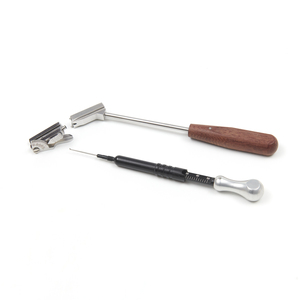
Factory Direct Stainless Steel Orthopedic Surgical Instruments Bone Assistance Device for Locating CE Certified Class II
High-precision anatomical bone locating and aiming device built from passivated 316L stainless steel for intraoperative stability and accurate alignment.
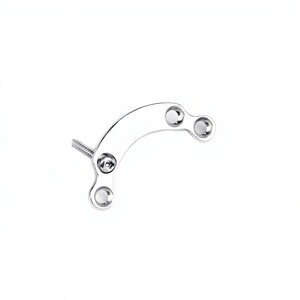
Veterinary Orthopedic Implants Acetabular Plate Stainless Steel CE Certified Animal Fracture Treatment Orthopedic Interventional
Specialized canine and feline pelvic fracture reconstruction plate designed with contoured screw hole placement to optimize fixation strength.
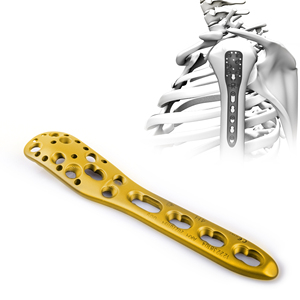
CANWELL OEM Proximal Humeral Titanium Locking Plate Philos Broken Bone Orthopedic Implants Trauma Fracture Surgery CE ISO Class
Anatomically pre-shaped PHILOS-type proximal humeral locking plate utilizing multi-directional locking screws to maximize pull-out force in osteoporotic bone.
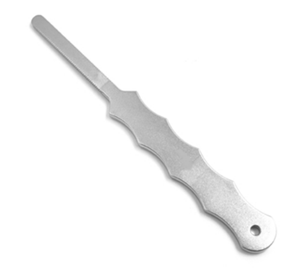
Pet-specific Stainless Steel Multi-faced Flat Bone File for Orthopedic Surgery
Precision-machined double-ended bone file designed for delicate edge smoothing, osteophyte removal, and bone contouring in small animal orthopedic procedures.
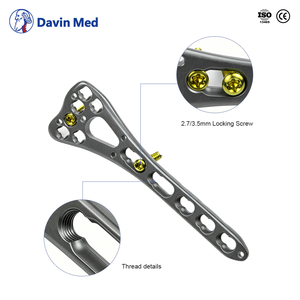
Davin Med Titanium Distal Radius Locking Plate System with Screws Kit 2.4mm Orthopedic Implant for Wrist Fracture Fixation
Ultra-low profile 2.4mm distal radius locking plate kit offering volar contouring to prevent flexor tendon irritation while delivering dynamic stabilization.
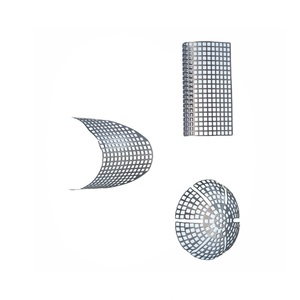
Competitive Price Titanium Alloy Material MESH Orthopedic Implants for Hospital
Malleable titanium mesh sheets engineered for cranial, maxillofacial, and orbital floor defect reconstruction with optimized porosity for soft-tissue adherence.
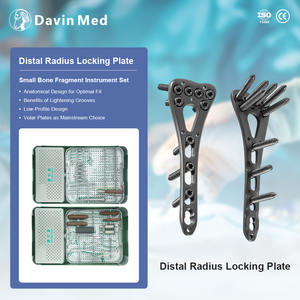
Titanium Volar Distal Radius Locking Plate Multi-Directional Screw Fixation Orthopedic Implant with Multi-Axial Locking System
Next-generation polyaxial volar plate allowing +/- 15 degrees of variable angle screw trajectory adjustment to capture intra-articular fracture fragments precisely.
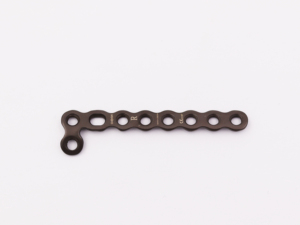
Hot Sale CE Certified Titanium/Stainless Steel Orthopedic Implants Medical Surgical 2.0 L-type Locking Implants for Bone
Micro L-shaped locking mini plate system designed for hand, foot, and maxillofacial osteotomies requiring high angle stability under dynamic load.
Executive Industry Report: Strategic Sourcing from China's Top Orthopedic Exporters
The global orthopedic devices market is undergoing a structural paradigm shift. Historically dominated by Western Tier-1 manufacturers, global healthcare providers, tender boards, and regional distributors are increasingly re-allocating procurement budgets toward top China orthopedic implants resellers and exporting manufacturers. Driven by advancements in 5-axis Swiss CNC precision machining, automated coordinate measuring machines (CMM), and standardized cleanroom processing, Chinese exporters now deliver medical devices that match Western fatigue resistance and biocompatibility at a significantly lower Total Cost of Ownership (TCO).
For B2B importers, hospital procurement officers, and private-label OEM buyers, sourcing directly from China is no longer merely a cost-reduction exercise—it is a core strategy for supply chain resilience. Traditional Western supply channels frequently present 16- to 24-week lead times for specialized trauma and spine sets, coupled with restrictive distributor margins. Leading Chinese exporters have built integrated ecosystems where implant fabrication, dedicated surgical instrument kit assembly, color-anodized size coding, and sterile barrier packaging occur within a unified ISO 13485 quality management framework.
Strict Biocompatibility
Raw materials are certified to international standards including Ti-6Al-4V ELI (ASTM F136) and 316L Stainless Steel (ASTM F138) with full melt mill certificates.
Sub-Micron Tolerances
Multi-axis CNC turning and thread whirling guarantee flawless screw-to-plate engagement and driver recess fit, preventing intraoperative stripping.
Regulatory Dossiers
Exporters provide complete technical documentation in STED format, including mechanical testing reports, sterilization validation, and IFUs for rapid local registration.
Metallurgical Architecture & Material Specification Matrix
Understanding the material science behind surgical implants is essential for regulatory reviewers and orthopedic surgeons. The clinical success of long-term joint prostheses, temporary trauma fixation plates, and spine pedicle screws hinges directly on Young’s modulus matching, tensile yield strength, fatigue limit under cyclic loading, and surface oxide stability.
| Material Classification | Standard Specification | Tensile Strength (MPa) | Primary Clinical Application | Biomechanical Advantage |
|---|---|---|---|---|
| Titanium Alloy (Ti-6Al-4V ELI) | ASTM F136 / ISO 5832-3 | ≥ 860 MPa | Pedicle screws, intramedullary nails, anatomical trauma plates | High strength-to-weight ratio, low elastic modulus closer to cortical bone, superior MRI compatibility. |
| Commercially Pure Titanium (CP-Ti) | ASTM F67 / ISO 5832-2 | 240 - 550 MPa | CMF micro/mini plates, cranial mesh, orbital reconstructive grids | Excellent intraoperative malleability allows surgeons to hand-bend plates to delicate facial contours. |
| Implants Stainless Steel | ASTM F138 / ISO 5832-1 | ≥ 860 MPa (Cold Worked) | Trauma fracture plates, Schanz pins, external fixator rods | Cost-effective structural rigidity for load-bearing limb stabilization and temporary fracture containment. |
| Cobalt-Chromium-Molybdenum | ASTM F1537 / ISO 5832-12 | ≥ 960 MPa | Modular femoral heads, total knee articulation components | Extremely low wear coefficient and high scratch resistance under heavy frictional contact. |
| Polyetheretherketone (PEEK) | ASTM F2026 | 90 - 100 MPa | Spine interbody fusion cages (PLIF/TLIF/ACDF), suture anchors | Radiolucent properties allow clear post-operative X-ray evaluation of bone graft fusion progress. |
Anatomical System Integration: Implants + Dedicated Tooling
A primary failure point in global orthopedic procurement occurs when third-party implants are paired with non-validated instrument trays. Top Chinese orthopedic exporters mitigate this clinical risk by designing matched implant-instrument ecosystems.
For example, locking plate systems feature drill guides with calibrated threads that screw directly into the plate's combi-hole, ensuring concentric pilot drilling. Reusable surgical instruments are crafted from custom-hardened stainless steel alloys to withstand hundreds of autoclave cycles without dimensional deformation.
Enterprise Advantage: The 6-Stage Quality Control Protocol
Orthomanufacturer Medical Co., Ltd operates advanced manufacturing facility equipped with multi-axis CNC machines, automated laser-marking units, and ISO Class 7 cleanrooms. Every medical device batch follows a traceable, six-stage quality assurance protocol before release for global export.
Raw Material Chemical Audit
Every titanium bar and stainless steel coil is verified via spectral analysis and mechanical tensile testing against ASTM mill specs.
Multi-Axis CNC Machining
Swiss-lathe thread whirling produces smooth helical lead angles and sub-micron locking threads for smooth insertion.
Passivation & Anodization
Chemical passivation removes surface free iron to prevent corrosion, followed by Type II anodization for size color-coding.
Optical CMM Inspection
Automated coordinate measuring machines record pitch diameter, hole concentricity, and wall thickness for 100% of lot samples.
Micro-Laser Traceability
Each implant receives precise fiber-laser marking of part numbers, lot codes, and UDI matrix codes linked to ERP records.
Cleanroom Packaging
Ultrasonic bioburden cleaning followed by double-pouch sterile barrier packaging in ISO Class 7 cleanroom conditions.
Future Trends in Global Orthopedic Procurement (2025–2030)
As surgical techniques shift toward Minimally Invasive Surgery (MIS) and personalized patient care, B2B resellers must align with exporters investing in next-generation manufacturing technology. The following key trends are shaping international demand:
Additive 3D Printing (SLM/EBM)
Selective Laser Melting enables porous titanium structures mimicking natural trabecular bone structure, accelerating osseointegration in spinal cages and joint revisions.
Patient-Specific Implants (PSI)
Preoperative CT scans converted to 3D CAD models allow exporters to produce custom reconstructive CMF and complex revision plates tailored to individual patient anatomy.
Carbon Fiber-Reinforced PEEK
CFR-PEEK composite trauma plates offer radiolucent fracture monitoring under X-ray alongside fatigue strength rivaling metallic implants without stress-shielding bone loss.
Strategic Buyer’s Audit Protocol for Chinese Exporter Evaluation
To prevent regulatory hold-ups, product recalls, or surgeon dissatisfaction, international procurement teams should apply a strict four-step verification framework when selecting an orthopedic reseller or exporter in China:
1. Verify ISO 13485 Scope
Ensure the vendor’s ISO 13485 certificate explicitly covers the manufacturing and export of the specific product family (e.g., "Non-sterile Titanium Orthopedic Implants"), not just general medical accessories.
2. Request Raw Mill Certs
Demand material test certificates (MTC) linked to raw material heat numbers for every order batch, confirming compliance with ASTM F136 or ASTM F138 chemistry limits.
3. Audit Instrument Fit
Evaluate sample kits to verify driver-to-screw engagement, tap sharpness, drill sleeve play, and tray autoclavability prior to submitting bulk tenders.
Frequently Asked Questions: Global B2B Sourcing & Procurement
Q1: What orthopedic product lines does Orthomanufacturer Medical export globally?
We manufacture and export nine primary product families: Spine Fixation Systems (pedicle screws, PEEK cages), Intramedullary Nail Systems (femoral, tibial, humeral), Locking Plate Systems (distal radius, proximal humerus, tibial plateau), Sports Medicine Implants (suture anchors, interference screws), CMF Maxillofacial Fixation (micro/mini plates, titanium mesh), Joint Prostheses (hip and knee systems), External Fixation frames, Surgical Power Tools, and Laparoscopic Instruments.
Q2: Can your factory support private-label OEM manufacturing and custom laser marking?
Yes. We specialize in OEM and private-label programs for global distributors and medical device brands. Our capabilities include fiber laser etching of customer logos, custom part numbering, color-anodized branding, custom sterile barrier packaging, and co-engineering products based on customer CAD drawings or physical samples.
Q3: Which raw material standards are used for your orthopedic implants?
All implant materials are strictly sourced from certified suppliers matching international medical standards: Ti-6Al-4V ELI (ASTM F136 / ISO 5832-3), Commercially Pure Titanium (ASTM F67 / ISO 5832-2), 316L Stainless Steel (ASTM F138 / ISO 5832-1), CoCrMo Alloy (ASTM F1537), Implant-Grade PEEK (ASTM F2026), and UHMWPE (ASTM F648).
Q4: What regulatory support and registration dossiers do you provide for local importation?
We assist distributors with local health authority registrations (such as SFDA, NMPA, CE, and regional MoH registrations) by supplying technical dossiers structured in STED format. Available documentation includes ISO 13485 certificates, material mill test reports, mechanical fatigue test results, biocompatibility reports, Instructions for Use (IFU), and labeling artwork.
Q5: How can international distributors request physical samples for technical evaluation?
Qualified medical device distributors, regional resellers, and hospital procurement departments can apply for sample evaluation sets. Samples allow your clinical team to verify surface finish, thread engagement, and surgical instrument tolerance prior to placing commercial contract orders. Contact our export desk to request a sample box.
Q6: What is the typical lead time and minimum order quantity (MOQ) for international shipments?
Standard catalog items (such as trauma locking plates and screws) are maintained in stock for rapid export within 7 to 14 days. Custom OEM projects or private-label production runs generally require 30 to 45 days depending on tooling complexity. MOQs are flexible to accommodate distributor launch trials.
Partner with China's Premier Orthopedic Manufacturer
Expand your regional product portfolio with high-precision, ISO 13485-certified spine, trauma, and joint fixation systems. Connect with our export engineering team today for technical catalogs, pricing schedules, and OEM program feasibility.