Featured Orthopedic Implant & Surgical Instrument Portfolio
Explore our CE-marked, ISO 13485 certified medical devices precision-machined from titanium alloy (Ti-6Al-4V ELI) and implant-grade PEEK. Designed for high fatigue resistance, optimal biocompatibility, and seamlessly matched surgical instrumentation.
Executive Overview: China’s Role in Global Orthopedic Manufacturing Excellence
The global demand for high-precision orthopedic implants and matching surgical instrument sets has shifted contract manufacturing dynamics significantly over the last decade. As healthcare systems strive for cost sustainability without compromising clinical outcomes, leading Chinese contract manufacturers—such as Orthomanufacturer Medical Co., Ltd—have elevated their engineering infrastructure to rival traditional Western OEMs. By integrating ultra-precision multi-axis Swiss-type CNC machining, automated passivation lines, Class 10,000 cleanroom packaging, and rigorous 100% lot-traceable laser marking, top-tier Chinese facilities are now primary drivers of global medical supply chain resilience.
Modern orthopedic surgery demands exact mechanical alignment, bio-harmonic stiffness, and robust fatigue strength. Whether manufacturing low-profile posterior thoracolumbar pedicle screw systems, polyaxial proximal humeral locking plates (such as PHILOS systems), or additive manufactured (3D-printed) porous titanium interbody cages, precision engineering forms the cornerstone of surgical success. Importers, regional distributors, and hospital procurement departments require complete regulatory transparency (including Technical Documentation Files, ISO 13485 audit reports, ASTM metallurgical certificates, and MDR-ready labeling) alongside competitive volume pricing structures.
Material Science & Manufacturing Standard Matrix
Selecting the appropriate raw material standard is the single most critical quality decision during orthopedic OEM engineering. The table below details the standardized materials used across our trauma, spine, CMF, and sports medicine production lines:
| Material Specification | International Standard | Biomechanical Profile & Purpose | Primary Clinical Application |
|---|---|---|---|
| Ti-6Al-4V ELI (Grade 23) | ASTM F136 / ISO 5832-3 | Extra-low interstitial alloy with enhanced fracture toughness and fatigue resistance. | Monoaxial/Polyaxial Pedicle Screws, Spine Rods, Trauma Locking Plates |
| Commercially Pure Titanium (CP Ti) | ASTM F67 / ISO 5832-2 | High ductility allowing precise intraoperative bending without micro-fracturing. | CMF Maxillofacial Mini Plates, Cranial Mesh, Reconstructive Plates |
| 316L Implant Stainless Steel | ASTM F138 / ISO 5832-1 | Proven corrosion resistance, high tensile strength, highly cost-effective trauma fixation. | Intramedullary Nails, Veterinary Acetabular Plates, External Fixators |
| PEEK-OPTIMA (Polyetheretherketone) | ASTM F2026 | Radiolucent polymer with modulus of elasticity closely matching human cancellous bone. | PLIF / TLIF / ALIF Spinal Interbody Cages, Suture Anchors |
| CoCrMo Alloy (Cobalt-Chrome) | ASTM F1537 / ISO 5832-12 | Extreme polishability, high wear resistance for articulating surfaces. | Total Joint Prostheses (Hip Stems, Femoral Knee Components), Deformity Rods |
Engineering Capabilities & Turnkey OEM/ODM Workflow
From raw bar stock inspection to automated cleanroom packaging, Orthomanufacturer Medical Co., Ltd maintains complete in-house process ownership to ensure contract manufacturing excellence.
Full Lot Traceability
Every single implant receives high-precision laser marking detailing catalog SKU, batch serial numbers, and anatomical sizing. Raw materials are 100% verified against original mill test certificates.
Matched Surgical Instrumentation
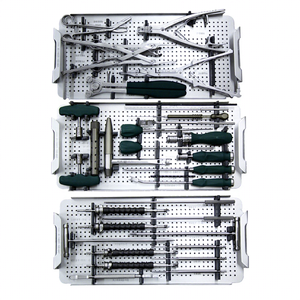
We do not just manufacture implants. We build dedicated, color-coded, autoclavable instrument kits—including depth gauges, torque-limiting drivers, bone taps, and bending pliers—to prevent intraoperative failure.
Multi-Axis CNC Precision
Utilizing 5-axis DMG MORI CNC milling machines and Citizen Swiss-type lathes, our factory achieves micro-tolerances within ±0.005mm, ensuring smooth thread engagement and flawless plate contouring.
Private-Label OEM Support
We provide full turn-key private-label services, customized anodization color codes, custom laser-etched brand identity, custom tray layout engineering, and local regulatory technical file assembly.
Additive Manufacturing (3D Printing)
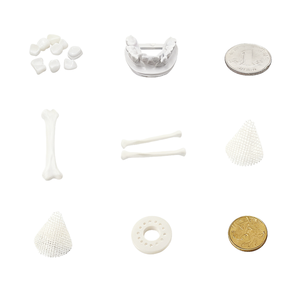
State-of-the-art Selective Laser Melting (SLM) 3D printing for patient-specific implants (PSI) and porous trabecular titanium lattice structures that promote rapid osteointegration.
Global Regulatory Compliance
Extensive experience fulfilling registration requirements across South America, Middle East, Southeast Asia, CIS, and European markets with dedicated multi-lingual technical sales support.
Future Procurement & Supply Chain Trends (2025–2030)
As healthcare expenditures tighten globally and public hospital systems demand standardized procurement metrics, the global orthopedic market is undergoing structural shifts. Overseas buyers, hospital group purchasing organizations (GPOs), and medical device importers must navigate four major upcoming industry trends:
1. Shift Toward Complete Procedure-Based Kits Rather Than Component Sourcing:
Leading distributors are moving away from piecemeal sourcing where screws are bought from vendor A, plates from vendor B, and surgical instruments from vendor C. Incompatible thread tolerances or improper driver engagement during surgical procedures create immense clinical liability. Modern buyers require end-to-end procedure kits—containing anatomically contoured locking plates, precision screws, and dedicated sterilizable trays—from a single qualified OEM manufacturer.
2. Rapid Acceleration of Additive Manufactured (3D Printed) Porous Implants:
Conventional plasma-sprayed coatings are increasingly being replaced by direct metal 3D printing (Selective Laser Melting). SLM technology creates biomimetic porous titanium lattice structures with interconnected pore sizes between 300 to 600 microns. This geometry mimics natural trabecular bone structure, encouraging rapid cellular ingrowth and long-term biological secondary fixation in spinal interbody cages and custom reconstructive implants.
3. Expanding Regulatory Demands and Technical File Transparency:
With the European Union Medical Device Regulation (EU MDR 2017/745) imposing stringent post-market surveillance (PMS) and clinical evaluation requirements, national health authorities in Latin America (ANVISA), Southeast Asia (MDA, BPOM), and the Middle East (SFDA) are updating their local registration guidelines. Importers must partner with Chinese manufacturers capable of supplying full technical documentation packages, biological evaluation reports (ISO 10993), and dynamic fatigue test results according to ASTM F1717 (for pedicle screws) and ASTM F382 (for metallic bone plates).
4. Rise of Single-Use Sterile Packaging for High-Volume Trauma Fixation:
To minimize hospital-acquired infections (HAIs) and eliminate complex hospital sterilization costs, the demand for pre-sterilized, single-use packaged orthopedic trauma plates and cannulated screws is surging. China-based manufacturers with validated Class 10,000 cleanrooms and Ethylene Oxide (EO) or Gamma irradiation sterilization lines are best positioned to fulfill these high-volume OEM contracts.
Deep Dive: Technological Features of Recommended Product Systems
Understanding the mechanical nuances of modern trauma and spinal instrumentation is essential for technical buyers. Below is an engineering overview of our core product recommendation lines:
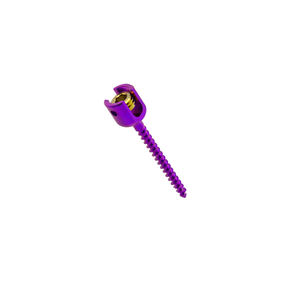
A. Posterior Thoracolumbar Pedicle Screw-Rod Systems (COXII & JZC Systems):
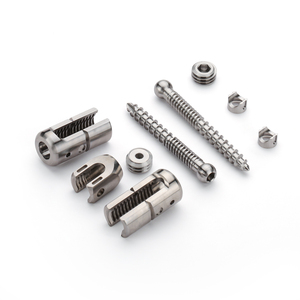
Spinal pedicle screws must withstand millions of sub-maximal loading cycles without fatigue failure at the screw-rod junction. Our 5.5mm and 6.0mm pedicle screw systems feature dual-lead threads for accelerated intraoperative insertion speed and enhanced pull-out strength in osteoporotic bone. Polyaxial screw heads offer a 52-degree cone of deflection, allowing smooth rod placement even in severe scoliosis or spondylolisthesis cases. Matched cobalt-chrome or titanium rods ensure stable vertebral segment fusion.
B. Anatomical Proximal Humeral Locking Plates (PHILOS 3.5mm System):
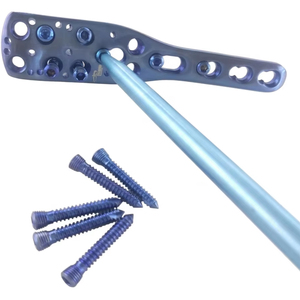
Proximal humeral fractures present complex fixation challenges due to poor bone quality in elderly patients. The PHILOS anatomical locking plate features convergent and divergent locking screw trajectories that create a 3D structural scaffold inside the humeral head. Specific suture eyelets along the plate perimeter enable the reattachment of rotator cuff tendons, restoring shoulder joint mechanics.
C. Anterior Cervical Spine Locking Plate System:
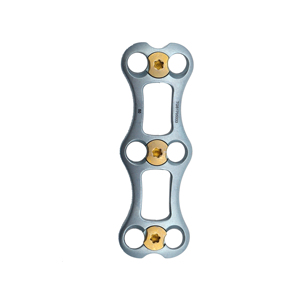
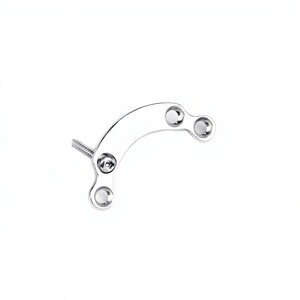
Cervical trauma and degenerative disc stabilization demand ultra-low profile plates to prevent postoperative dysphagia. Our titanium cervical locking plates feature a zero-profile or ultra-thin cross-section with intuitive tactile tactile anti-backout locking mechanisms. Surgeons receive visual and tactile confirmation when locking screws engage, completely preventing screw loosening toward the anterior esophagus.
D. 2.5mm Straight Condyle & Small Fragment Locking Plates:
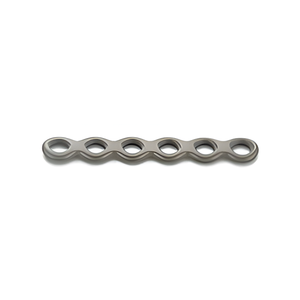
Designed for peri-articular micro-fracture repair and small bone trauma, these plates utilize combi-holes that allow surgeons to choose between dynamic axial compression (using standard cortical screws) or angular stable locking fixation (using threaded locking head screws). Highly polished, rounded plate edges minimize soft tissue irritation and tendon friction.
Frequently Asked Questions by International Buyers
Get expert answers regarding technical specifications, OEM customization protocols, regulatory submissions, and minimum order quantities from our engineering team.
What specific orthopedic product lines does Orthomanufacturer Medical Co., Ltd specialize in?
Can your factory produce OEM orthopedic implants according to customer drawings or samples?
Which certified raw materials are utilized for your implants?
What documentation support do you provide to assist regional product registration?
How do you ensure surgical instruments match the implants seamlessly?
How can new distributors evaluate sample quality before placing bulk orders?
Partner with China’s Leading Orthopedic Device Factory
Whether you are expanding your regional trauma catalog, upgrading your spine system portfolio, or seeking a reliable contract manufacturer for private-label OEM implants, our engineering team is ready to assist you.
Send an Inquiry