Featured Medical Implants & Surgical Fixation Systems
Engineered in compliance with ISO 13485 & ASTM F136 / ASTM F138 standards. Full material lot traceability guaranteed for global distributor tenders.
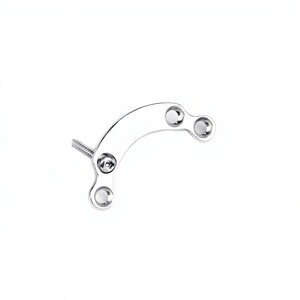
Veterinary Orthopedic Implants Acetabular Plate Stainless Steel CE Certified
Precision anatomical acetabular fixation plate manufactured for canine and feline hip reconstruction and fracture intervention.
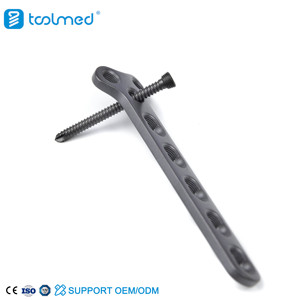
T Type Locking Plate Veterinary Orthopedic Surgical Implant
Low-profile T-shaped locking compression plate designed for angular stable fixation in veterinary osteotomy and trauma repair.
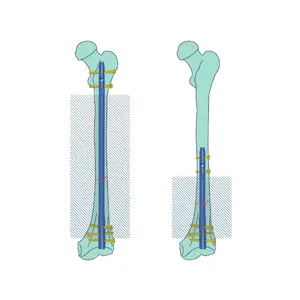
Multi Functional Reconstruction Femoral Nail System
Advanced intramedullary nail with multi-planar locking options for complex femoral shaft, subtrochanteric, and neck fractures.
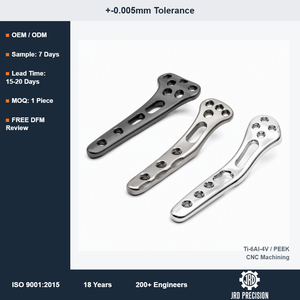
Precision 5 Axis CNC Machined Titanium Implants (±0.005mm)
Ultra-precision custom medical component manufacturing in Ti6Al4V with ISO 9001 and CMM verification for OEM partners.
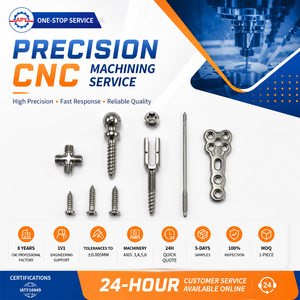
Precision CNC Titanium Bone Screws & Spinal Fixation Parts
High-fatigue strength polyaxial and monoaxial pedicle screws engineered with custom thread geometries for spinal stability.
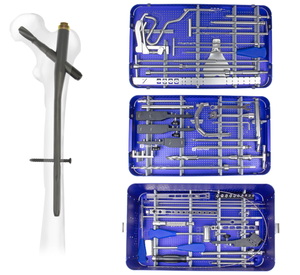
PFNA Proximal Femoral Intramedullary Nail & Instrument Set
Helical blade PFNA system tailored for trochanteric fractures, complete with ergonomic surgical instrument sets.
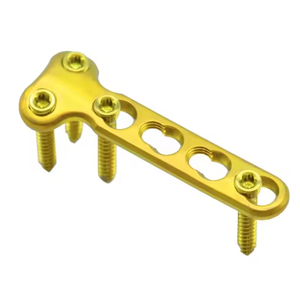
Full Range Titanium Bone Screw Set System for Distributors
Comprehensive trauma screw kit including cortical, cancellous, and locking screws packed in modular aluminum sterilization trays.
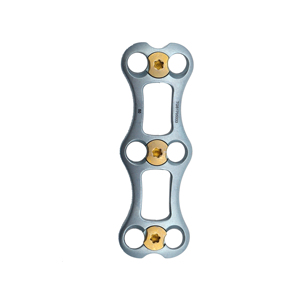
Anterior Cervical Spine Locking Plate System
Ultra-low profile cervical plate with integrated dynamic anti-backout mechanism for anterior cervical discectomy and fusion (ACDF).
Executive Sourcing Guide: Orthopedic Implants Manufacturing in China
The global market for orthopedic trauma devices, spinal reconstruction hardware, joint prostheses, and veterinary implants has undergone a monumental shift toward consolidated, high-precision original equipment manufacturing (OEM). Procurement officers, medical device brand owners, and hospital group purchasing organizations (GPOs) evaluating options to request a quote from China orthopedic implant manufacturers and factories require deep technical insights into metallurgical integrity, biomanufacturing tolerances, surface passivation standardizations, and international regulatory file compliance.
As surgical procedures demand tighter mechanical tolerances and superior bio-integration, Chinese orthopedic manufacturing hubs have evolved from basic component producers into world-class innovation centers. Utilizing state-of-the-art 5-axis Swiss-type turning centers, multi-axis machining facilities, and Class 100,000 cleanroom packaging environments, leading factories deliver implants that meet or exceed stringent ISO 13485 quality management guidelines and ASTM material specifications.
Material Engineering Standards: Metallurgical Integrity in Orthopedic Implants
Implantable medical devices operate under continuous biomechanical stress, requiring exceptional tensile yield strength, fatigue endurance limits, corrosion resistance, and cytocompatibility. Professional orthopedic factories strictly adhere to specialized raw material specifications:
Titanium Alloys (Ti-6Al-4V ELI & CP Ti)
ASTM F136 / ISO 5832-3: Extra Low Interstitial (ELI) grade titanium is the gold standard for load-bearing pedicle screws, intramedullary nails, and anatomical locking plates. Its modulus of elasticity ($110\text{ GPa}$) is significantly closer to cortical bone than stainless steel, reducing stress shielding risks.
ASTM F67 / ISO 5832-2: Commercially Pure (CP) Titanium provides unmatched ductility for malleable maxillofacial mini-plates and titanium mesh, allowing intraoperative contouring without micro-fracturing the metallic matrix.
Specialized Polymers & Stainless Steels
PEEK (ASTM F2026): Polyetheretherketone offers radiolucency and an elastic modulus ($3.6\text{ GPa}$) virtually identical to cancellous bone, making it ideal for spinal interbody fusion cages (ACDF/PLIF/TLIF).
316L Stainless Steel (ASTM F138): High-nitrogen, low-carbon stainless steel remains a cost-effective, high-yield material for temporary trauma fixation, veterinary bone plates, and external fixator pins requiring supreme shear resistance.
| Material Standard | Material Composition | Tensile Strength (MPa) | Primary Clinical Applications | Key Mechanical Advantage |
|---|---|---|---|---|
| ASTM F136 | Ti-6Al-4V ELI Alloy | ≥ 860 MPa | Spinal Pedicle Screws, PFNA Nails, Trauma Plates | Superior fatigue resistance & reduced stress shielding |
| ASTM F67 | Commercially Pure Titanium (Grade 1-4) | 240 - 550 MPa | CMF Maxillofacial Plates, Cranial Mesh | High intraoperative malleability & osseointegration |
| ASTM F138 | 316L Stainless Steel (Medical Grade) | ≥ 860 MPa (Cold Worked) | Vet Acetabular Plates, External Pins, Wire | Maximum shear yield strength & cost economy |
| ASTM F2026 | Polyetheretherketone (PEEK) | 90 - 100 MPa | Spinal Interbody Fusion Cages (PLIF/TLIF) | X-ray radiolucency & bone-like elastic modulus |
| ASTM F1537 | Cobalt-Chromium-Molybdenum (CoCrMo) | ≥ 960 MPa | Total Joint Hip Stems, Knee Femoral Heads | Ultra-high tribological wear resistance |
Precision Manufacturing Technologies & Quality Control Protocols
Precision is non-negotiable in implantable device fabrication. Leading Chinese factories deploy advanced 5-axis high-speed CNC milling and Swiss lathe machines equipped with live tooling. These technologies allow complex dynamic surfaces—such as anatomical locking plate contours, cannulated intramedullary screw channels, and complex helical thread pitch geometries—to be machined in a single setup, eliminating compound tolerance stack-up.
Raw Bar Stock Verification
Spectrographic elemental testing and ultrasonic flaw detection verify 100% compliance with raw mill certificates prior to machining.
5-Axis CNC Milling & Turning
Micron-level machining achieves tight tolerance profiles (±0.005mm) on thread roots, drive recesses, and locking holes.
Electropolishing & Anodizing
Controlled Type II chemical passivation and Type III color anodizing create biocompatible oxide barriers and color-coded surgical sizing.
CMM & Optical Metrology
Fully automated Coordinate Measuring Machines (CMM) and video measuring systems audit 3D profiles against CAD models.
Laser Traceability Marking
Fiber laser systems etch permanent SKU numbers, lot tracking codes, and UDI matrix codes directly onto implant non-contact surfaces.
Cleanroom Assembly & Packaging
Ultrasonic solvent washing removes particulate residues before double pouch heat-sealing in controlled ISO Class 7 cleanrooms.
Future Market Trends in Orthopedic Manufacturing (2025–2035)
The global orthopedic implant landscape is rapidly evolving under the influence of technological advances, changing demographic demands, and shifting regulatory frameworks. Procurement teams and brand managers must align with manufacturers that actively invest in next-generation production processes:
1. Additive Manufacturing (3D Printed Porous Titanium)
Traditional solid titanium implants rely on plasma spray coating to promote bone ingrowth. Future procurement trends demonstrate a decisive shift toward direct additive manufacturing using Electron Beam Melting (EBM) and Direct Metal Laser Sintering (DMLS). These techniques fabricate biomimetic porous lattice structures directly integrated within interbody fusion cages and total joint acetabular cups, drastically improving osteoinduction and long-term mechanical stability.
2. Patient-Specific Implants (PSI) & Rapid Customization
Driven by advanced DICOM processing software and high-speed CNC toolpaths, custom orthopedic implants tailored to patient-specific CT scans are moving from niche oncology reconstructive procedures to mainstream complex trauma cases. Forward-thinking Chinese factories are establishing dedicated rapid-prototyping workflows capable of delivering validated custom implants within expedited lead times.
3. Patient-Specific Robotic Surgical Alignment Tools
As robotic-assisted orthopedic surgery gains market share in joint replacement and spinal pedicle screw insertion, implants must feature tight geometric tolerances to interface seamlessly with robotic navigation arrays and patient-matched surgical guides. Sourcing partners must guarantee that instrument-to-implant interface tolerances eliminate any micro-slop during automated placement.
4. Bioabsorbable & Hybrid Composite Implants
In sports medicine (e.g., ACL reconstruction suture anchors and interference screws), bioabsorbable materials such as Poly-L-Lactic Acid (PLLA) combined with Hydroxyapatite (HA) are reducing the need for secondary revision surgeries. Sourcing certified manufacturers capable of precision polymer molding alongside titanium machining represents a key strategic advantage.
Evaluating Ortho Manufacturer Capabilities (Orthomanufacturer Medical Co., Ltd)
Orthomanufacturer Medical Co., Ltd stands at the forefront of China's medical device manufacturing sector. The factory operates an end-to-end production infrastructure designed specifically to address the complex requirements of global distributors, private label OEMs, and institutional healthcare buyers.
By eliminating third-party component sourcing and maintaining full in-house capabilities—from raw titanium alloy forging and micro-machining to dynamic mechanical testing and custom tray assembly—Orthomanufacturer Medical ensures that every order fulfills precise technical specifications:
- Matched Surgical Instrument Sets: Every trauma plate or spinal screw system is designed in tandem with ergonomic, autoclavable stainless steel surgical instruments, preventing driver strip-out and ensuring intraoperative ease.
- Complete Registration Support: Providing comprehensive technical files, material mill certificates, cleaning validation reports, and ISO/CE documentation to accelerate national healthcare registry approvals.
- Custom Private-Label OEM Solutions: Laser branding, custom packaging configurations, and custom CAD development based on client specifications or sample reverse engineering.
Procurement FAQ: Sourcing Orthopedic Implants from China
What technical documentation is included when requesting a quote for orthopedic implants?
How do Chinese factories ensure thread tolerance and prevent screw stripping?
What is the standard minimum order quantity (MOQ) for custom OEM implant manufacturing?
Are implants delivered clean and sterilized, or non-sterile for hospital autoclaving?
Can we order matching surgical instrument sets along with implant shipments?
Request a Comprehensive Factory Quote & Technical Dossier
Partner directly with an established ISO 13485 certified orthopedic implant factory. Submit your product specifications, target volume, or engineering drawings for an immediate response from our medical technical team.
Inquire Now